

The history of Ireland may be traced through its monuments…
So wrote William Wilde (Oscar’s dad!!), describing the Boyne Valley in 1849. And how right was he!! This astonishing region, through which flows the rather modest (112kms) Boyne and its tributaries, encompasses history, mythology, archaeology and religion. Here, you will find one of the largest megalithic sites in Europe, the ancient capital of the High Kings of Ireland, early Christian settlements, Norman castles and the site of the one of the most significant battles in our history.
In a country that is absolutely spoiled for choice when it comes to amazing drives, this one is a must. And it’s on the capital’s doorstep!! That’s right, the first of the sites is accessible within a half hour of the city centre. BUT – be warned … at circa 225kms it might sound very doable but there’s NO way I could pack it all into one day.
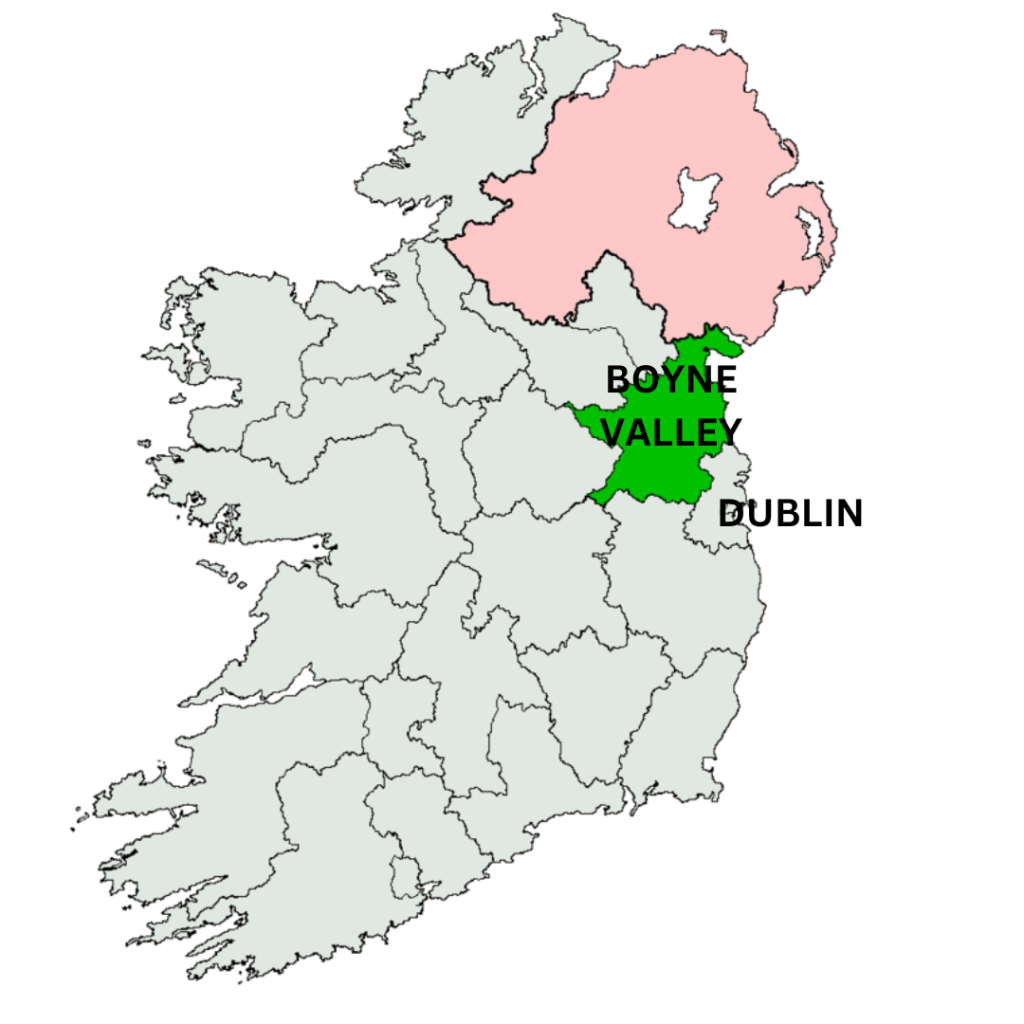
Nechtan, the King of Leinster, ruled over vast tracts of land. On this land was the ancient Well of Segais which was surrounded by nine sacred hazel trees of wisdom. Anyone who ate the hazelnuts that fell into the well, or drank its water, would be granted knowledge and a poetic tongue. No one but Nechtan himself and his 3 cup bearers were allowed near the well.
One day his wife – the Celtic goddess Boann – approached the well and challenged its power by walking around it anticlockwise. The waters surged up violently and rushed down to the sea, thus creating the River Boann (alas, she herself was blinded, mutilated and drowned by the rushing waters!).

It would be easier for you if I grouped the monuments into ancient Celtic, early Christian, Anglo-Norman etc …. but sure where’s the fun in that!!! No – I’d rather stick to the route and hop in and out of the car!
But… out of kindness ……I’ll give you the briefest of timelines!!
*Circa 3000BC, Middle Stone Age man arrives and sails up the Boyne.
*Around the same time, passage tombs are constructed.
*From circa 600BC, the High Kings reign from Tara
*St Patrick arrives in 433AD and Christianity spreads.
*Viking raiders are followed by the Normans in 1169 who introduce towns and castles.
*1539, King Henry VIII of England suppresses all monasteries in his realm and divides their possessions among his political supporters.
*Oliver Cromwell ‘visits‘ the area in 1649!
*1690 sees the hugely significant Battle of the Boyne.
Before we head off…. you’ll realise very quickly that this is but the briefest of summaries – each site is well worthy of its own blog post -but I just want you to get a flavour of what’s here should you ever make it this far….
We can begin our drive anywhere on the loop of course but lets start off with a biggie and go on from there !
Brú na Bóinne
Predating the pyramids and Stonehenge, the passage tombs of Brú na Bóinne (meaning the Palace or the Mansion of the Boyne) present us with a hugely important prehistoric landscape.
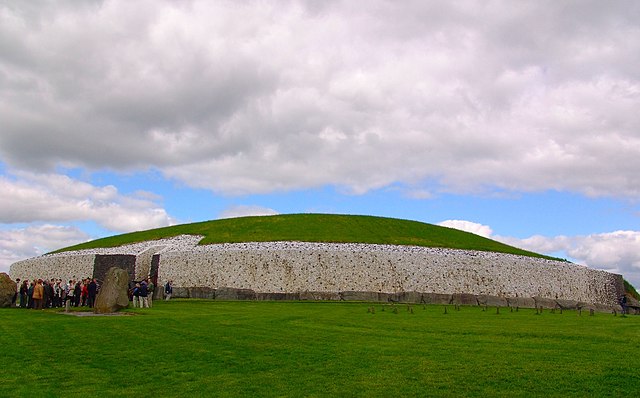
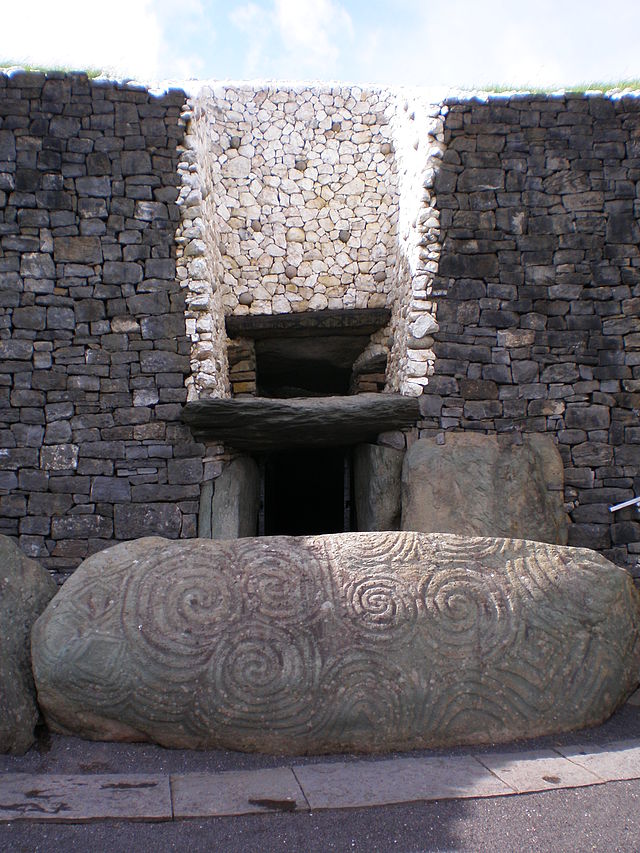
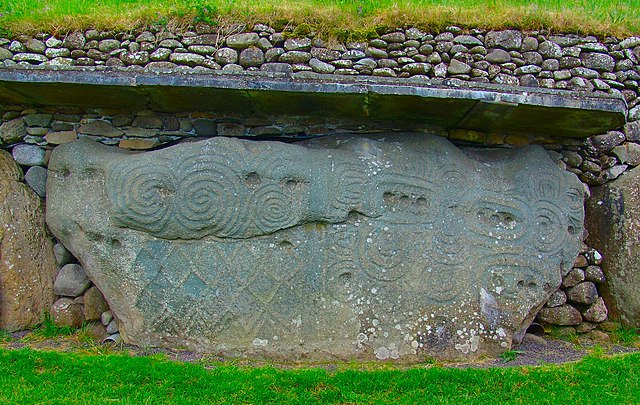
The best known of the monuments is Newgrange (c3,200B.C.). The large circular mound is surrounded by kerb stones (many are decorated) and capped by a grassy dome. The inner passageway leads to burial chambers where cremated human remains and grave artifacts were discovered. There is no evidence to prove for whom the tomb was built but one can only assume that it was for a king or an important clan
At dawn on the winter solstice (December 21st), a beam of light enters through a specially designed opening over the doorway at the shaft entrance, lighting up a path to the burial chamber.
Cormac mac Airt, one of the most famous of the ancient High Kings of Ireland, having been converted to Christianity, did not wish to be buried at the Brú because it was the cemetery of his pagan ancestors. He chose Rosnaree but, after his death, his servants tried to take his body to the Brú anyway. The river Boyne swelled up against the funeral procession and swept the coffin away to Rosnaree so Cormac had his wish granted after all!!!
Newgrange tends to steal the limelight but Knowth and Dowth are well worthy of attention. The Knowth complex includes a large mound surrounded by eighteen smaller tombs while Dowth has two tombs.

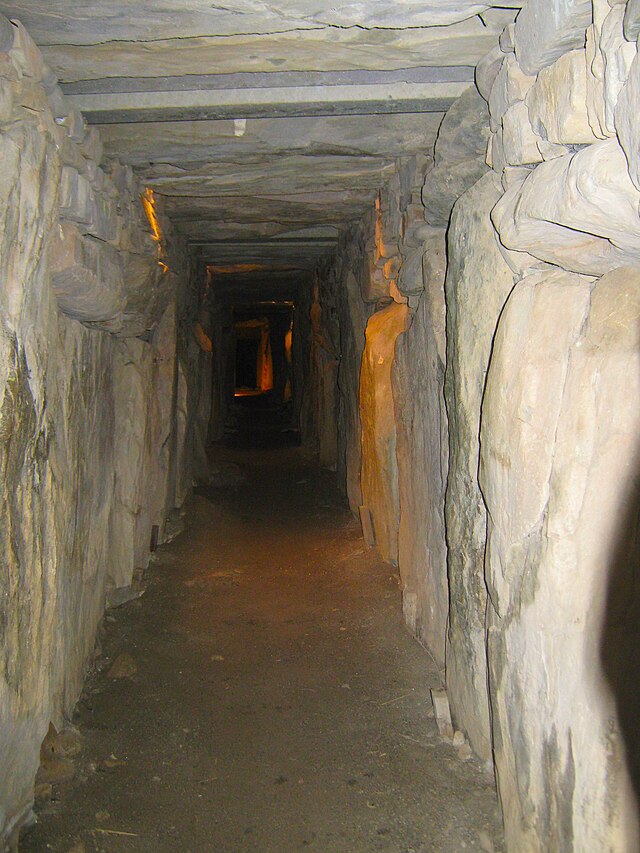
Brú na Bóinne became Ireland’s first World Heritage Site in 1993. All visits to Newgrange and Knowth begin at the Visitor Centre where shuttle buses transfer visitors to the tombs. There is no access to the interior of the Dowth tomb but you can walk around the exterior.

Battle of the Boyne
With the thrones of England, Scotland and Ireland at stake, Protestant King William of Orange deposed Catholic King James (his father-in-law!) in 1688. James was allowed flee the country and by 1690 had amassed a largely Catholic army in Ireland.
On July 1st, 1690, the Battle of the Boyne witnessed the largest number of troops ever deployed in the country. James’ force of some 23,5000 men fought well for a time against Williams multinational army of some 36,000 but were outnumbered from the start and no match for the better trained Williamites.
Victory for William was to ensure Protestant superiority in Ireland until the foundation of the modern state in the 20th century.
The Grand Orange Lodge is a fraternity sworn to maintain the Protestant Ascendency in Ireland. The Order is most prominent in Northern Ireland where annual parades are held on the 12th of July to commemorate William of Orange’s victory (The battle was on July 1st but the Julian Calendar was replaced by the Gregorian Calendar in 1752 which removed 11 days – hence 12th July)

Battle of the Boyne Visitor Centre: Oldbridge House and Gardens.
The Salmon of Knowledge
The poet Finegas lived near the River Boyne where he spent his days trying to catch the Salmon of Knowledge. It was said that the first person to taste its flesh would be wiser than all other men.
A young warrior named Fionn, unaware of the legend, came to live with Finegas. One morning, Fionn heard a shout and a struggle – Finegas had caught a salmon. It was a beauty and the poet immediately knew he had caught the Salmon of Knowledge.
Tired after his fishing success, Finegas told Fionn to cook the salmon but not to eat any of it, not even a mouthful. He headed off for a rest and Fionn built a fire. He cooked that salmon very carefully but, when turning it, the hot skin burned his thumb. He quickly put his thumb into his mouth to take away the pain.
When the cooked fish was brought to Finegas, the poet noticed immediately that there was something different about Fionn – a new wisdom in his eyes. Fionn denied eating the salmon but then remembered the burnt thumb that he had put in his mouth. Finegas accepted that Fionn now had the wisdom of the Salmon of Knowledge. When Fionn left Finegas. he went on to become leader of the Fianna and the greatest warrior they had ever known.
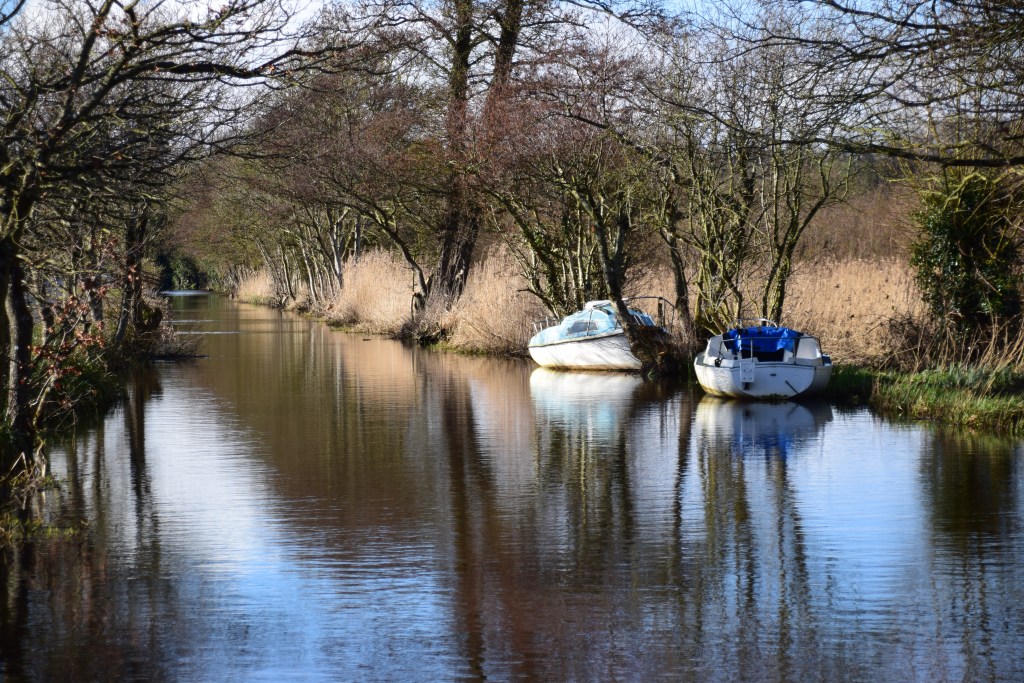
Duleek Abbey
In 450 AD, Patrick, the Patron Saint of Ireland, established a bishopric here which was granted to one of his followers, St. Cianan. The name Duleek derives from the Irish Damhliag meaning stone house – it is believed that this might have been the very first stone church in Ireland (other churches were known as Dairthech meaning oak house, being made of wood).
The Monastery suffered greatly at the hands of the Vikings who had settled in the nearby town of Drogheda but seems to have survived the regular plundering.
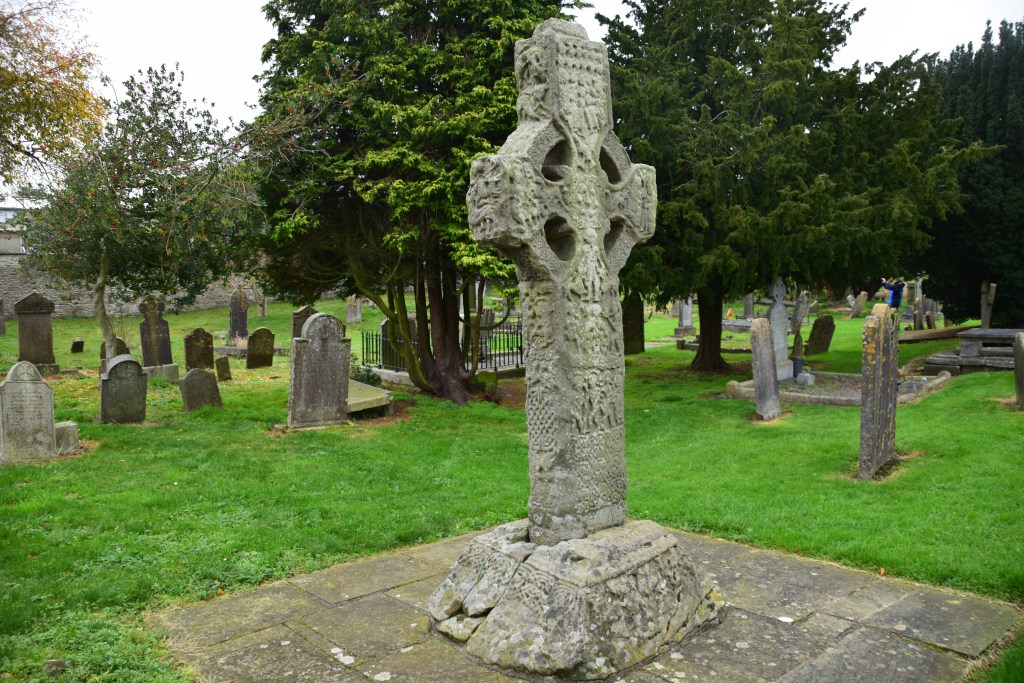
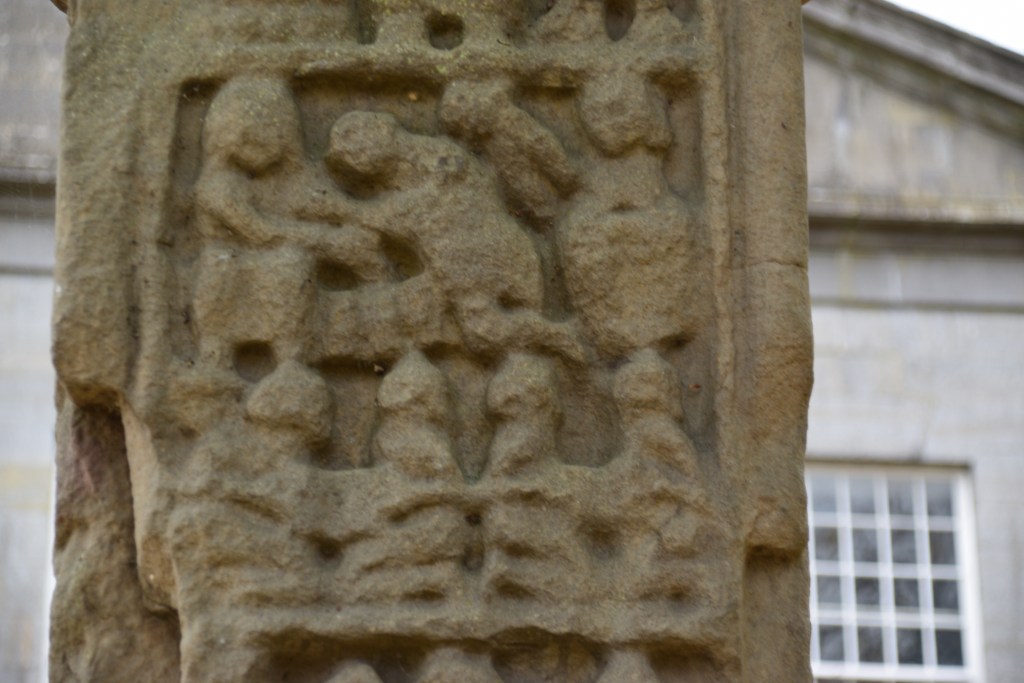
A 9th century sandstone High Cross features a crucifixion scene and possible scenes from the life of the Virgin Mary as well as geometrical patterns.


The village is nice for a coffee or lunch break and there’s a Heritage Trail to follow if I haven’t already given you enough to do!!

Drogheda
Drogheda (derived from the Irish Droichead Átha meaning Bridge of the Ford) was already settled for thousands of years before the Anglo- Normans made the town one of their main strongholds. The completed town walls in 1334AD enclosed 113 acres, making it one of the largest walled towns of the time.
The walls were certainly put to the test on several occasions and didn’t always manage to hold out against attack. Cromwell breached the walls in 1649, sacked the town, massacred some 2000 and deported captives as slaves to Barbados. Drogheda surrendered to King William after the Battle of the Boyne.
Saint Laurence Gate is a BARBICAN (the outer defence of a castle or walled city, especially a double tower above a gate or drawbridge), built as part of the fortifications. Its lofty towers are unusually large but there was a valid reason – such height was needed to offer a clear view of the river estuary some 4 miles away and thus be alerted to any potential sea invasion

Census 2022 shows Drogheda is still Ireland’s largest town – incidentally in Louth – Ireland’s smallest county!
Old Mellifont Abbey
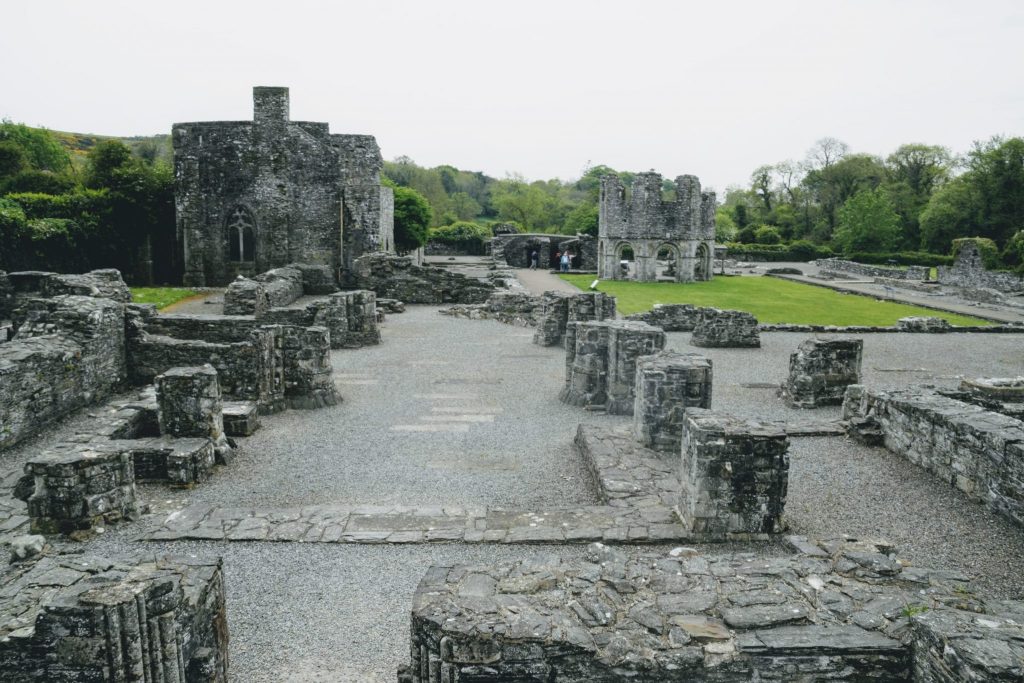
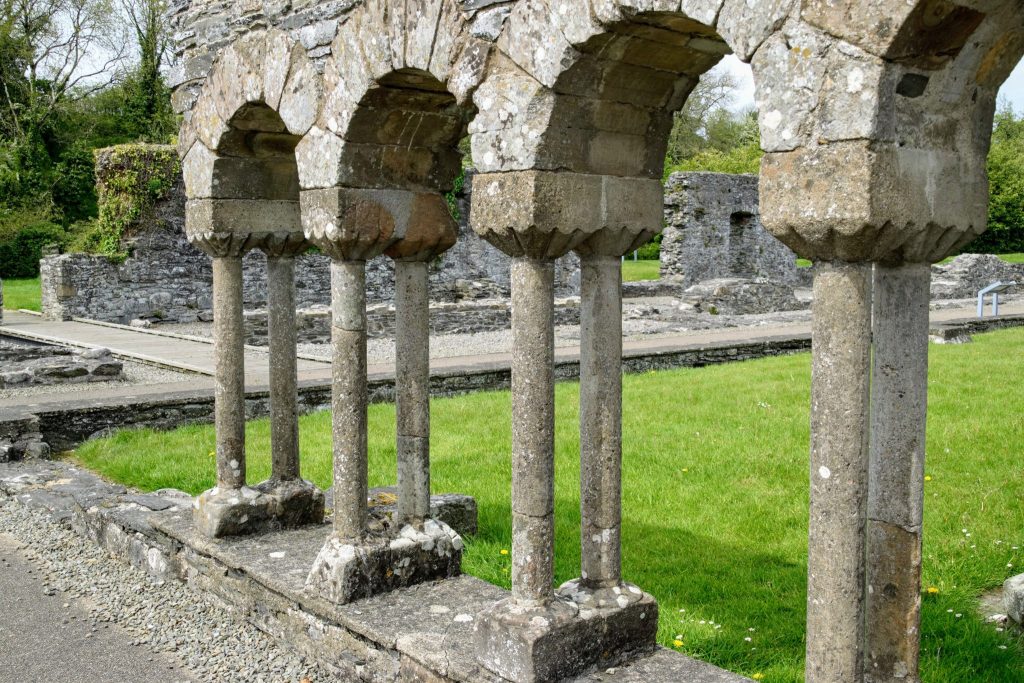
Old Mellifont Abbey, founded by Saint Malachy in 1142, was Ireland’s first Cistercian monastery – its foundation marking the introduction into Ireland of the European monastic way of life. By 1170, it housed one hundred monks and three hundred lay brothers. The Abbey became the model for other Cistercian abbeys and the Order went on to found at least another 20 houses throughout the country.
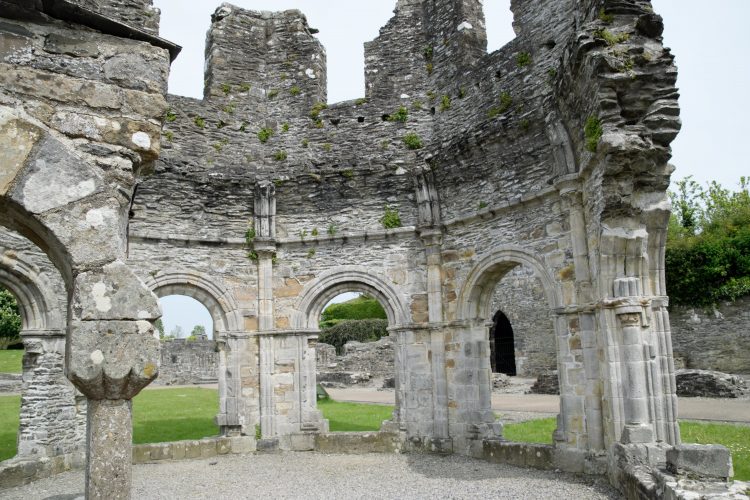
In 1539, King Henry VIII of England suppressed all monasteries – the abbey became a fortified house before eventually falling into ruin. Among the ruins is a 12th century octagonal lavabo (where the monks washed their hands before meals).
Monasterboice
This monastic site was founded in the 6th century by St Buite and was a thriving centre of religion and learning until the Cistercians arrived at nearby Mellifont in 1142.
Nothing remains of the original monastery but there are remains of two 10th century churches, a graveyard and round tower. The site is most famous though for its spectacular Early Christian High Crosses.

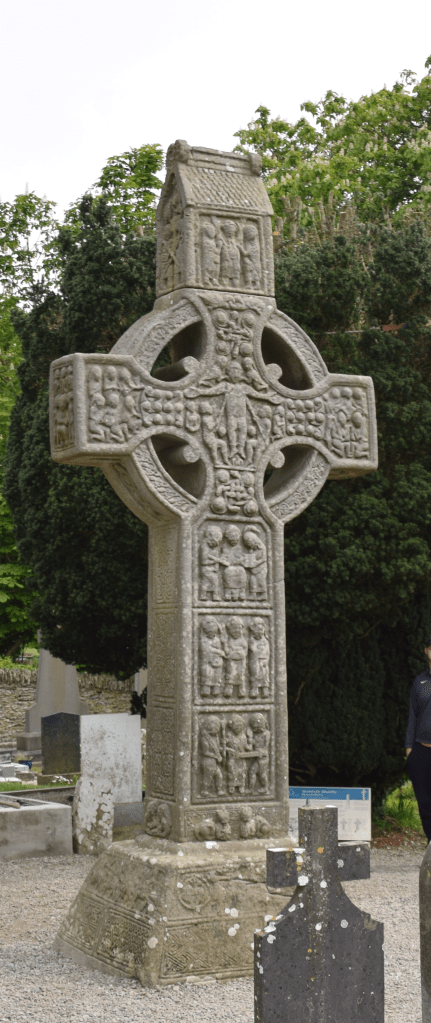
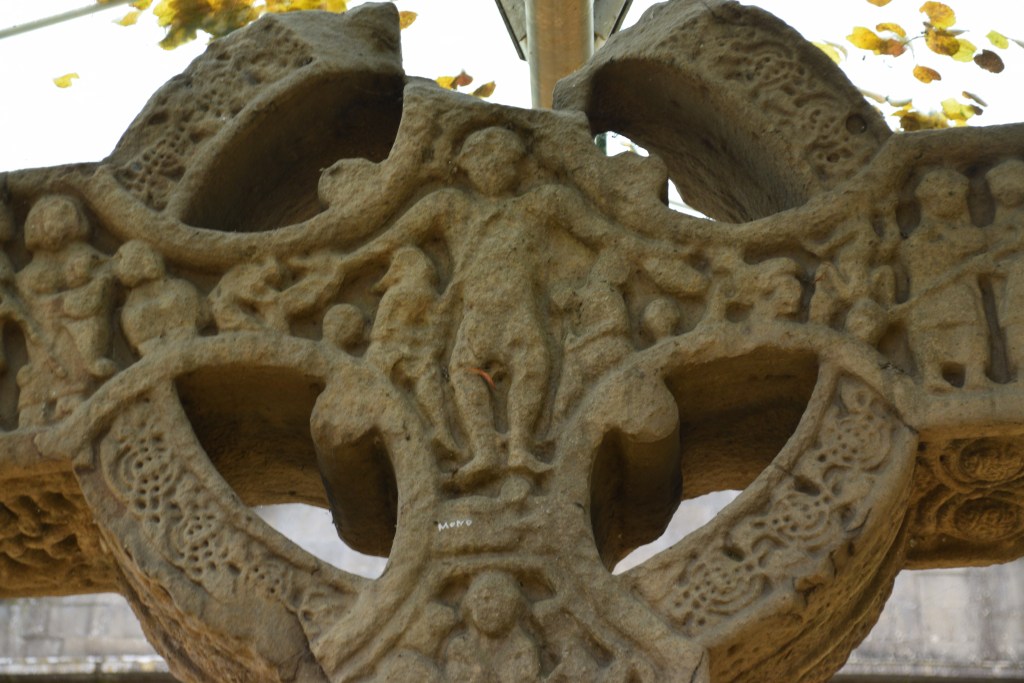
There are 3 High Crosses here but there are actually over 300 to be found throughout the country. Apart from their height, they are distinctive for having the four arms of the cross encircled in a ring and for their rich engraving. There are all sorts of theories put forward re eternal life, the circle of life, etc., but more than likely they were constructed with the ring as extra support because of the height and weight of the structure.
Early crosses were decorated with simple celtic designs. Then biblical scenes were introduced. In this period before books, such images would have been used to educate early Christians.
The High Crosses were never used as headstones – they did not mark burial places. Rather, they were ritual – declaring territory as Christian and serving as a focal point for ceremonies.
Stonemasons would live and work in the monasteries. The sandstone crosses were built in 3 parts – the base with a hollow centre, the cross itself and a capstone. They were always placed in situ before the carving was completed. They might have been painted but there is no proof that such was the case.

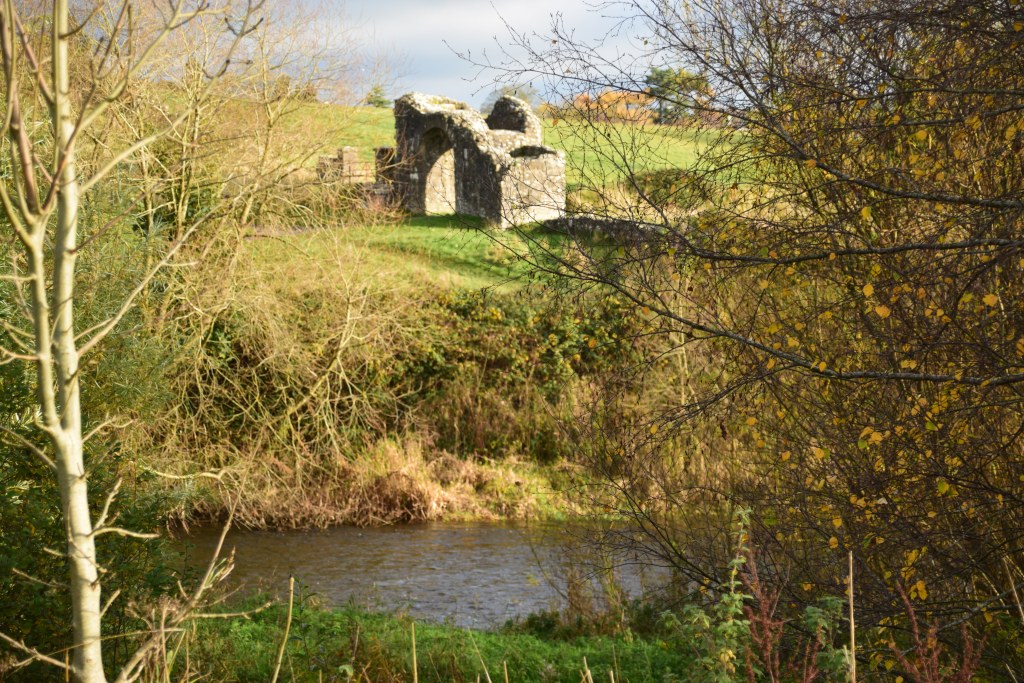
Hill of Slane
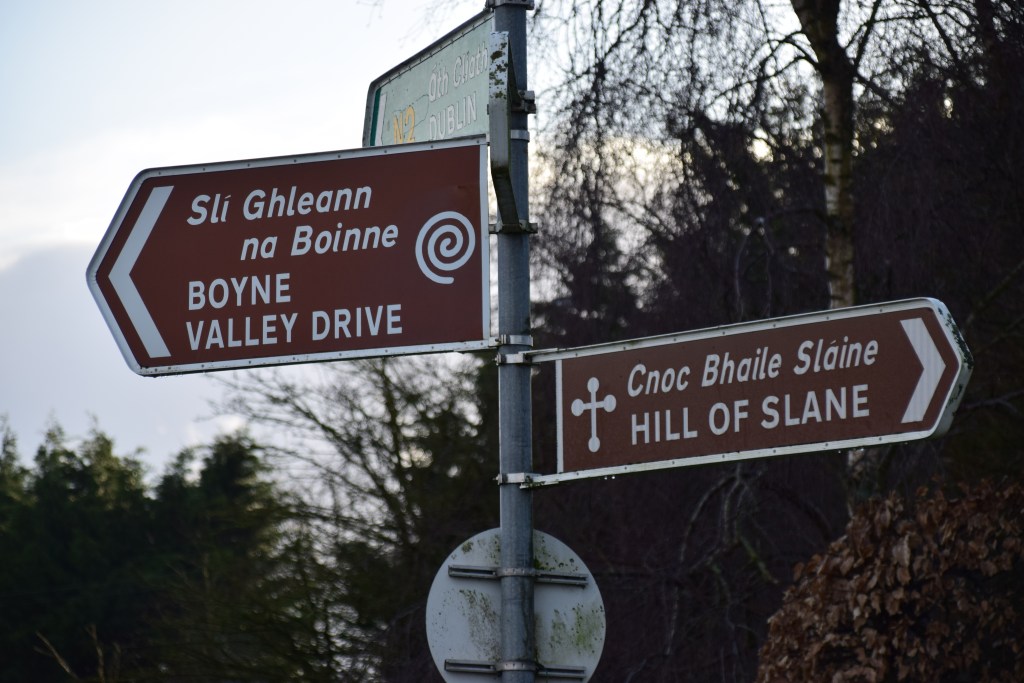
Well here’s a spot steeped in mythology and history!
According to tradition, one of Ireland’s earliest kings – Sláine – was buried on top of the hill. It was the site of a mythical well the magical waters of which were used by our ancient warriors to heal their battle wounds.
But it is to St. Patrick himself that the hill owes its historical prominence. He had spent some years in Ireland as a slave before escaping and training as a missionary. He returned to Ireland c432 to minister to the scattering of Christians in the country and to convert the Irish who practiced a mostly nature-based pagan religion. He sailed up the Boyne in 433 as the druids prepared to celebrate a pagan feast on the nearby Hill of Tara. The High King – Laoghaire – had banned all fires within view of Tara but, in direct defiance, Patrick lit the Easter Paschal Fire on the Hill of Slane.
The druids told King Laoghaire that unless it was extinguished that same night, the fire would never be put out but, after several attempts to challenge Patrick with their magic, they admitted defeat. Eventually, Laoghaire and his followers would submit and convert to Christianity.
St. Erc, believed to be the only druid to pay due homage to St. Patrick during the stand-off, was appointed first Bishop of Slane. The present monastic ruins include a medieval church and college
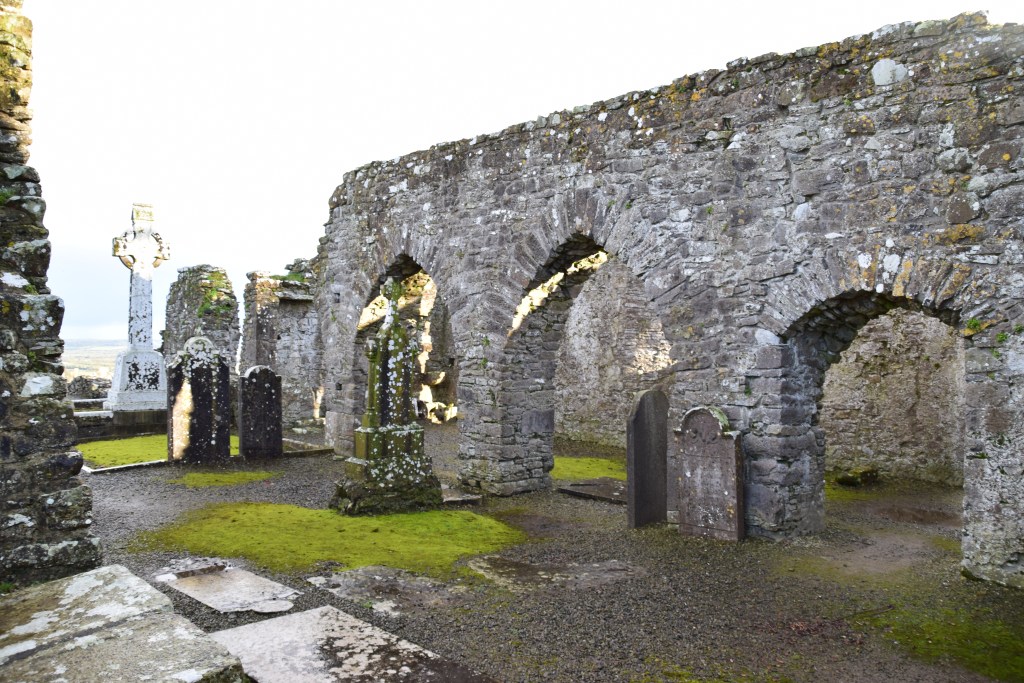
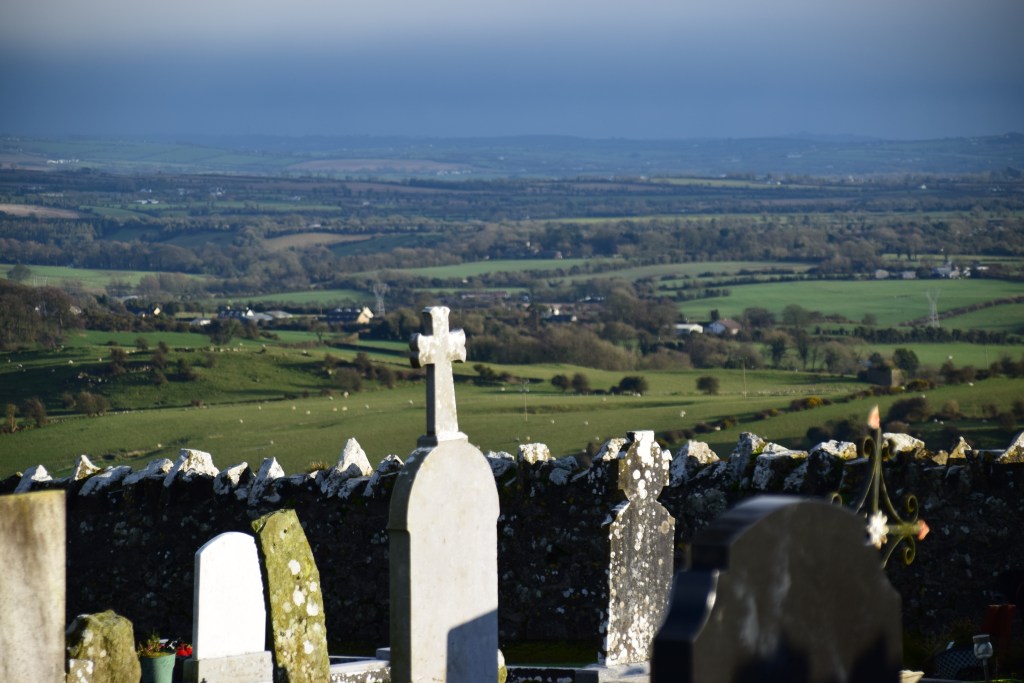
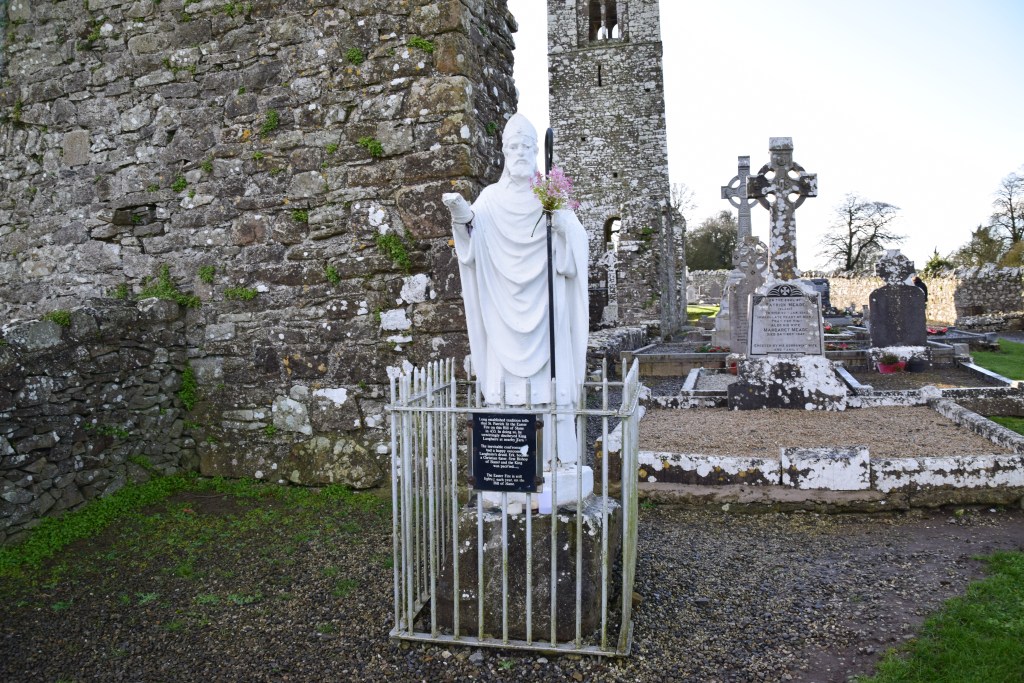
The site is open 24/7 and during June , July and August there is a local guiding service.
Slane Castle
Following William of Orange’s victory, some half a million Irish acres were confiscated from those who supported James II. The most distinguished architects and landscapers in England and Ireland were commissioned to reconstruct buildings and parklands such as this estate at Slane.
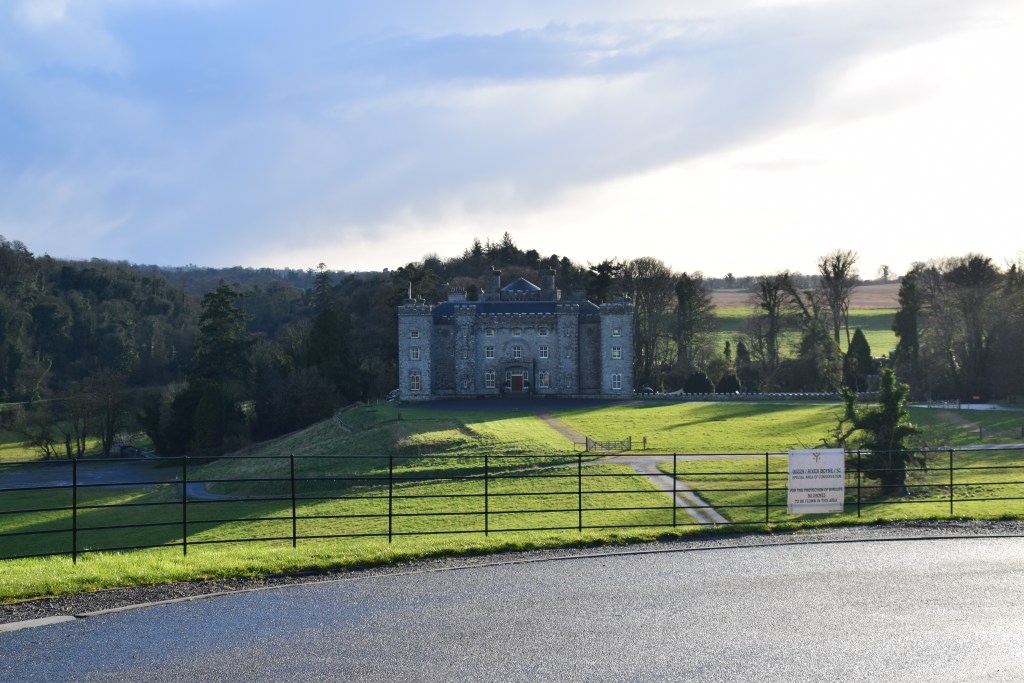
Since its launch in 1981, Slane has become internationally famous as a concert venue hosting Bowie, Dylan, Springsteen,Oasis, U2, Madonna among others. U2 recorded their 1984 album The Unforgettable Fire at the castle. You’ll find Slane Irish Whisky Distillery on the estate.
Donaghmore Round Tower
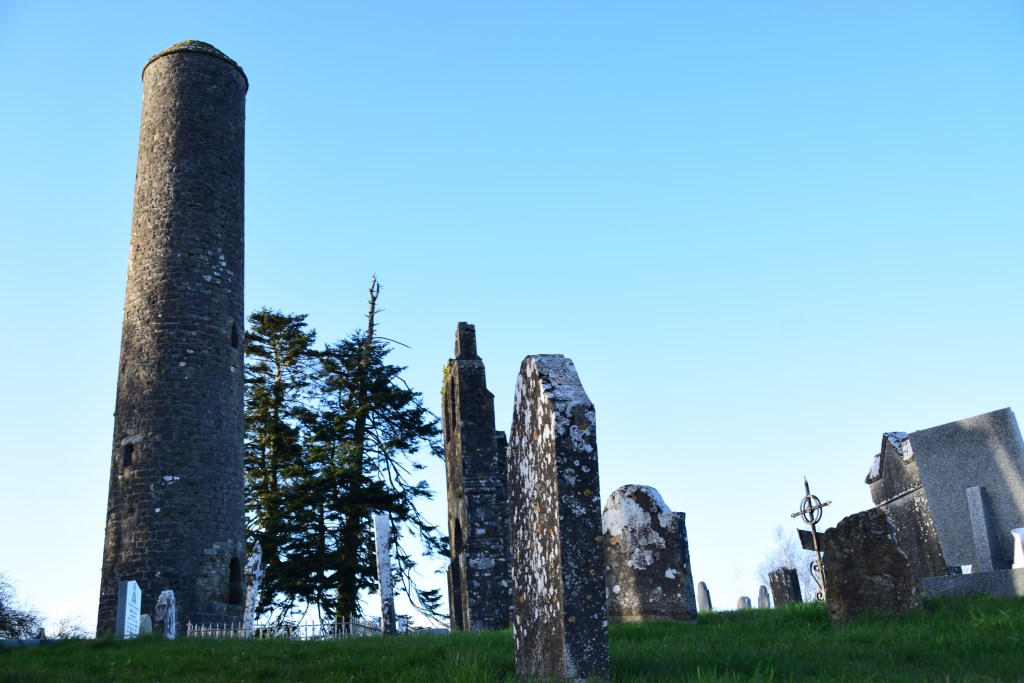
It’s thought that Patrick is responsible for a monastery here also – giving charge of it to another of his followers – St. Cassanus. Apparently, it was first inhabited by a celibate clergy but gradually evolved into a community of married clergy and laymen.
Kells
Long before Christianity, Kells was a royal residence of significance and would later become an important Anglo-Norman settlement but we know it best for its monastic settlement.
In 550 St. Columba (also known as St. Colmcille), established a religious settlement at Kells. In 563 he went to the Isle of Iona, off the west coast of Scotland and founded another settlement. After several Viking raids, the community of Iona was granted lands at Kells as a safe haven from invaders. Kells itself of course, was raided many times by Vikings and Irish alike.
Its distinguishing monuments include a Round Tower (which although roofless still stands tall) and several fine High Crosses. But it’s best known for its Book of Kells, a highly ornate version of the four gospels, written in Latin by monks around the year 800. It was protected in the Round Tower until 1654 when, with Cromwell on the rampage, it was sent to Dublin for safe keeping.



The Book is on display in Dublin’s Trinity College.

Loughcrew Cairns
Similar in age to the tombs at Brú na Bóinne, the Loughcrew Cairns are spread across three hilltops and include some of the most beautiful examples of Neolithic art in the country. The main cairn is aligned to sunrise at the spring and autumn equinoxes when light shines through the passage to illuminate symbols on the back wall of the chamber.


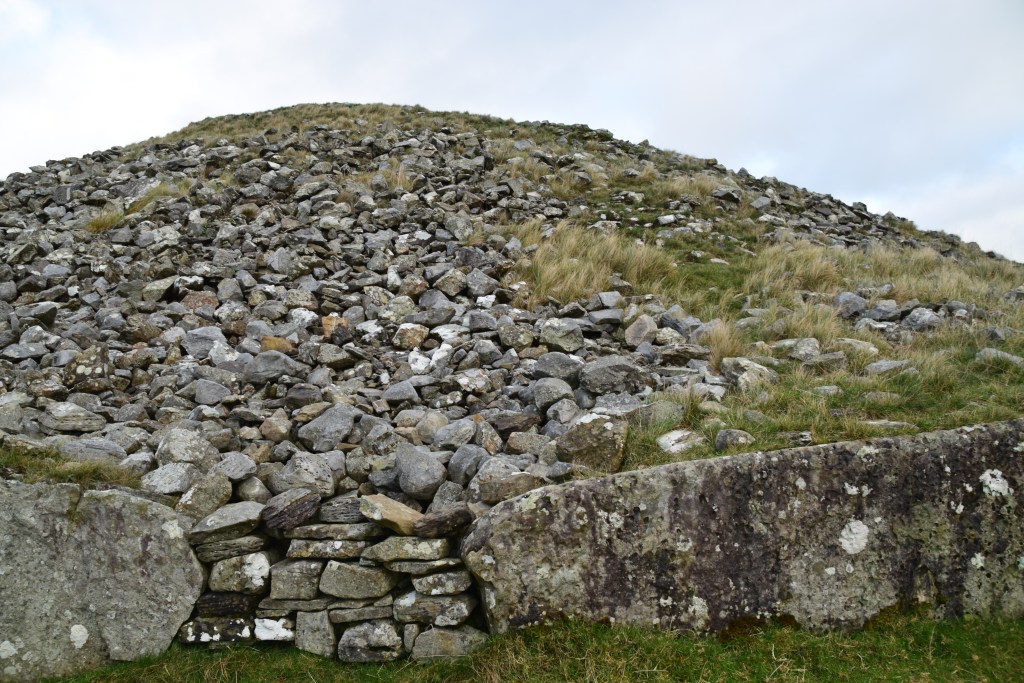
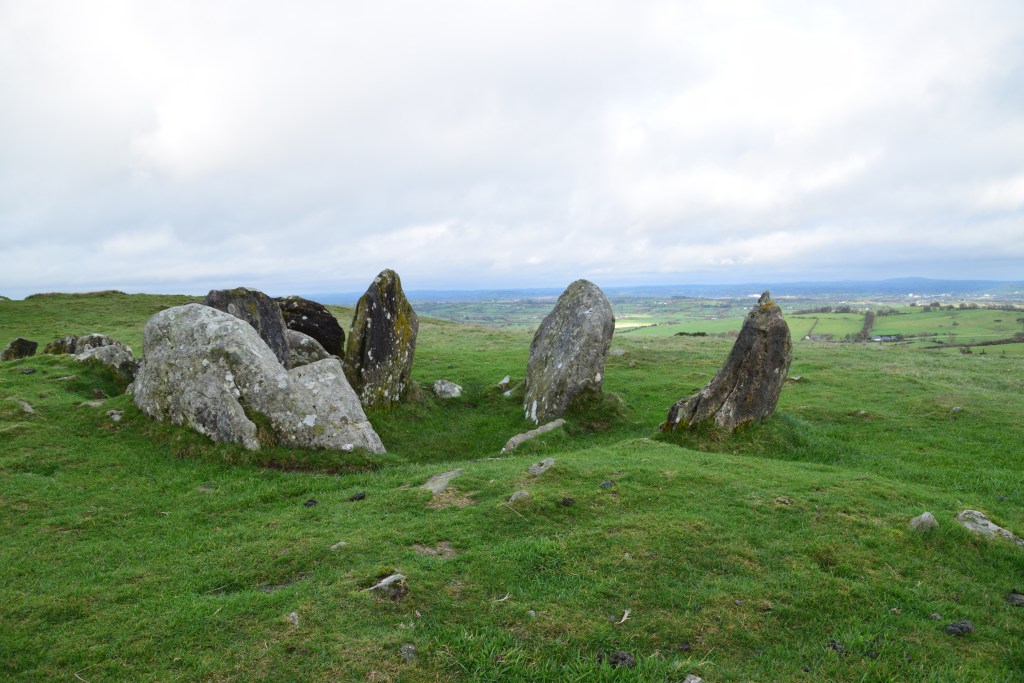
The area is known as Sliabh na Caillí – Mountain of the Witch. Legend has it the cairns were created when a giant witch, striding across the landscape, dropped stones from her apron.
Trim Castle
The 12th century Norman Invasion changed the predominantly rural Irish landscape to one of large estates, castles and walled towns.
In 1172, King Henry II of England granted the ancient Kingdom of Meath to his ally Hugh de Lacy.
De Lacy’s contemporary, the cleric and historian Giraldus, described him as :
a swarthy man with small, black deep – set eyes, a flat nose, an ugly scar on his right cheek caused by a burn, a short neck and a hairy sinewy body. He was short and ill made in person, but in character firm and resolute, and of French sobriety. He was very attentive to his private affairs, and in office a most vigilant public administrator. Although much experienced in military matters, he was not fortunate as a general. After his wife’s death, he fell into loose moral ways. He was very covetous, and immoderately ambitious of honour and renown.
De Lacy set about creating an urban landscape with such speed that the 1186 Annals of Lough Cé recorded Meath as full of castles and foreigners. Alas, in that same year, 1186, he came to a rather abrupt and grizzly end when a local Irish chief removed his head with a sword!!
For strategic reasons, de Lacy decided to make Trim, rather than Drogheda, the centre of his administration and built his castle on raised ground overlooking a fording point on the Boyne (Trim comes from Baile Átha Troim = Town of the Ford of the Elder Trees). The massive twenty-sided structure boasted walls up to nine feet thick and was protected by a ditch, curtain wall and moat.
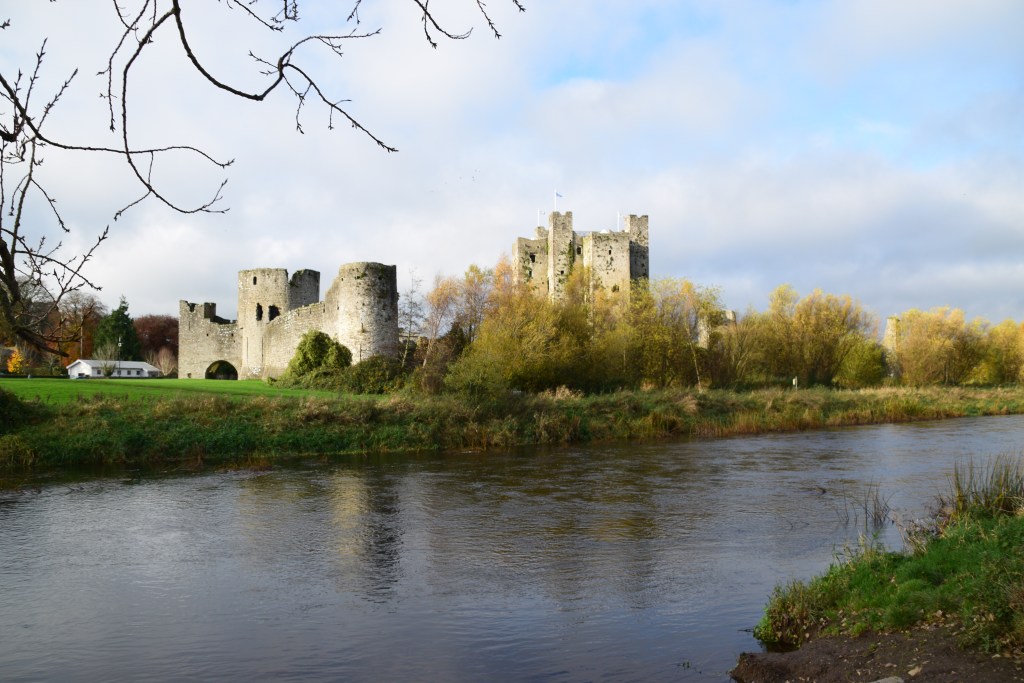
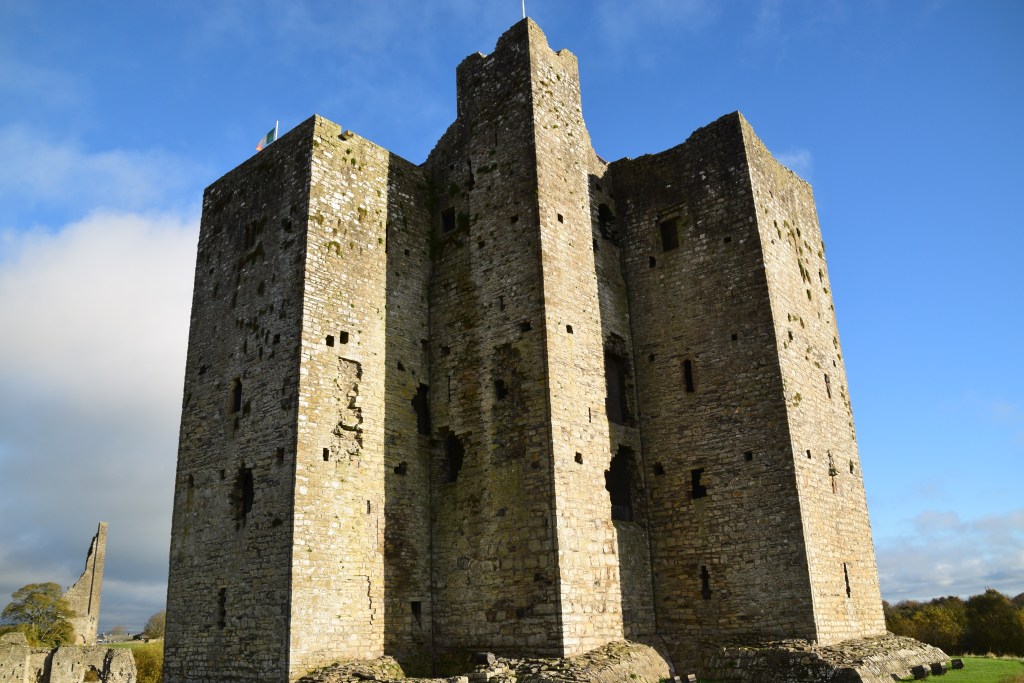
In 1995, the castle was used as York Castle in the movie Braveheart.
Bective Abbey
Following on the success of nearby Mellifont Abbey, the Cistercians built a second abbey here in 1147. The remains of the cloister, chapter house and church date back to the 13-15th centuries. Following the Dissolution of the Monasteries, the land was rented out and the Abbey became a manor house . Added fortifications meant that the abbey grew to resemble a castle rather than monastic site.

The medieval ruins have appeared in film – 1955’s Captain Lightfoot starring Rock Hudson, 1995’s blockbuster Braveheart and 2020’s The Last Duel, starring Matt Damon, Adam Driver, et al .
Hill of Tara
Although very few monuments on this low-lying ridge have stood the test of time, this ancient site oozes myth and history and is an essential part of our story.
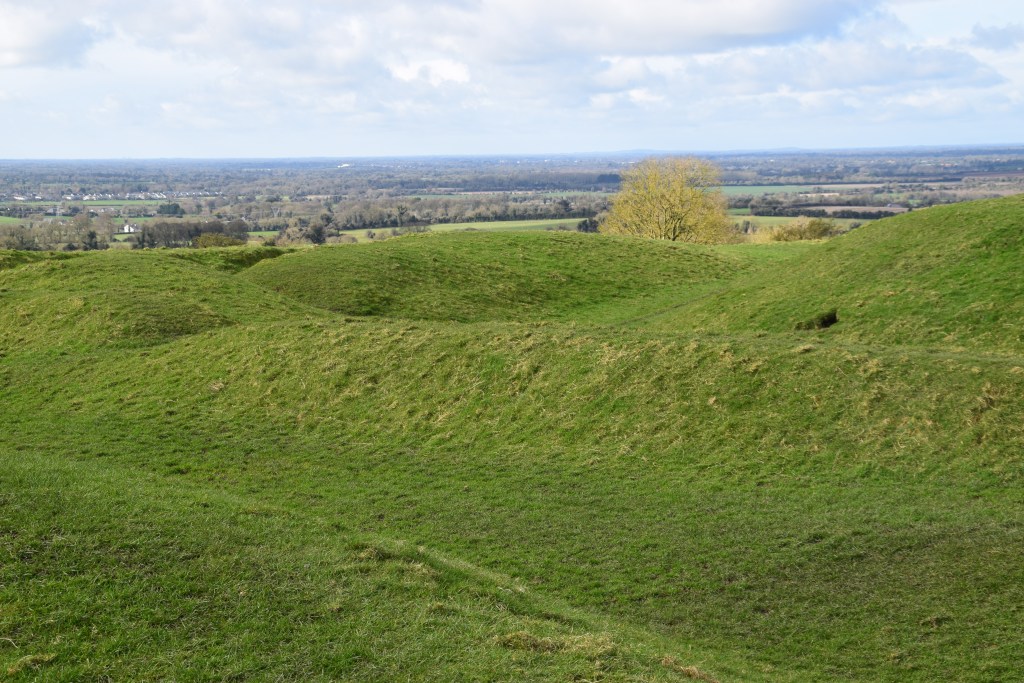
A passage tomb here, as with the others on our drive, dates from around 3,000 BC. However, Tara became truly significant as a centre of political and religious power from the Iron Age up into the Early Christian era. This was the royal centre of Mide, the fifth province of ancient Ireland, and this was where the kings of Ireland came to be crowned.

According to tradition, when a true King entered Tara, the Lia Fáil (Stone of Destiny) cried out to announce his rightful reign.

A church building on site now serves as a seasonal visitor centre which presents an audio visual history of Tara. Guided Tours are available upon request. Access to the Hill of Tara itself is open all year around.
In 1899, a group of British-Israelites were convinced the Arc of the Covenant lay buried here under the Hill of Tara. Their timing was awful to say the least. Their quest coincided, unfortunately for them, with a period known as Ireland’s ‘Cultural Revival’ which instilled a huge interest in all things heritage. No way would they be allowed to dig up sacred land. After 3 years of constant opposition and protests, the group gave up and departed – minus the Ark of course. But the question remains – Is it still here?!

Aerial View of Tara
Attribution Wikipedia /County Meath – Hill of Tara – 20070923154644.jpg
Skryne
The Hill of Skryne is actually higher than its more famous neighbour.
The rather unusual name can be traced back to an ancient monastery. Seemingly, the residents took in the relics of St. Colmcille for safe keeping. The monastery became known as Scrin Choluim Chille ( Colmcille’s Shrine) eventually becoming Skreen and then Skryne.
The ruins on site date to the 14 -15th centuries. There are so many ghost stories attached to the place – no way will you find me up here on my own at night!
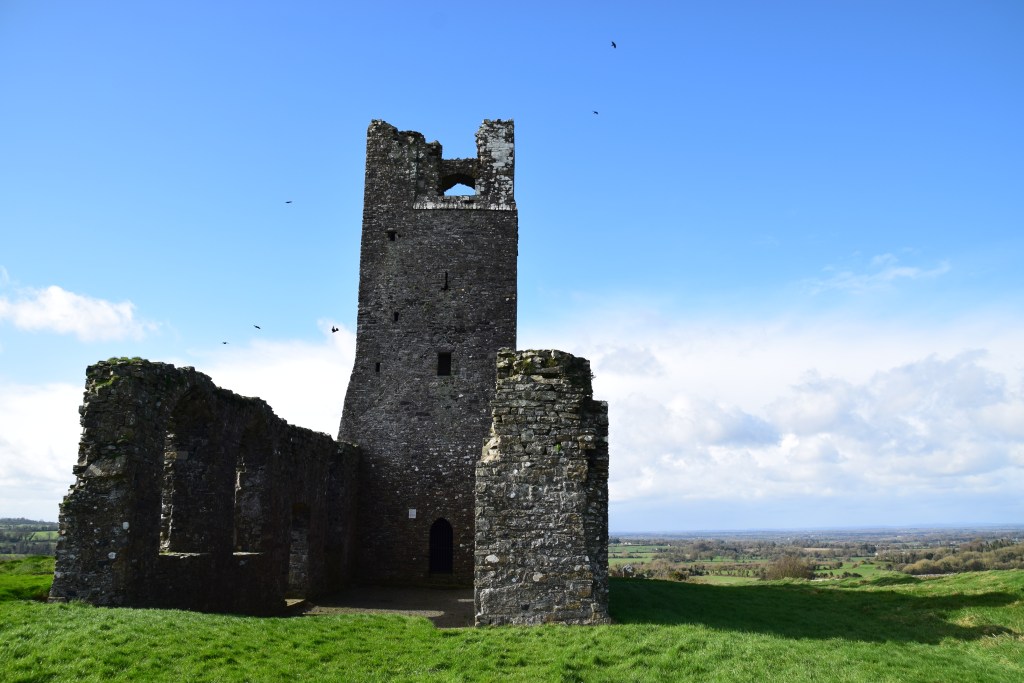
And right beside the ruins……..
Does anyone recognise the pub???? It featured in the well-known Guinness ‘White Christmas’ TV ad.
And I don’t know about you lot, but I could definitely do with a pint after all this!!!

Before you go – don’t leave, thinking that this is just a pile of grassy mounds, roofless round towers and ruined castles that can be ignored on a visit to Ireland. OK – so it is a pile of grassy mounds, roofless round towers and ruined castles but this region and its history resonates with every one with even the smallest shred of Irish heritage. This is the week of St Patrick’s festival and the country (not to mention the rest of the world!) is celebrating in style. Families, in droves, make their way to Tara and Brú na Bóinne to celebrate the winter solstice and to Slane in the summer for the outdoor concert. And let’s not forget the Lambeg Drummers – probably already practicing for the July Orange Marching season……
No – come, stand on those mounds and amidst the ruins and contemplate our ghosts and heroes….
I would like to be a passenger on this road trip! I’m afraid of driving on the opposite side of the road.
I must admit, that for all our road trips – of which there have been a fair share – I’ve never ever driven on the right!!
For this region though, there are loads of day tours from Dublin – you wouldn’t see everything but you’d see the main sites…
That’s a lot of history and heritage in a relatively small journey! The idea of the Arc of the Covenant laid undisturbed is fascinating. I’m sure many must have wondered, ‘ what if? ‘
You’d wonder how such a thought would come about in the first place!!! I’ve never read up on it to find out but I must…
Wow, that area certainly does pack in a load of history! I’ve heard of Newgrange of course, and also of course the Battle of the Boyne and the Book of Kells, but I never knew they were all from the same corner of the country. You’ve convinced me that this drive would be an excellent way of learning about various periods of Irish history and on top of that it looks beautiful 🙂
My favourite would be the Loughcrew Cairns because you have to trek up the hillside a bit so it feels quite remote… It’s very doable from Dublin but a night in one of the county towns would add to the trip as well as spreading it out – and of course one could then continue on to Belfast maybe…
There’s so much history in just a small region of the country. I didn’t know that the circle originated to bring strength to the large cross. But then I guess it caught on 😊 Maggie
There really is a lot – I don’t know how much of it I could actually manage all at once – monument fatigue would certainly set in – I’ve cobbled the blog from various trips and visits over the years….
Even the High Crosses – as you say – to go into detail and learn the significance of each one and its features would be enough in itself…
This is a great post. Throughout my years in Dublin I made many day trips around all these monuments. As you say, they’re not just piles of stones or grassy mounds, to really appreciate them you have to immerse yourself in the history and then the dots come together to form a great living fresco. Imagination fills the spaces left open when it’s not fiction with novels and movies.
Well said…
What a thorough survey of Irish sites! A formidable task.. Thanks for it.
I really should have split it but I wanted to present it as a complete driving route… and of course I actually only included the main sites!!!!!
I liked your photos of Newgrange, Marie. It brought back great memories of our trip there. It was one of my favorite sights on our trip.
Newgrange is amazing – its hard not to be impressed – although there’s something special also about the smaller sites of Knowth and Dowth – I’m glad you have good memories..
Yes, I also liked the two smaller sites. I’m glad we saw them all.