

Chances are, when visiting Bolivia, you will pass through La Paz at some stage. Many travellers seem to minimise their time here – or avoid it altogether – but I, for one, was glad to stay a while.
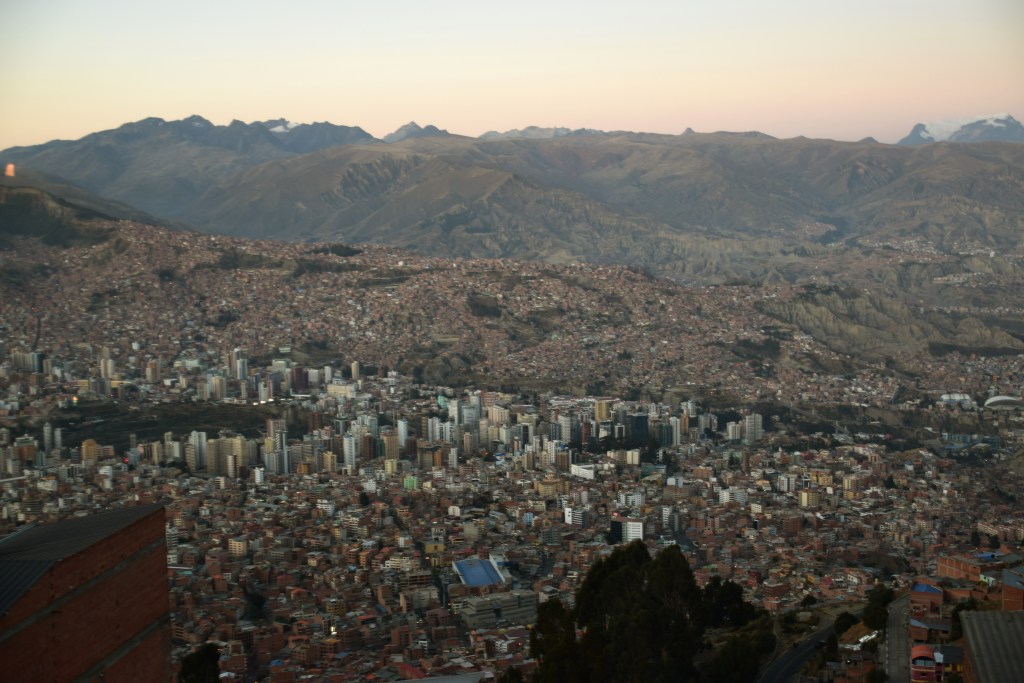
While Sucre is the constitutional capital of the country, La Paz is the seat of Government – its altitude of circa 3600m making it the highest administrative capital in the world. It is actually made up of adjacent cities – La Paz, sits down in the valley, while El Alto (higher again by some 560m) is perched above on the edge of the plateau, no longer a mere suburb but in fact the second largest city in Bolivia.

Nearly there….21,000 ft high snow-capped Mount Illimani is known as the Guardian of the City.
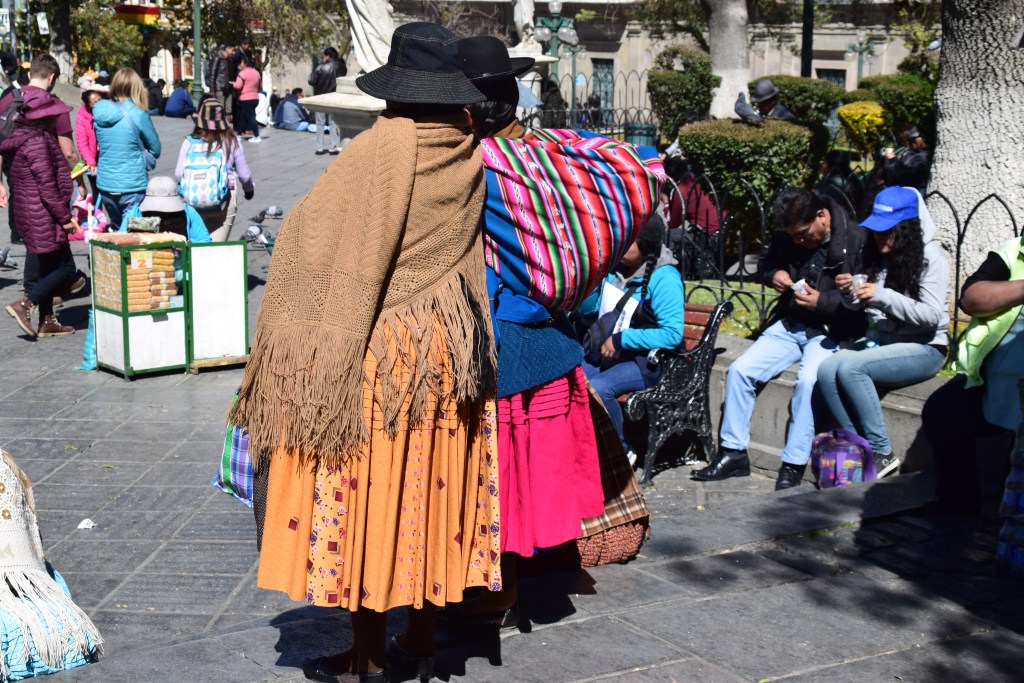
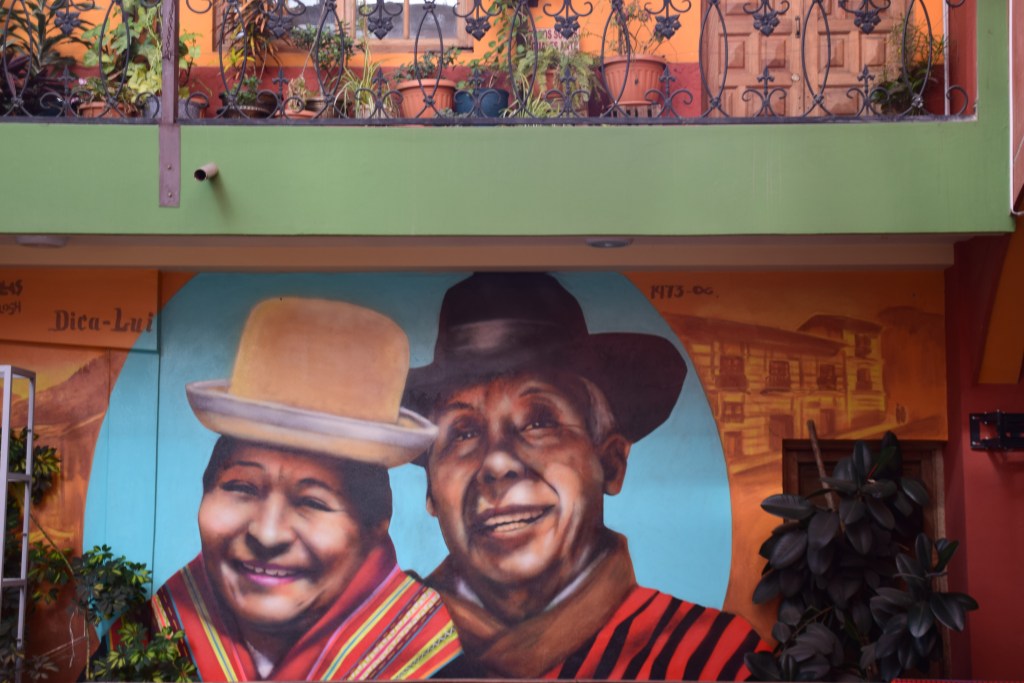
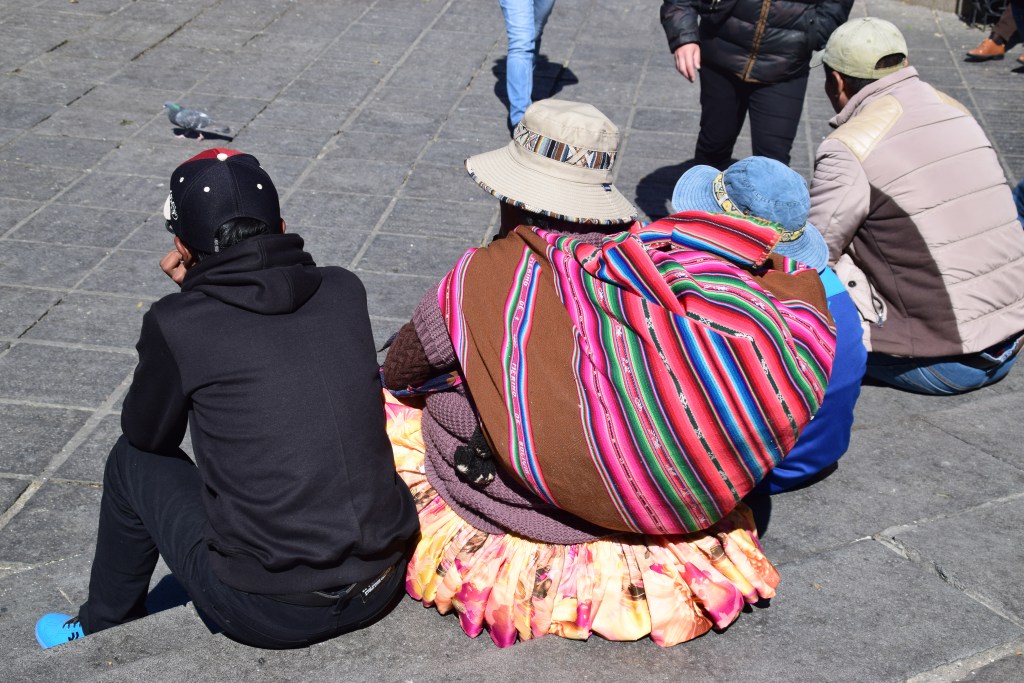
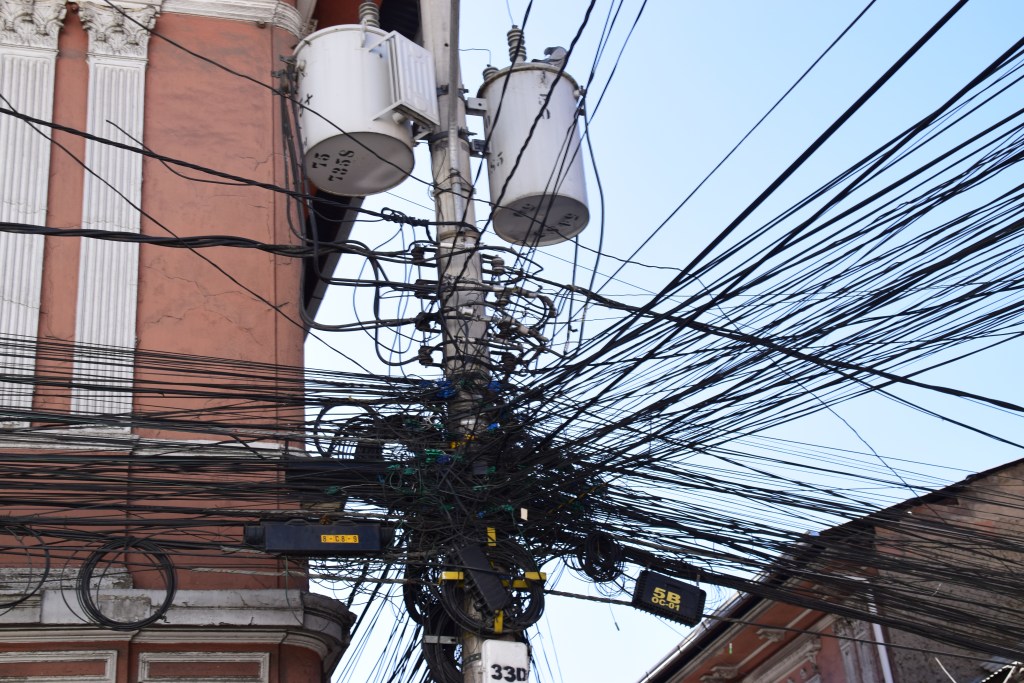
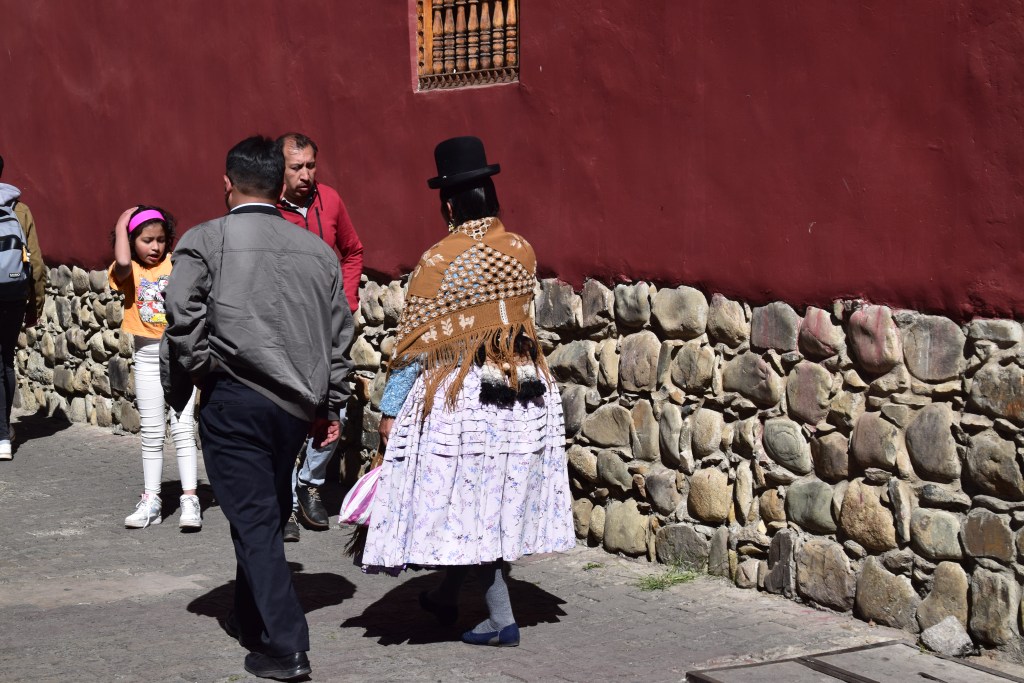
Altitude isn’t the only contrast around here – modern skyscrapers clash with colonial buildings, rickety buses compete with new hi-tech public transport systems, you’ve traditional dress and bowler hats vs jeans and baseball caps and, as for the weather – bright sunshine and blazing heat versus the biting cold! And for the name itself? La Paz, meaning peace – No! Definitely not what springs to mind!
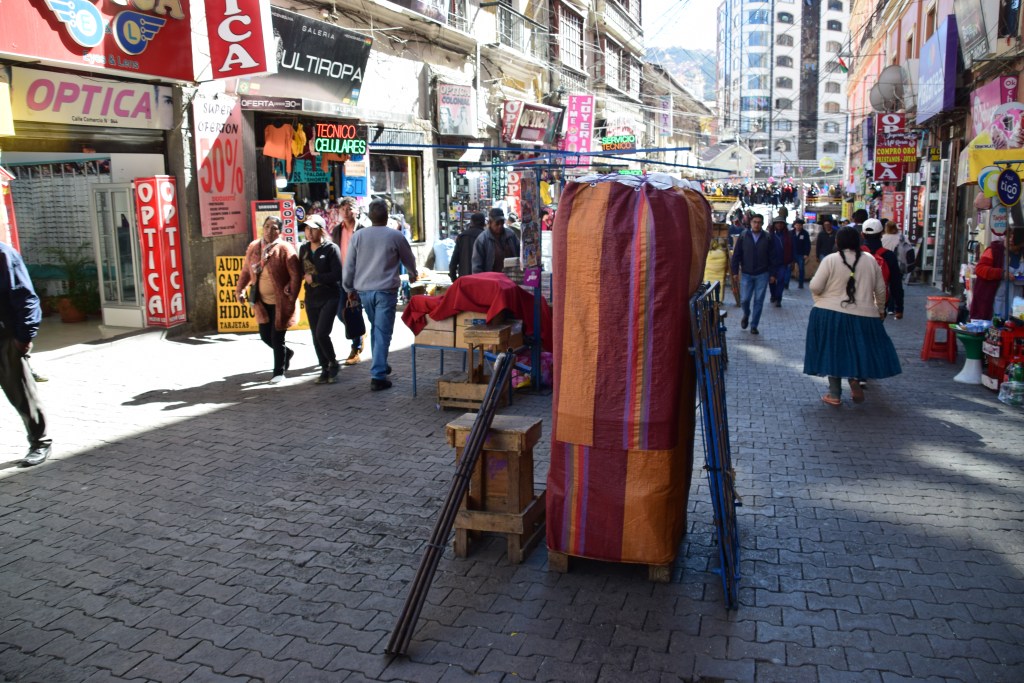
This is not a city of many major ‘attractions’. Most of what’s to be seen is located in La Paz and can be comfortably visited in a day. Maybe ‘comfortable’ is a bit of a misnomer! Between dealing with the effects of altitude, and the constant addition and removal of clothing as you move between sun and shade, extensive walking can become a bit of a challenge as the day progresses! But – walk you must – if only to experience the surrounding chaos of bustle, traffic and noise!
Walkabout:
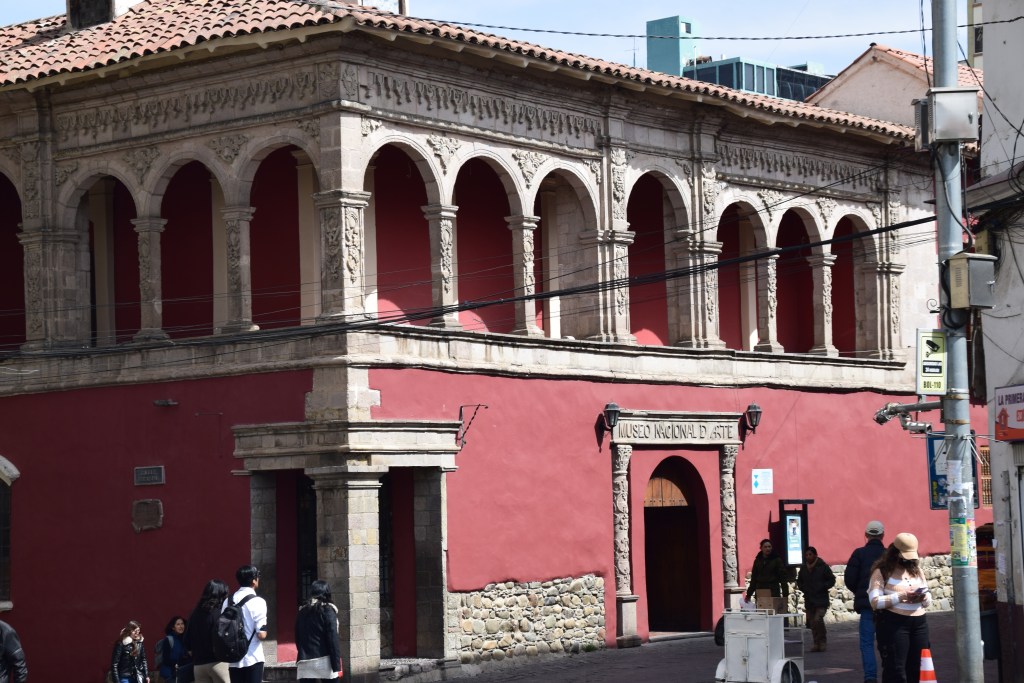
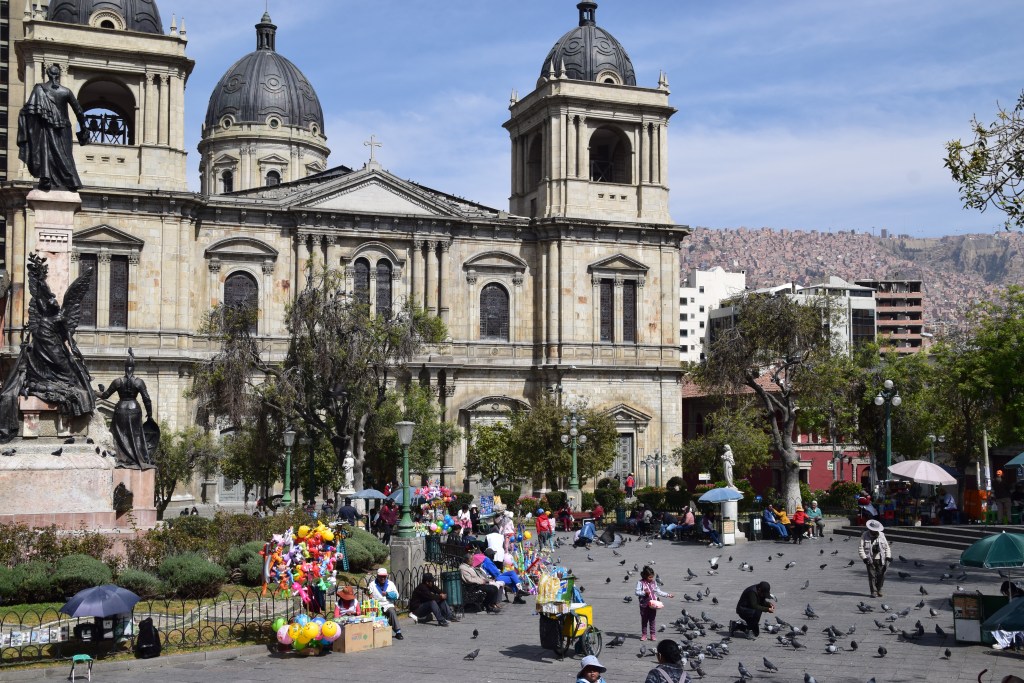
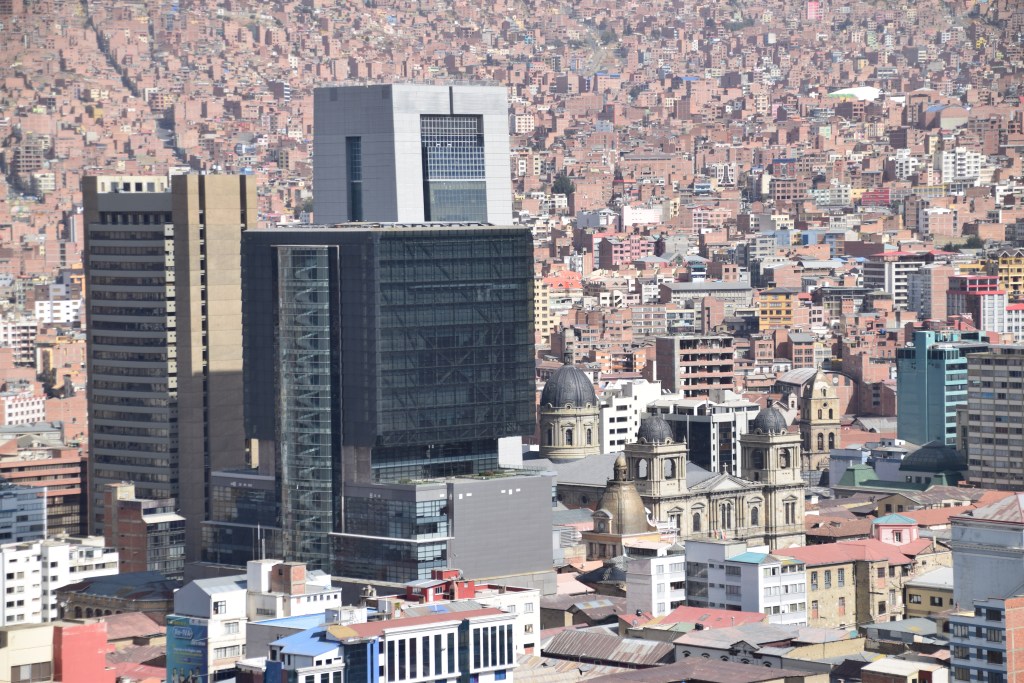
Plaza Murillo is the central plaza of Casco Viejo, or Old Town, and the main focal of political life in Bolivia. Here you’ll find many of the city’s most beautiful and prestigious buildings. Construction on the current Cathedral began in 1835 – but it got two new towers in 1989 for the visit of Pope John Paul II. Next door is the Government Palace, also known as Palacio Quemado (Burned Palace – It has been gutted by fire twice). During the Pacific War (1879-84), Bolivia lost its access to the coast. The ceremonial guard continues to wear a red uniform – as a reminder to Chile to return the land to Bolivia. The lovely Congress building served as a convent, jail and university before it’s renovation in 1904. The 18th century Palacio de los Condes de Arana is now home to La Paz’s National Museum of Art.


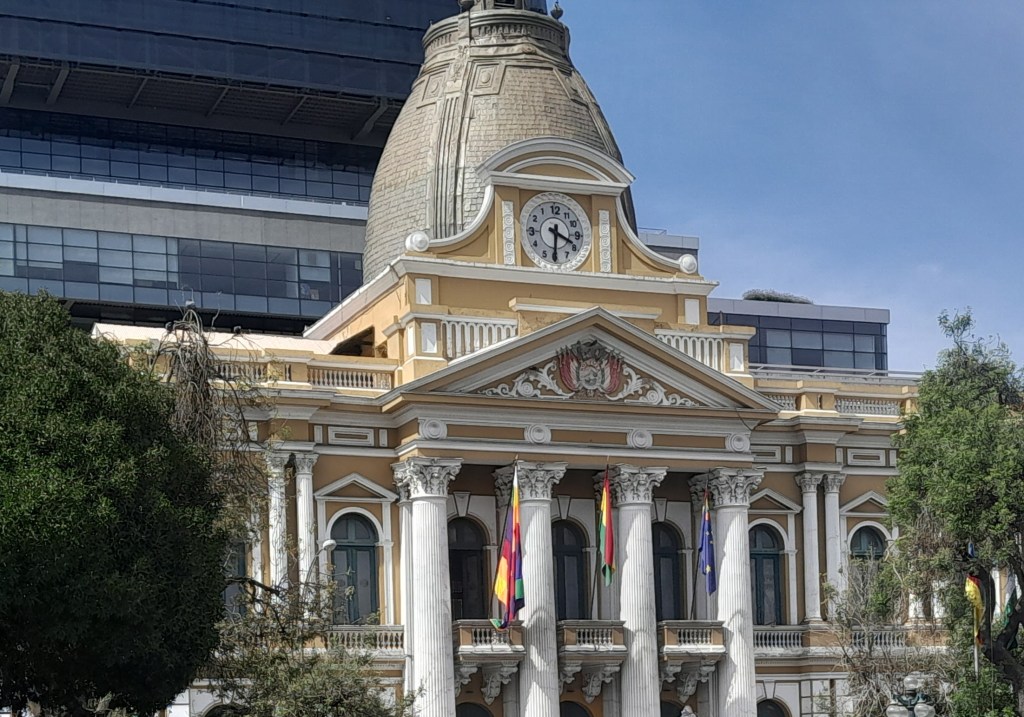
Look at the clock on the Congress building – the numbers are reversed and the hands run anti-clockwise. Apparently, the clock was reversed in 2014. According to the government, it represents the symbol of political change and invites Bolivians to question established norms.
Oh dear – in their drive to modernise the city, city planners haven’t exactly shown much sentiment towards their heritage buildings!
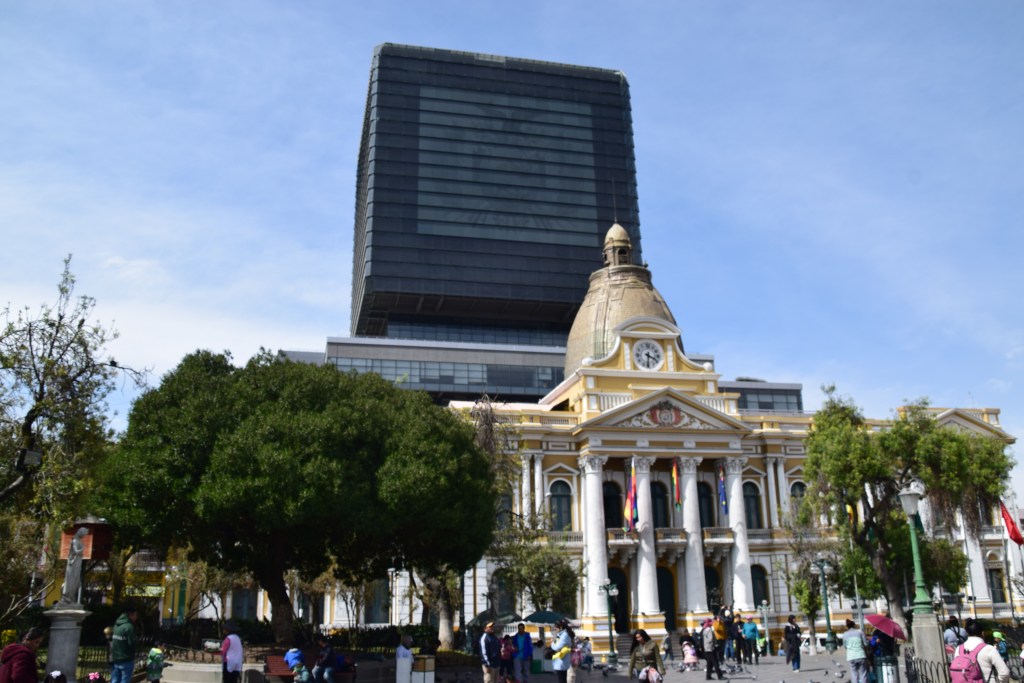
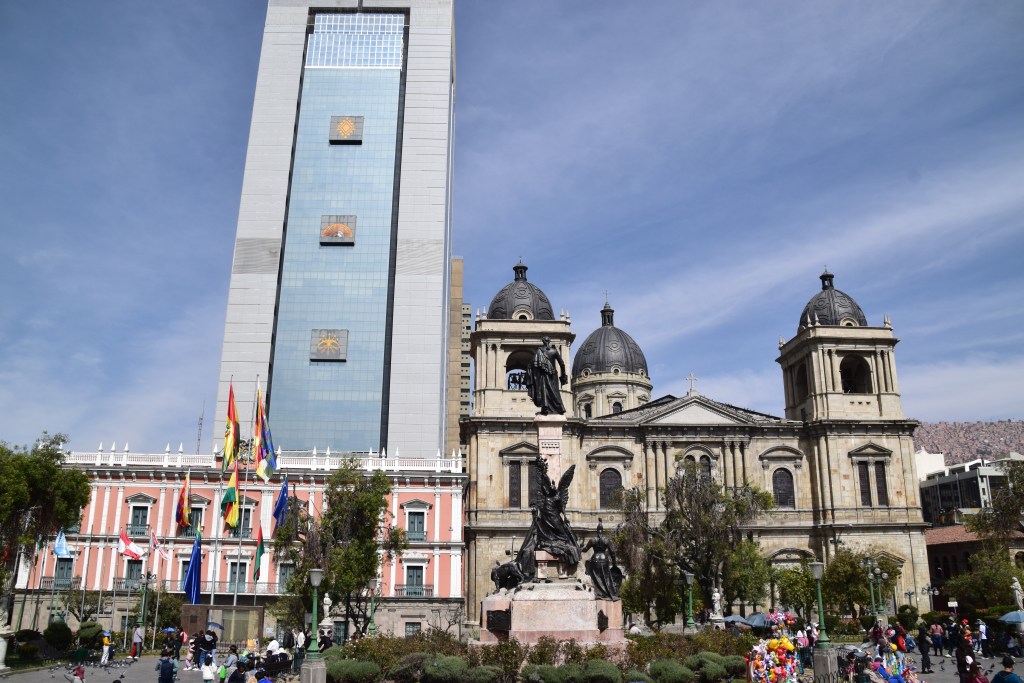
Flags fly outside every government building.
The National Flag has three horizontal stripes. Red (heroism), Yellow (wealth), Green (natural resources). For official state functions, the flag includes a coat of arms containing a llama, wheat, hills and a palm tree – all natural characteristics of Bolivia.

Indigenous communities had long felt shut off from the political process. In 2009, the wiphala (meaning ‘flag’ in Aymaran language) was formally adopted as a second official national flag. Square in shape, the wiphala is divided into 49 squares of 7 colours in a diagonal pattern. Red (the earth and Andean man), orange (society and culture), yellow (energy and strength), white (time and change), green (natural resources and wealth), blue (the cosmos), and violet (the Andean government and self-determination).
This decision is not without controversy. Depending on one’s point of view, two flags are necessary in acknowledging the country’s multicultural reality, or divisive – highlighting the country’s ethnic tensions and undermining national unity.

I spotted a blue flag flying alongside the 2 official flags outside several buildings. I think it must be the Bolivian Maritime Claim Flag – the blue representing the Pacific Ocean maritime zone. The flag includes both official flags, 9 stars representing the Bolivian departments and a larger 10th star symbolizing the territory (and its outlet to the sea) that was lost to Chile during the Pacific War.

Bolivia brought the territorial dispute with Chile to the International Court of Justice in The Hague in 2013. After 5 years, the court ruled against Bolivia, saying that Chile was not obliged to negotiate sea access with Bolivia.
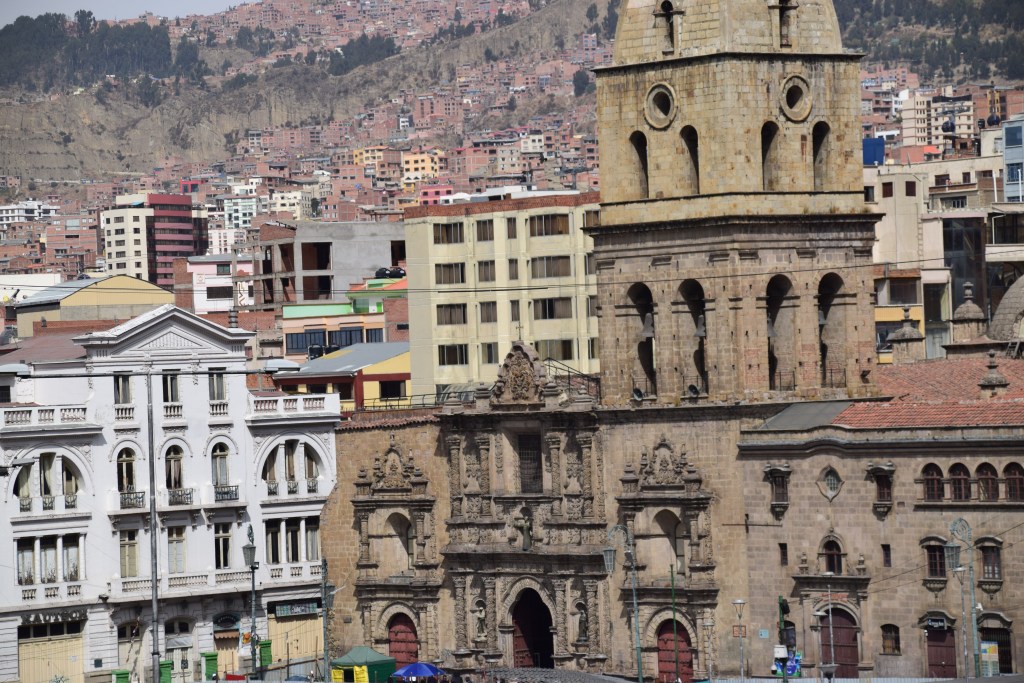
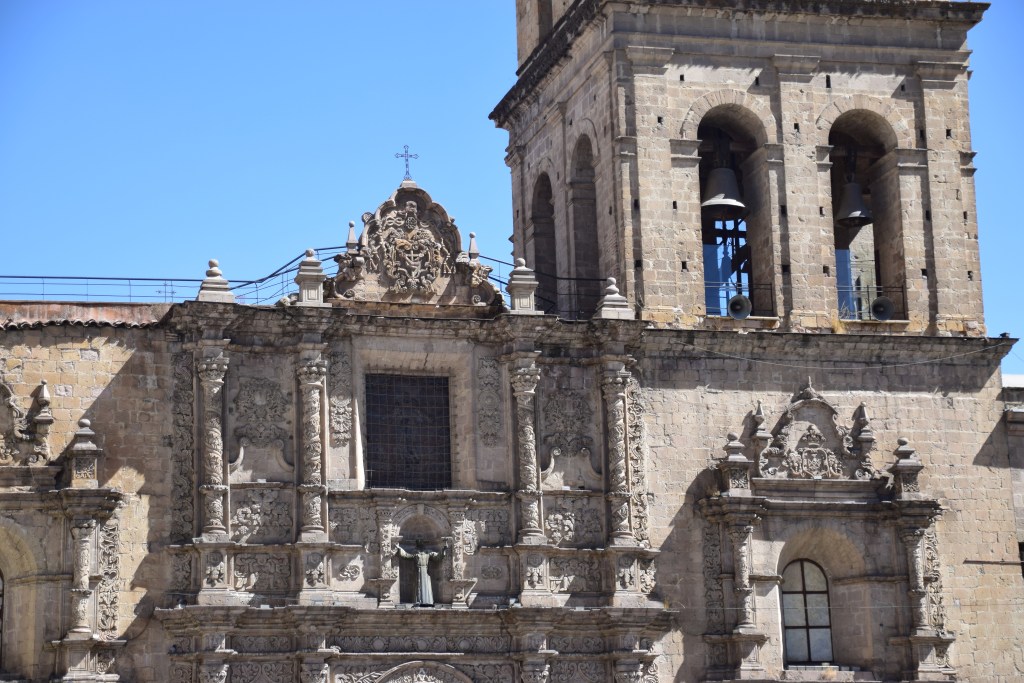
Moving away from Plaza Murillo, the lovely Basilica of San Francisco was built in 1549 with a unique combination of baroque colonial and indigenous architecture.
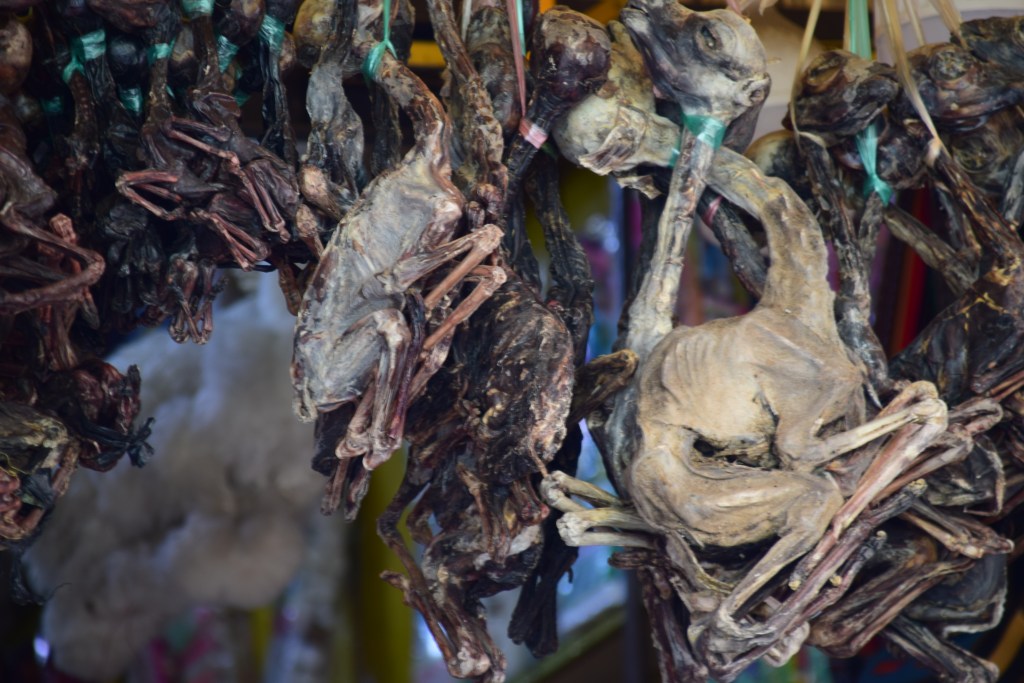
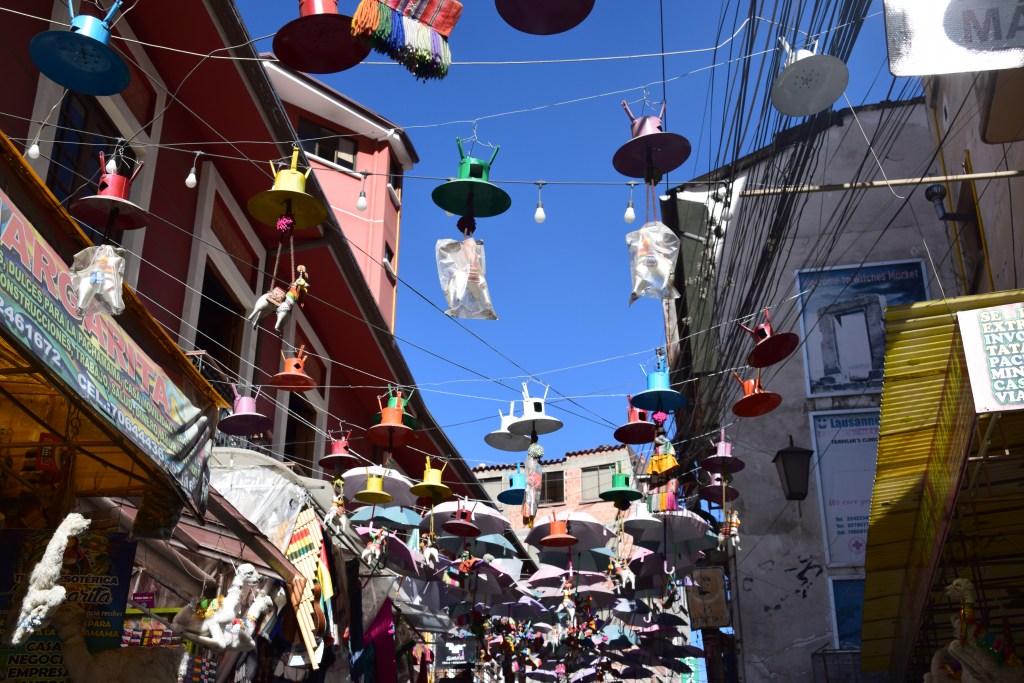
A short walk from the Basilica brings us to the Witches’ Market –Mercado de Hechiceria. Here, chifleras continue to sell products traditionally used in the Aymara culture as medicinal herbs, lucky charms or offerings to the gods. Dried llama foetuses, in particular, are in plentiful supply – used in many rituals but, especially, they are buried under the foundations of a house for protection and prosperity. (Chifleras, combining the roles of healer, therapist and mystic, were considered witches by the colonising Spanish, hence the name of the market).

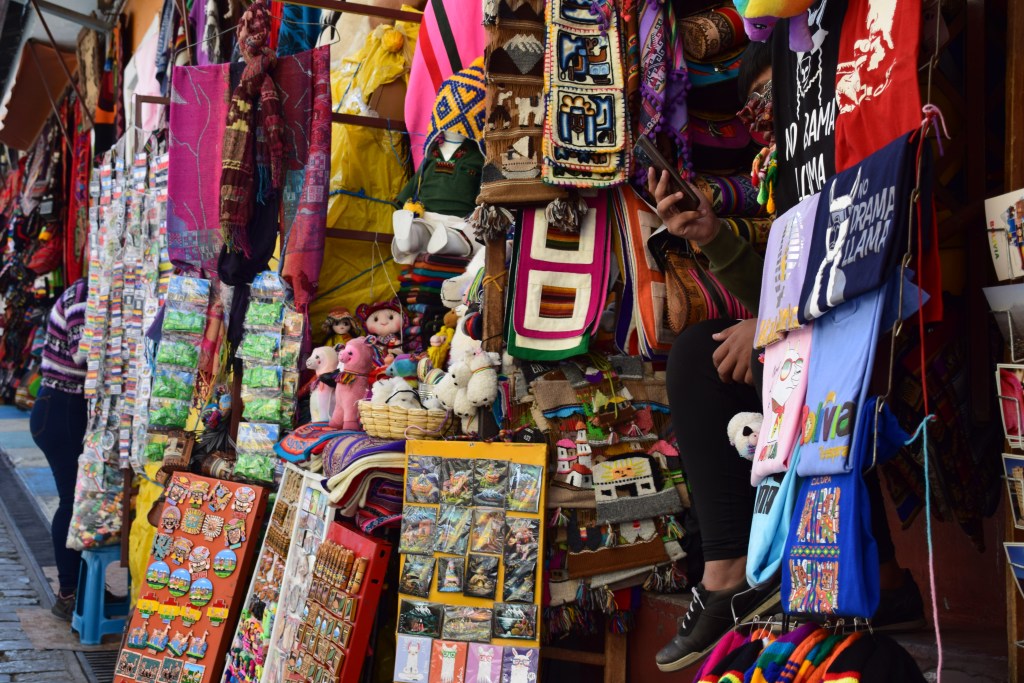
Further along, Sagarnaga Street is where you’ll find your artisan and tourist shops as well as hostels, travel agencies, cafes and, of course, the ubiquitous Irish Pub ( hasn’t it a great name!!). Bit of a tourist trap of course but this is probably where you’ll buy your llama gloves and hat because, of course, you didn’t pack properly for the cold!


Side alleys descend to Paseo el Prado / Avenida 16 de Julio. There’s a nice pedestrian walkway down the middle of the street while, if you happen to be there on a Sunday, a section is closed off for a street market full of craft and food stalls…
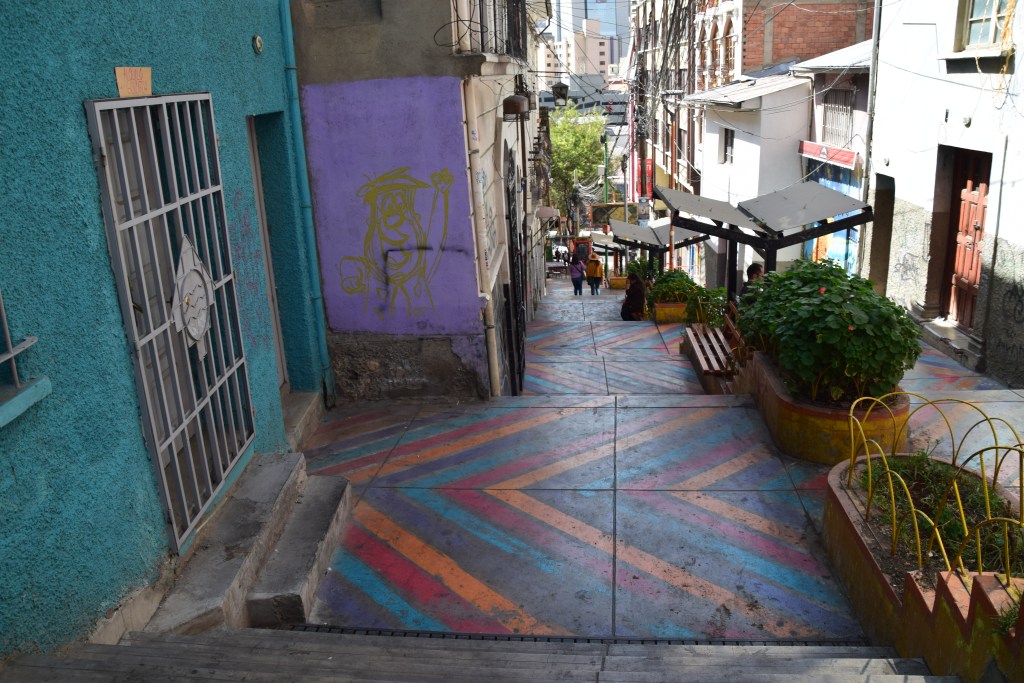
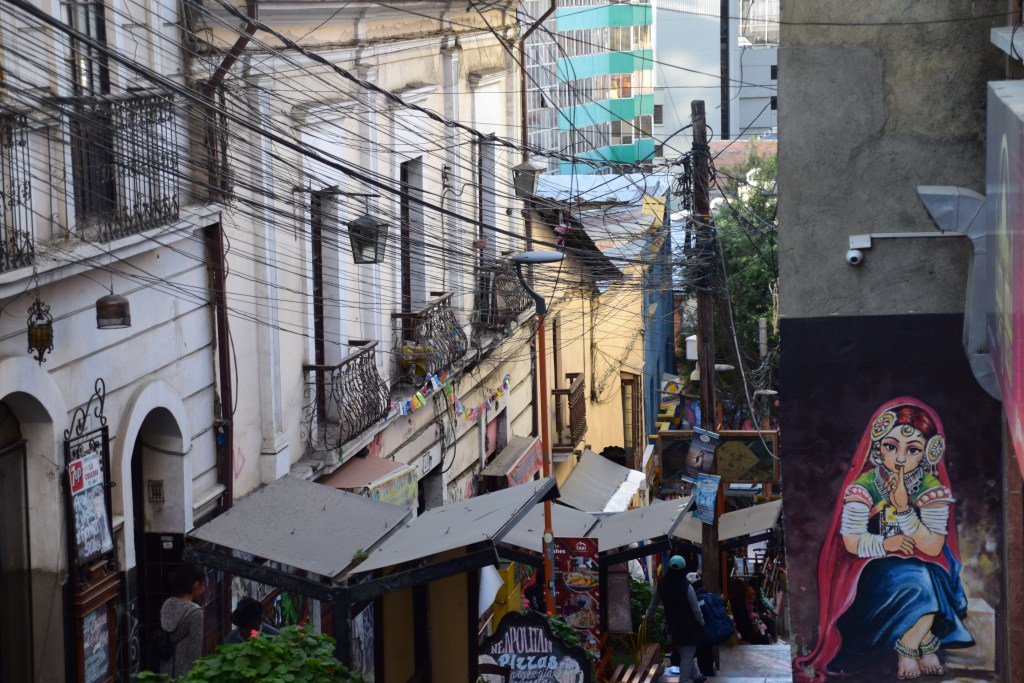
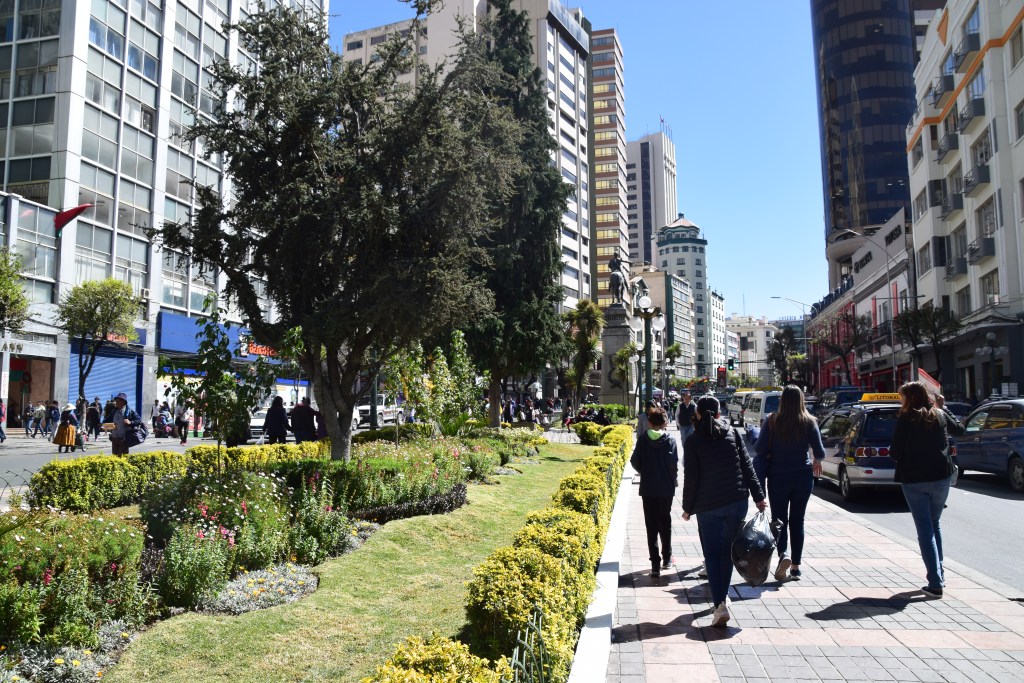
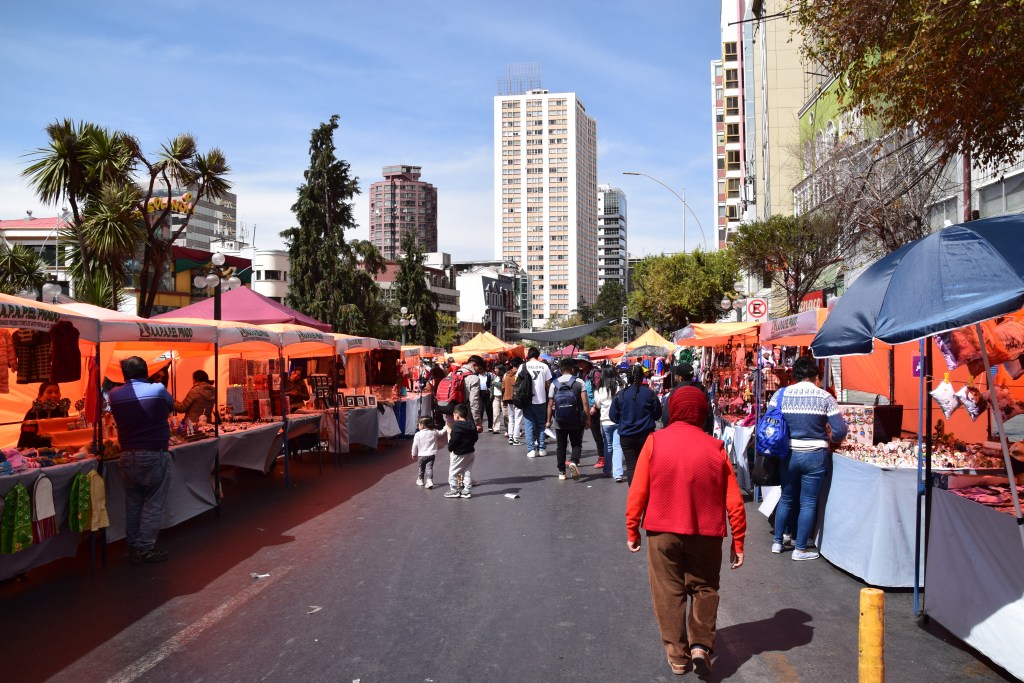

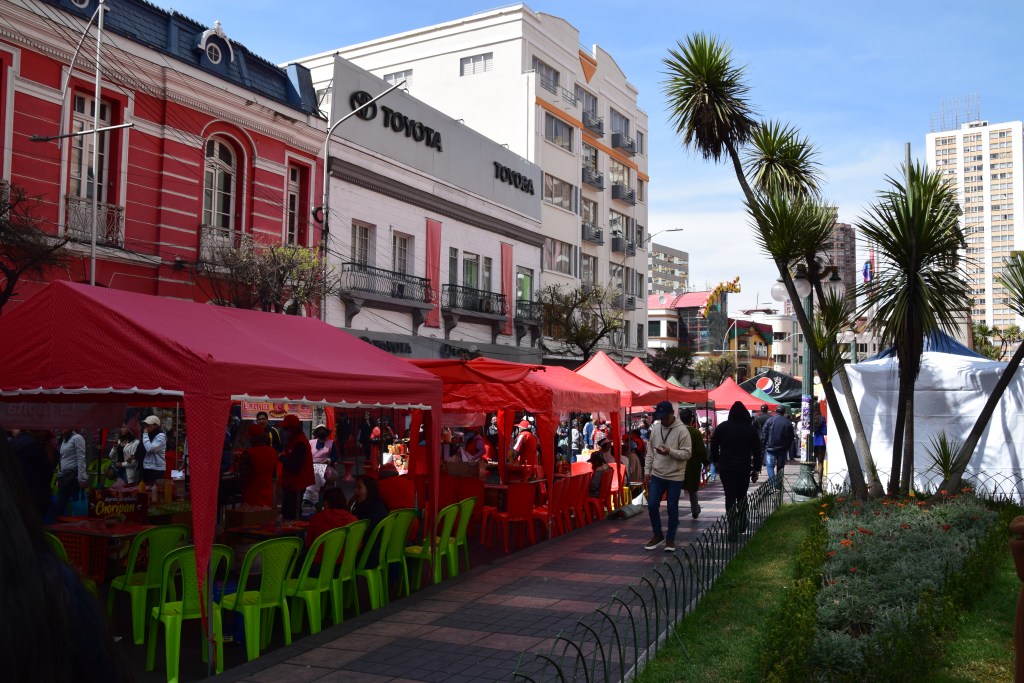
This main thoroughfare roughly follows the Choqueyapu River (now mostly built over) which created the canyon in which the city was built.
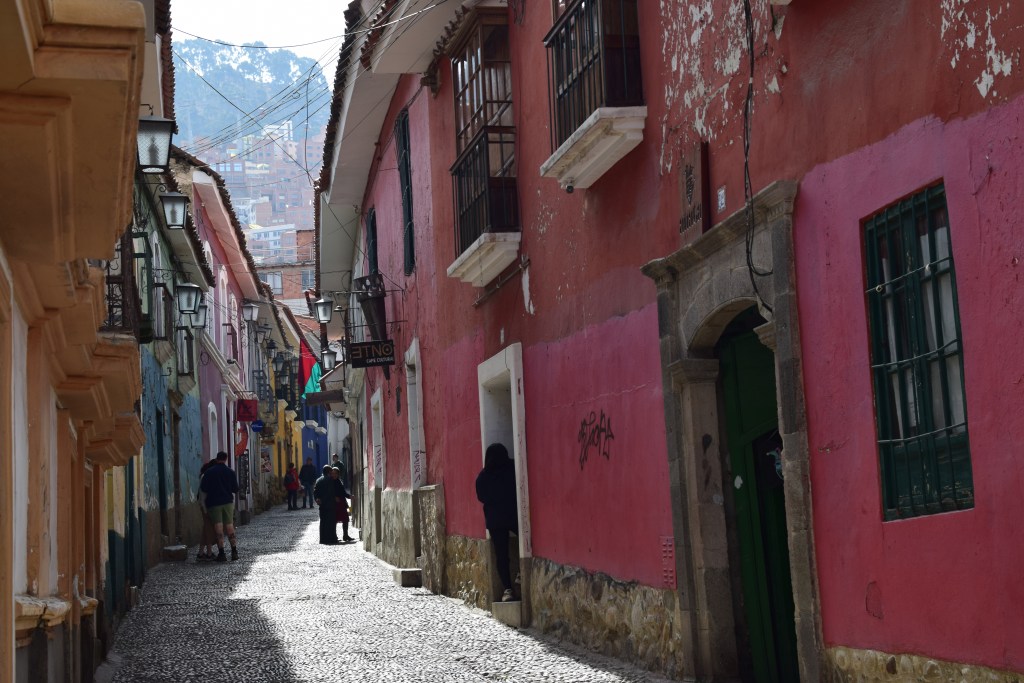
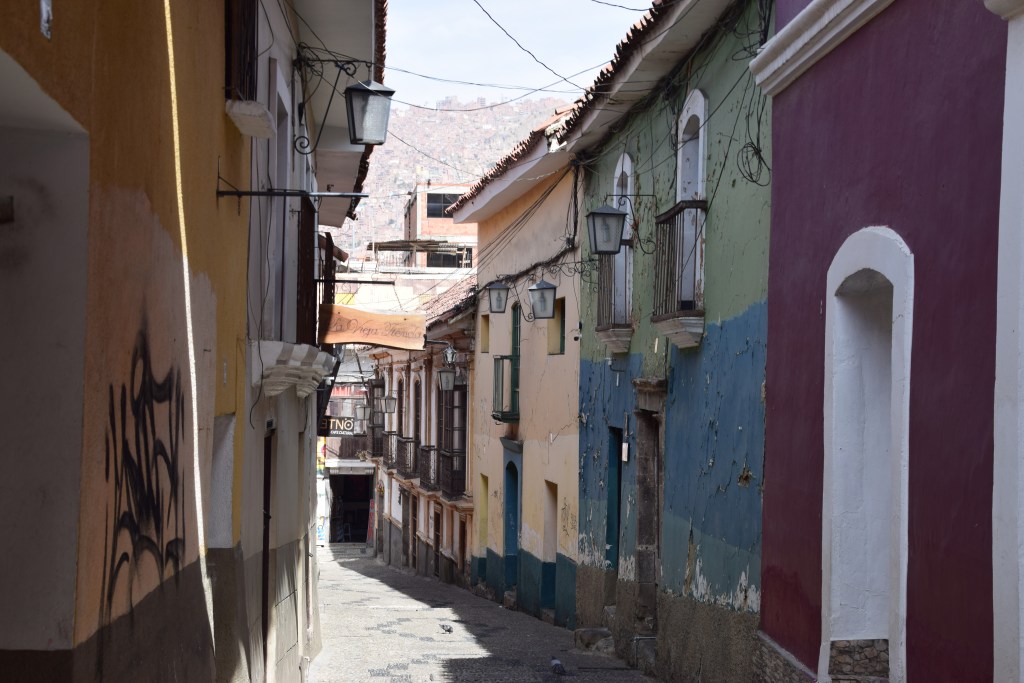
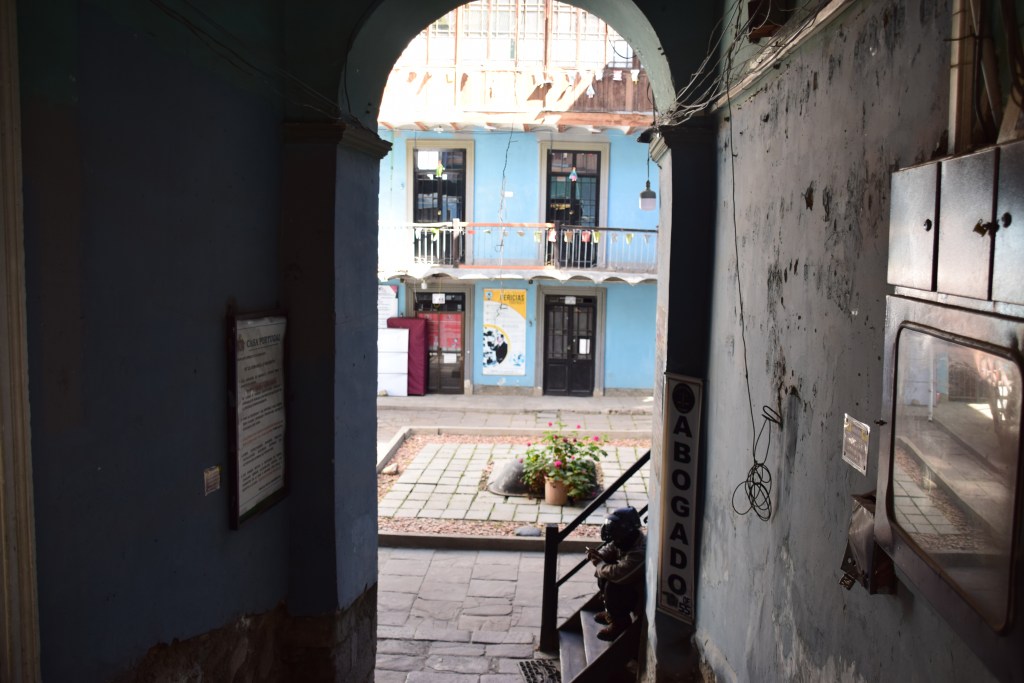
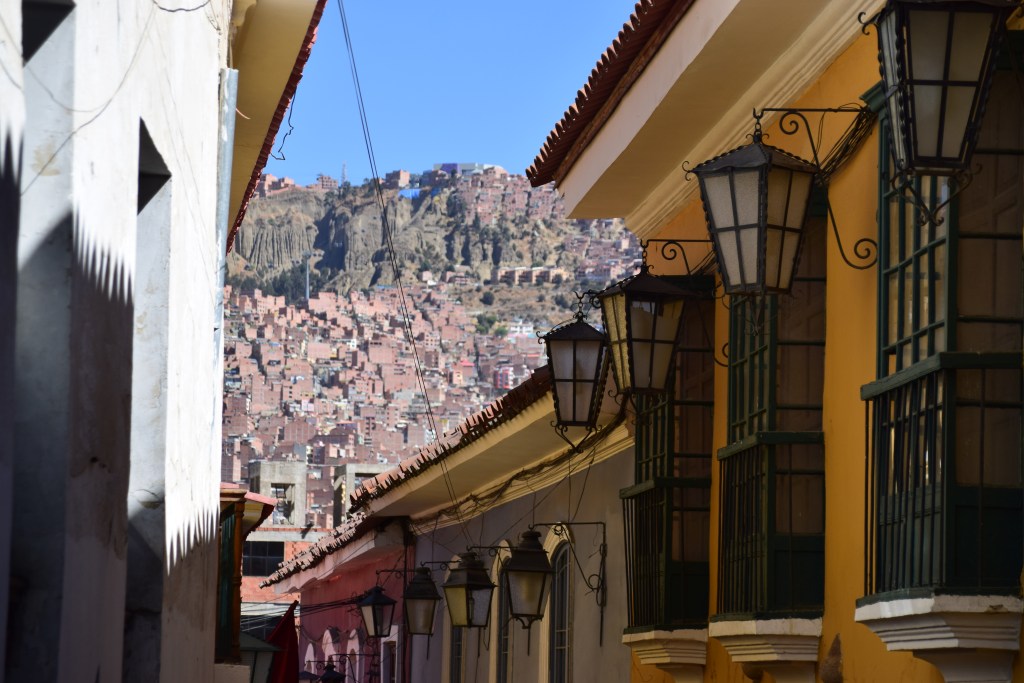
Calle Jaén has managed to preserve its colonial style and is packed with galleries, cafes and museums.
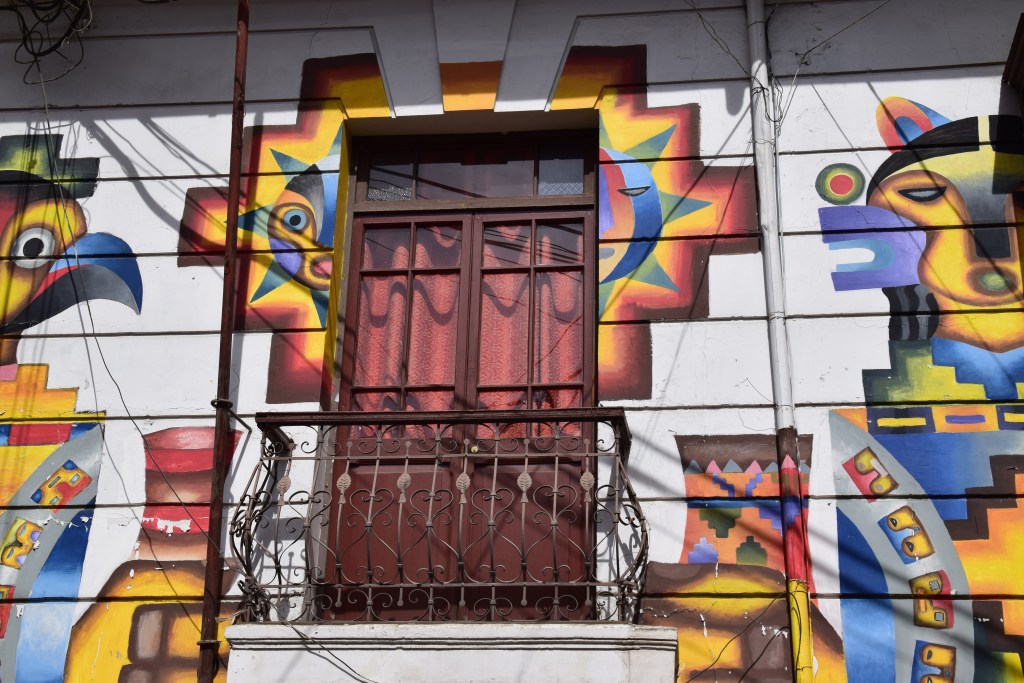
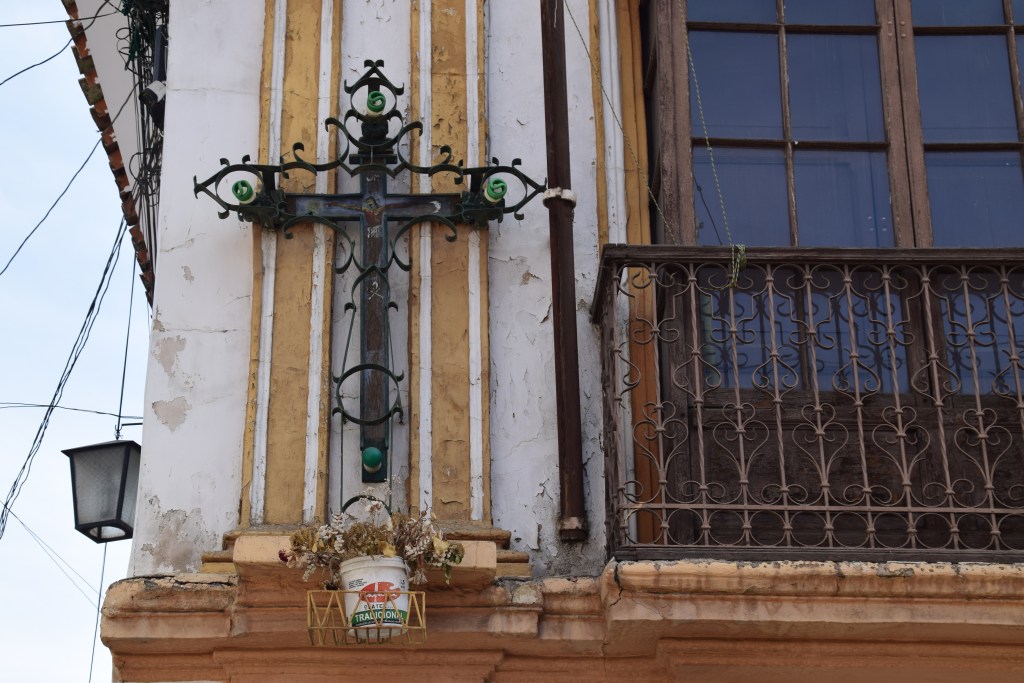
Away from the Centre….
Several miradors, or viewing points, have been created around the city.
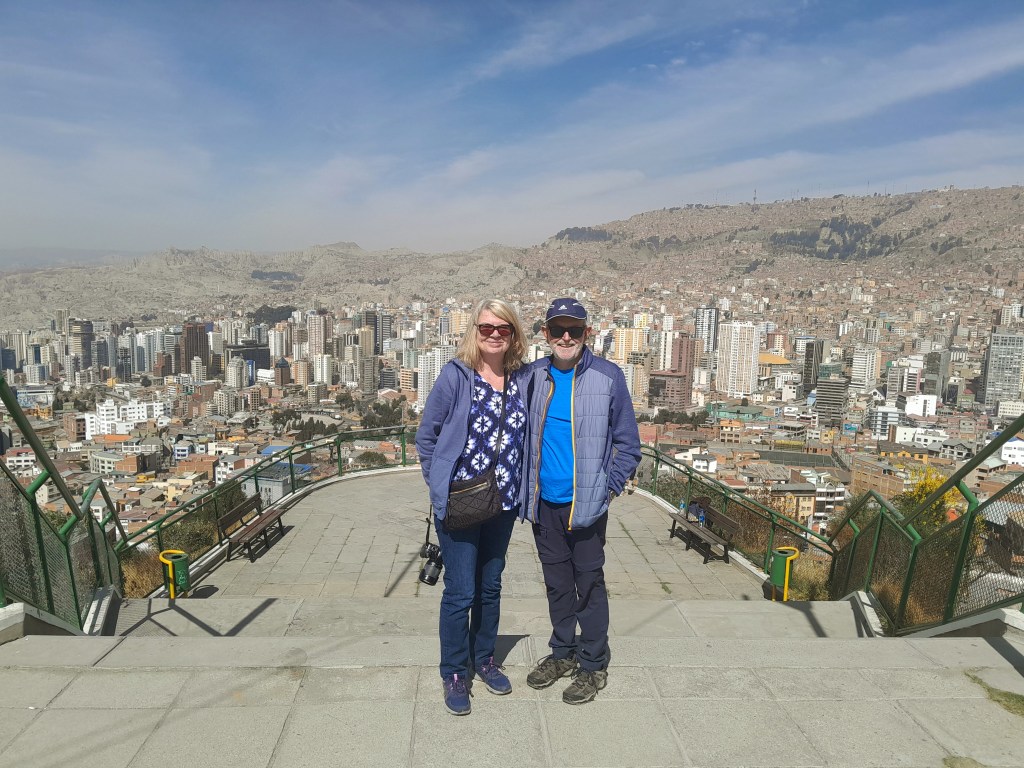
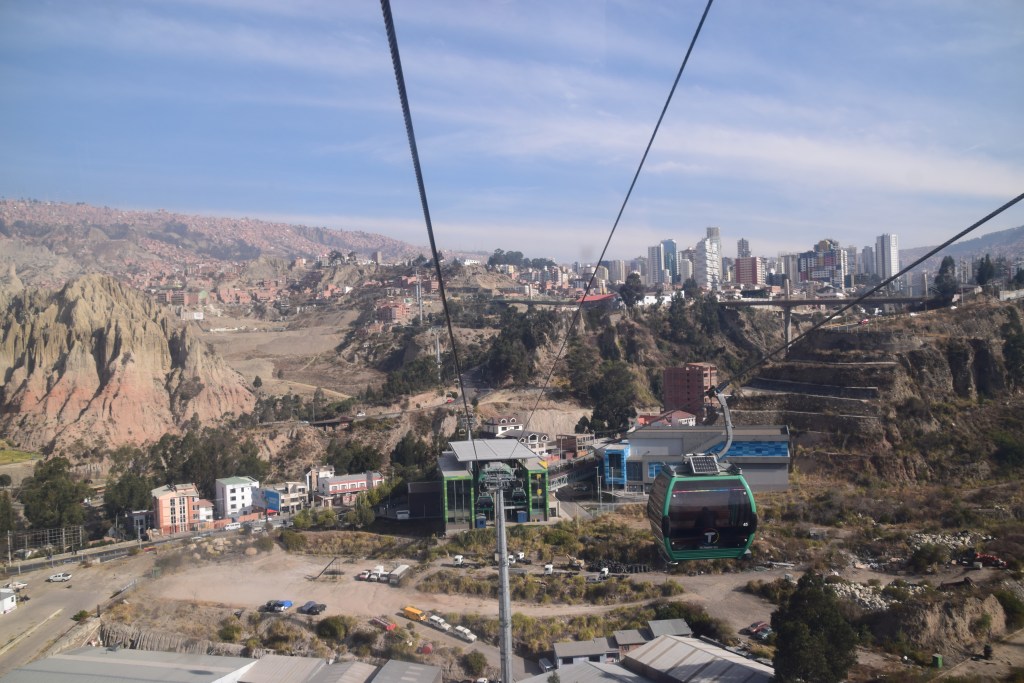
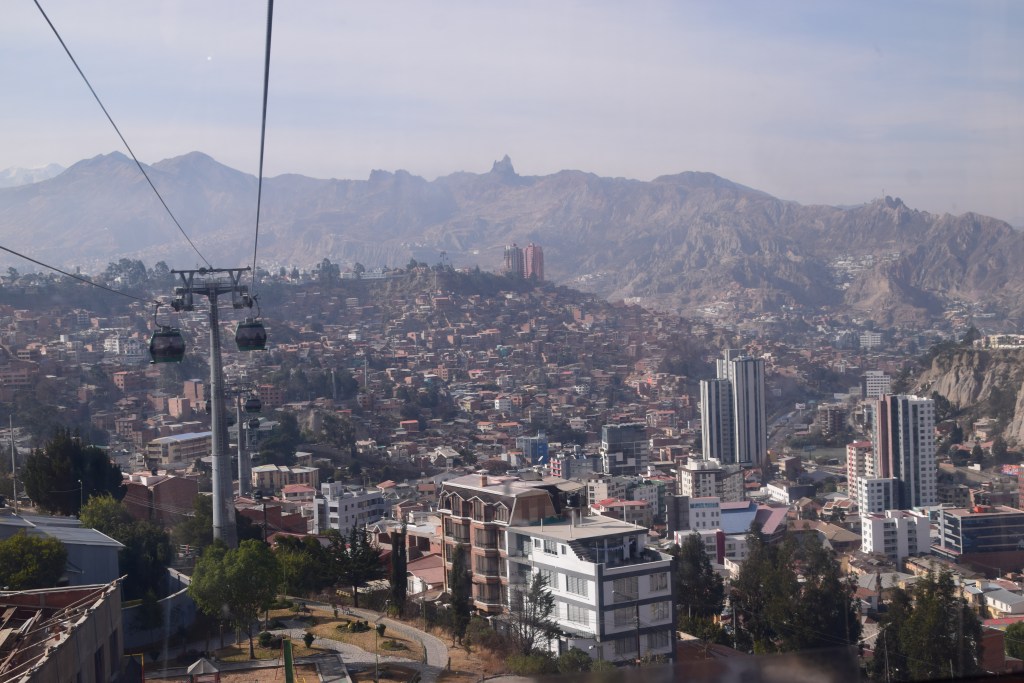
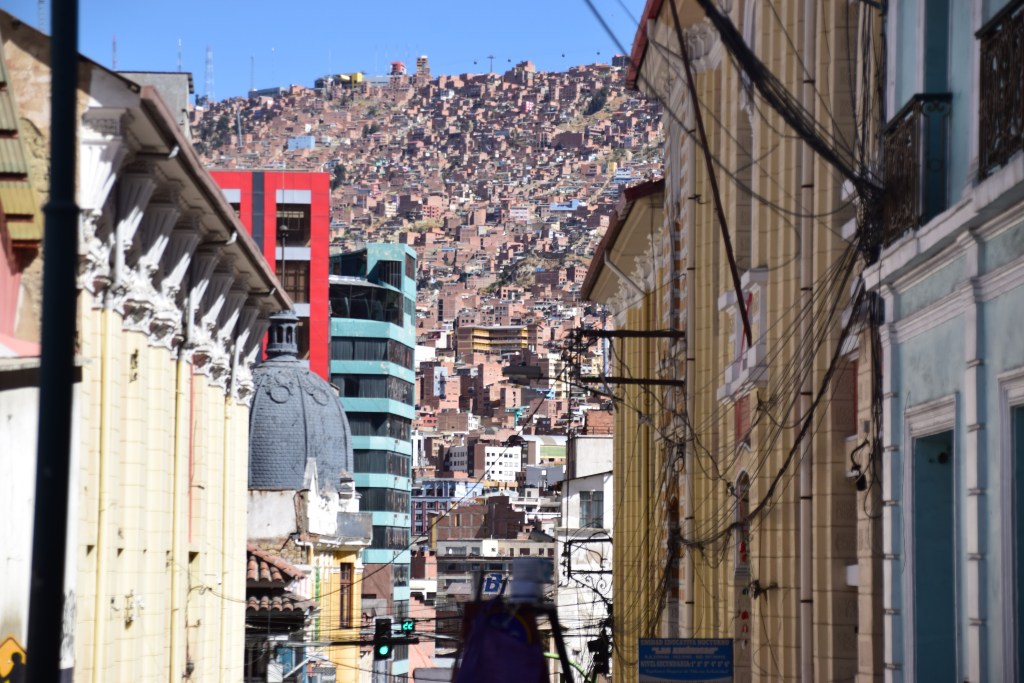
Up here, you can appreciate and assimilate the layout of the cities. At the bottom of the bowl you have the old city and the skyscrapers. Then it’s house after house clinging to the sides of the canyon. Most are left unadorned, indeed unfinished – the enterprising residents do not have to pay property tax on unfinished homes!
These inhabitants might have the best views but they are not aspiring towards the top – no – people hereabouts are aiming for the bottom! The lower you go, the milder the climate, so the more affluent city folk settle in the lower neighbourhoods.
El Alto was politically separated from La Paz in 1987. This is not only the the largest city in Latin America inhabited by indigenous Americans, but is the highest major metropolis in the world. It’s population now sits at almost 1 million – mostly made up of Aymaran migrants from Bolivia’s rural areas. The boom in numbers has posed huge problems for the authorities – particularly the supply of clean drinking water and and adequate sewage service.
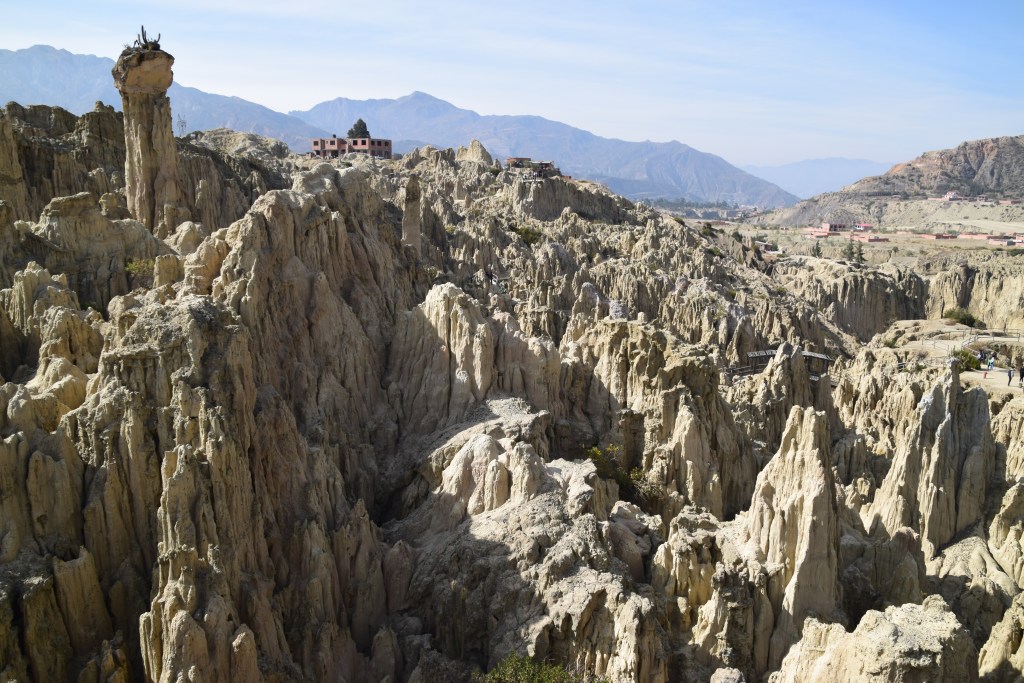
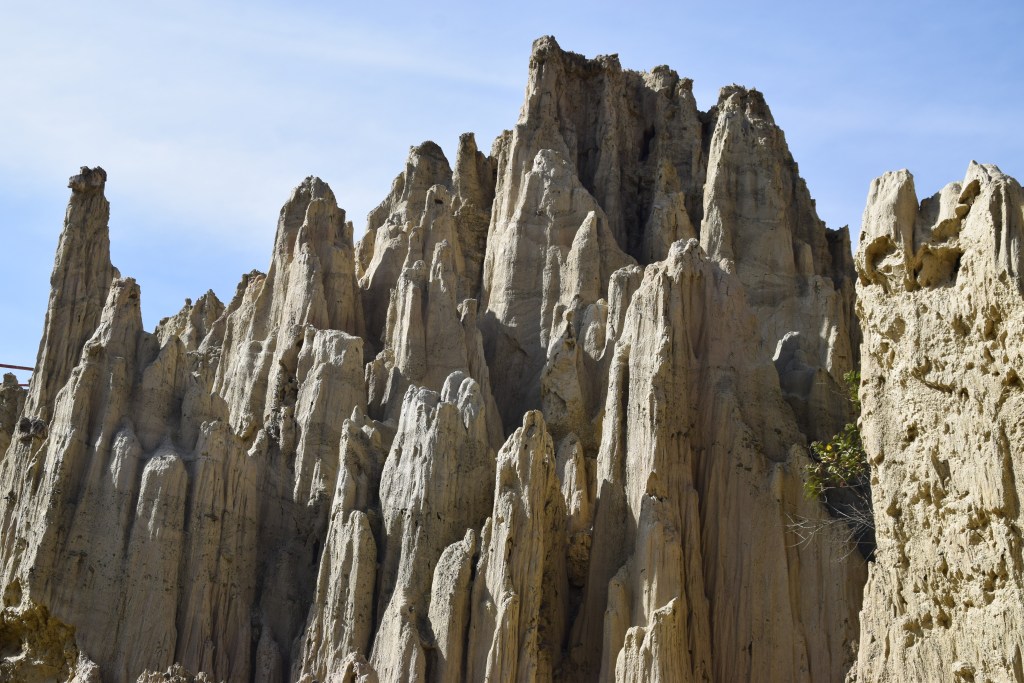
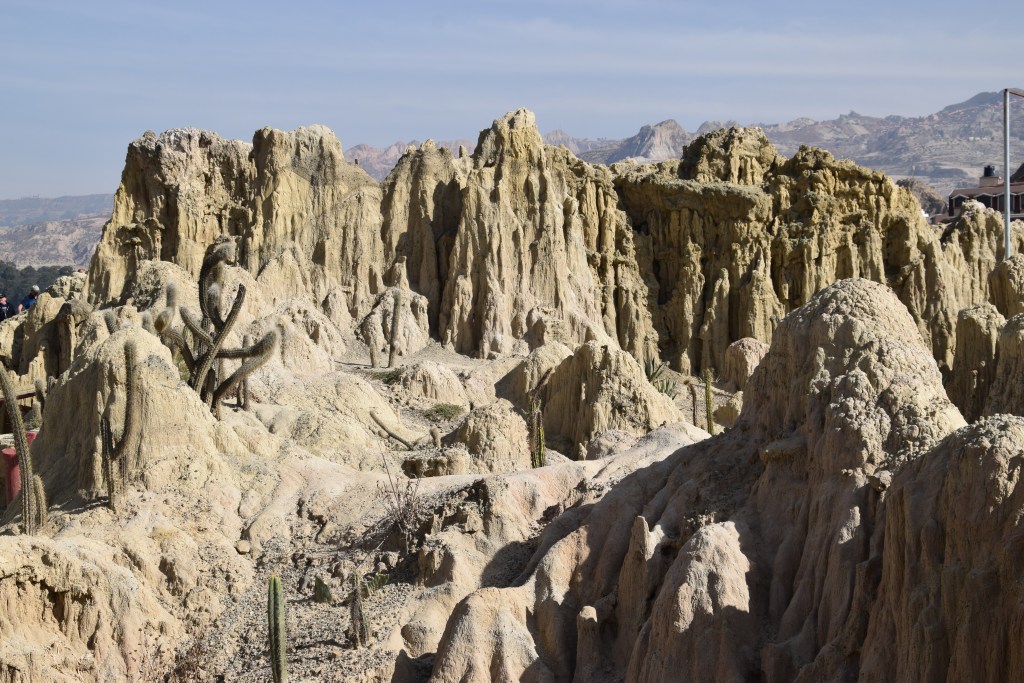
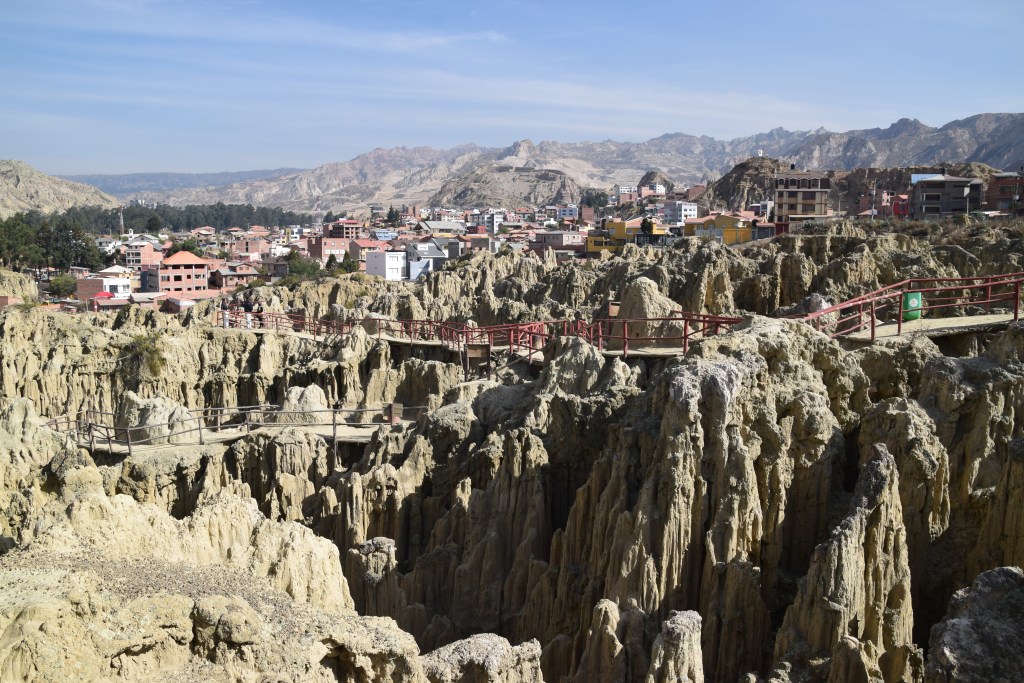
Vallee de la Luna is located about 10kms from the city. Supposedly named by Neil Armstrong himself, this is a lunar landscape dominated by stalagmites that have resulted from natural wind and water erosion. There are marked trails through the clay and sandstone formations.
Getting Around
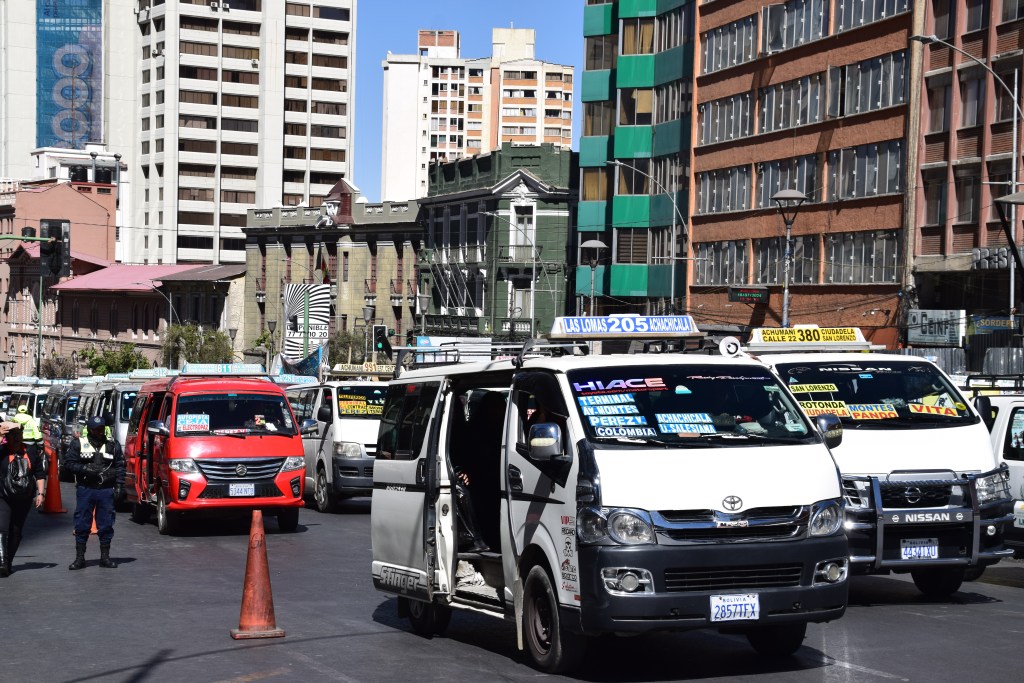
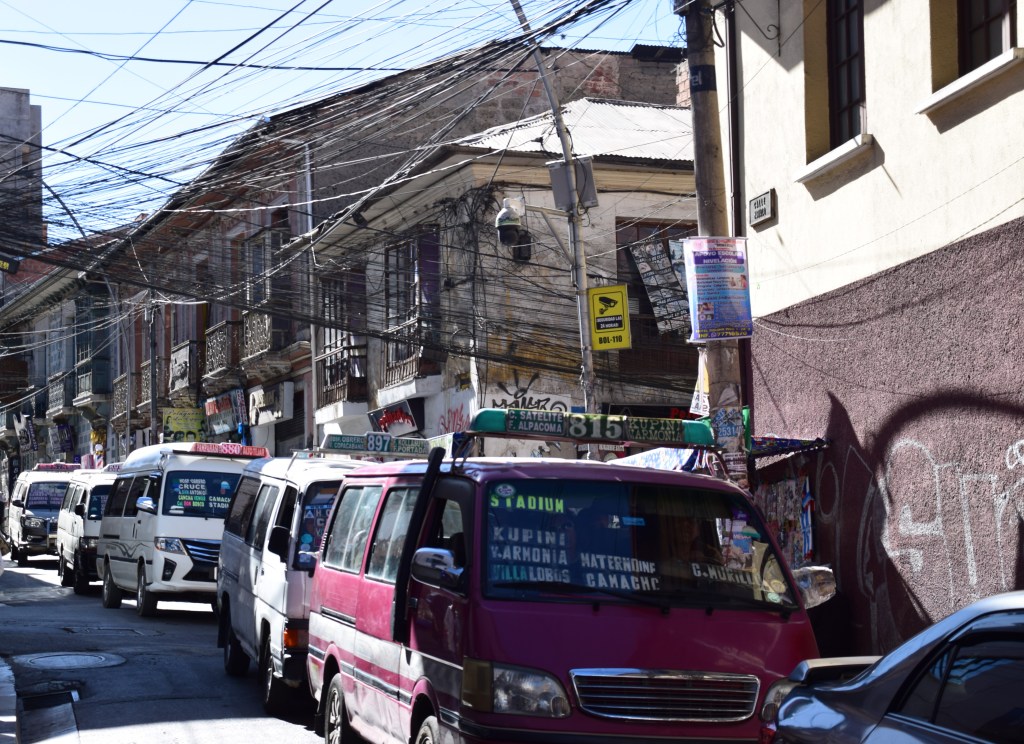
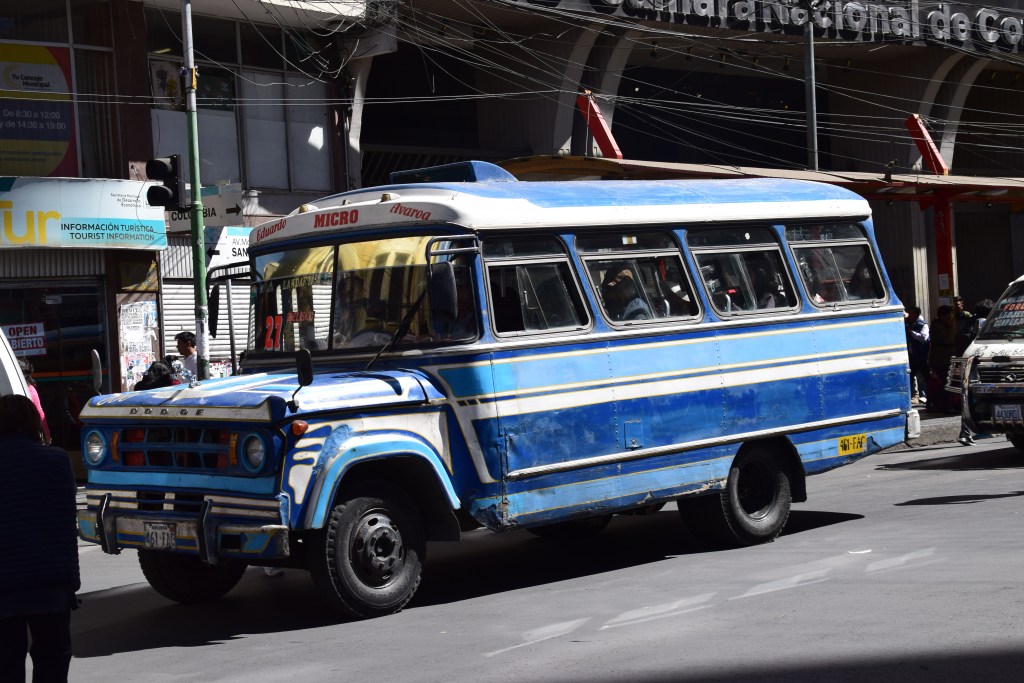
Traffic here is relentless (but NOT the worst place I’ve ever visited, to be honest!) No matter how centrally you are located, you will probably use public transport at some stage, especially if you are struggling with altitude sickness.
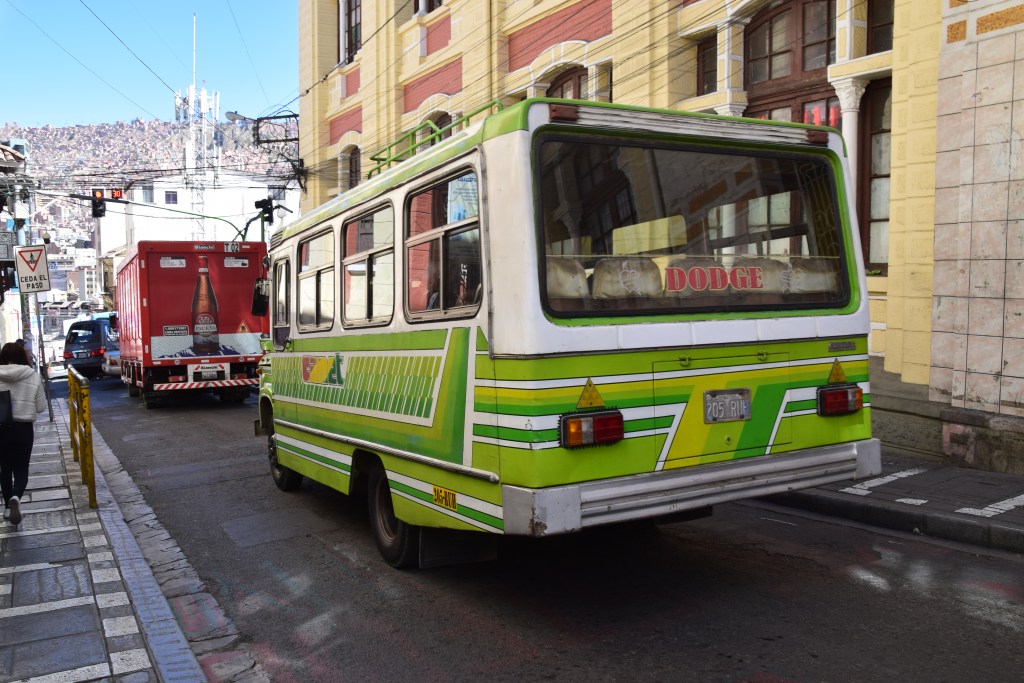
Around the city, there are three options – buses, shared vans and fixed-route shared taxis called truffis – and all have their routes indicated on the windscreens.
Mi Teleferico
Despite their proximity, travel between La Paz and El Alto has been a challenge to put it mildly! The international airport is in El Alto and many residents commute between the two cities for work. The narrow, winding roads connecting the two cities could not cope with the ever growing demand for taxis, buses and minibuses – the chaotic traffic congestion, with its increasing journey times ( not to mention air and noise pollution) had to be addressed.
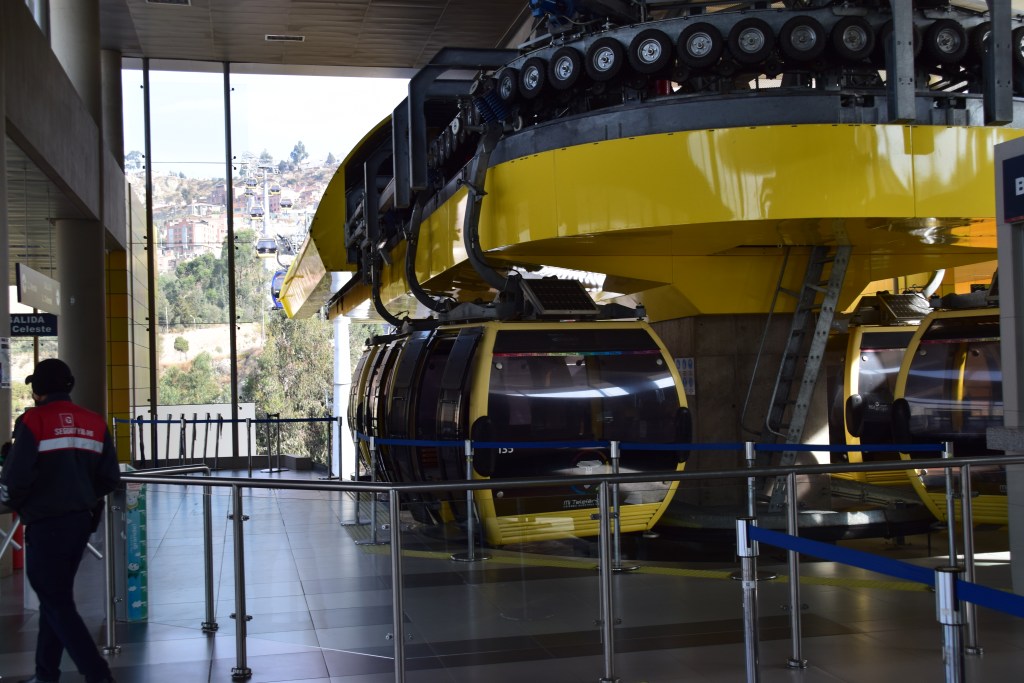
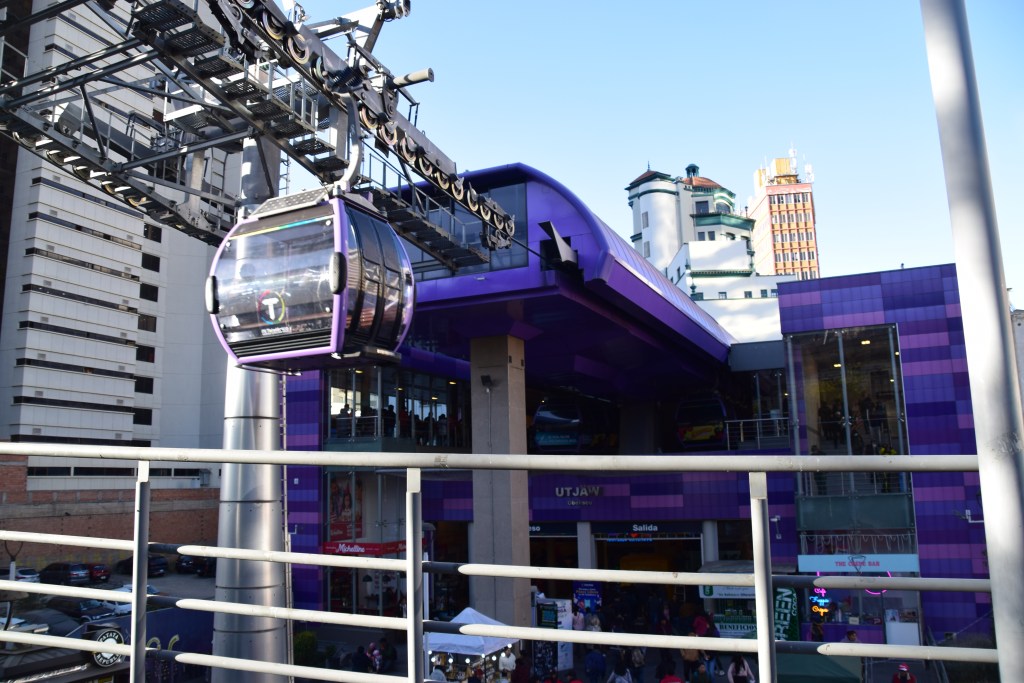
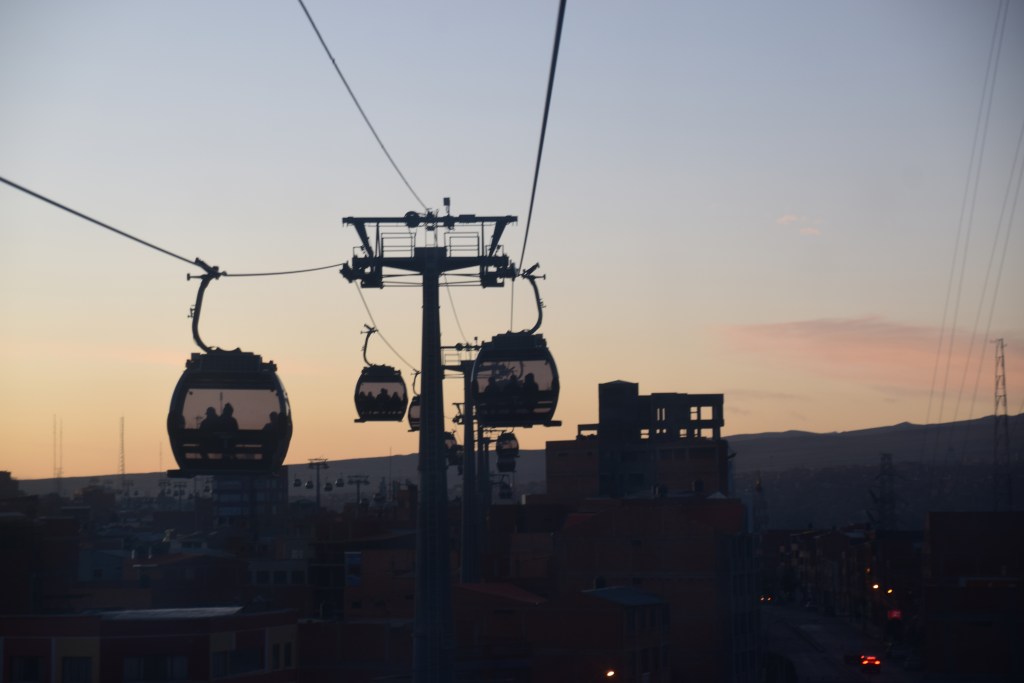
The challenging terrain, with its significant difference in altitude, made a conventional metro system impractical if not impossible. But, as early as the 70’s, the idea of linking the cities by a single cable car line was considered. It took decades for the scheme to get underway but the postponements and revisions eventually paid off – the first line was opened in 2014 and, today, 10 lines operate across 26 stations!
Trivia Moment – the first 3 lines were the colours of the Bolivian flag: red, yellow and green
The world’s longest cable car system has pretty impressive stats – each of the 10 different coloured lines has a capacity of 6,000 per hour with a 10-passenger cable car departing a station every 12 seconds! Running 17 hours per day – that’s a lot of Bolivianos on the move! Bypassing the traffic jams, commute times are down from 1 hour to 10 minutes and, because it’s run on electricity, it contributes to the effort of reducing smog and noise pollution.
And residents are not the only ones benefitting from the new system – visitors are hugely impressed with the efficient and spotlessly clean stations while, for just 3 bolivianos (about €0.40) per single ticket, you get the best views of the city!
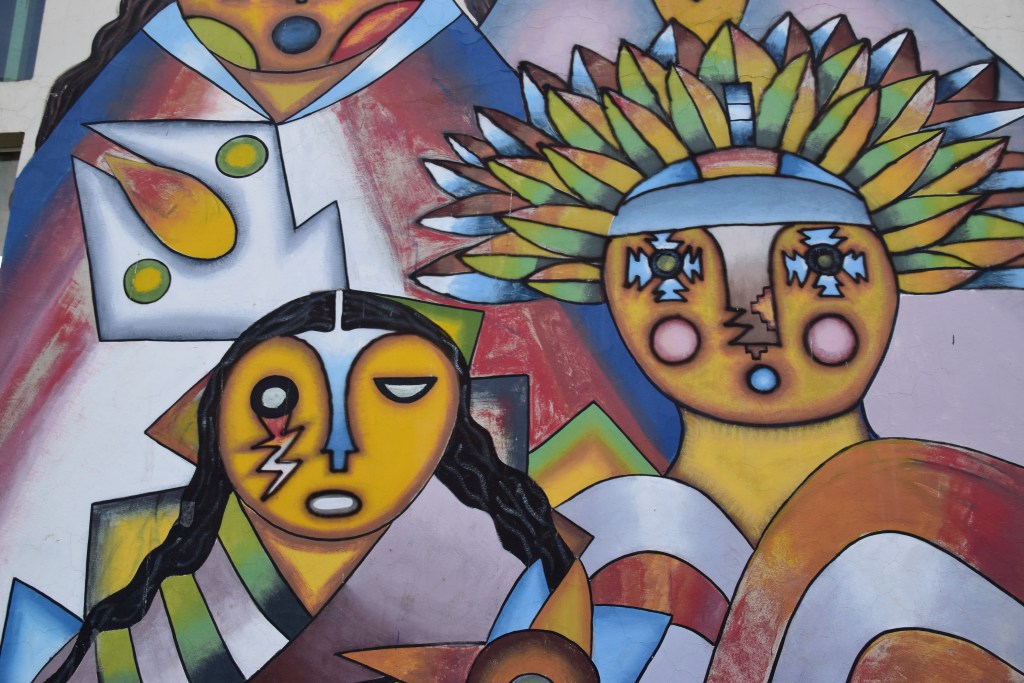
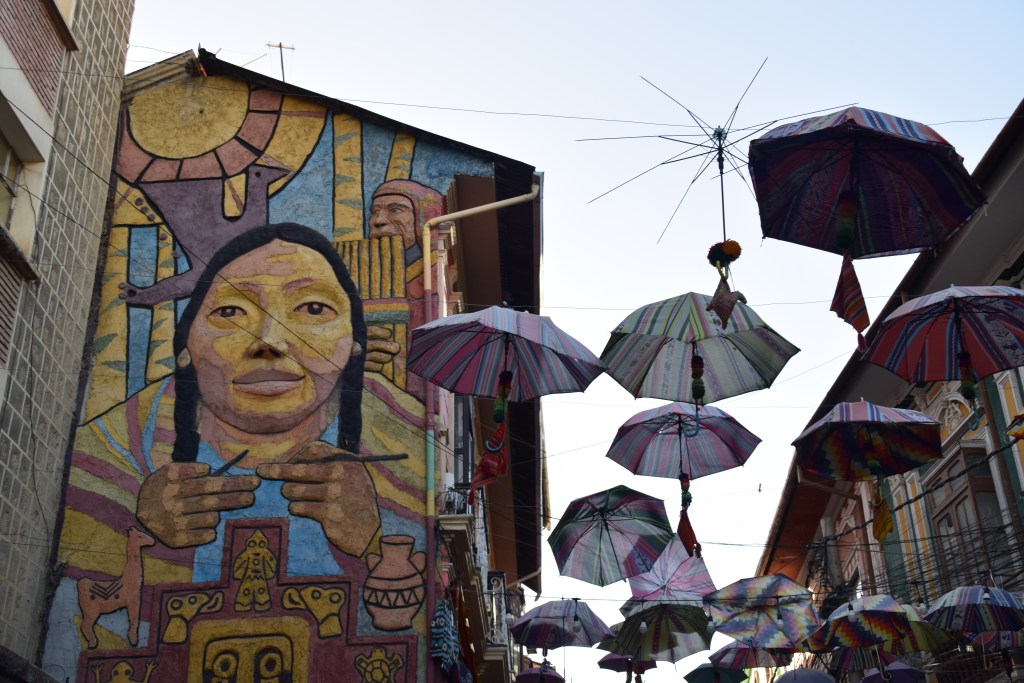
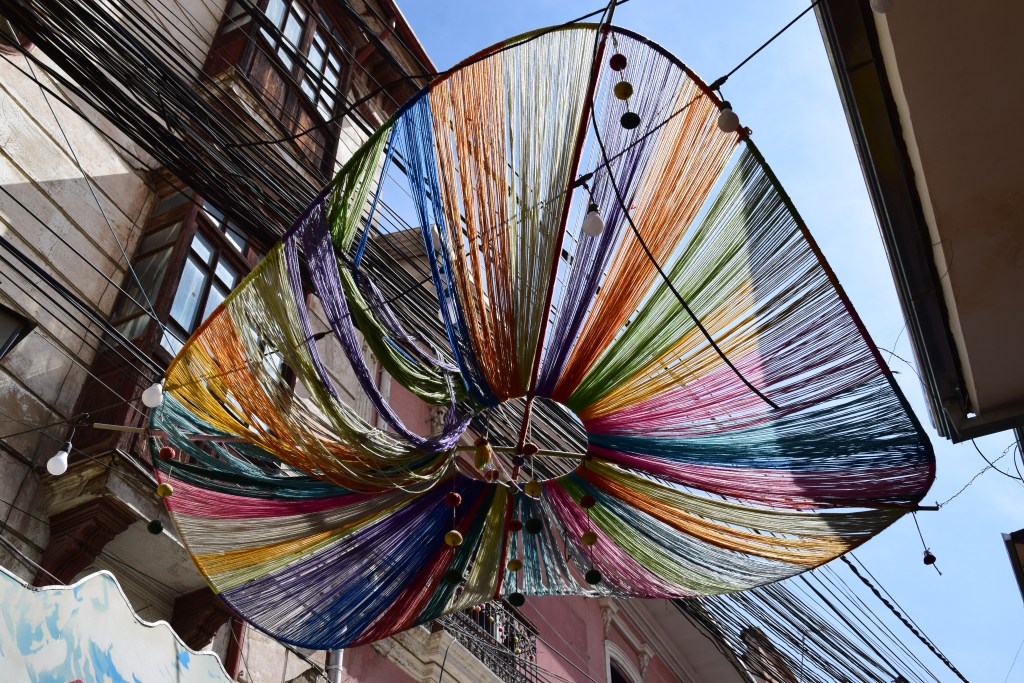
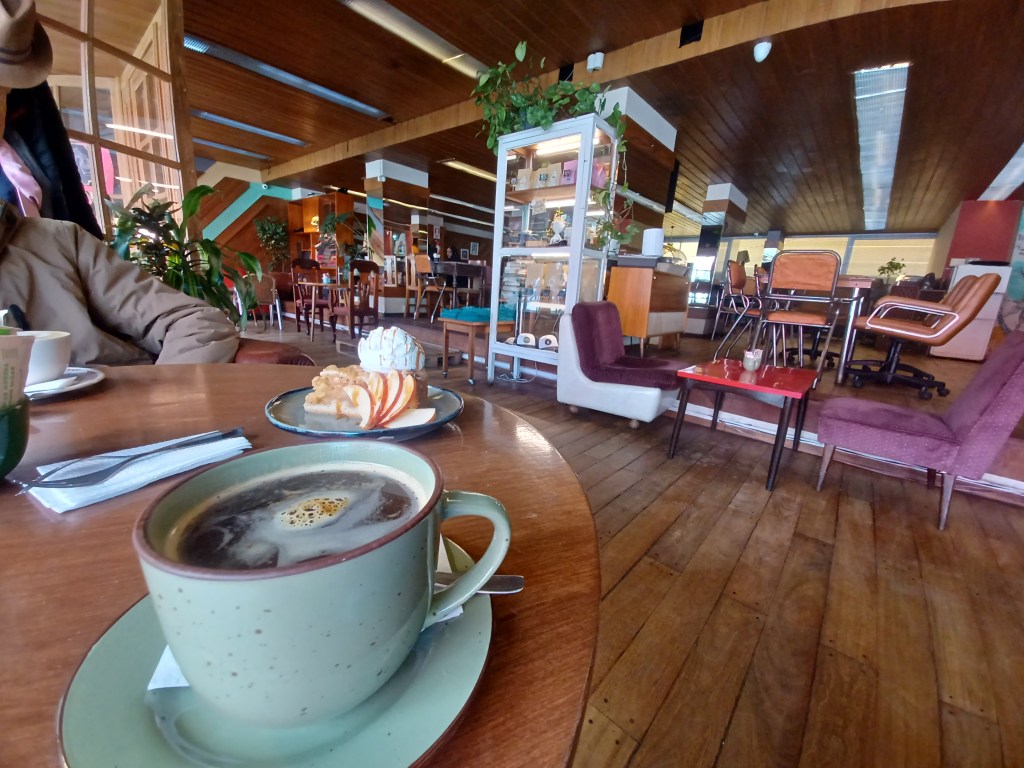
In the end, it’s about wandering about, stopping for coffees or something to eat (portions are HUGE!), absorbing the colours and enjoying glimpses of those steep canyon sides through the narrow winding streets…


What we did….
We spent 3 nights in the city – 2 en route to Uyuni and one afterwards (July, 2024).
The best thing about Hotel Europa is its location – just off Avenida 16 de Julio. That means good access to cafes and restaurants and within walking distance of the main sights in the city centre. Exhaustion made us go for the easy option on the night of our arrival and we ate in the hotel – a mistake – the most disappointing food of our whole trip. Breakfast was ok. I can’t comment on spa facilities – we were too wrecked to even check it out!!
Day 1 – Arrived late evening by car / cable car from Lake Titicaca. Ate in the hotel.
Day 2 – Guided City Tour / Vallee de Luna in the morning. It being a Sunday, there was a market on Avenida 16 de Julio which we wandered through after the tour. We stopped at Alexander Coffee on the avenue for lunch. Had to go back to the hotel for a siesta but we managed to pull ourselves together and enjoyed that massive burger in The Steakhouse.
After Uyuni..
Arrived at the hotel mid morning. Found another good coffee shop nearby. Walkabout city centre – it was nice to retrace the steps of the guided tour on our own at a more leisurely pace (we didn’t have to repeat the Miradors or Vallee de Luna). Lunch in The Carrot Tree. Souvenir shopping along Sagarnaga Street.
Thanks for the memories used to go there every year from the USA back then was into post cards collection so no pics unfortunately now. Enjoy it good friends there and even one living in Paris! Cheers
It must be a very different city now.. El Alto must have been much smaller?
I imagine i get to talk with friend in Paris who is from cochabamba. Lots of changes as any when you are away for a while.
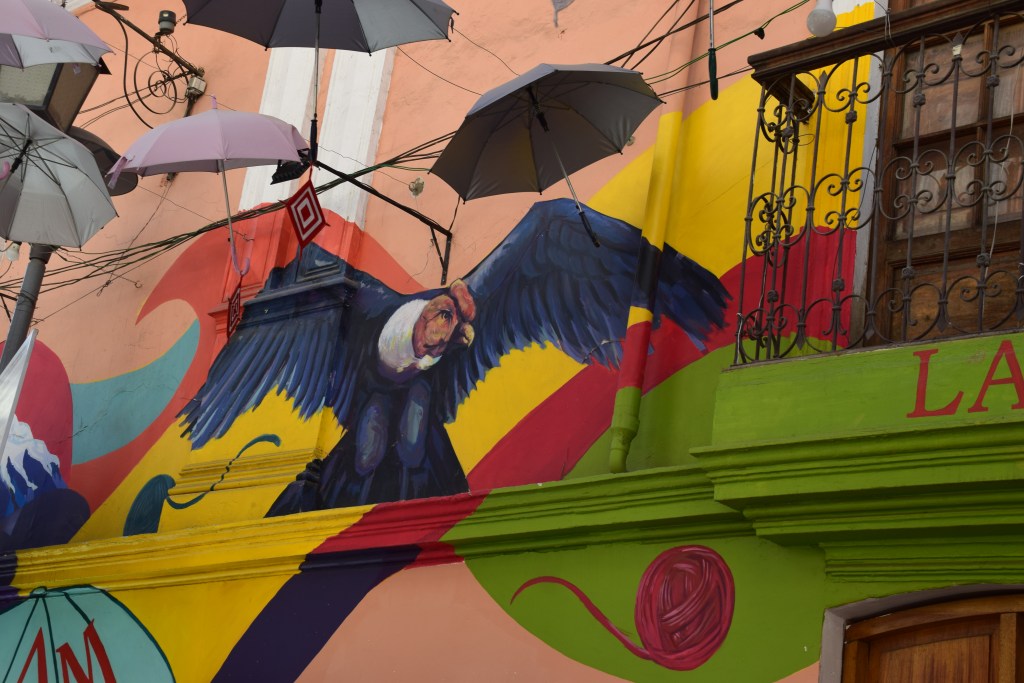
It has a very distinctive and unique atmosphere, and it certainly looks like a wonderful place to add to a Bolivia itinerary if it’s not yet there. I love the colourful street art and how instead of trains or buses, they have cable cars to get all over the city! Thanks for sharing, and have a good day 🙂 Aiva xx
I love the efficiency of metros when we are away but we never get to see much overground! That’s why this is such a hit – sightseeing as well as practical!
🥰🥰🥰
Will definitely be on those cable cars! I’m reading this while in Manila – a giant, congested, choking city, so can relate to some of your LaPaz difficulties right now. Loving learning from you about Bolivia and so looking forward to seeing it for ourselves
You’ll be there at some stage – even if you decide to continue by train… I think you’ll like it for a day or two. No comparison!! Total population between the 2 cities here is circa 2 million! Manila 15 million!! Mad!!
It feels like 15 million too!!
I can’t picture it! That’s over twice the population of the whole island of Ireland here!
definitely, go – you and Michaela will love it!
They will indeed!!!
You’ve definitely shown us the city merits a couple of days as part of any itinerary. I love the street art and the witches’ market looks fascinating. And I can never resist a cable car ride!
Probably not a place I need to return to but definitely glad we stayed there. The cable car is great. We’d a guide at the beginning and he was so proud and excited to show it off to us!
Think about having your fortune told in the market. I did and it was great fun!
OOOH – never had my fortune read….I’d take it too much to heart!!
It does take a little time to get caught up in La Paz. Once you’ve visited the major monuments, not in the best shape after years of mismanagement, it’s fun to wander the streets and enjoy the street life. There’s still an authenticity that you don’t find in many places in South America.
You’re right about the authenticity – we expected it to be more touristy overall so were (pleasantly) surprised by how few visitors seemed to be passing through – so really spent most of our time among the local communities…
I enjoyed reading your take on La Paz – it’s tremendously vibrant, exciting, with scads of things to see and do. We did a walking tour which took all day, so we were able to explore much of what you discovered, as well as the cholitas or female wrestlers at night. Thanks for bringing back some great memories, Marie.
We missed out on the cholitas – would have liked it just for the experience. Didn’t do enough research before we left and then just didn’t follow it up while we were there…
It looks like such an incredible city. I would really love to visit one day 🙂
And you will Hannah! I know it!!
What a remarkable place. Even for a seasoned traveller La Paz and wider Bolivia must rank up there in terms of adventure. Interesting that the national football stadium is in El Alto giving the local footballers a big advantage 🙂
Ah this was well up my list and lived up to its expectations overall – was just sorry that we hadn’t more time – It was one of those trips where we tried to cram in as much as possible….
It looks like a great place. Your photos are wonderful too!
It kind of made me chuckle that you went and found a nice vantage point to look over the city as if the altitude wasn’t high enough for you already!
It’s also great that the cable car system has benefited locals, commuters and visitors alike!
I know! Mad isn’t it! The altitude was a killer…. and at that stage we’d been at high altitude for about 2 weeks – found it really tough going. Never got used to it although we didn’t have to cancel anything unlike others we met along the way…
Nice photos. During our Peru trip we briefly considered crossing Lake Titicaca and continuing on to La Paz and more before returning back for the Machu Picchu route. In retrospect it probably would have been a better plan than the one we ended up doing.
Ah I’ve never yet had a trip I couldn’t have improved on… ‘We should have done that’is my most frequent moan …. The problem with that region is there’s SO much to include.. I really wanted to visit Bolivia so elements were chopped from the Peru part that I would have liked and we still didn’t get to see everything we wanted in Bolivia… Needed a holiday once we got back home!!