
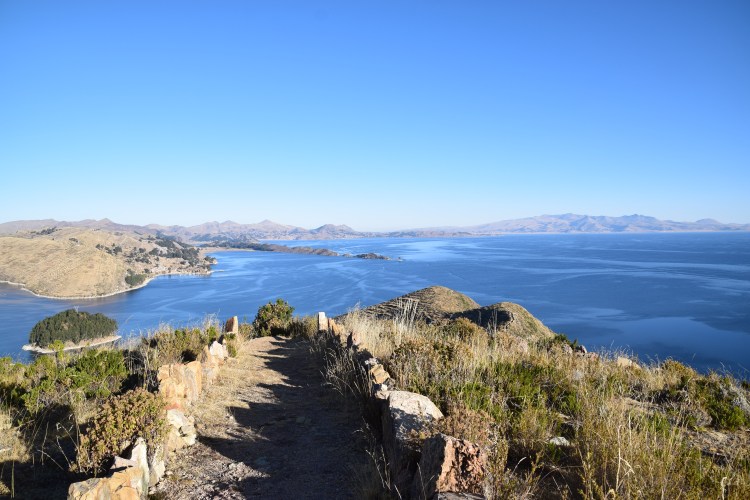
The apus – gods of the mountains – protected their devotees in the fertile valley below. They had land for their crops and light and rain for those crops to grow. They were happy and knew nothing of the negativity of ambition or hate. They had absolute freedom with one exception – they were forbidden to climb one particular mountain on which the sacred fire was lit.
An evil spirit, living locally, resented such happiness. He tempted the humans to climb the mountain and discover its secrets. The apus, in fury, sent hundreds of pumas to devour those who had disobeyed (later turning the pumas into rocks).
Inti, the Sun God, was so upset that he cried and cried – flooding the valley with his tears…
And that, my friends, is how Titicaca was created!

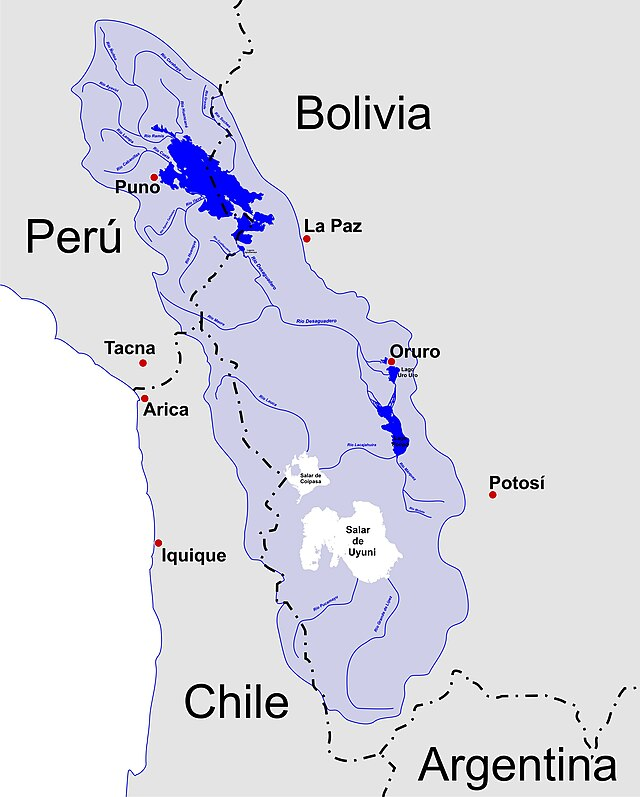
Less interestingly, the lake was formed some 60 million years ago when a huge earthquake split the Andes, forming a crater that filled with the water from melting glaciers. At 12,500ft above sea level, this is the highest navigable lake in the world (i.e. deep, wide and calm enough for commercial craft to cross safely). Although located in the mountains, it’s found in part of the Andes known as the altiplano (high plateau) so there are open plains up here and the mountain peaks, although visible, are actually quite a distance away. More than 25 rivers flow into the lake which is dotted with 41 naturally formed islands as well as the more famous manmade floating islands.
The name Titicaca comes from the Aymara language meaning grey or stone puma
The lake is shared between Peru (60%) and Bolivia (40%) and is accessible from both countries. The border crossing is easily negotiated, making a combination of lake experiences very manageable indeed.
THE UROS FLOATING ISLANDS
These iconic islands are one of Peru’s major attractions – rather odd perhaps in that their original purpose was withdrawal and isolation!
The indigenous Uros lived in villages around Titicaca for centuries. As the growing Inca Empire (1438-1572) began to encroach on their lands and threaten their existence, the Uros retreated deep into the lake to escape the danger. They used a plant, growing in the lake, to build floating islands which could be moved further in to the lake when necessary. They existed as bird hunters and fishermen out in the lake, supplementing their diet with eggs and the odd guinea pig – eventually raising cattle on the shores and trading with the Aymara.
To build an island, the Uros first gather large blocks of totora roots – a remarkably strong and pliable endemic reed that is abundant in the lake. Multiple blocks are pulled together, the roots and reeds mixing naturally to form a layer about 1-2m thick. Reeds are continually laid on top of this floating base – a long scythe is used to cut the plant under water and the reeds are dried in the sun for a few weeks before being bundled and placed in alternating directions on top of the root blocks. Fresh reeds have to be added every few weeks as the lower layers rot – an endless cycle that has continued for centuries now. The islands support several housing structures which are also made from the reed. Eucalyptus rods are stuck into the bottom of the lake as anchors and the islands tethered to stop them drifting away (a family can move at any time – there is no claim to property rights on the lake). Each island lasts for about 30 years – at that stage the foundations are no longer of use and a new island must be built.
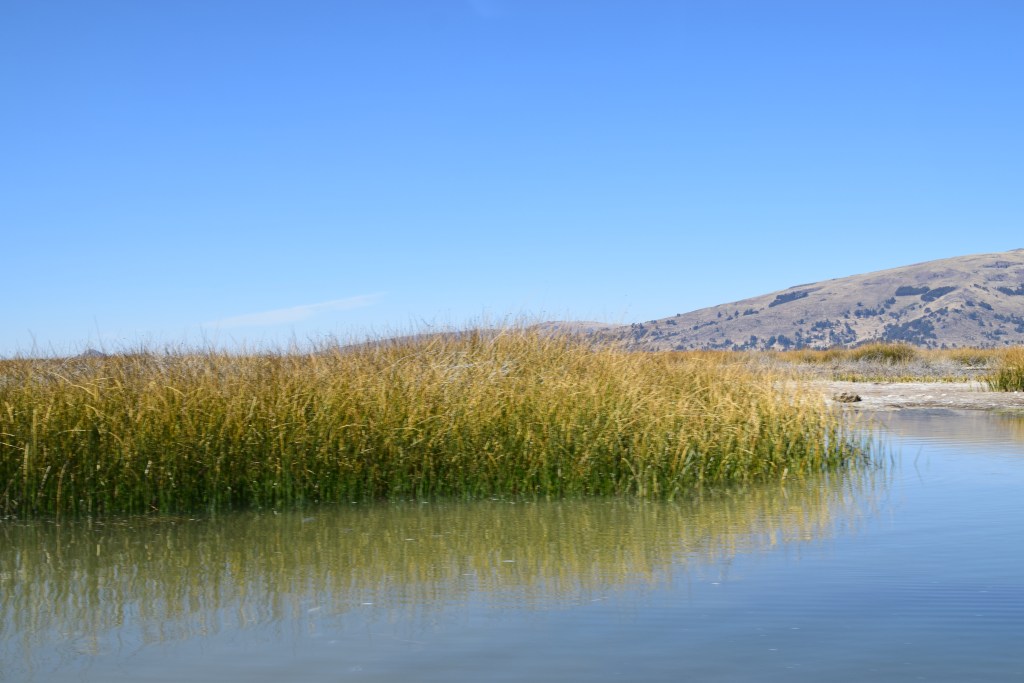

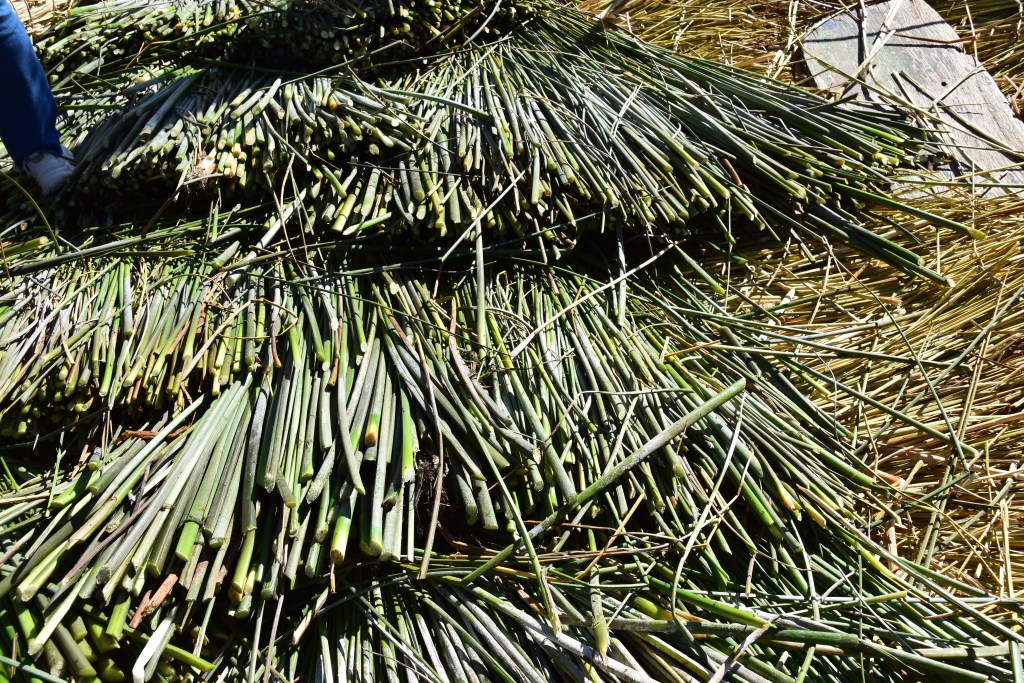
In 1986, a huge storm devastated the islands and was to mark a turning point for the floating community. Many Uros reassessed their situation and decided to rebuild closer to the safety of the shore. This new proximity to the Peruvian mainland offered access to outsiders and would eventually shift the principal livelihood of the Uros from fishing to tourism.

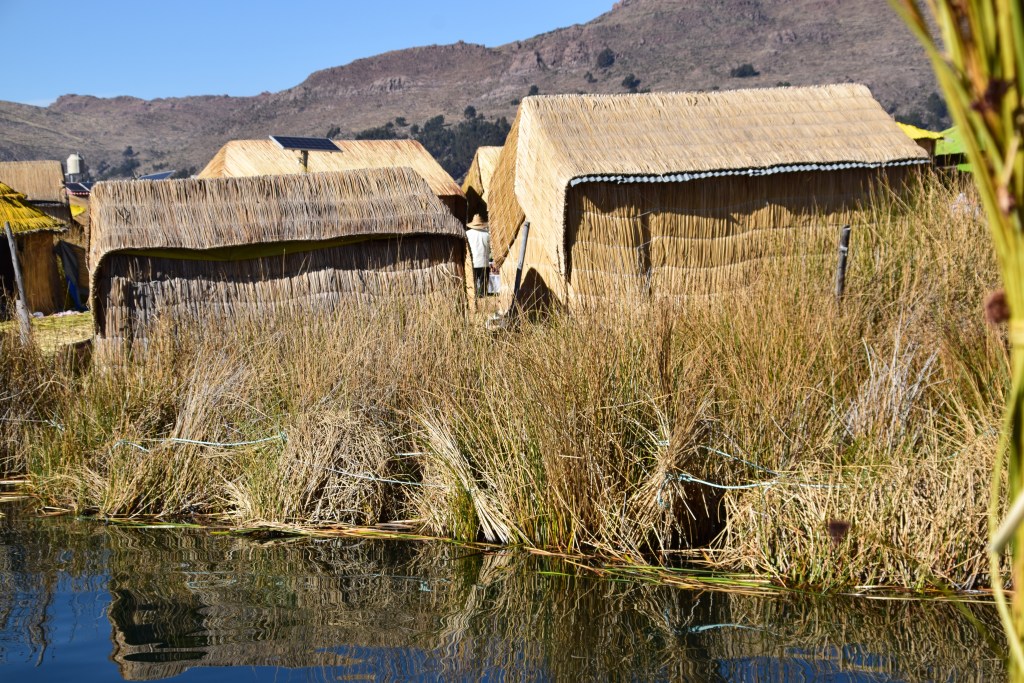
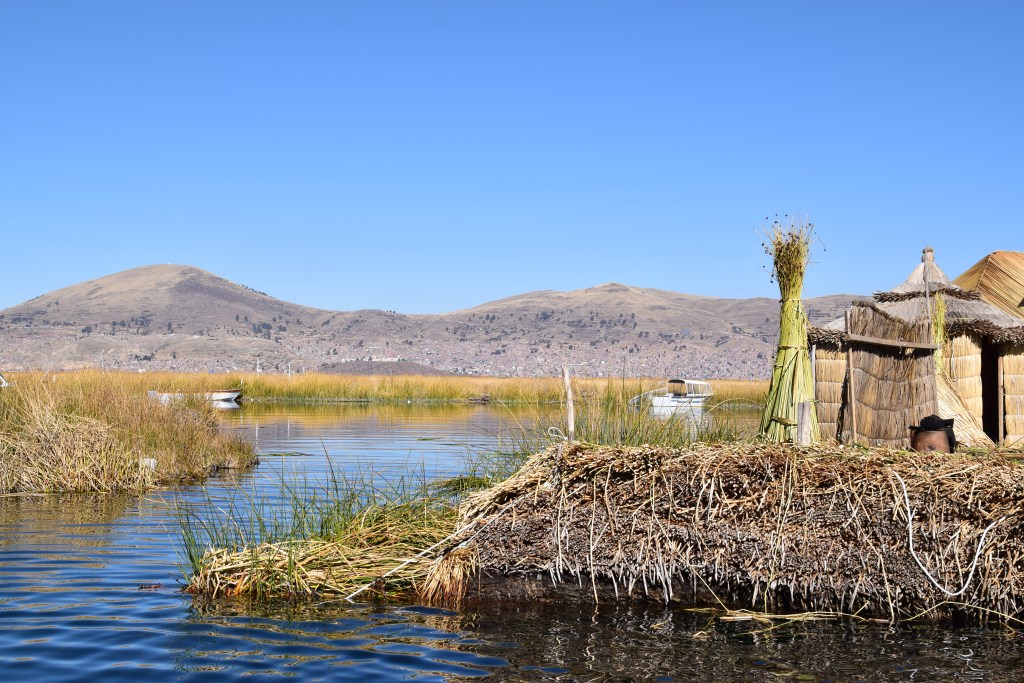
Typically, the 5km boat trip to the islands takes around 20 minutes. Disembarking onto an island is a bit disorientating for a while – although solid, the island floor is bouncy underfoot. After a welcome and introductions, one learns about the island-making process and the way of life of the residents. Islands vary in size (the biggest being about half the size of a football pitch) and support one clan. There are communal cooking, eating and living areas with individual family huts for sleeping. Family disputes are easily settled – the island is cut in two (or more!) pieces and the warring parties are thus separated. Visitors are given a chance to look inside the reed homes before being directed towards the souvenirs and then taking a ride in a traditional reed boat to a larger communal island with shops and a restaurant.
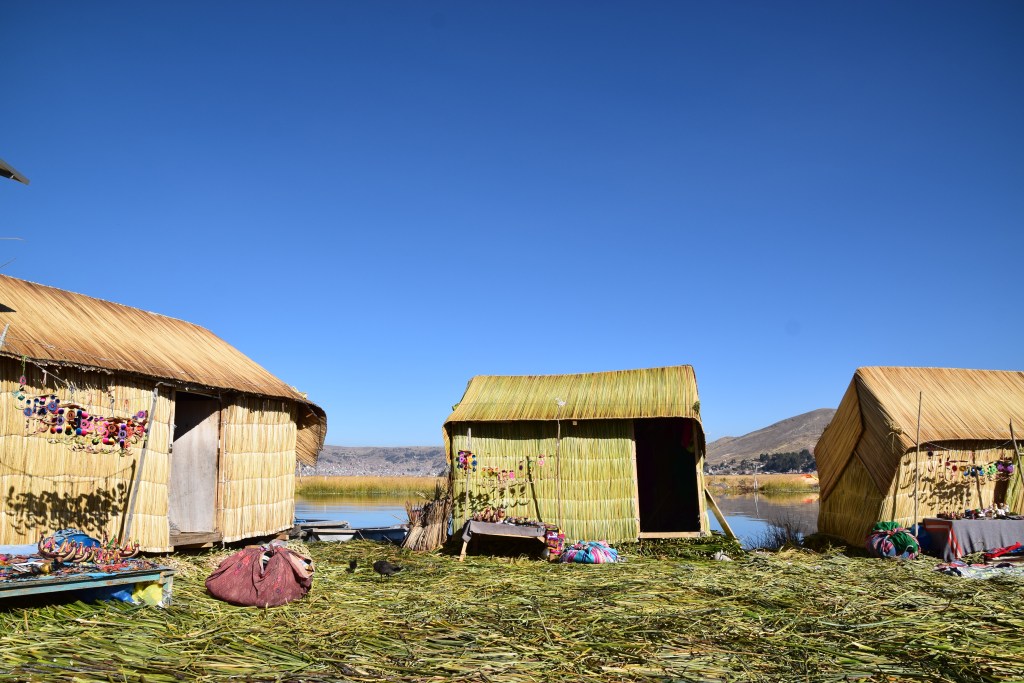
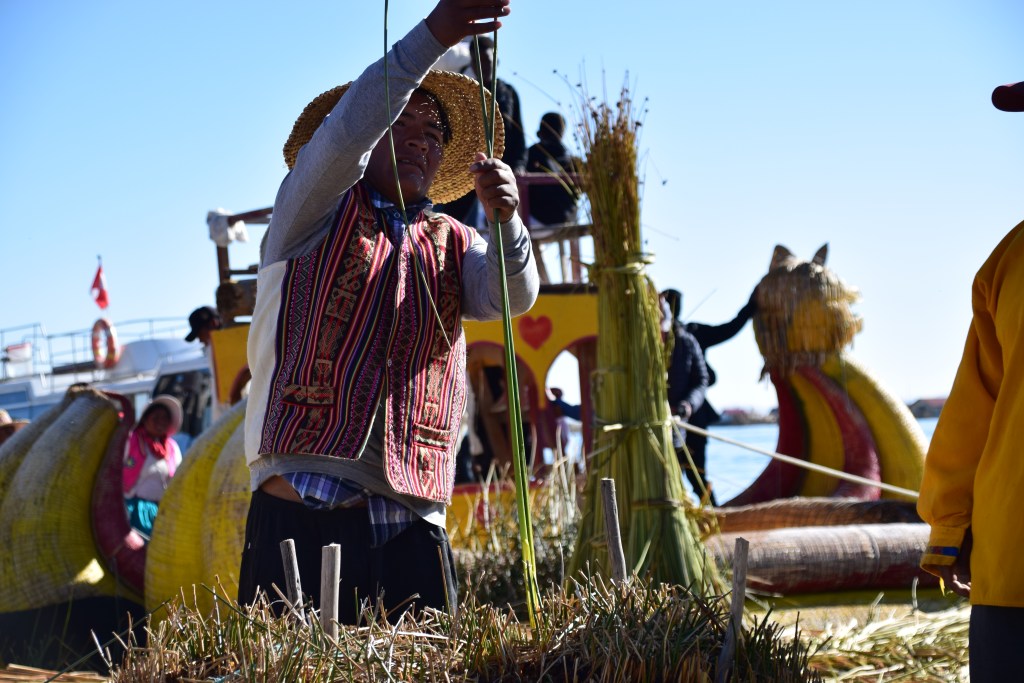

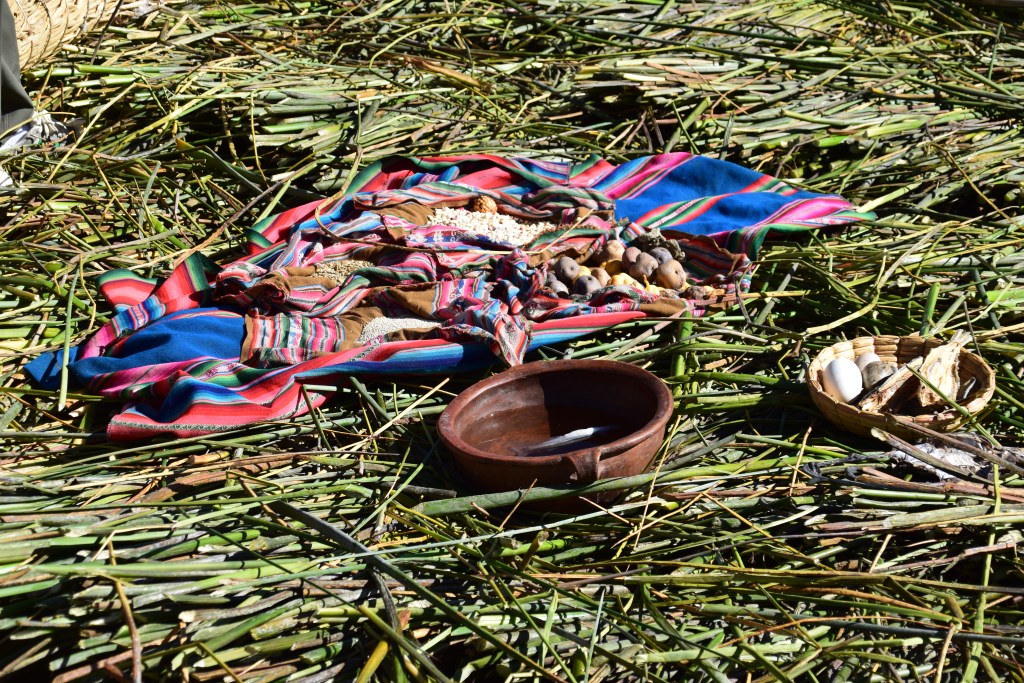
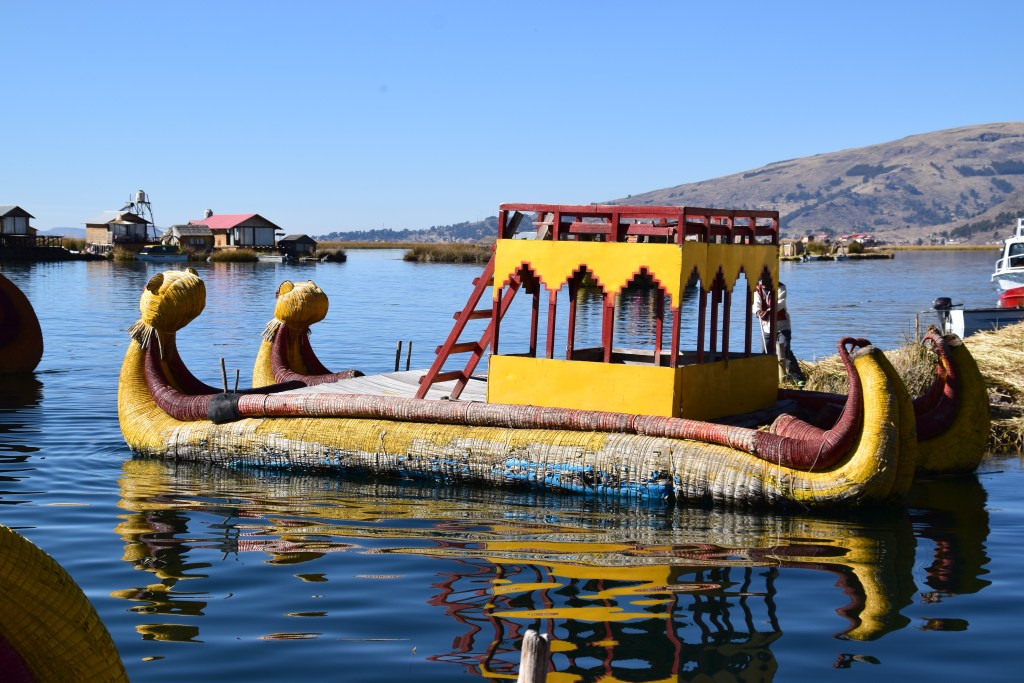
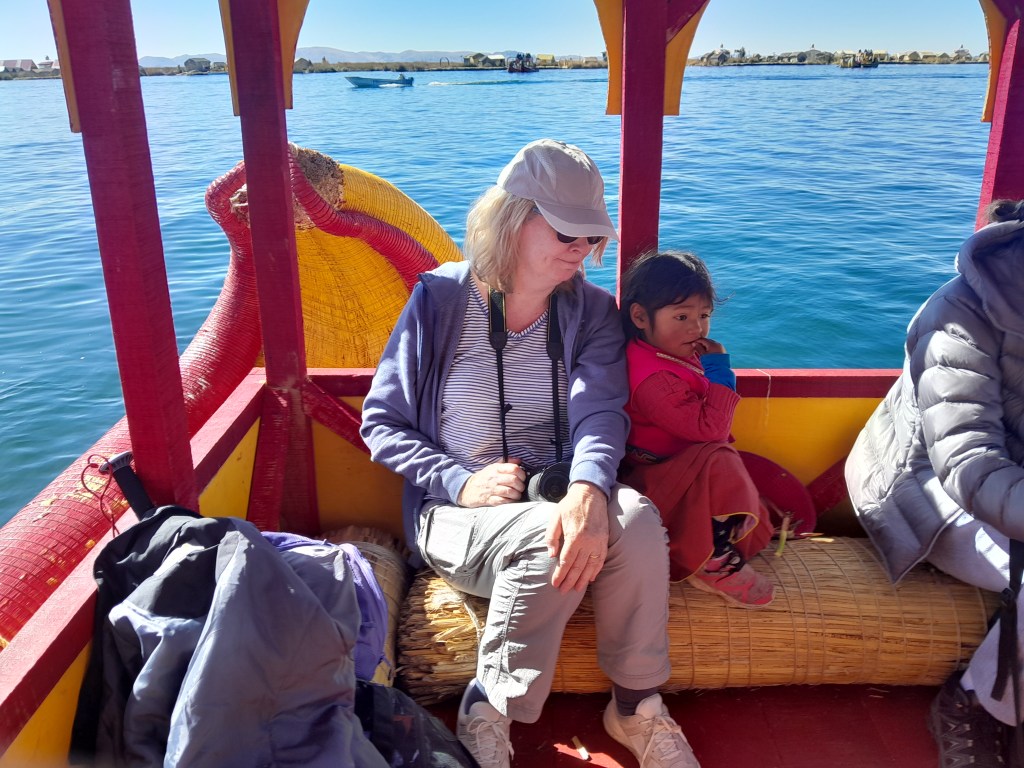
For me, alas, the whole experience was quite staged and screamed ‘tourist trap‘. Demonstrations were well rehearsed (which is fine) but I definitely felt pressurised into buying their ‘homemade’ crafts and then there is the extra charge for the traditional boat ride. I wasn’t convinced that our family actually lived full time on the island – the cynic in me reckons that, for some, this is a day job like any other with island ‘residents’ commuting from nearby Puno!

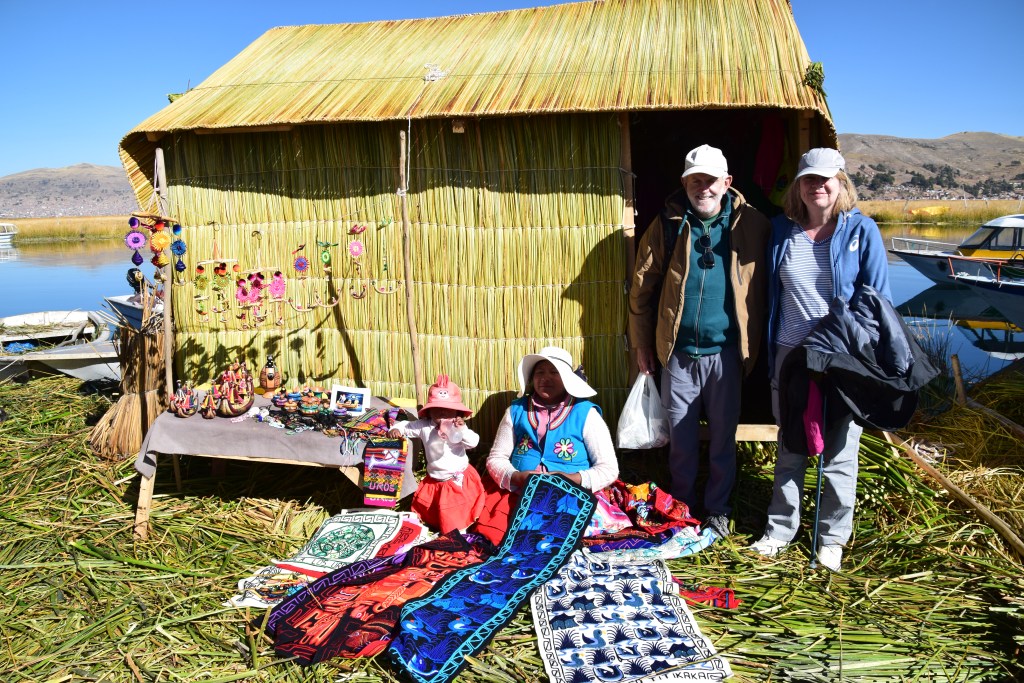
Having said that, who’s going to go to Titicaca and NOT visit the islands! Commercial as the tour may be, you still learn a great deal about the construction of the islands and the traditions and lifestyles of the Uros and we need to remember that they are mostly dependent on tourism for income. Stats vary but islands number somewhere between 60 and 120 (depending on the source) and circa 1300 inhabitants. There are controls in place – community leaders dictate which islands are to be visited on a given day and ensure that the business is spread evenly among them. While many of those islands close to shore are set up for tourism purposes, there are islands deep out into the lake where circa 100 residents have maintained their traditional way of living.
This way of life is undoubtedly on the way out. Solar panels, TVs, improving sanitary facilities and motorised boats are not enough to hold the young people who prefer to seek work in the cities – it is estimated that island life will most likely end with the next generation.

While most visitors settle for a short visit, it is possible to stay on some of the islands for a longer experience. As well as families offering rooms and board, you can opt for a mini hotel – just remember – there may be no electricity, heat or water!
TAQUILE
A trip to the small island of Taquile for lunch is often paired with the Uros.
Islanders here were relatively cut off from the mainland until the 1950s, and this isolation has helped keep their heritage and way of life intact. Abiding by the Inca code of Ama sua, ama llulla, ama qhilla (do not steal, do not lie, do not be lazy), around 2,200 residents exist on subsistence farming and fishing – the six island communities take turns to rotate crops of potato, corn, beans and barley on ancient mountainside terraces. They raise sheep, guinea pigs, chickens and pigs. When tourism kicked off in the 1970s, it presented locals with a new source of income and, while most visitors are day trippers, others stay with locals in family-run accommodations. There is no grid-connected electricity here but solar lighting is becoming more common.
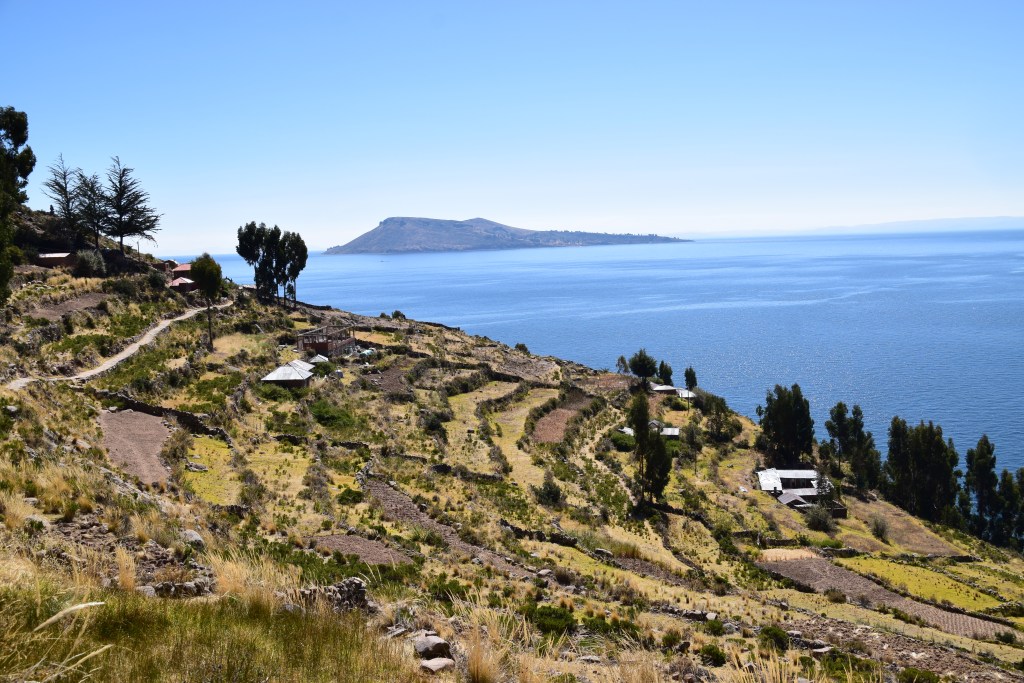
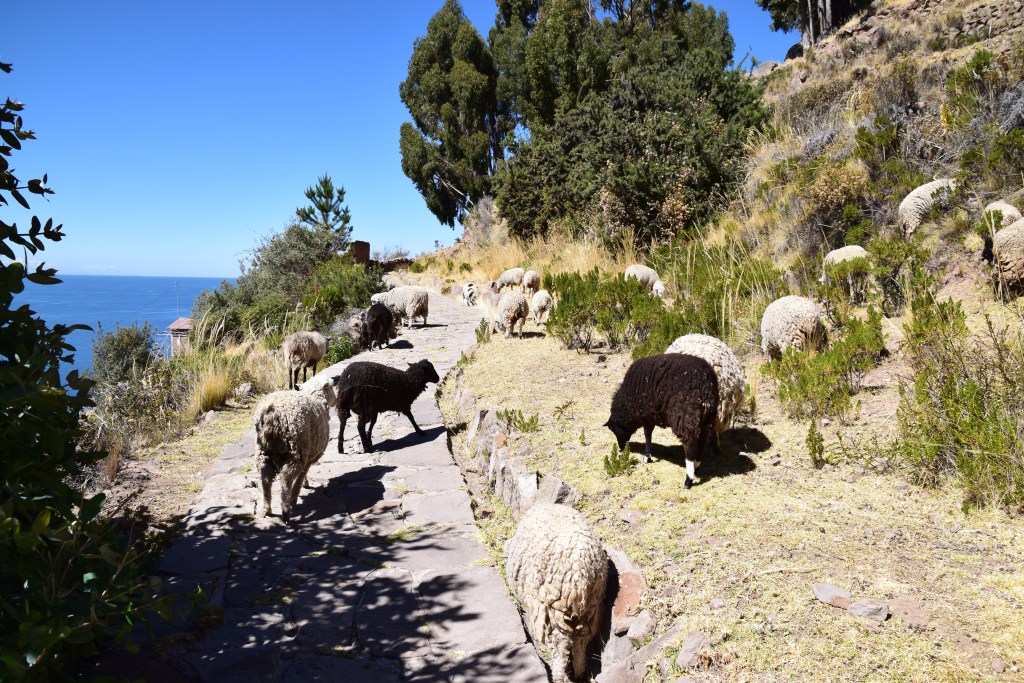
The island is particularly famous for its craftmanship. Both men and women are involved in textile production but there are strict gender roles – women spin and dye wool and do the weaving while men do the knitting.
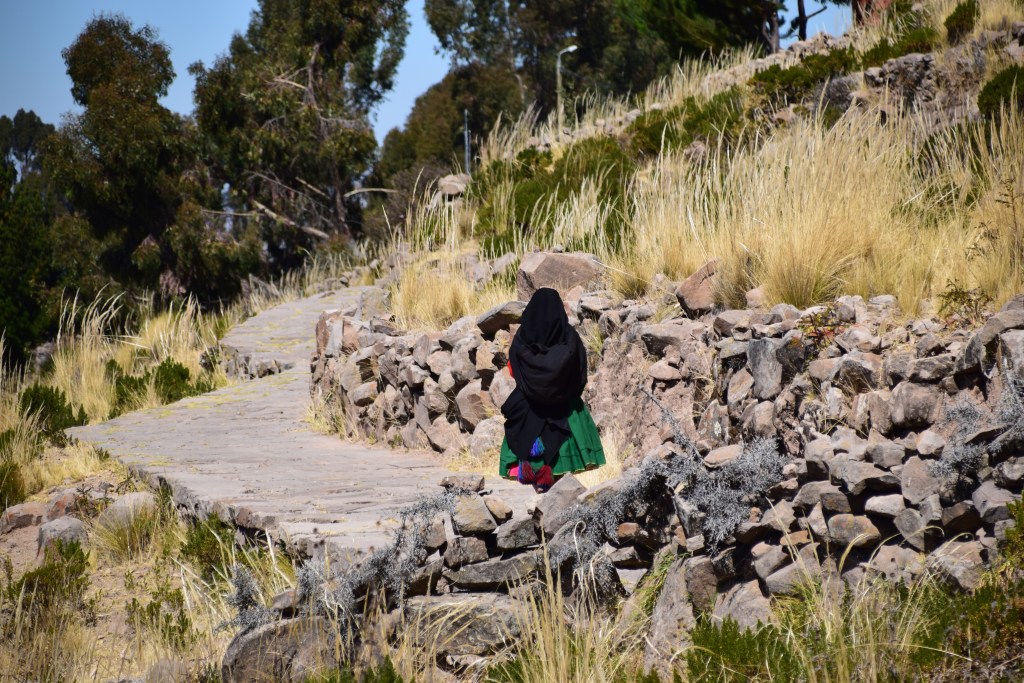
Taquileños are among the few indigenous communities in the region to forgo Western dress and keep their traditional garments. A woman’s marital status is indicated by her skirt – married women wear black while multi-colour is for unmarried women. Those seeking a husband wear the biggest and most colourful skirts! Women protect their beautiful hair from the sun and rarely cut it. However, when getting married, the bride cuts her hair and weaves it into a sash for her husband as a wedding gift.

Meanwhile, the men have been busy knitting – particularly hats! As boys aged five or six, they learn to knit chullos – first in white but, as their skill increases, they’ll use colours to create symbolic designs. When they wish to marry, their knitting ability is a key factor in getting a match approved – they are chosen by their mates based on the quality of their chullos (it should be knitted so tightly that it can hold water!). When they are married, the father-in-law presents the groom with a red ‘marriage’ hat or pintay. The chullos continue to change throughout a man’s life, depending on his status. New chullos are made when a man is divorced or when his social standing in the island hierarchy changes.

(Courtesy Wikimedia)
In 2005, UNESCO deemed Taquile’s textile art an Intangible Cultural Heritage of Humanity.
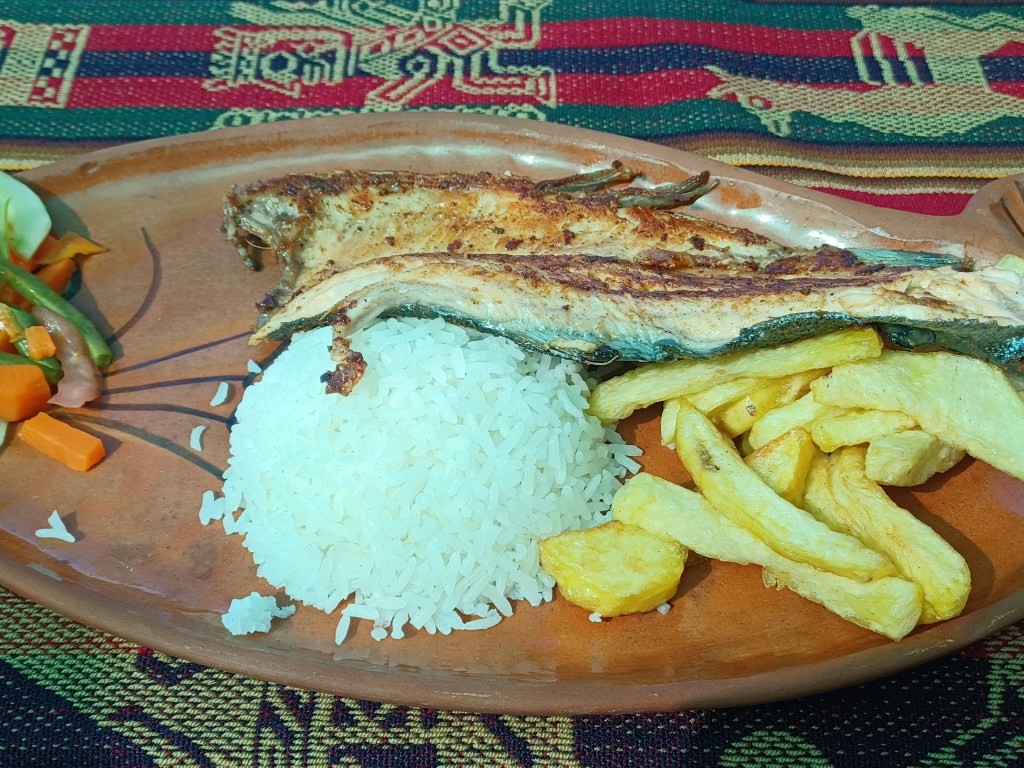
Lunch may be served in a local’s home – tables set up in the yard, looking out over the lake. The meal typically includes bread, quinoa soup, fresh trout and salsa (trout is not indigenous – it was introduced to the lake from Canada in the 1950s).
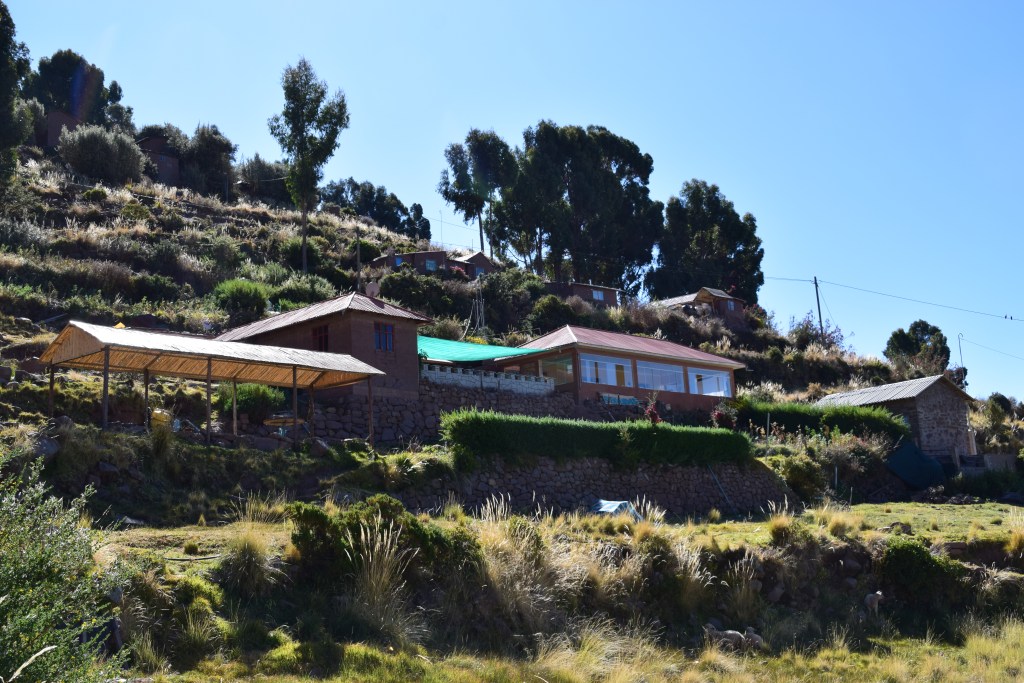
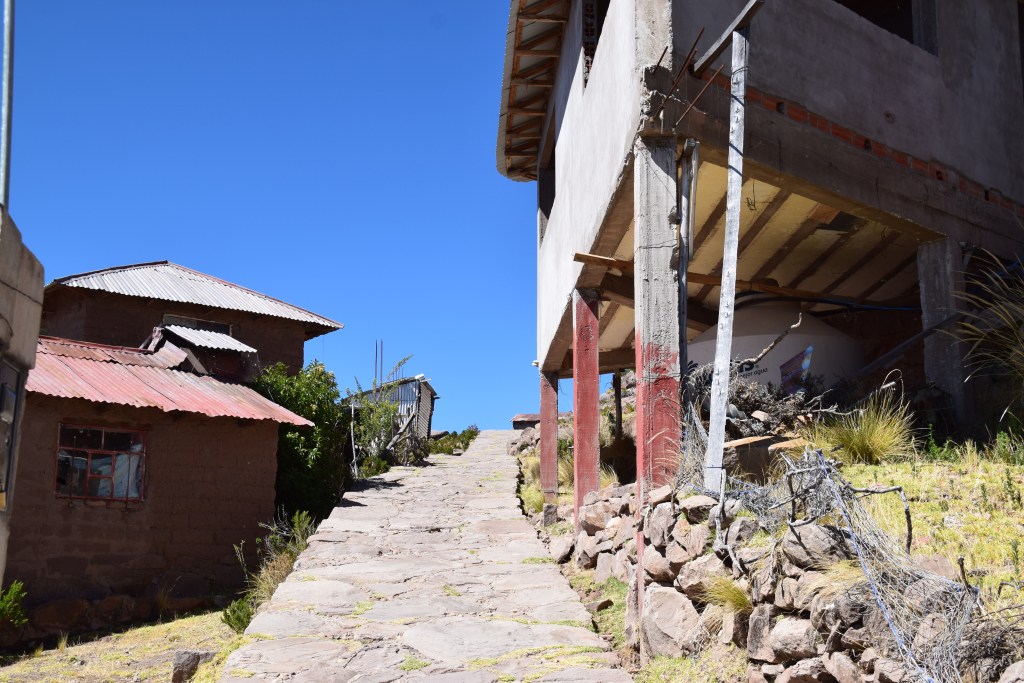
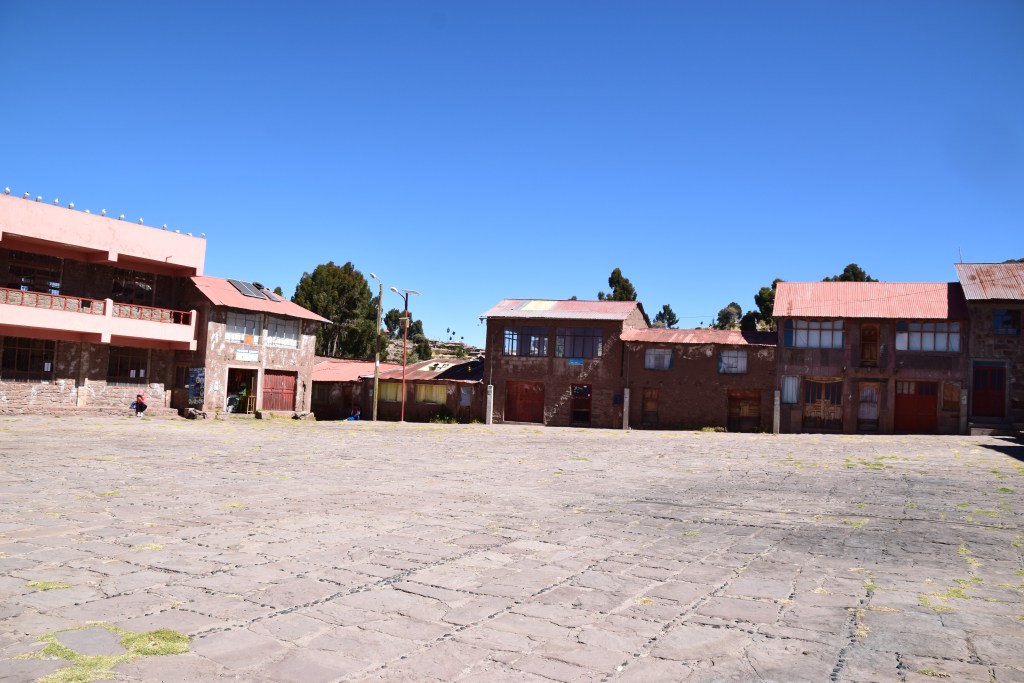
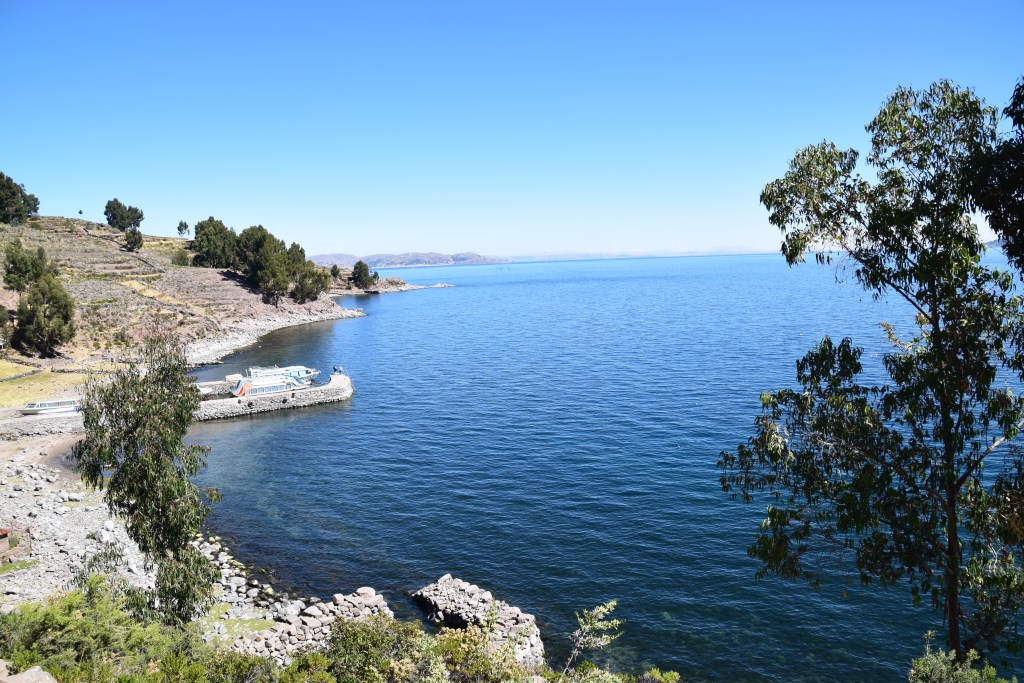
A visit usually includes a walk along the the top of the island – wonderful views – you can see the snow-capped peaks of Bolivia far in the distance! There is a local weaving cooperative in the main square and, depending on timing, your visit might coincide with a traditional dance performance.





PUNO TO COPACABANA
I’m reluctant to comment on the town of Puno because my only experience of the place was whilst being whisked from the station and to and from the boat. Our hotel – for 2 nights – was too far from town to walk and the high altitude zapped any energy we’d left at the end of the day anyway. I don’t like that – I don’t like staying in a place but not seeing it – not matter what it’s like. There are many places on the planet I wouldn’t return to but there are very few I’d regret having visited in the first place…..
Anyway – she digresses!
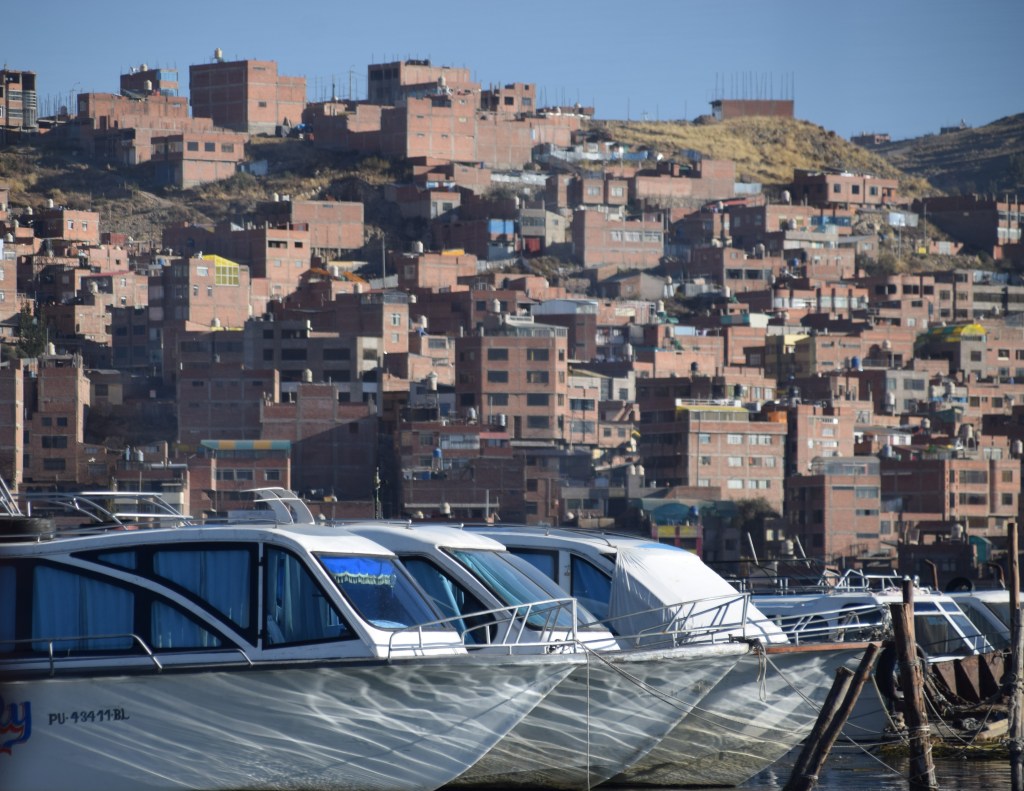
Puno is the main hub for accessing the islands from Peru. Most visitors are like ourselves – arrive late in the day, sleep, visit the islands, sleep and leave. The city offers a range of accommodation and places to eat and I’m sure there are charming nooks and alleys to be explored away from the main drag!
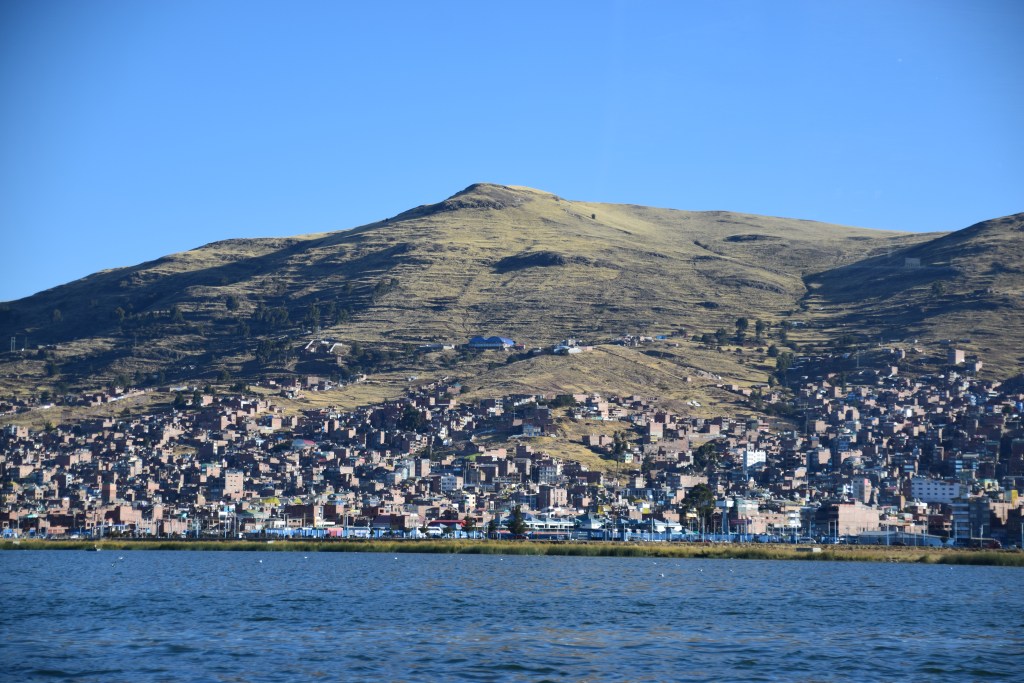
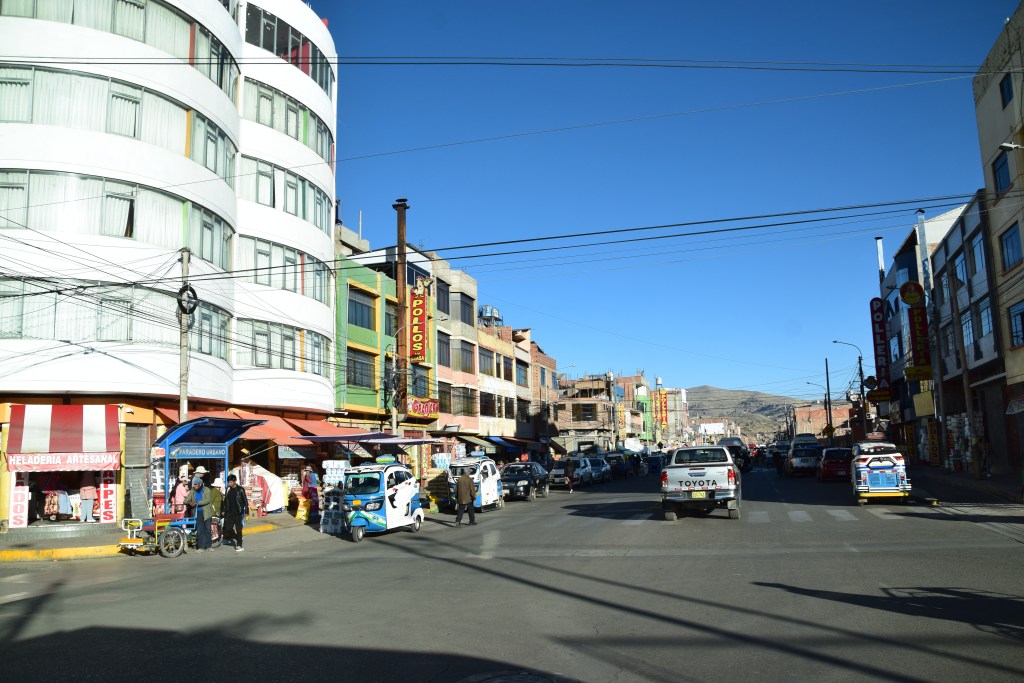
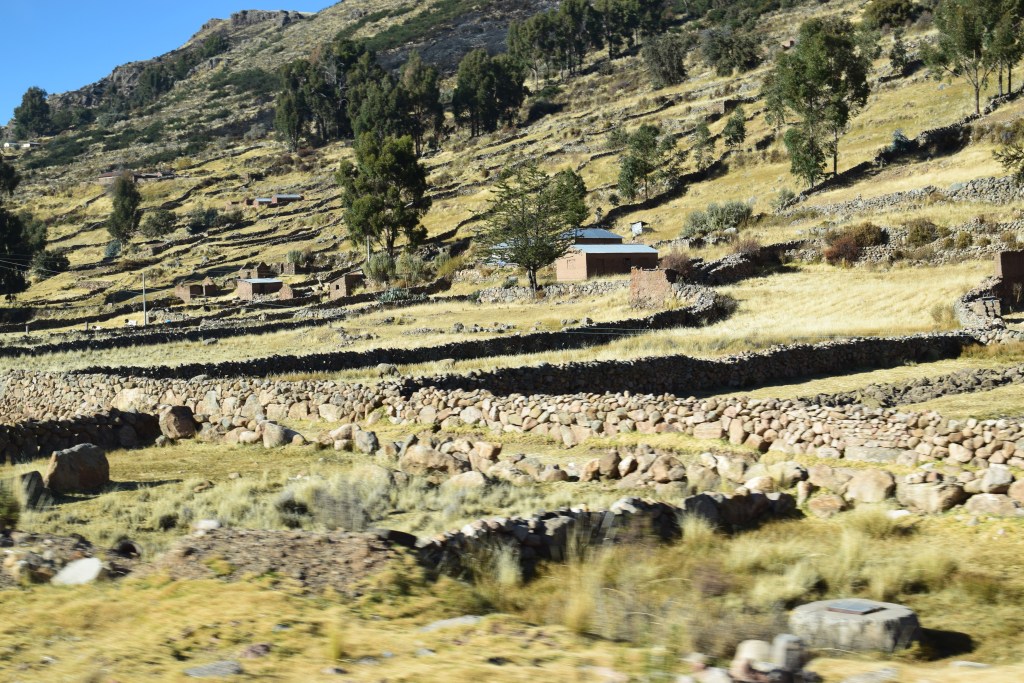
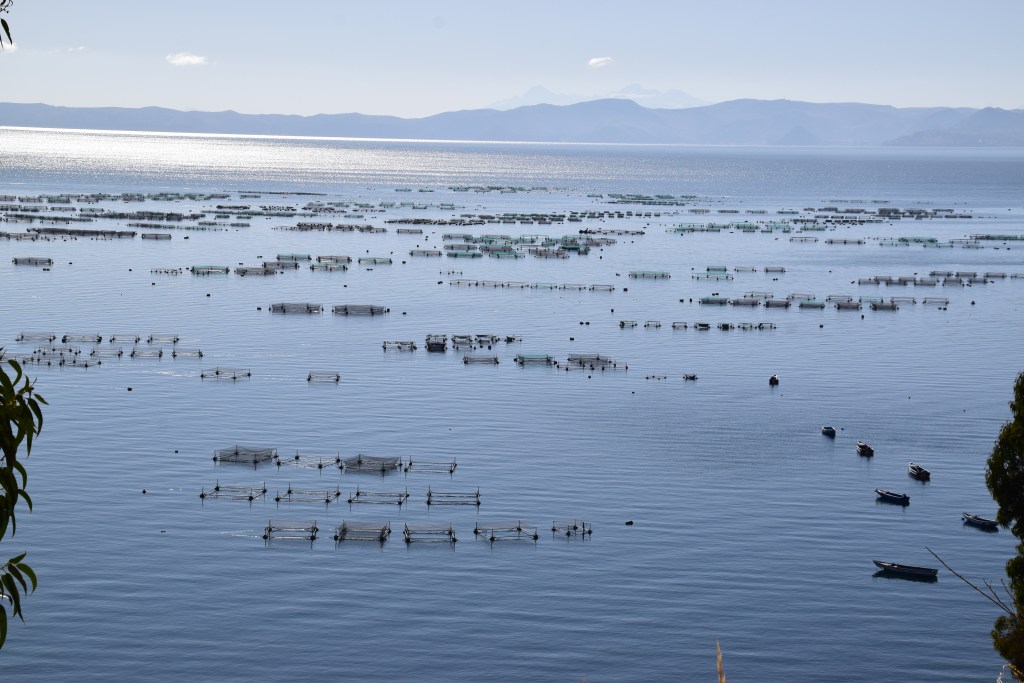
Leaving Puno and heading around the lake away from the tourist hot spot, offers up a completely different version of life here. Over 3 million people depend on Lake Titicaca for agriculture and livestock farming (sheep, llamas). On one side you’ve rolling terraces – where small farmers grow their potatoes, beans, quinoa – on the other, the floating cages of trout farms hang along the lakeshore.
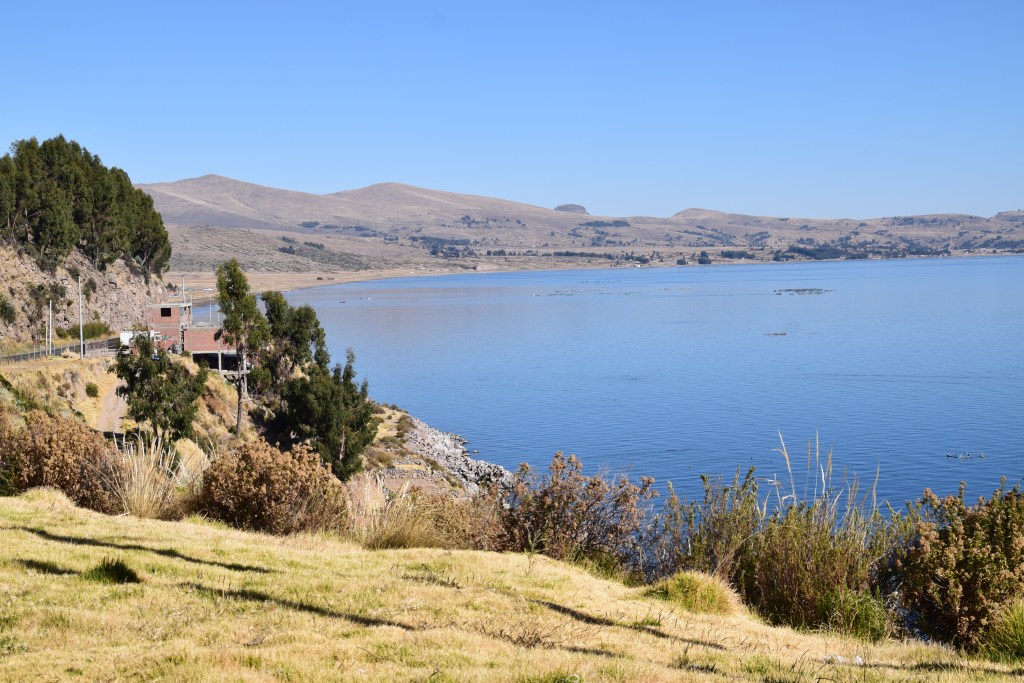


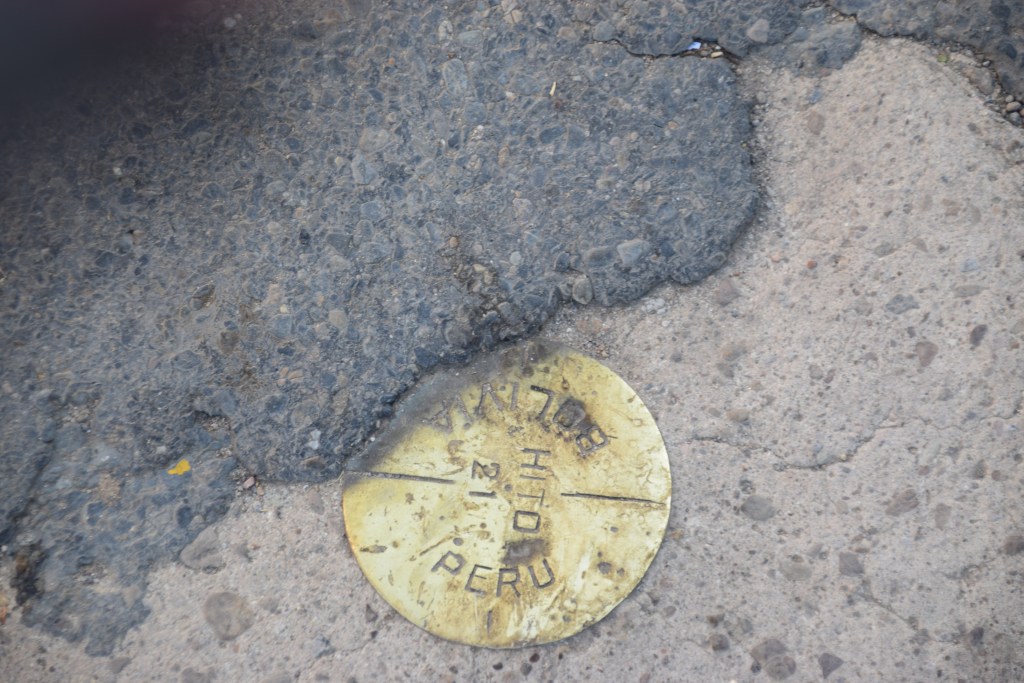
The border crossing is straightforward – except that one’s Peruvian guide cannot operate in Bolivia and so there’s a handing over ceremony to be endured as luggage is switched out of one car and into another. More introductions and you’re back on the road – within 20 minutes, you’re in Copacabana….


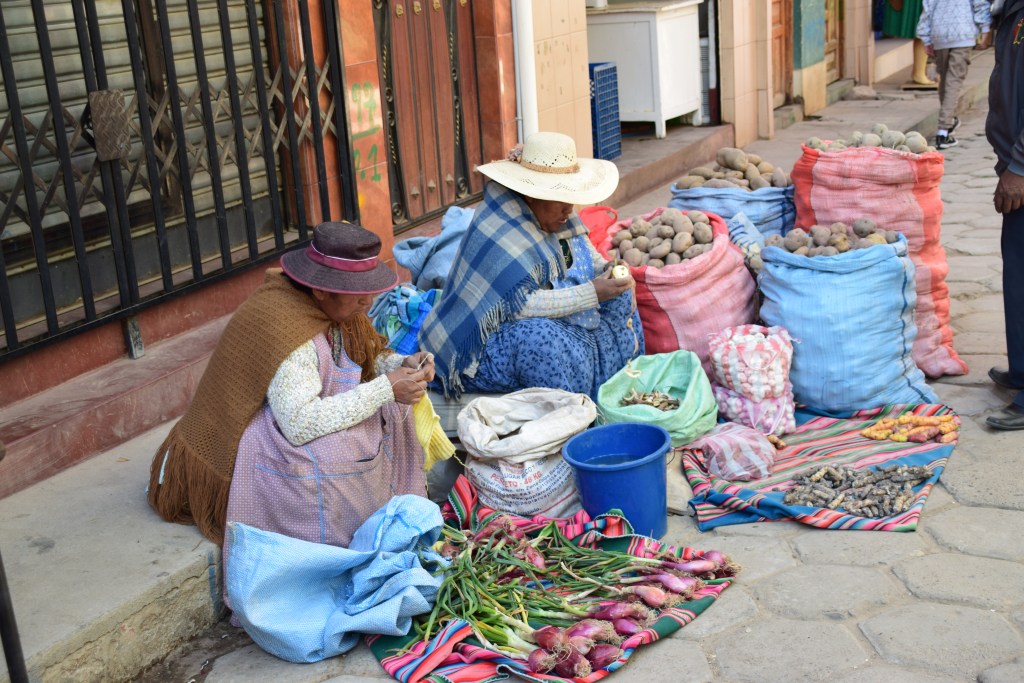
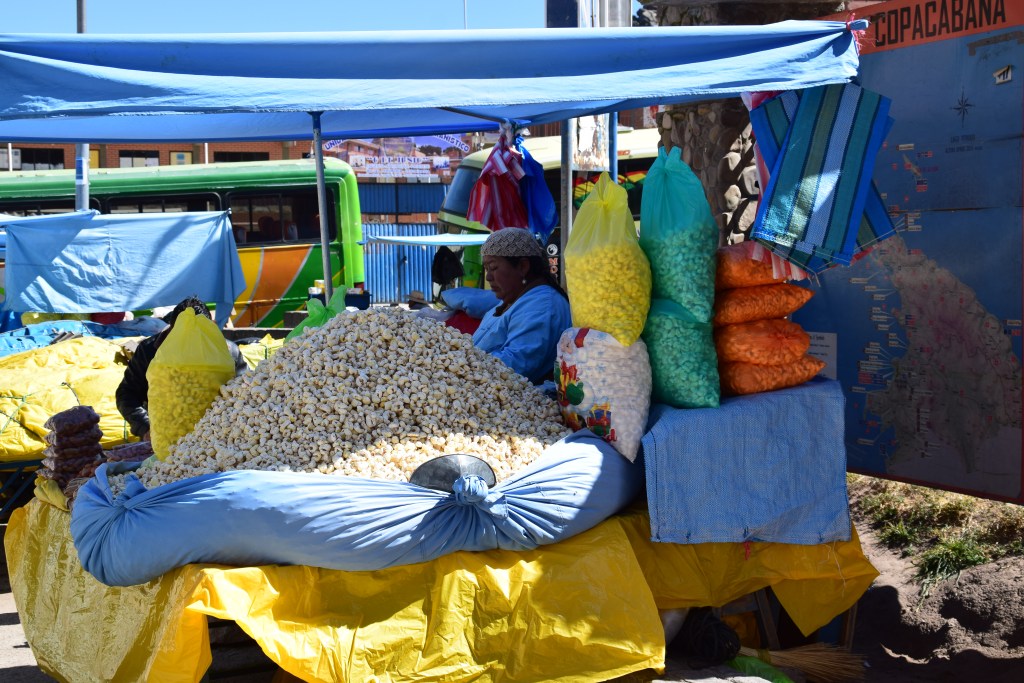
Copacabana is Bolivia’s equivalent of Puno – a jumping off spot for the islands. It’s wrong of me to compare the two when I didn’t spend any time at all in Puno but my initial impressions were of a far more attractive town – although much smaller. We’d just a short time to look at the Basilica and market before heading to the harbour to catch our boat for the one hour’s ride to Isla del Sol. There are nice coffee shops and plenty of places to eat and sleep and I, for one, would be happy to spend a night there.




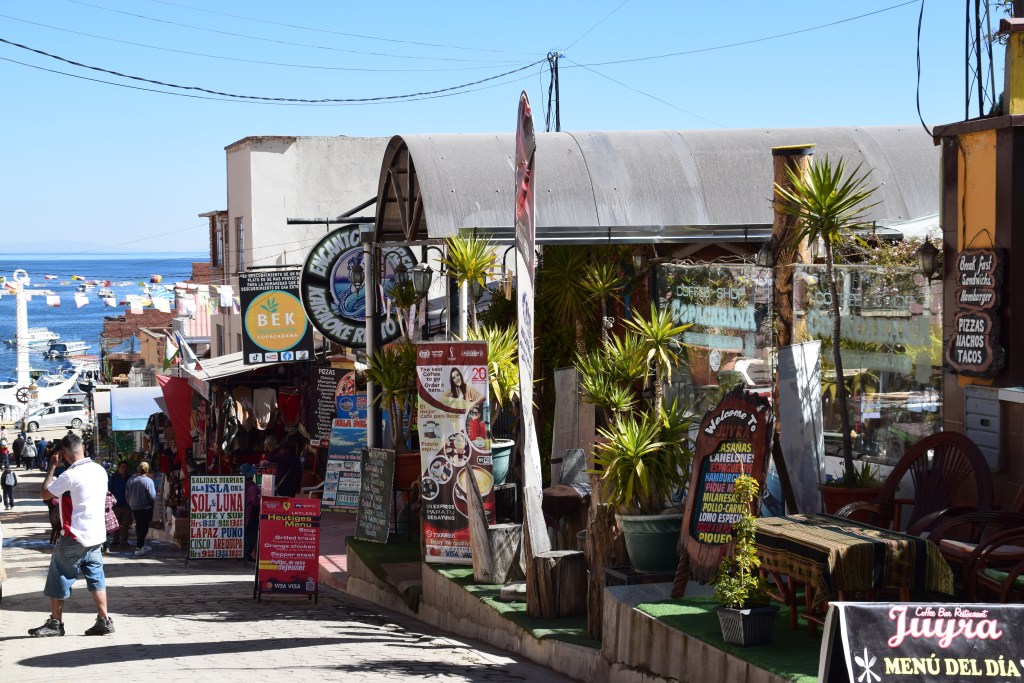
ISLA DEL SOL
Following a great flood, the region around Lake Titicaca was plunged into a long period of darkness. After many days, the bearded god Viracocha arose from the depths of the lake and made his way to Isla del Sol where he not only commanded the sun to rise, but created the world’s first two Incas; Manco Capac and Mama Ocllo.
While the lake was indeed a sacred place for the Incas, they didn’t actually originate on its shores. It’s more likely that the Incas invaded Isla del Sol in the mid fifteenth century and created the story in an attempt to not only justify their reign, but to identify themselves with the pre-existing Tiwanaku civilization.
Whatever its origin, Isla del Sol was seen as a centre of spiritual power and became a place of pilgrimage for the Inca. Today, there are dozens of minor pre-Inca and Inca ruins scattered about the island – many paths and walls being integrated into the infrastructure of the island.

At circa 70km2 in area, this is one of the largest islands on the lake. Over 800 families live in several communities and although the island gets its fair share of visitors, people still follow a very traditional way of life. The terrain, though stunning, is harsh – there are no paved roads or motor vehicles here and the main economic activity is farming the ancient terraces with fishing and tourism augmenting the subsistence living.

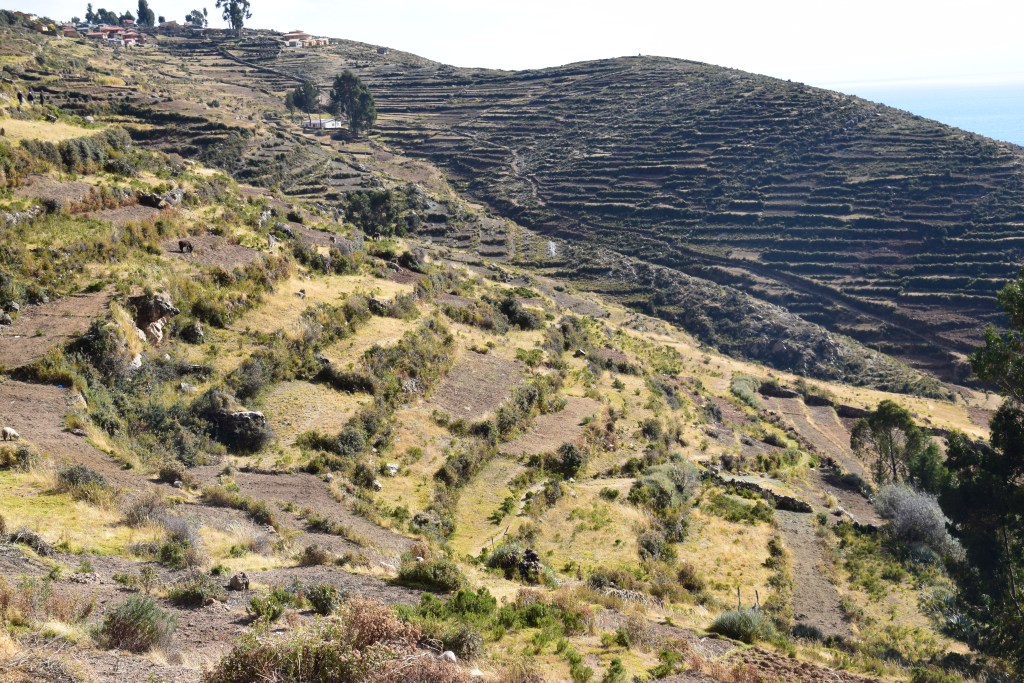
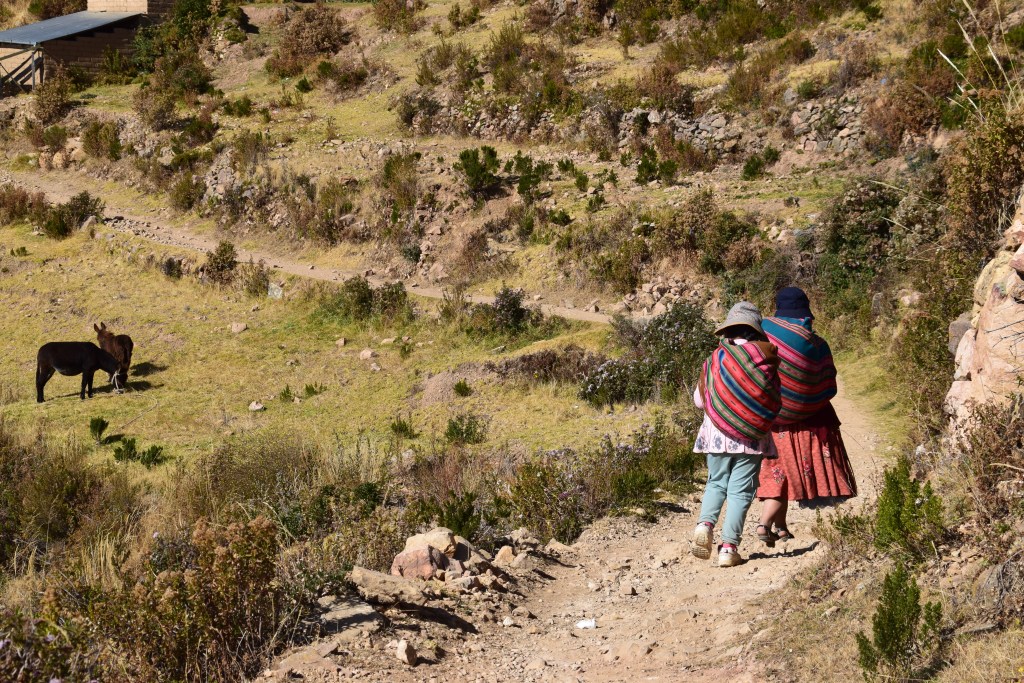
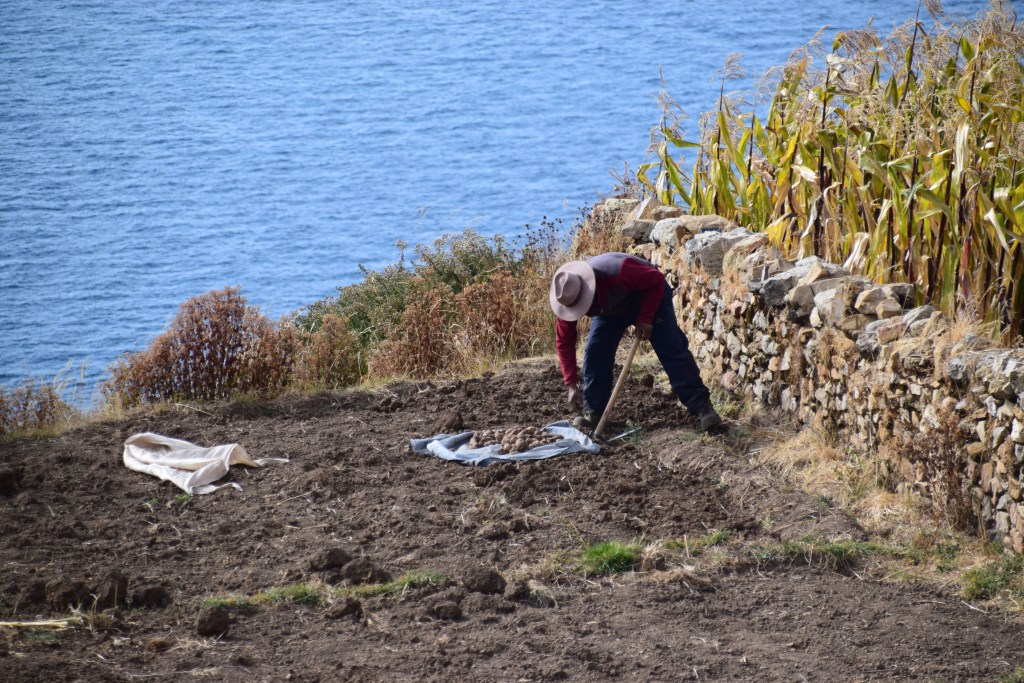
A word about the humble spud!
We Irish know a thing or two about potatoes. And as for black spuds – well – we’re still not really over the Great Famine (see – it gets capital letters!) of 1845 -52 when the potato harvest failed. So the regular appearance of Chuno on our plates took a bit of getting used to!
Small potatoes (for ease of processing) are spread closely on flat ground and allowed to freeze with the low night temperatures and dehydrate in the daytime, for about three nights. This process results in natural freeze-drying.
The potatoes are then taken to chuñochinapampas – flat areas where the potatoes can be laid out. Here, they are trampled by foot, usually by the extended family (and their pets!). The trampling eliminates what little water is still retained and removes the skins. They remain as they are for over a week, drying in the sun. Once dried, they require only minimum care and can last for a very long time. This is the process for Chuno Negro – White Chuno has the extra stage of prolonged washing after the trampling.

The village of Yumani is approached from the harbour via 206 Inca steps and offers a selection of accommodation and eateries. Even that climb can present a challenge, bearing in mind that you’re already 3800m above sea level and now adding another 200m by the time you reach the village!!

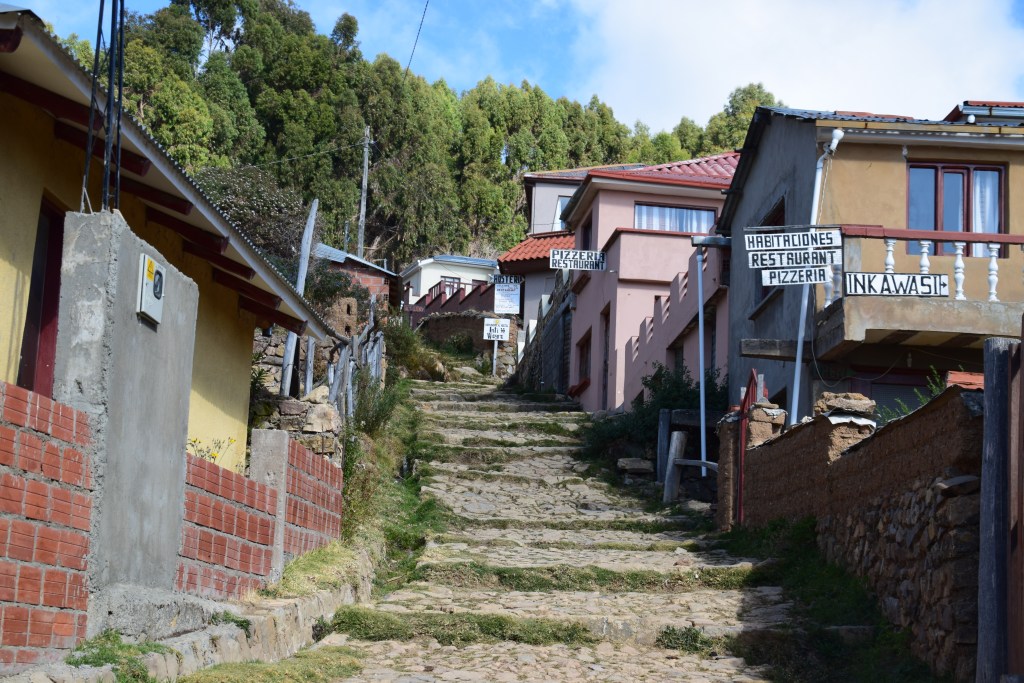
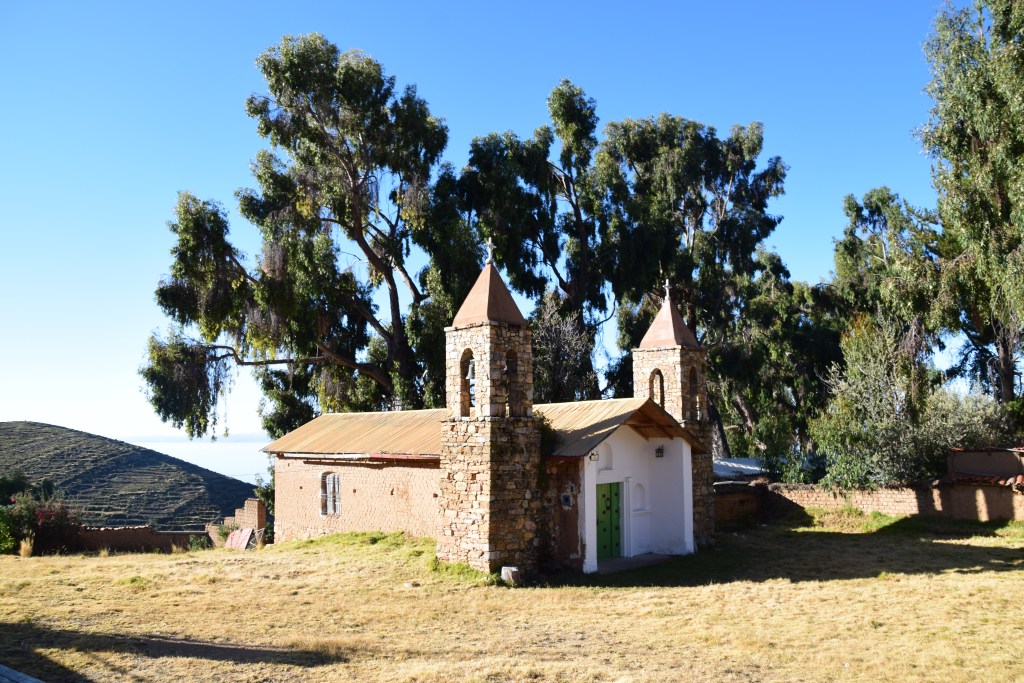
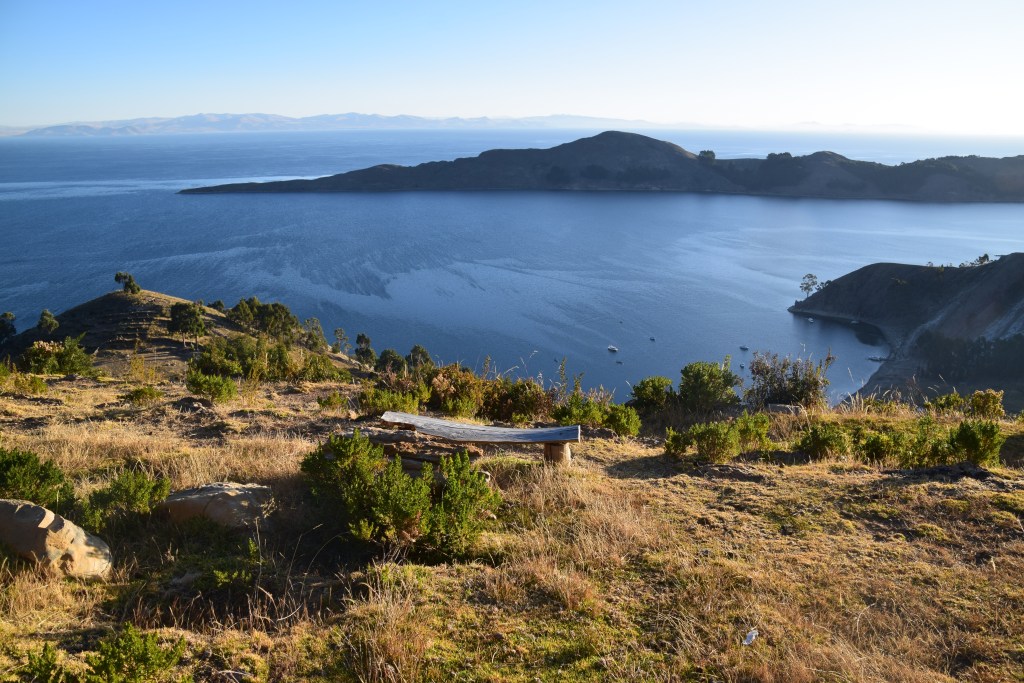
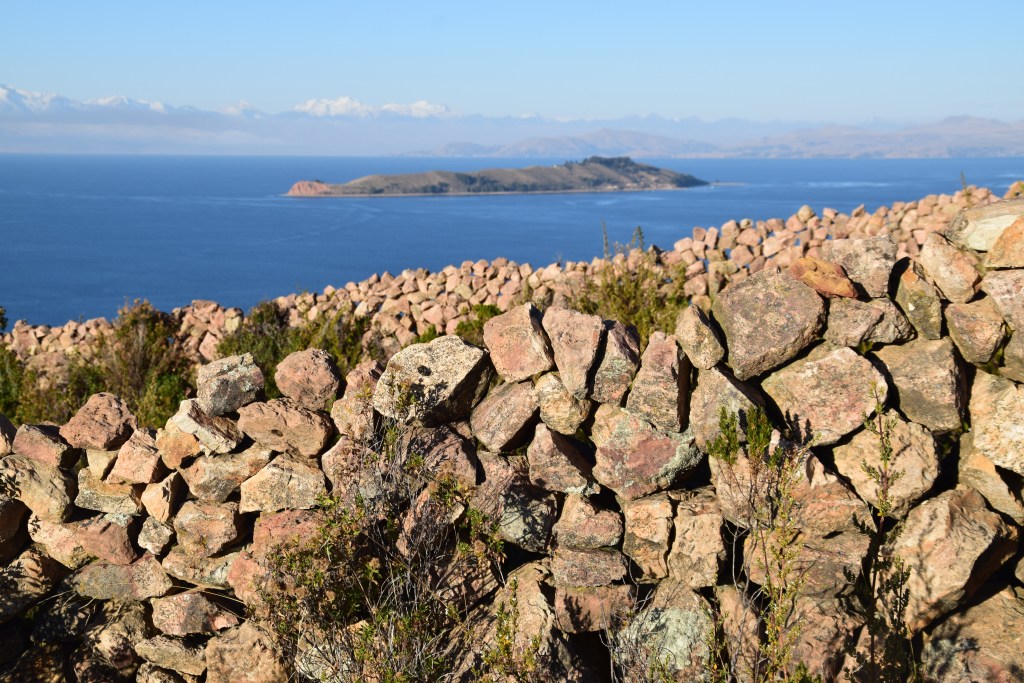
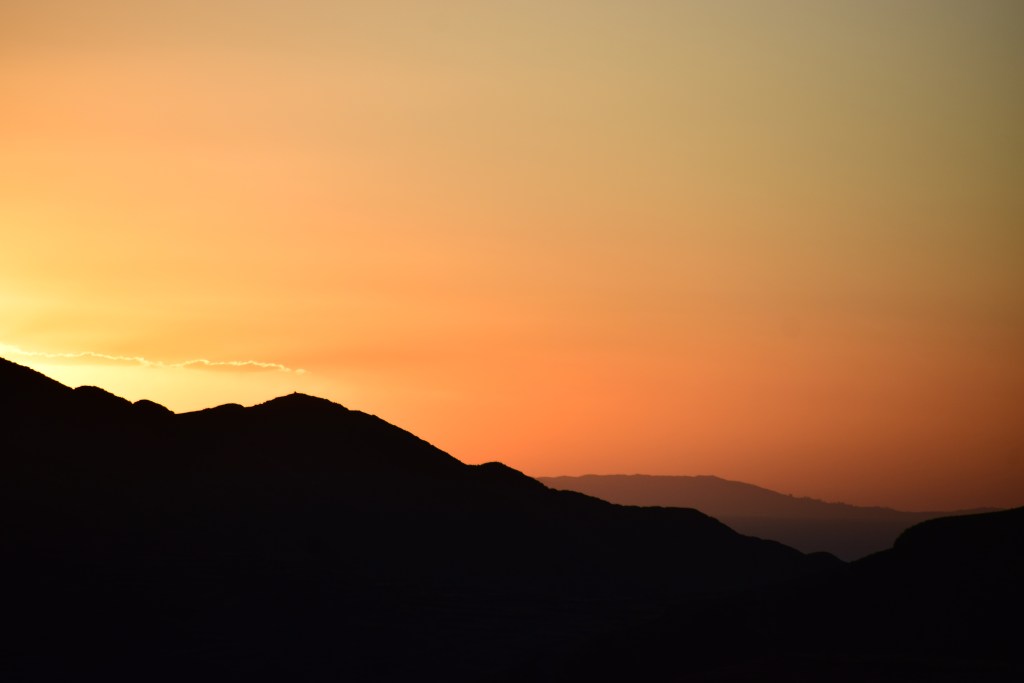
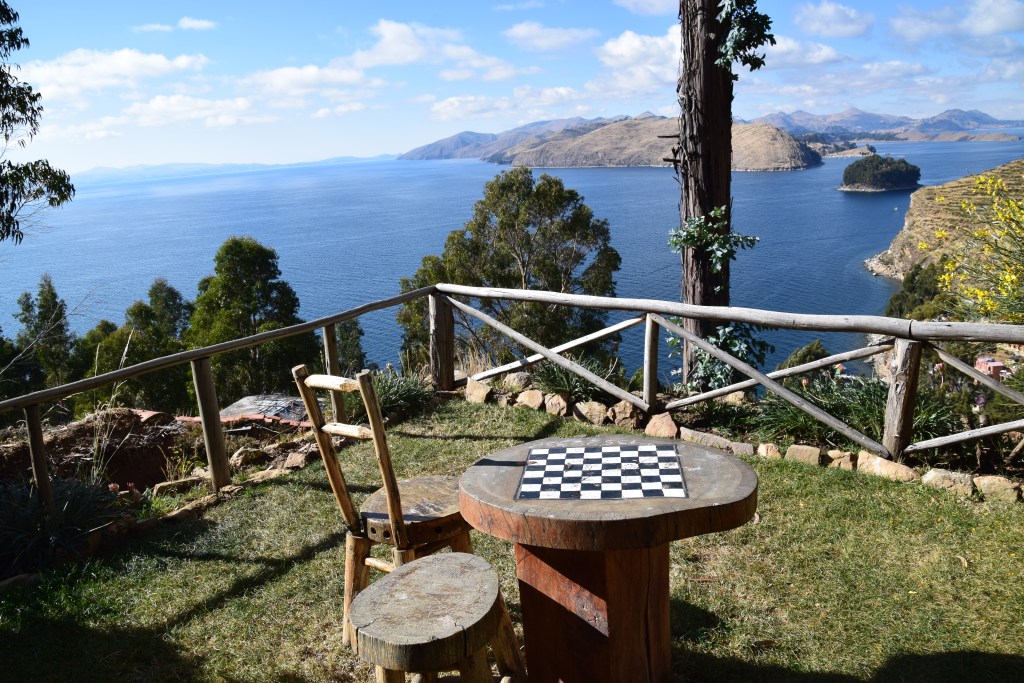
A further climb above the village is worth it for the views of the island, lake and the Cordillera Real in the distance – and the sunsets of course ! While most visitors spend a night here, you could happily spend several days hiking the scenic trails.



ISLA DE LA LUNA
Located just 12kms and a short boat ride from Isla del Sol, the tiny Isla de la Luna is inhabited by about 200 people. This is an organised community with family activity based around farming, fishing, crafts and tourism. The pace of life is slow here – residents while away their day watching over their sheep and llamas as they graze along the cliff. Some man the stalls near the pier where visitors can purchase handcrafts. It wouldn’t take very long to walk the full length of the island and there are few actual attractions other than the views and the one archaeological site…
They might have only one site – but it’s a good one! This, after all, is where Viracocha commanded the rising of the moon. The first Incas – Manco Capac, son of the Sun God Inti and his sister/wife Mama Ocllo, daughter of the Moon – would leave Lake Titicaca in search of a place to found their empire but this sacred island is where they would establish their Temple of Virgins, Ina Kuyu.
It was a huge honour to be brought here and the women were considered pure and sacred. They were taught many skills and the most successful and most favoured would marry Inti (although, this meant of course, that they had to give up their life on earth!). Lesser virgins were taught domestic skills such as planting, spinning and medicine before travelling to other communities in the empire to share their knowledge and thus strengthen the Incan culture. It is believed by some historians that perhaps the whole island was reserved for this purpose – explaining the lack of any other Inca settlements.
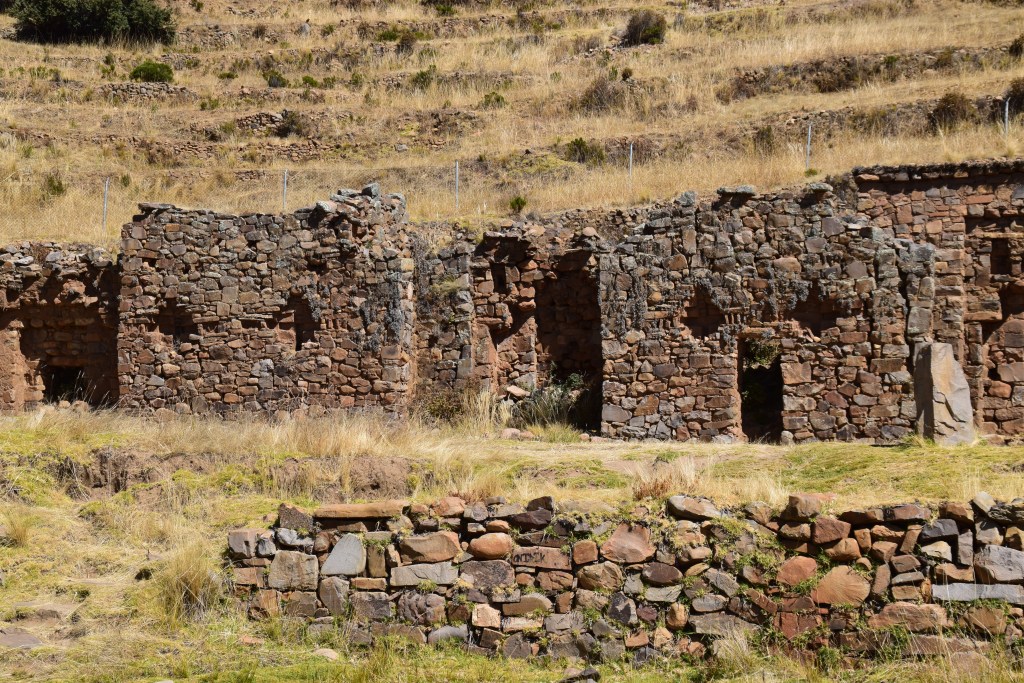
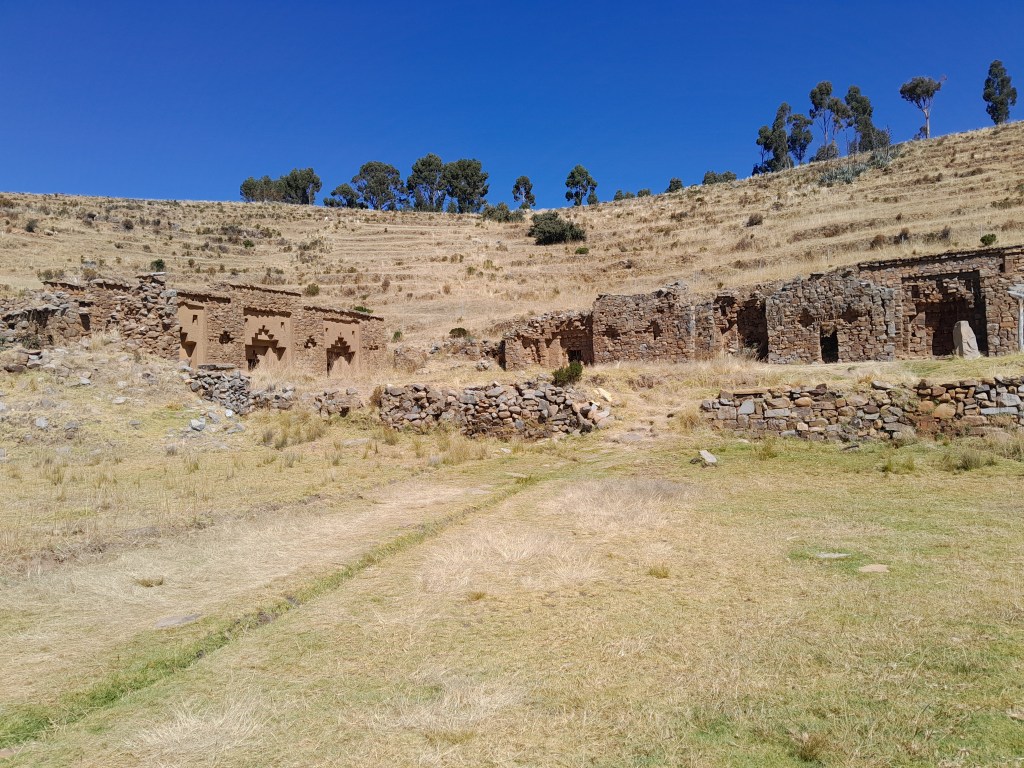
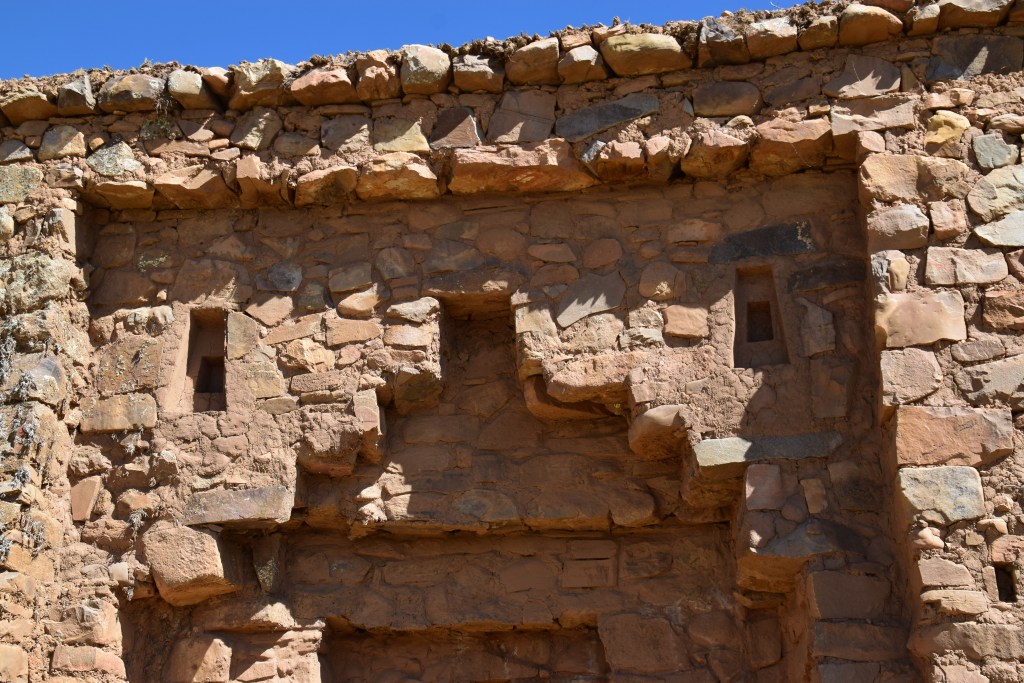
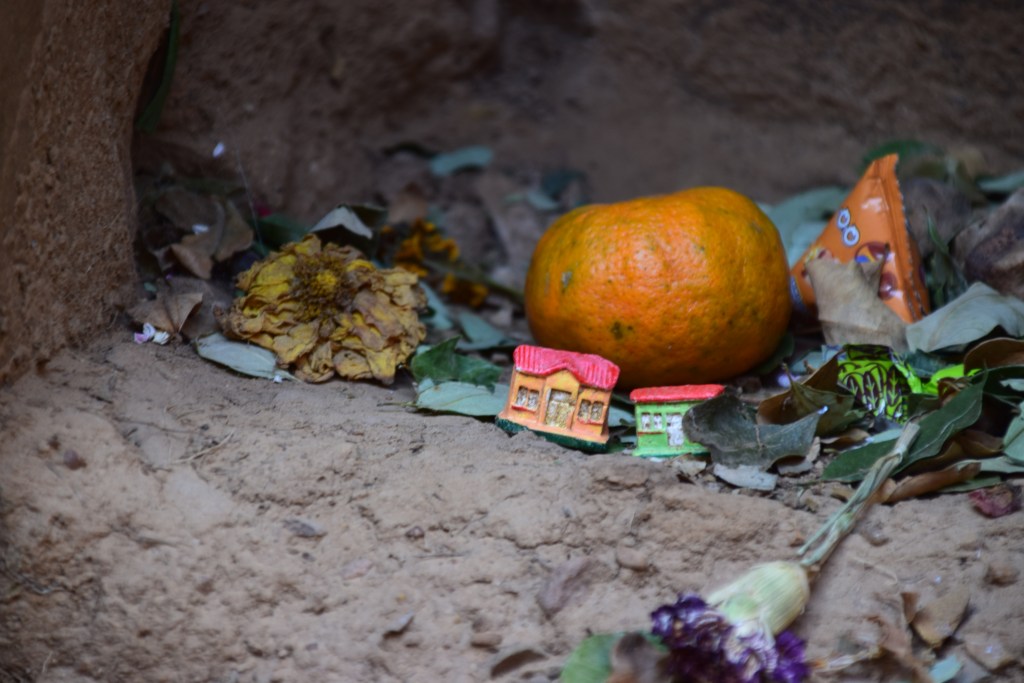
Inak Uyu is approached via a set of terraces leading up from the dock. The U-shaped complex in a natural amphitheatre has been partially reconstructed. It was once plastered and painted red and yellow. Interestingly, much of the design is not Inca at all but dates back to the Tiwanaku civilisation.


.
The above is based entirely on our own visit of 3 nights – (2 in Puno and 1 on Isla del Sol). – July, 2024. We travelled from Dublin with Trailfinders.
WHERE WE STAYED
SONESTA POSADAS DEL INCA PUNO
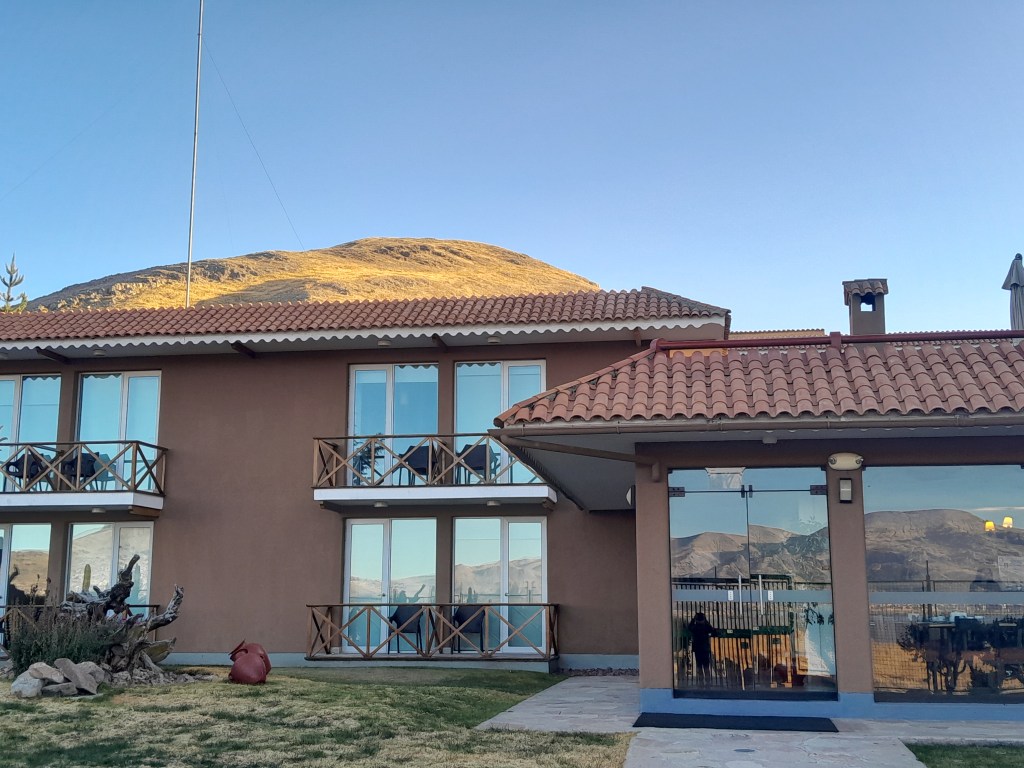
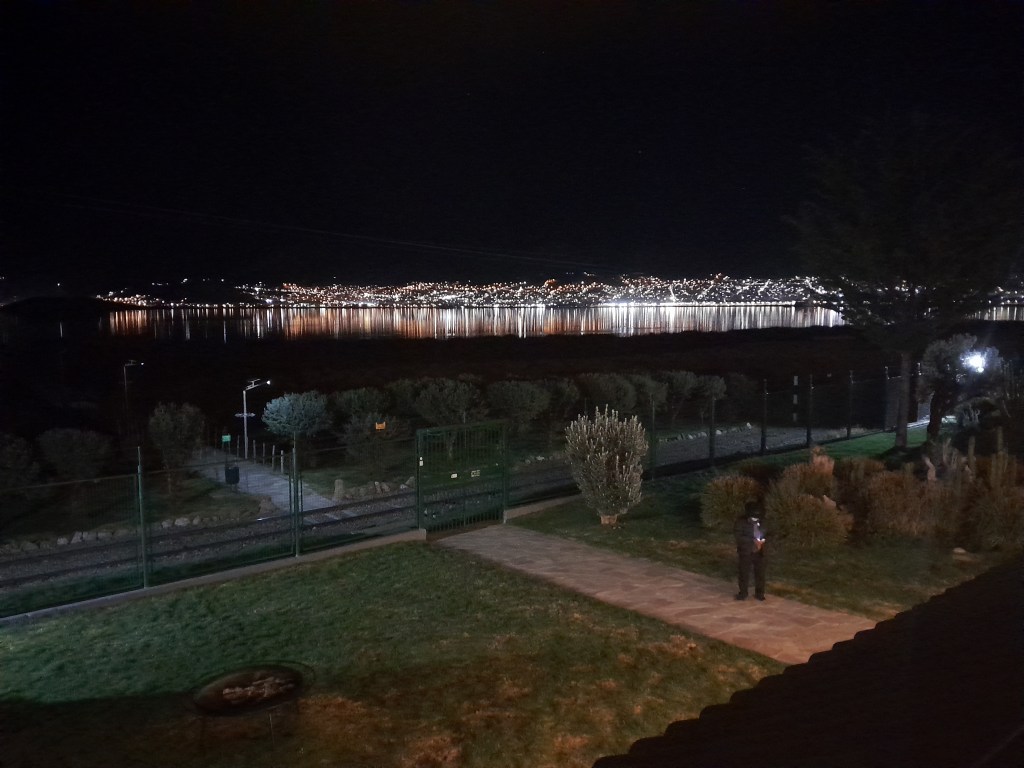
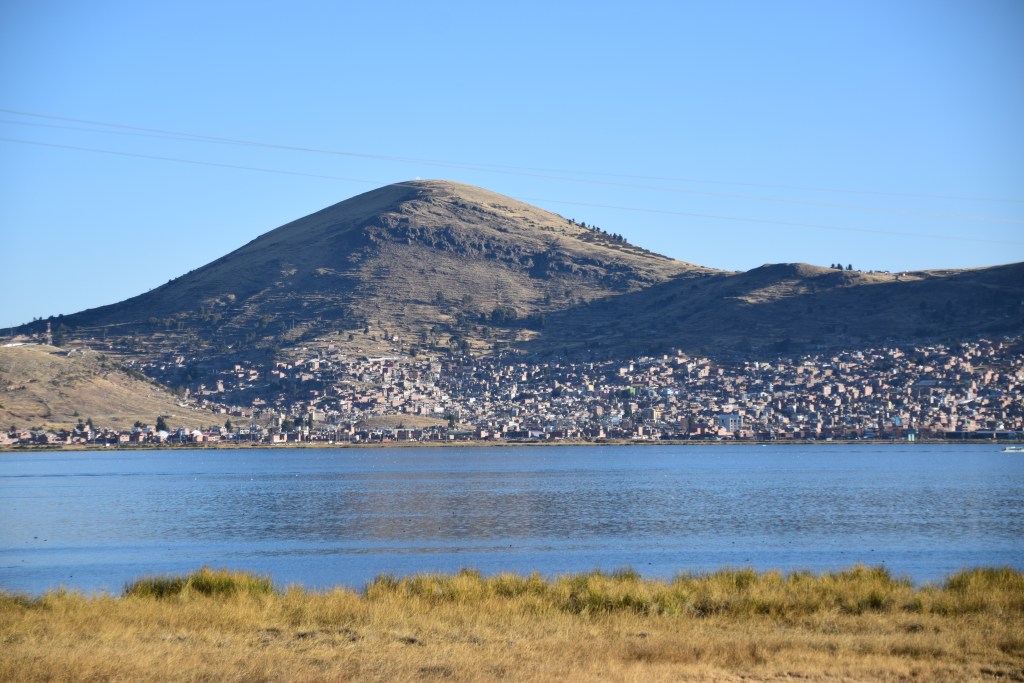
This 3* property is, as I mentioned, a bit outside town. It offers nice views of the lake and a welcoming open fire in the dining room. I suspect that most visitors are too busy with trips to have time to sit outside and enjoy the landscape. It’s a short cab ride back in to town but, again, most people stay and eat in the dining room after their busy day of travel or sight-seeing. It was fine for the 2 nights we spent here.



POSADA DEL INCA ECOLODGE
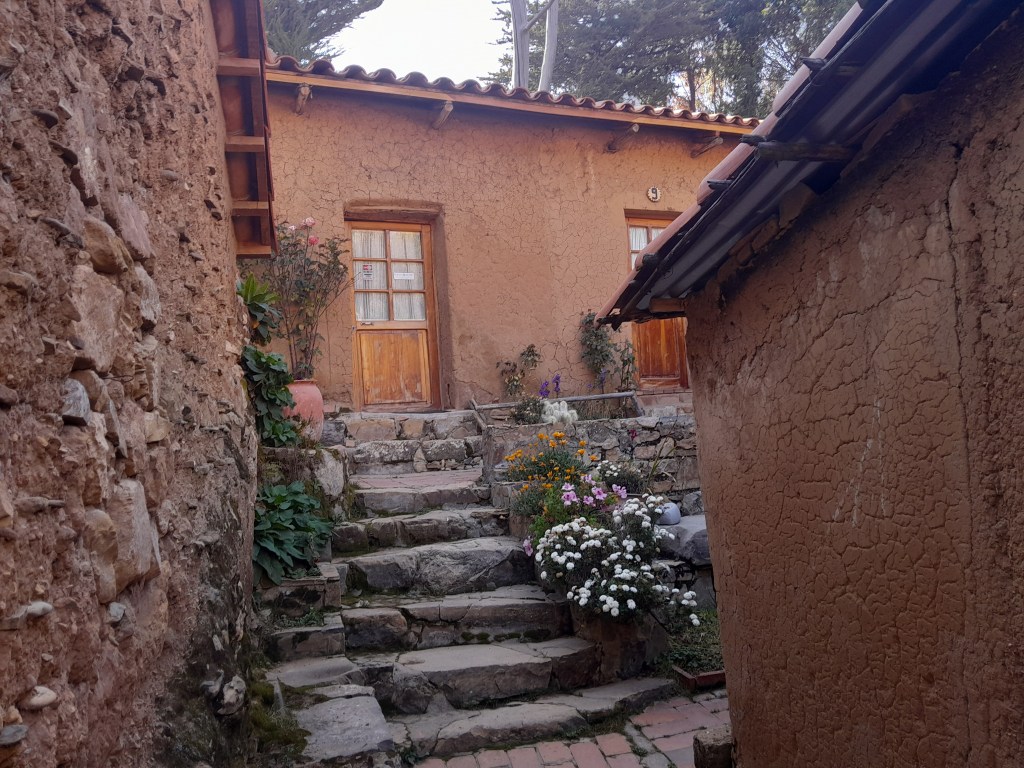
This old restored hacienda has, surprisingly, 20 rooms scattered about the grounds. It’s located in Yumani which means you have quite a climb to reach it – not for the faint hearted!! Don’t expect a gourmet experience – food is basic but good. There are nice nooks and crannies about the grounds which are enjoyable while the sun is with you!
There it is – hiding in those trees…..





Remember learning all about this in geography classes
I know!!!! And my dad taught me all the countries of South America… Of course he was of the generation that didn’t travel – if he were alive, he would not believe that I could visit such a place!
He’s probably looking down and is delighted for you.
He’ll love it!!
Thanks for the wonderful post. In 2017 we spent a number of days in Puno but I had a bad case of altitude sickness coming over the mountains so I spent a lot of time in our small hotel by the main square while Annie toured the city and took the Lake tour you did. At least I got out to walk around the city, see many parades going on and get our laundry done. Glad you had an easy border crossing. We took a local bus to La Paz and the border crossing was the worst we’ve ever gone through. The driver had everyone get off in the middle of Desaguadero. Thank goodness there was a tour group on the bus so we just followed them the 8 blocks to the border crossing, changed money on the street, took care of customs and then followed them another 1/2 mile down dusty back roads to a street where the bus picked us up. Even the locals weren’t sure where to go. One of the few times we thought we might never see our luggage again.
Looking forward to reading future posts on Bolivia.
Steve
Ah altitude sickness – I’m glad we didn’t research it properly before we left – because we wouldn’t have gone if we knew what we know now!! It was TOUGH … we managed to keep going but on 3 or 4 occasions we seriously considered cutting our loses and getting back to Lima. Each time we just said we’d go as far as the next destination … and we never acclimatised because every new destination was a bit higher!
That was a terrible border experience – and it’s not so long ago!
We did a similar tour on our first trip to Peru. In addition to Isla del Sol, we stayed on an island on the Peruvian side, further away than Taquile. On the boat ride we could see quite a few reed islands in the distance that were still being lived in, and didn’t allow tourists. So, even though the Uros visit is touristy, some of them still live like that (at least they did when we were there). It is an interesting part of the world though isn’t it. Maggie
There are a few islands that seem to do homestays – it’s becoming more popular I think. It’s good to know that even some of the community is still living in the traditional way – although it must be tough enough now with so many temptations near at hand! It’s definitely worth seeing – even if it’s just for the opportunity to get out on the lake. I’ve been going through the photos this past few days – I’d forgotten how basic life still is on the islands… a wonderful experience….
What a fabulously interesting post, Marie. The island experience may have been a tourist trap but you clearly learnt loads about something unusual and close to unique. Sometimes you have to compromise to get the experience. They all sound like terrific places, full of interest and so different. It’s sounding like a fantastic journey.
Ah it was a great experience – and you’re right – we really did learn loads. And, as I said above – there’s NO way you’re not going to visit them…
Wow, what an epic trip! Thanks for sharing it.
It was indeed – Only thing against it all is that I always imagined these trips as being leisurely and laid back with time to absorb the culture and traditions…. sure we were flat out – on the move the whole time !!
A beautiful part of the world that few see
How lucky am I…. it took us a long time to get to South America – it was actually looking as though we might never get there …. Never say never!!
I also followed the floating islands tour. It’s obvious that it’s all fake and that it’s a tourist trap. It would be so much more honest to admit that it’s a re-enactment and stop taking people for idiots.
Yes I’d have preferred that – Trying to convince us that they lived there – with practically no possessions – was a tall ask…
This is so fascinating! I can’t imagine living on a floating island, not to mention one made of plants that’s sturdy enough to last for so long. I’d love to visit, despite how staged it might feel. Thanks for the tour!
I’d never survive – I need a hairdryer!!! And yes – You’d have to see it if in that area. And just accept it for what it is…. XXXMarie
what an extraordinary place to visit! great photos, I feel like I’m there too through your post
Thanks Tanja – I’m delighted I was able to transfer the impact…. it’s a wonderful place indeed. XXXMarie
Fascinating read and some great photos!
It’s a little sad that they expect island life to end with the next generation but on the flipside, I don’t think being rooted to island life would be for me either!
The story about the skirts and knitting was interesting too. It’s a good job my marriage prospects did not come down to the quality of my knitting! Haha.
Thanks Jason – it must have been a tough life – it’s no wonder they are drawn away from it… I loved the hats / scarfs …. I’m hoping its the real thing – not their mammies hiding away and unravelling their knotted mess at night 😅
Fascinating! I’ve thought about visiting South America, but have not been there. Nice post!
Well – never say never! We didn’t get there til 2023 and then again in 2024… The problem is deciding where to go! I envied the younger generation we met along the way who were spending 3/4 months ….. not envying the amount of actual travel but rather all that they had seen …