
So – are you one of the lucky ones?……
……living in a European country with direct flights to Slovenia? Well, if so, I truly hope you’ve already made that trip…. and, if you have, that you stopped over for a while at least in its capital city. For us Irish, the need for connected flights, or bus transfers from Trieste airport, makes Ljubljana a bit trickier for a weekend junket. Many visitors, heading to the country for a week or so, tend to skip the city in favour of the lakes and mountains. And that’s such a pity….
Because there’s no list of MAJOR sites to be tackled, and because most highlights are clustered around the pedestrianised old town, the joy is in just wandering about and taking full advantage of the al fresco bars and restaurants.
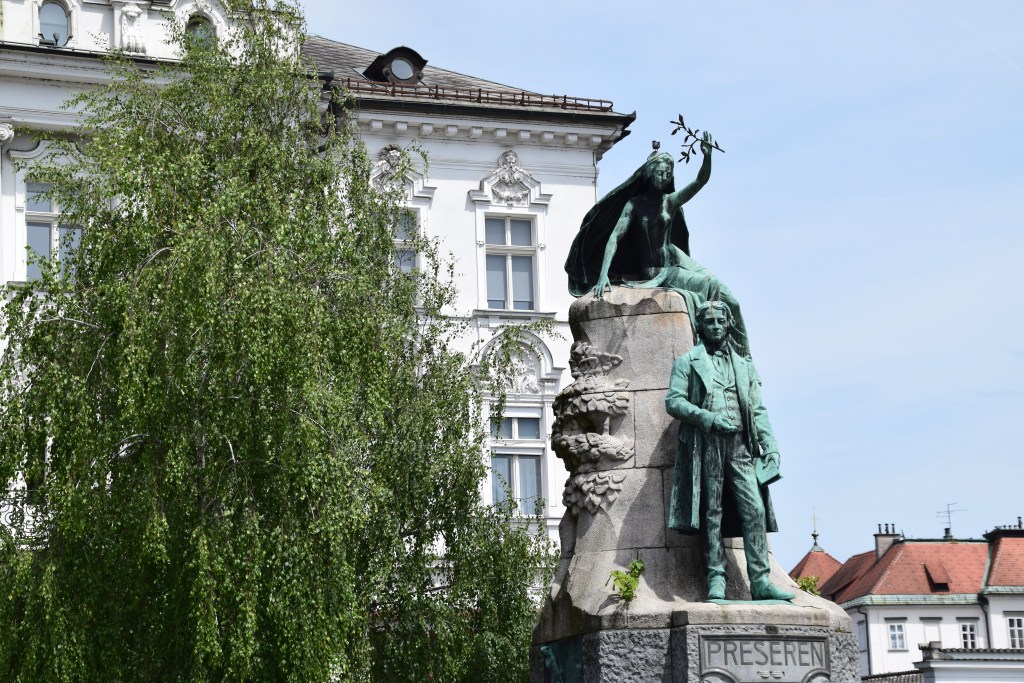
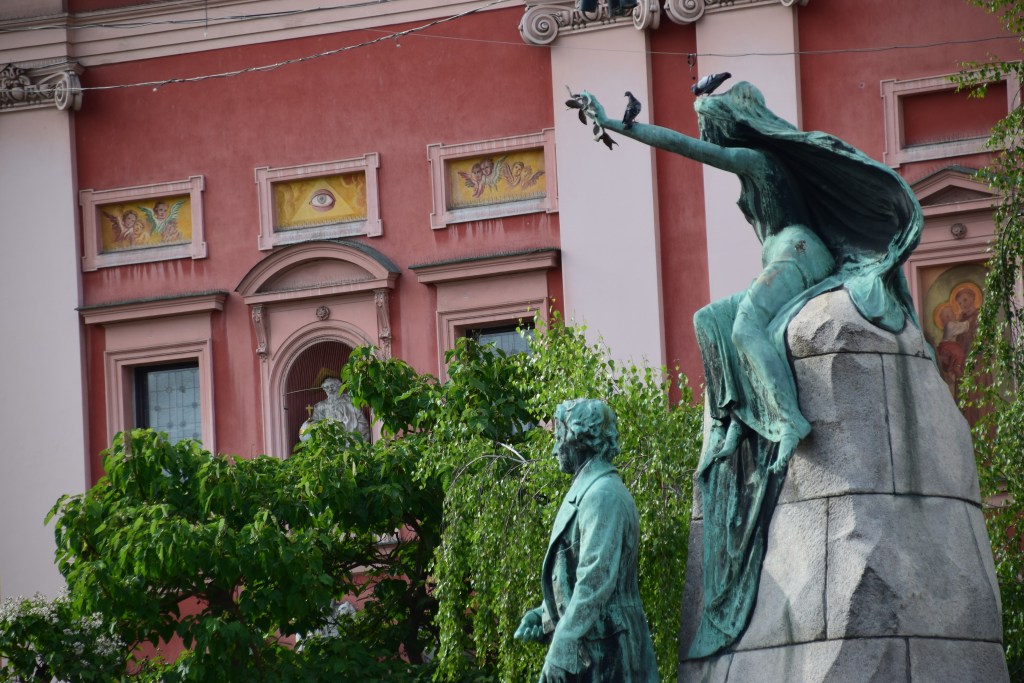
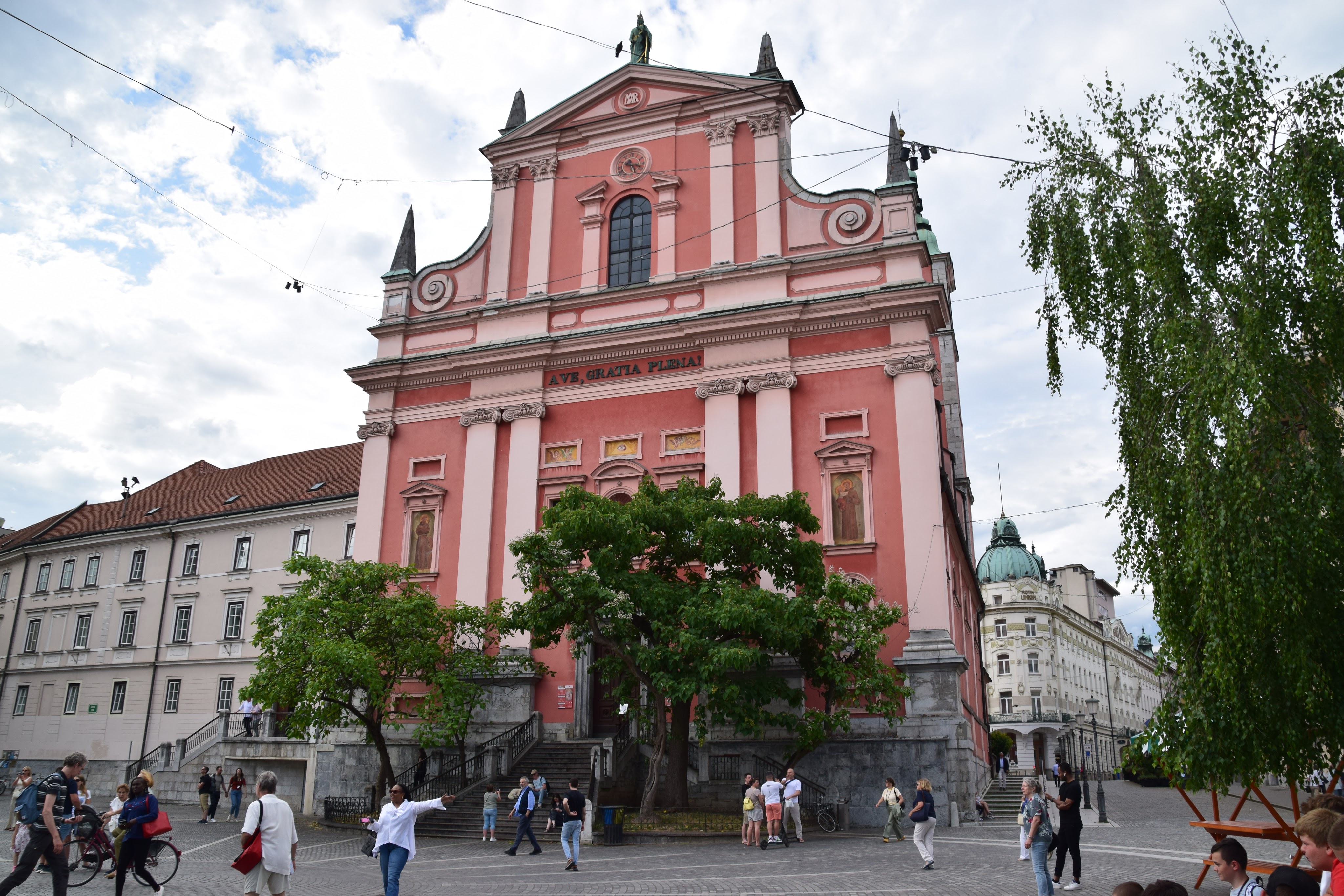
We’ll start at Prešernov trg – the heart of the city. You can’t miss the striking red exterior of the 17th century Franciscan Church. The square is named after the great Slovenian poet, France Prešeren (1800-1849). When his statue was unveiled in 1905, the clergy in the nearby church were horrified at the naked muse of poetry holding a laurel wreath above his head! The solution? The planting of birch trees to strategically block the view of the muse from the church entrance!

The Ljubljanica river snakes its way through the old town. its embankments densely scattered with cafés and bars .

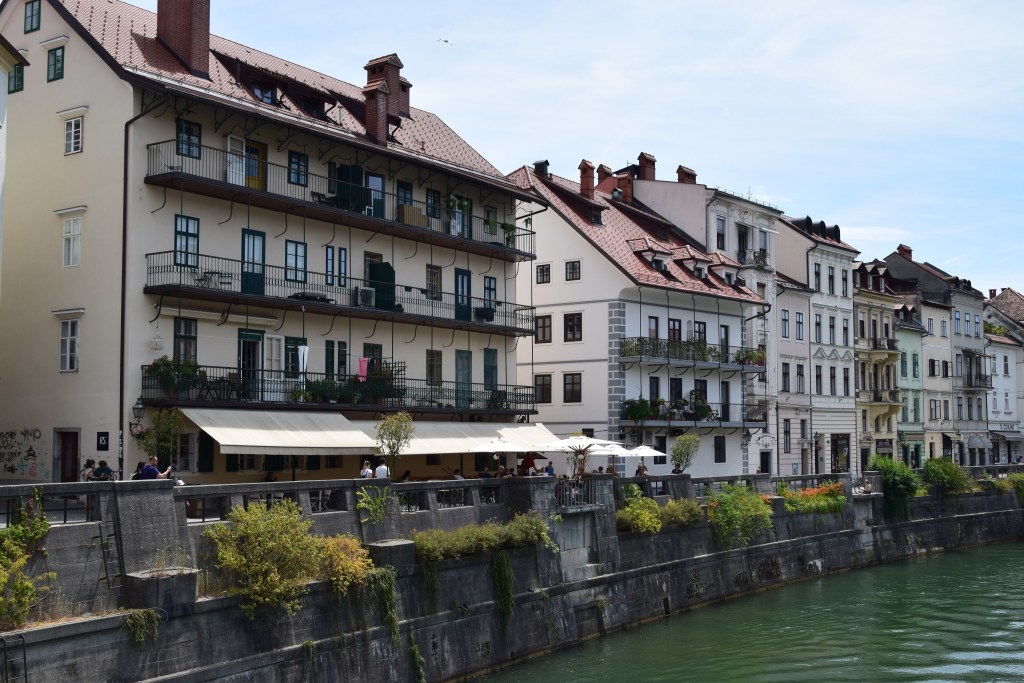
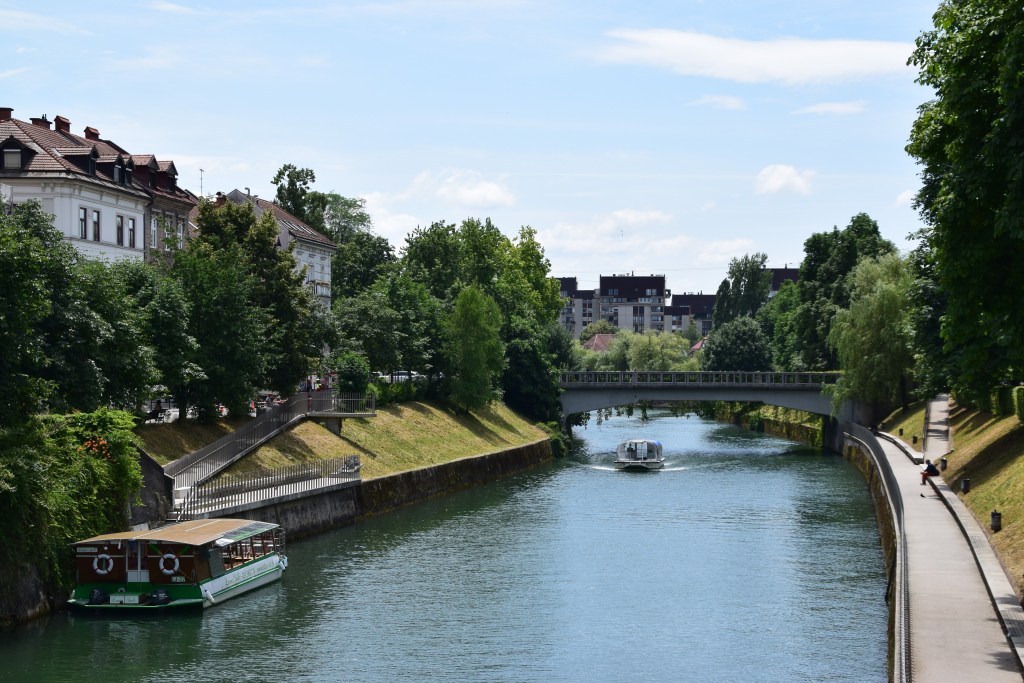
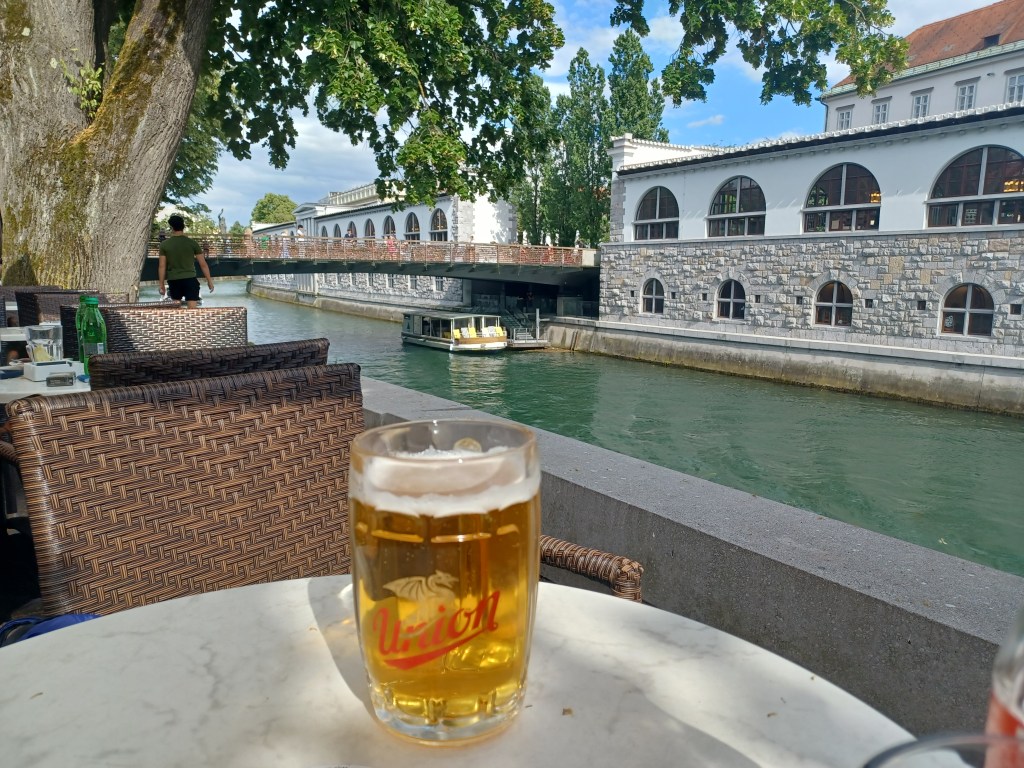
The 41km long Ljubljanica has become an archaeologists dream – once a major trade route, the river is thought to have offered up somewhere between 10,000 – 30,000 relics and artifacts to treasure hunters. Stone Age, Romans, Celts ……there’s a lot of history in these waters! To halt the stream of collectibles falling into private hands, the parliament declared the river a site of cultural importance in 2003 and banned diving without a licence.
In front of the Franciscan Church you’ll find one of the most famous sights of the city – the Triple Bridge. The river has been spanned at this point since the 13th century with wooden structures being eventually replaced by a more solid construction in 1842. In the 1930’s, architect Jože Plečnik was asked to widen it to accommodate more traffic. Instead, he added a pedestrian bridge at an angle on either side. The central structure was used for traffic until 2007 when the old town was pedestrianised.


A word about Ljubljana’s main man – architect Jože Plečnik. Between the World Wars, Plečnik contributed hugely to the transformation of the city following the dissolution of the Austro-Hungarian Empire. He visualised the city as a new Athens and managed to get the commissions for a stadium, cemetery, market square, covered walkway, university library and development of the waterfront. His urban planning reflected the needs of a modern 20th century city which he combined with the classical architectural elements of Athens. In 2021, 7 key features of this work in Ljubljana were inscribed on UNESCO’s List of World Heritage Sites – The works of Jože Plečnik in Ljubljana – Human Centred Urban Design
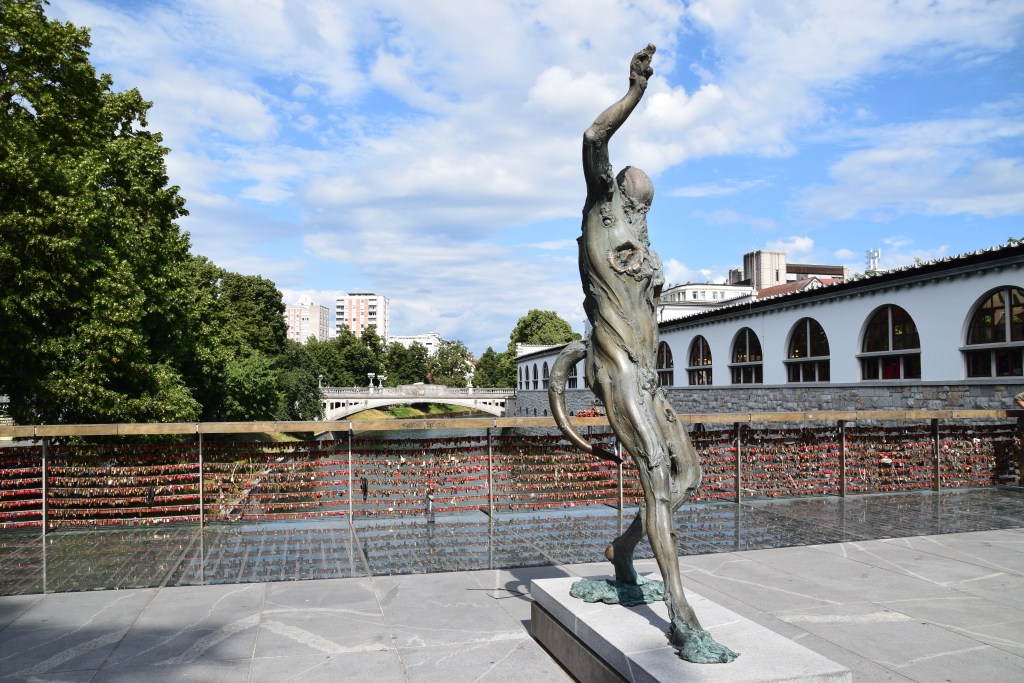
Butcher’s Bridge (Mesarski Most), is named after the butcher stalls that once lined the nearby market and exists since only 2010. Shortly after its opening, love locks began to appear on its steel wires.

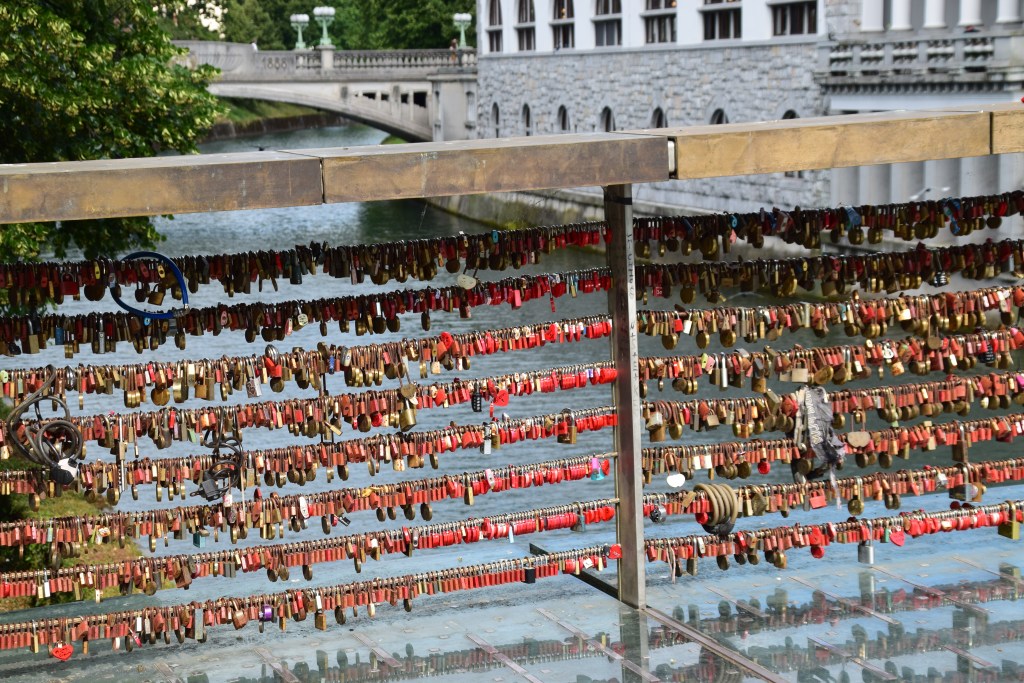
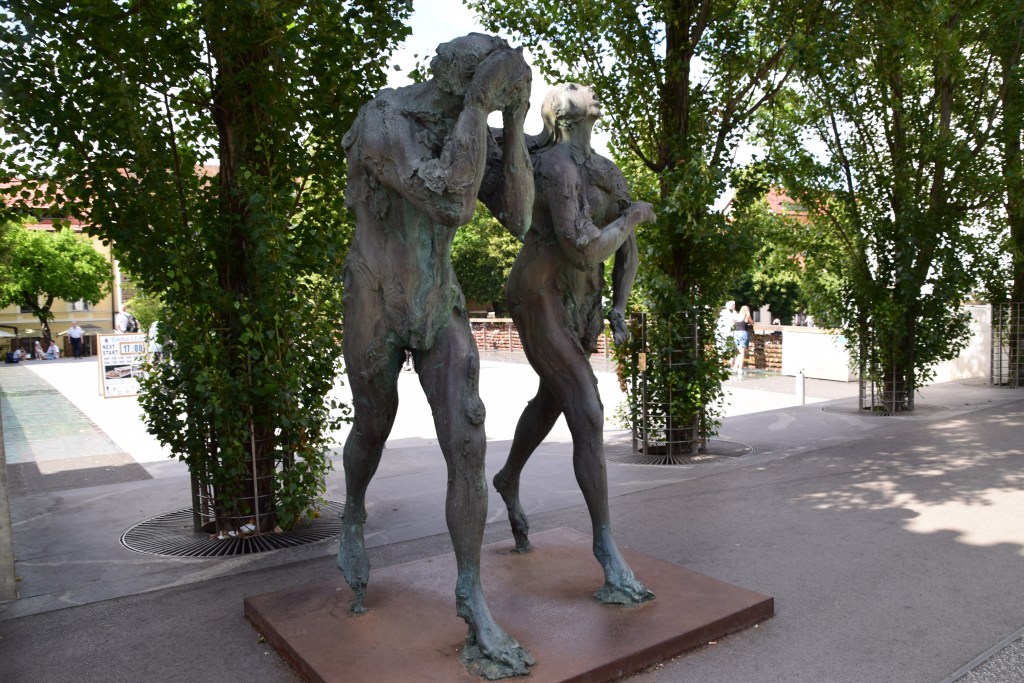
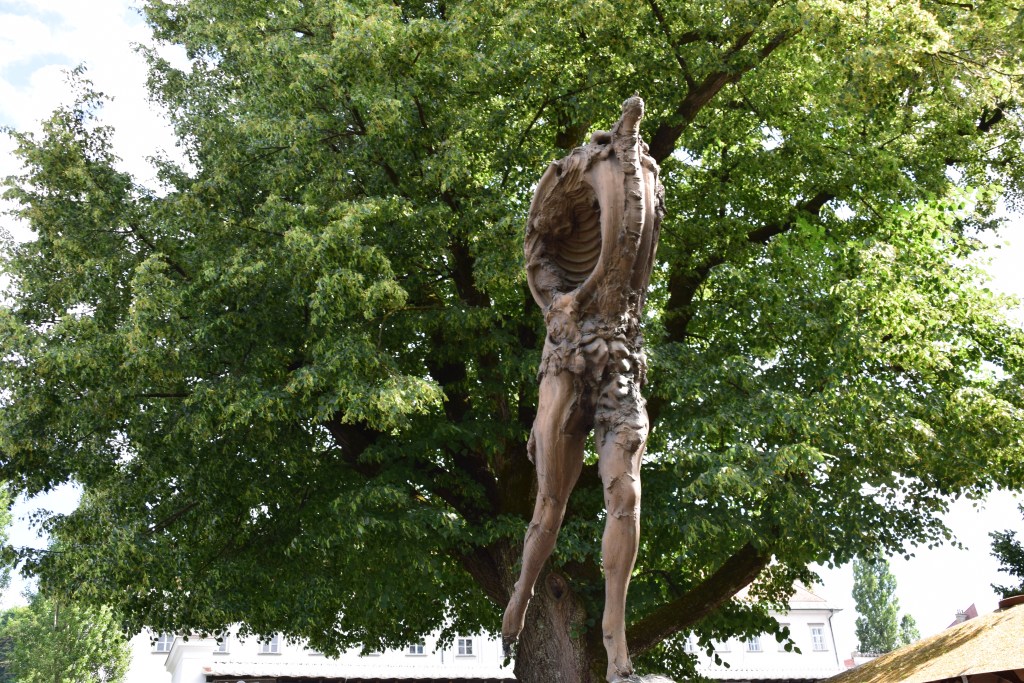
This location as a symbol of eternal love is rather disparate with the surrounding artwork. Sculptures by Jakov Brdar – depicting themes of mythology, sin and human suffering – add a rather surreal and unsettling feel to the bridge.
First, we have Adam and Eve, shamed and banished from Paradise.
A Satyr is startled by a serpent, embodying temptation and desire.
Prometheus is running and disemboweled, in punishment for having given knowledge (of fire) to mankind.
Jason and the Argonauts passed through the Ljubljana Swamp during their adventures whilst seeking the Golden fleece. Jason ended up fighting a dragon (as one does!) that was terrorizing the local people.
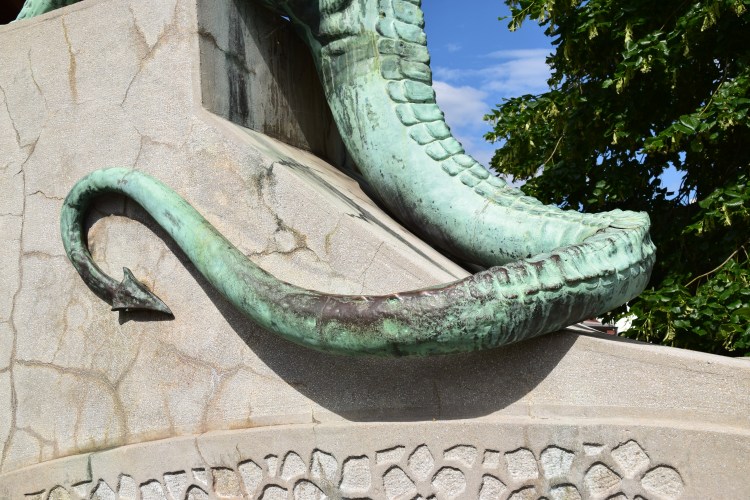
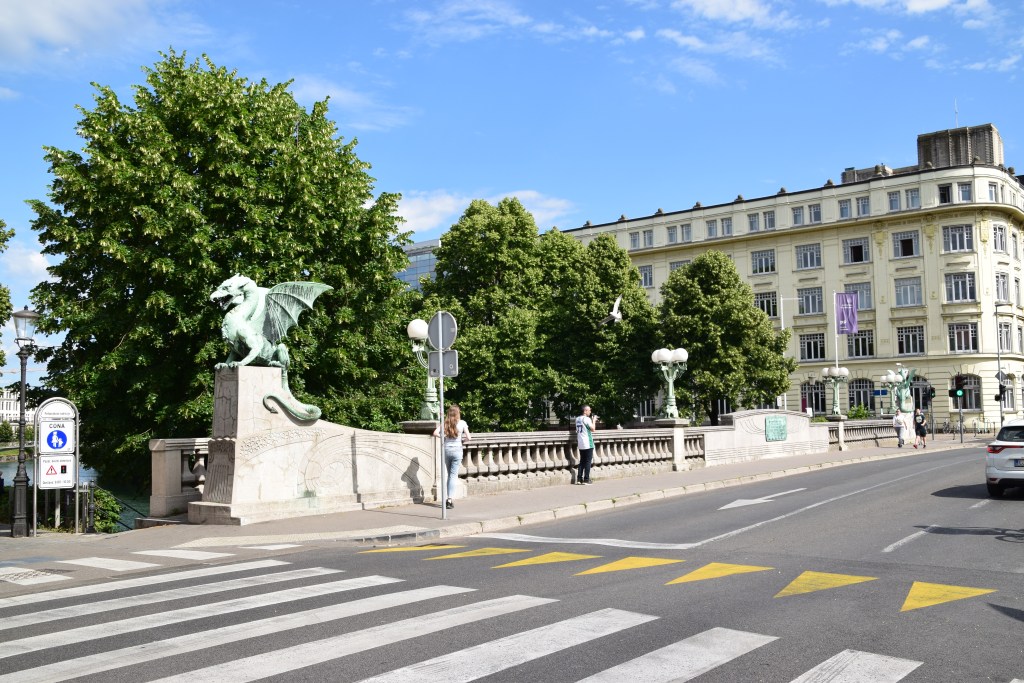
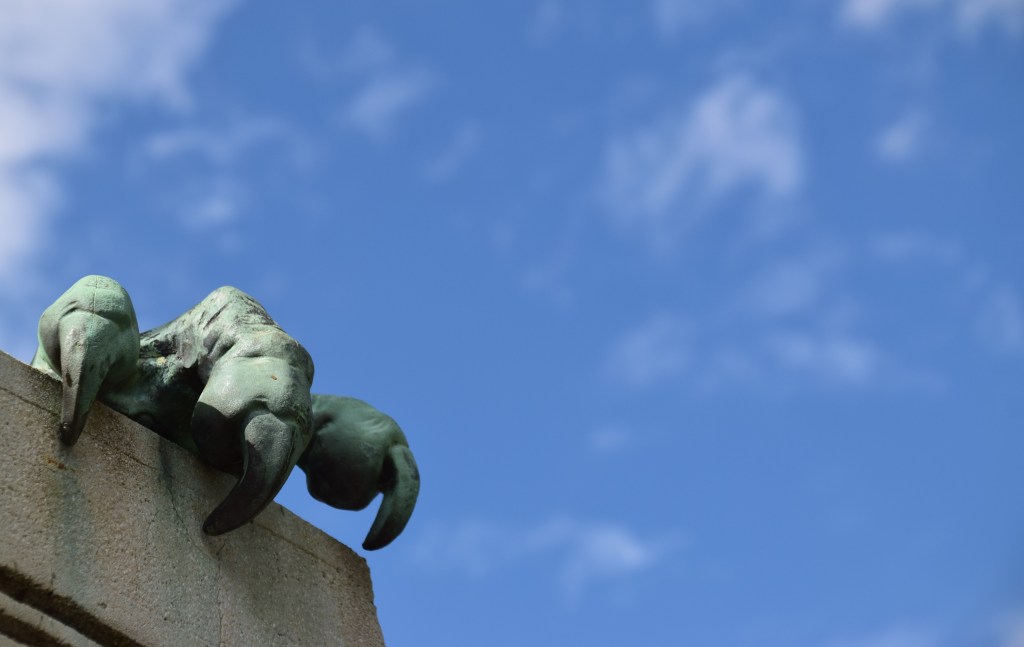
Nowadays, a dragon (presumably a nicer one!!) holds pride of place on the city’s coat of arms – symbolising strength, courage and might. And he has his own bridge! Dragon Bridge (Zmajski Most) is flanked by four large dragons – two at each end – as well as sixteen smaller statues for decoration.
Apparently the dragons wag their tails whenever a virgin crosses the bridge – but no one has ever seen it happen!

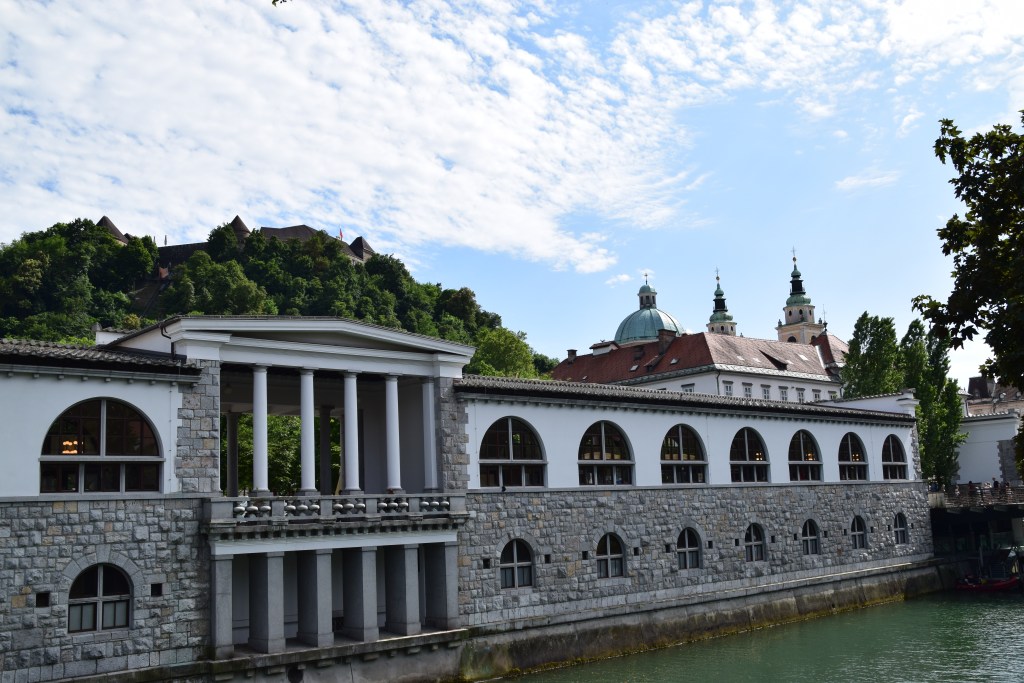
Close to Dragon Bridge in Vodnikov trg, you’ll find an open air market with fresh produce, food stands, etc. Beside it, the Covered Market runs along the riverbank – a stretch of covered halls lined with pillars – you know already that its the work of Plečnik! Here you can stock up on your fish, meat, bread, cheese, etc….

if you’re lucky enough to visit the city on a Friday (March-Oct) then you’re in for a treat. Local restaurants host Open Kitchen in the square with their chefs selling street food versions of their dishes at pop-up stalls.
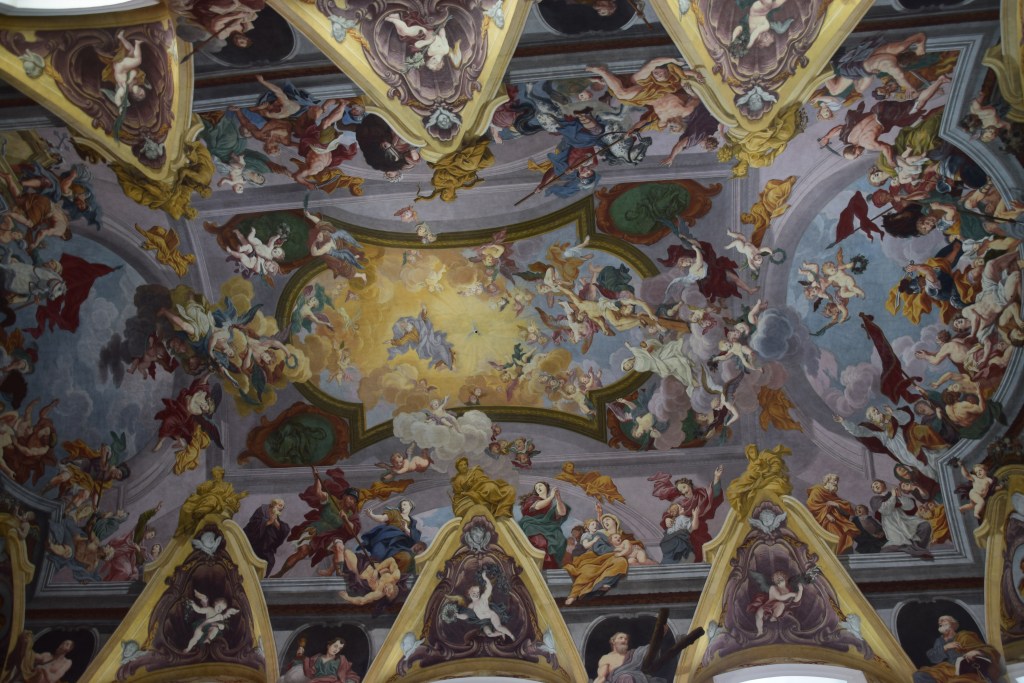
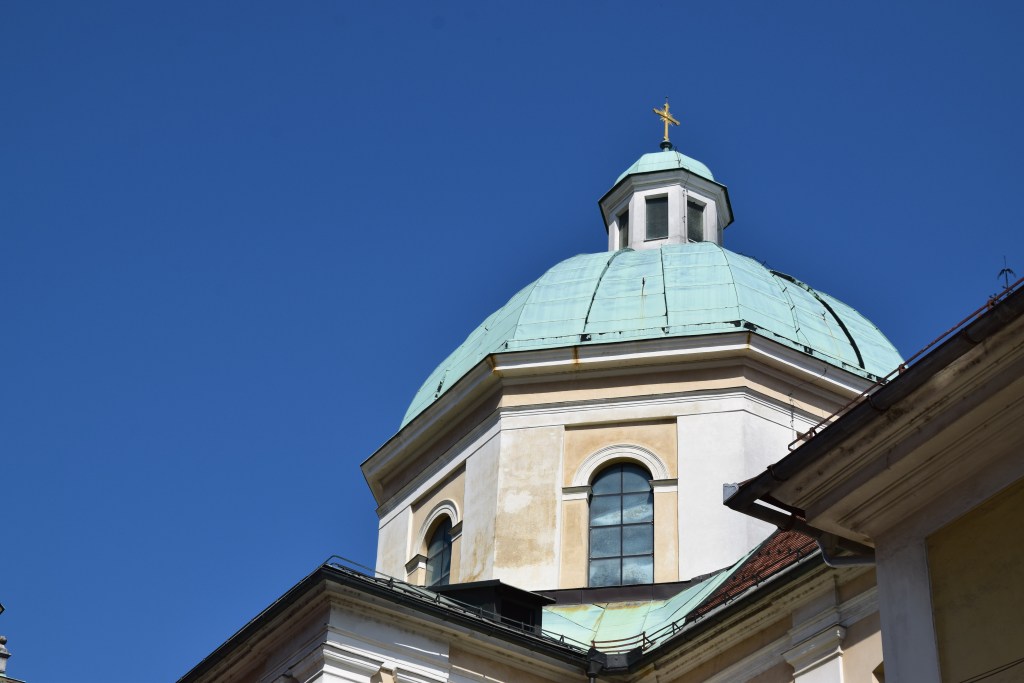
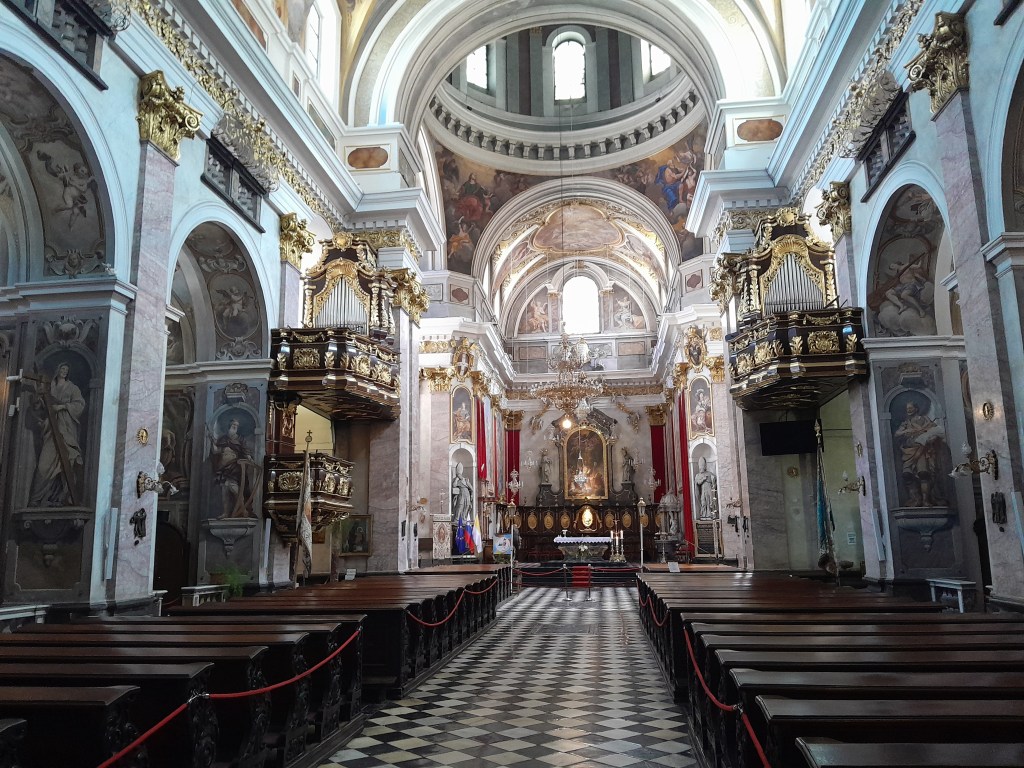
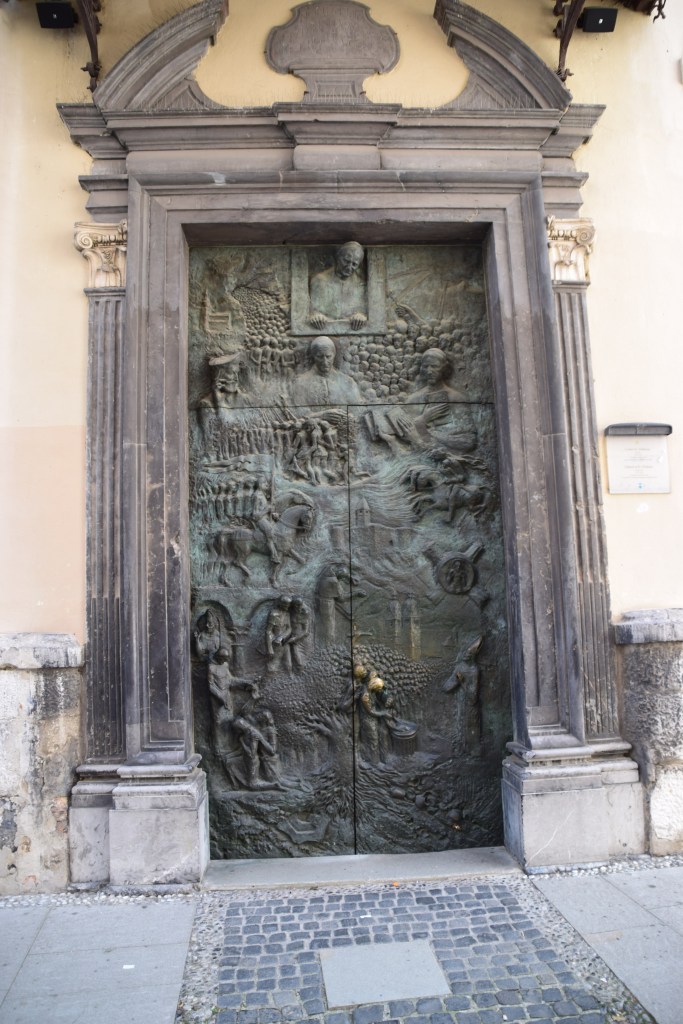
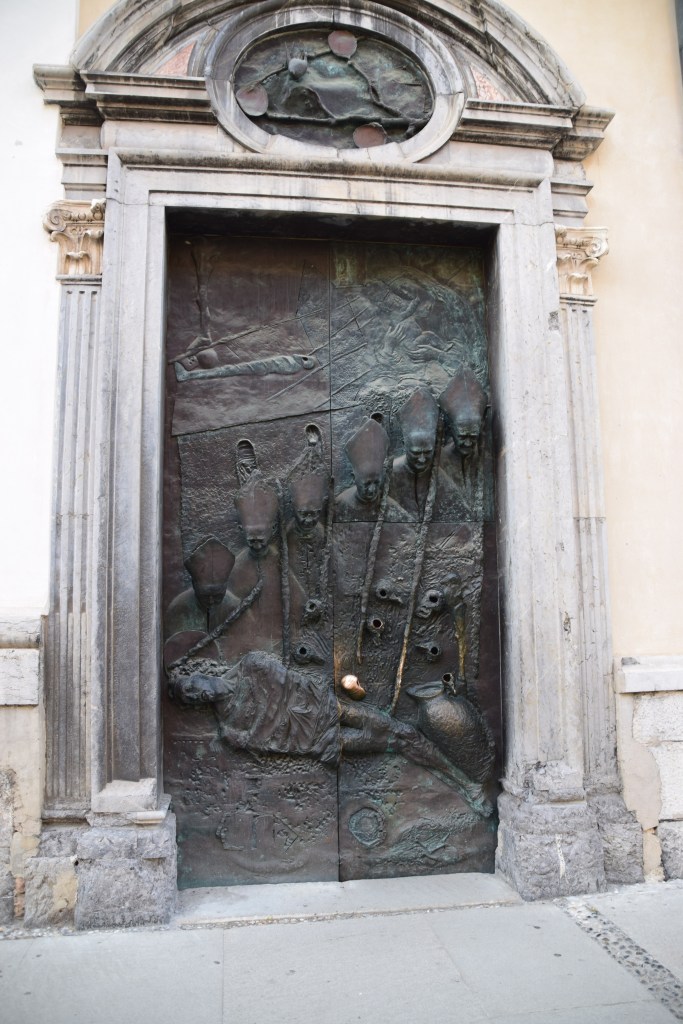
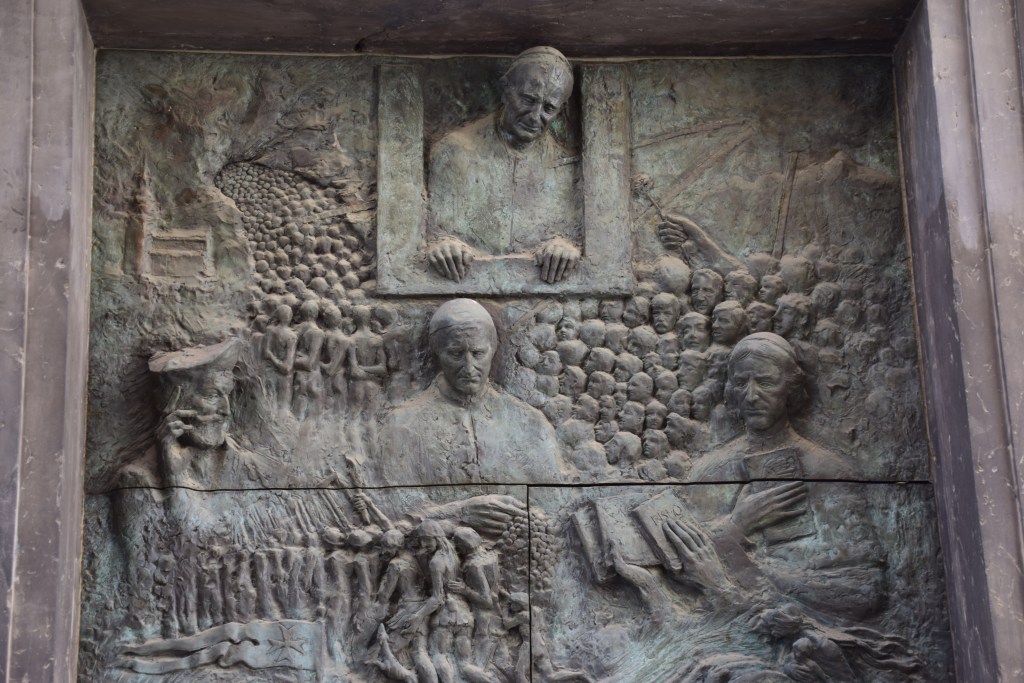
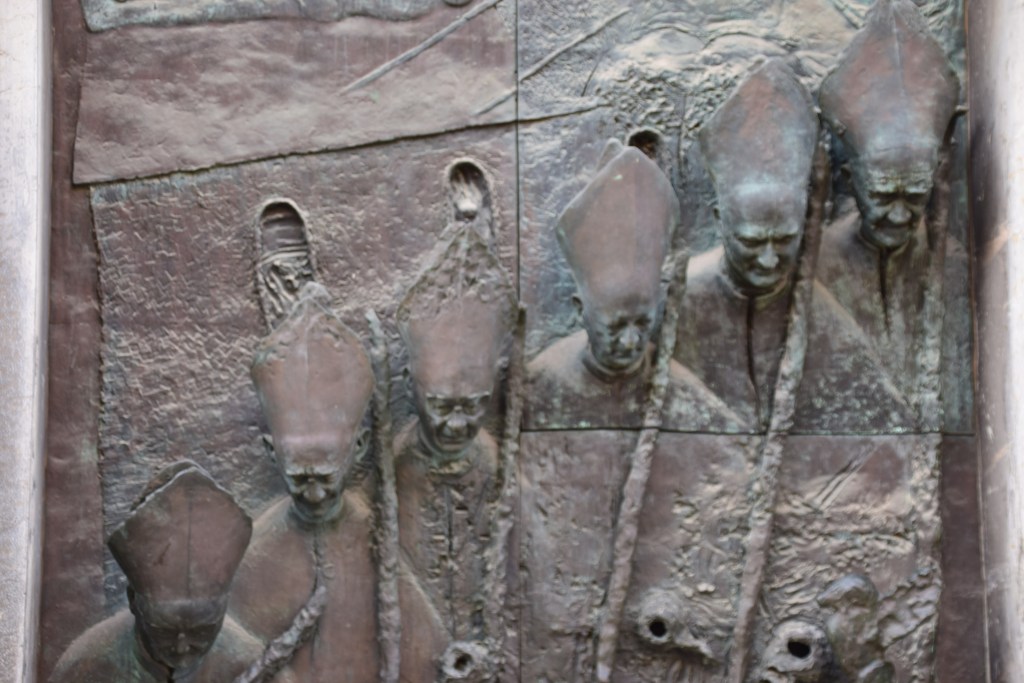
Saint Nicholas’s Cathedral is right next to the food market. You’re not going to miss it – the green dome can be seen for miles around. It’s worth having a look at the Baroque interior and the frescos but, if you can’t get inside, at least make sure to stop at the huge bronze doors which were designed for Pope John Paul II’s visit in 1996. One features the pope himself, looking down upon the history of Christianity in Slovenia. The other shows six bishops of the twentieth century standing over the enshrouded body of Christ
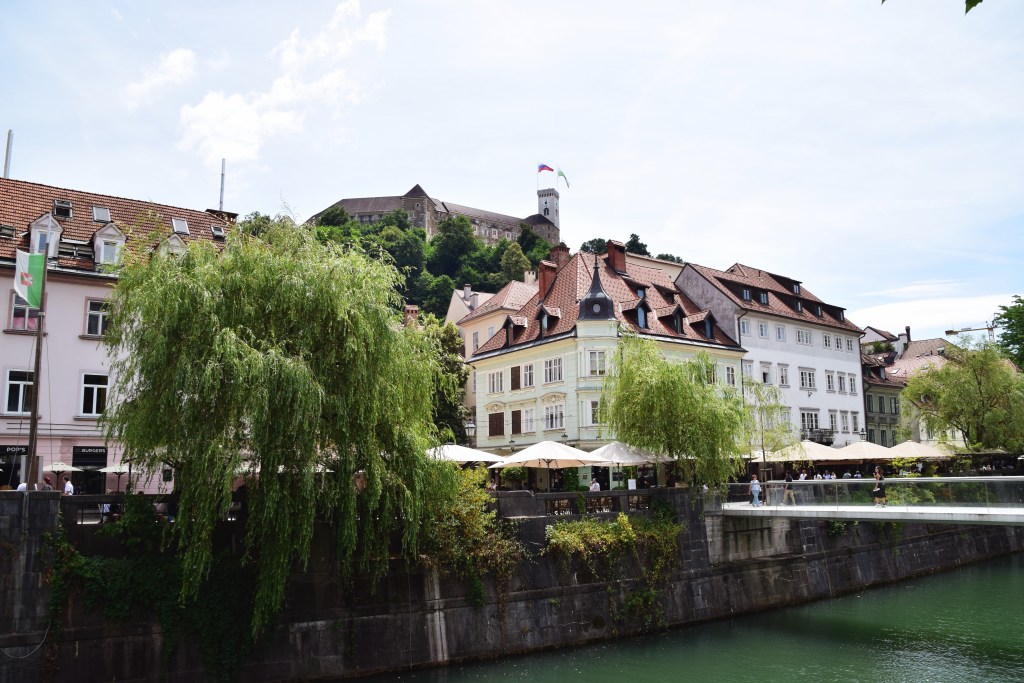
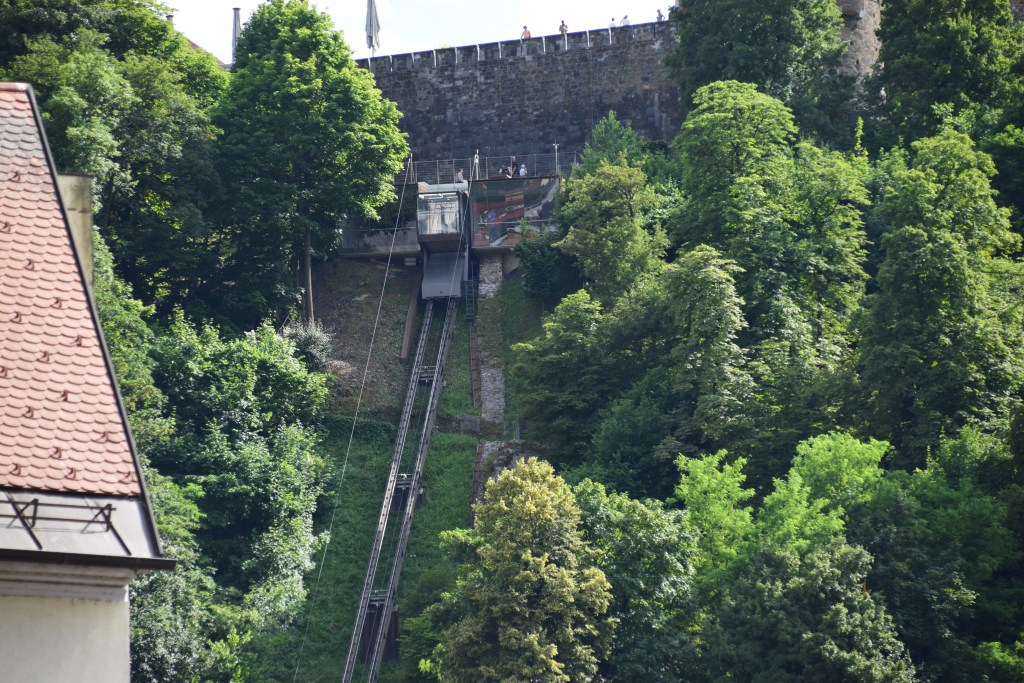
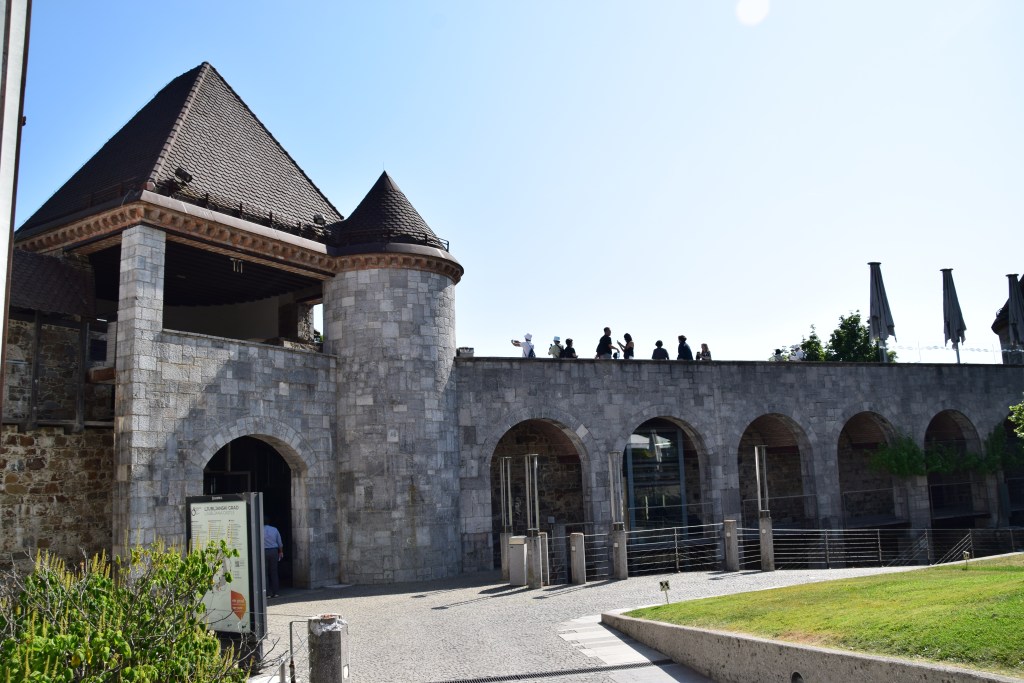
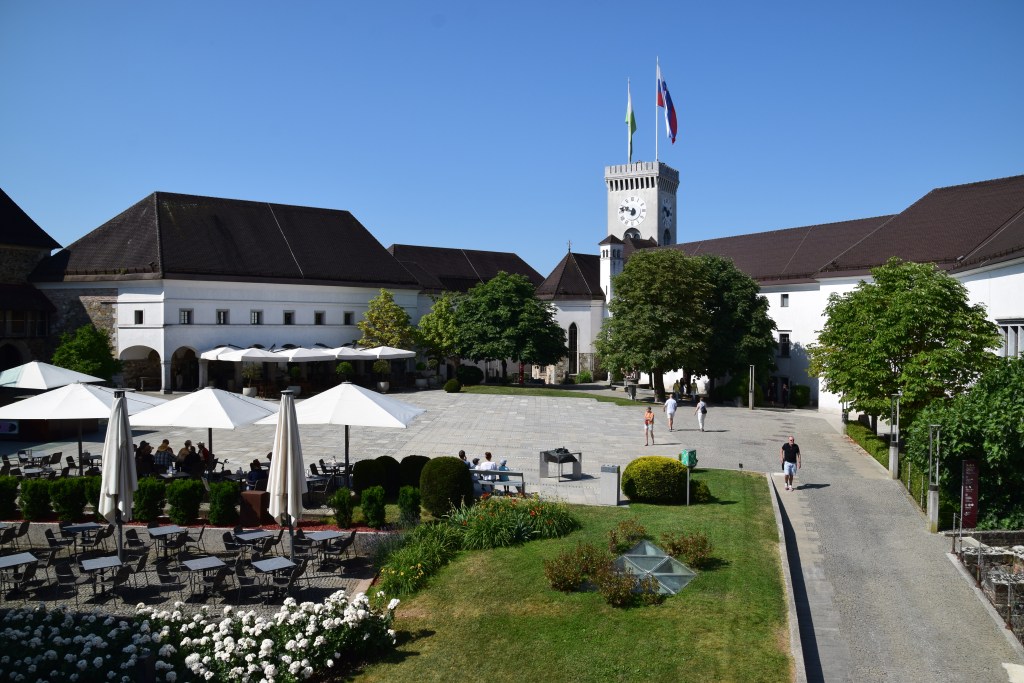
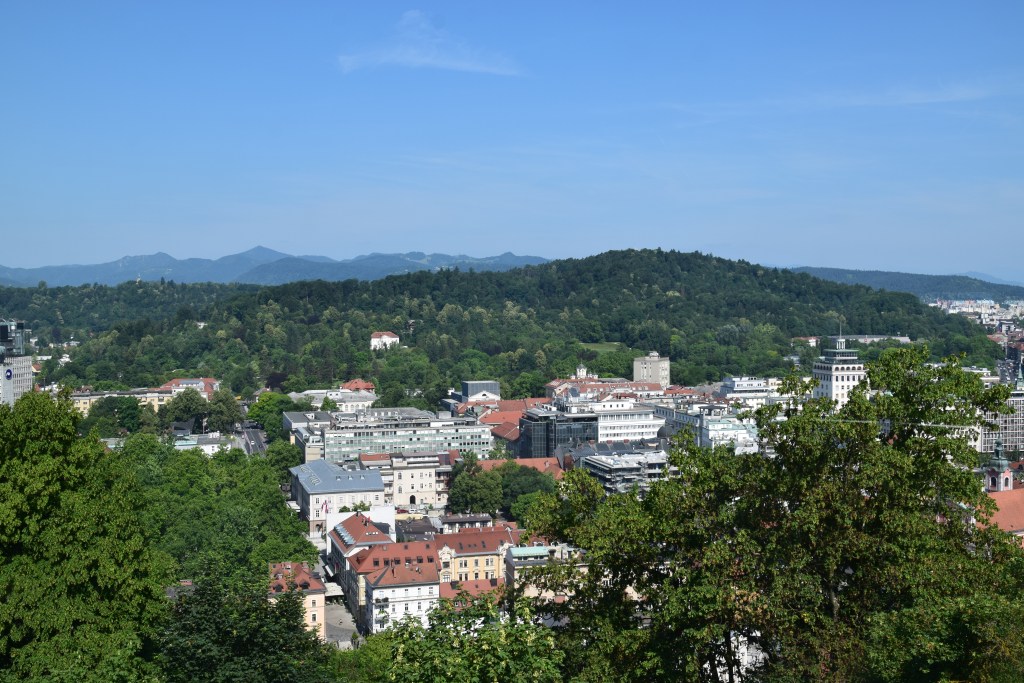
Ljubljanski Grad has watched over the city for some 900 years. Even if you don’t love castles, it’s worth heading up for the views over the city rooftops towards the Slovenian Alps. You can walk up (if you really want to! ) or opt for the funicular beside Vodnikov trg and maybe walk back down. It’s actually free to wander the grounds and viewing terrace while some exhibits can also be accessed without a ticket.

Trivia Moment
Along with Slovenia, the Socialist Federal Republic of Yugoslavia (SFRY) was made up of Bosnia and Herzegovina, Croatia, Macedonia (now North Macedonia), Montenegro and Serbia. The six republics existed as a communist federation from the end of WW II until its breakup in the early 1990s.
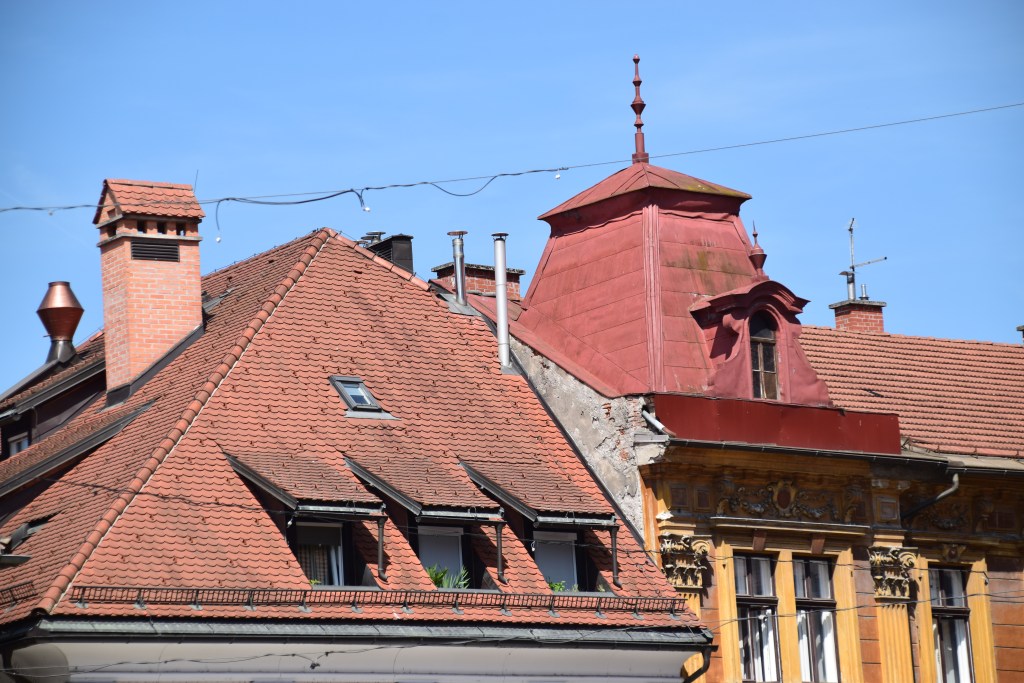
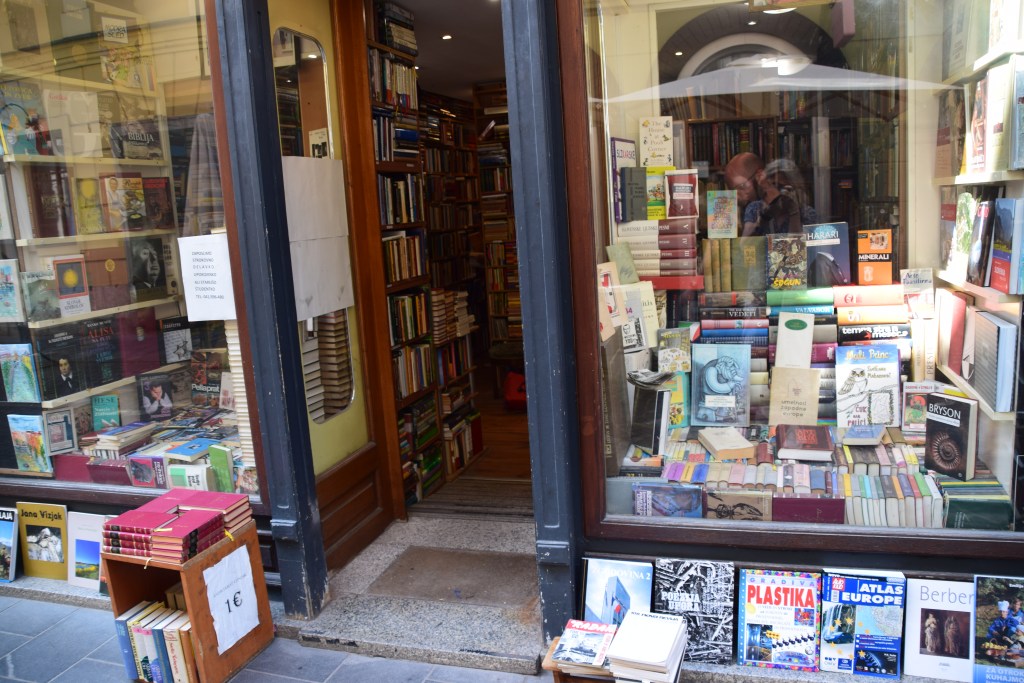
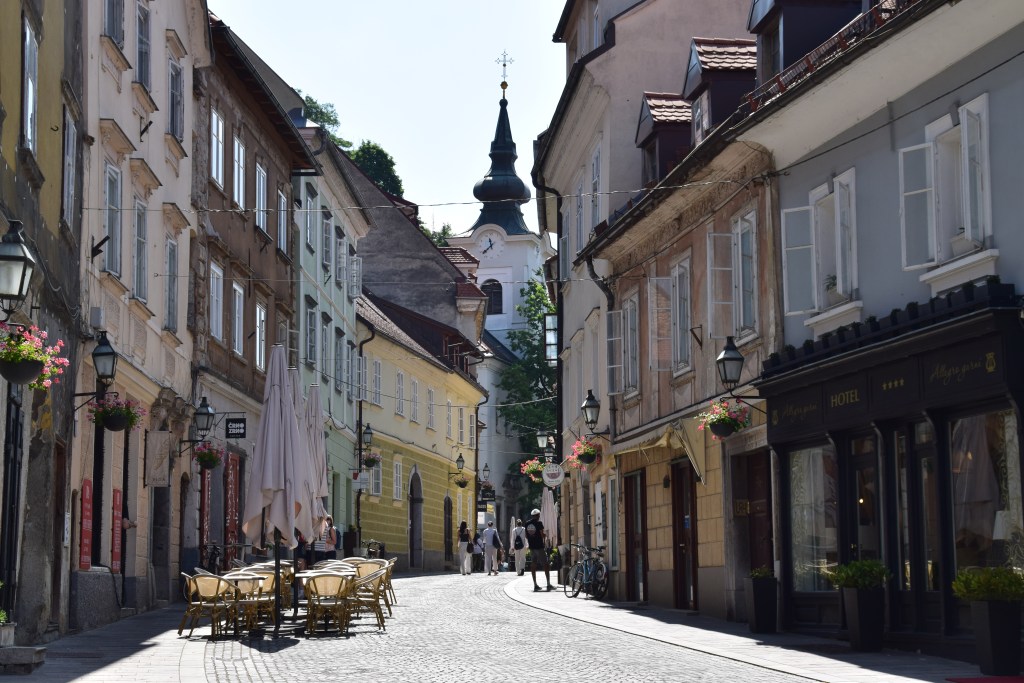
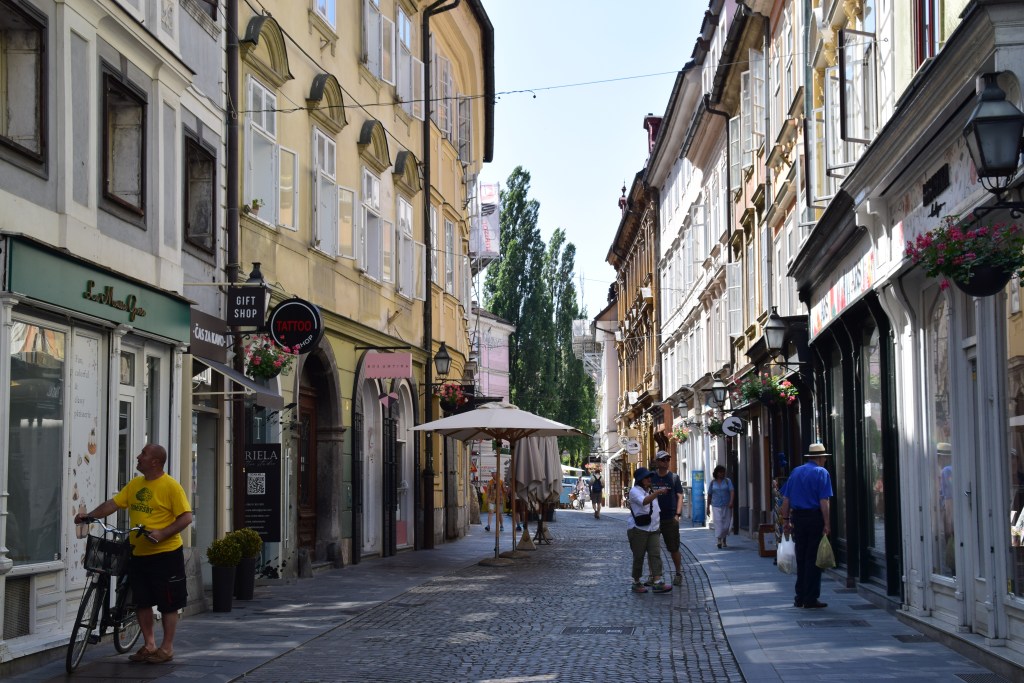
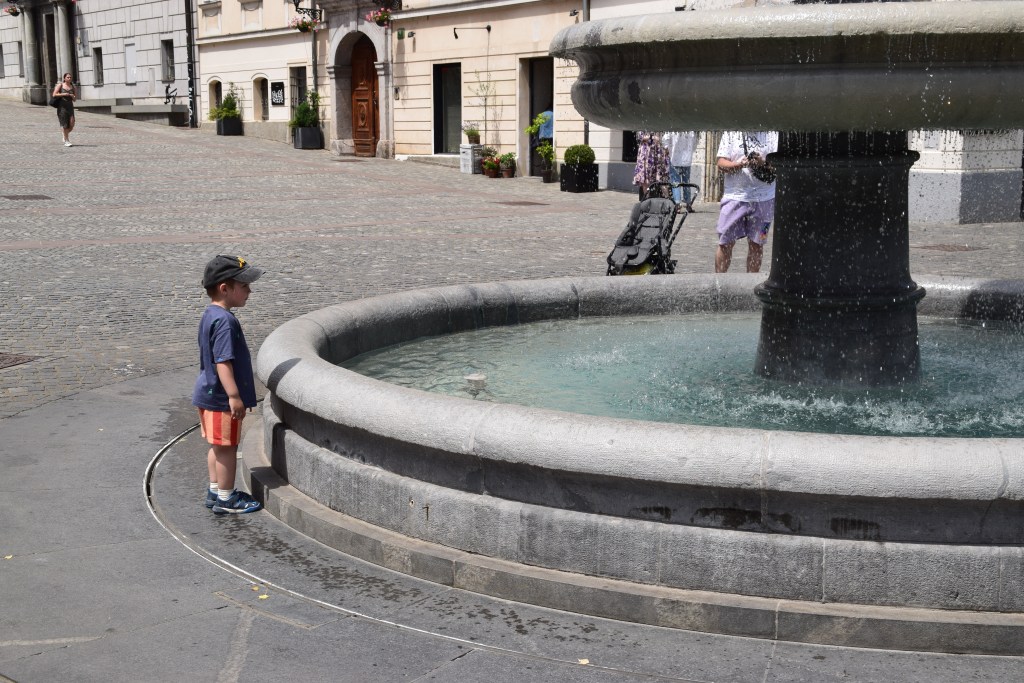
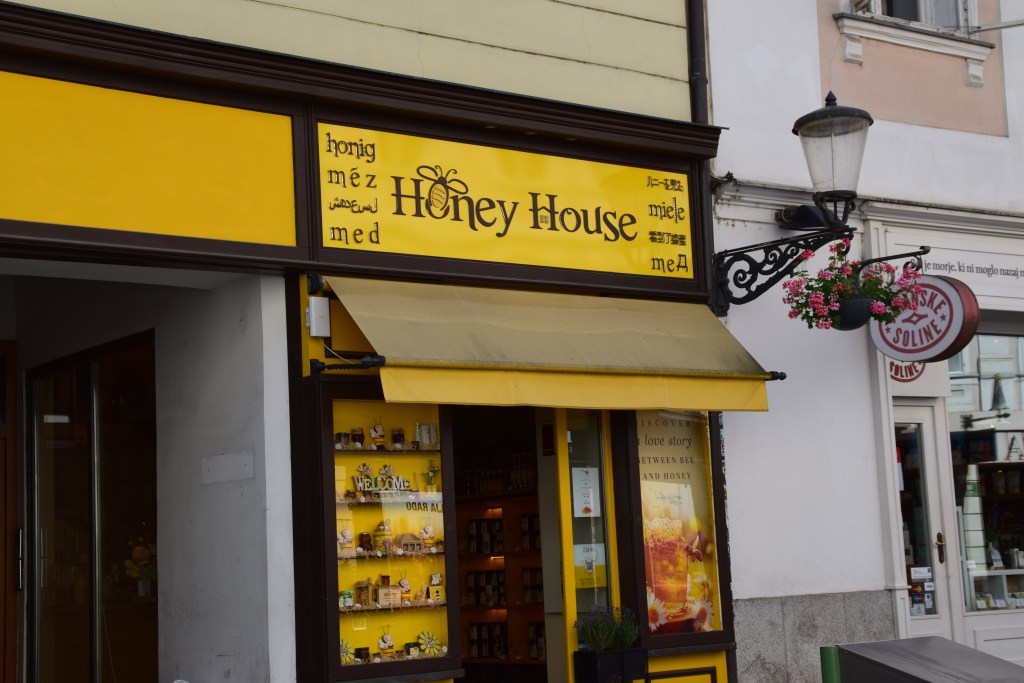
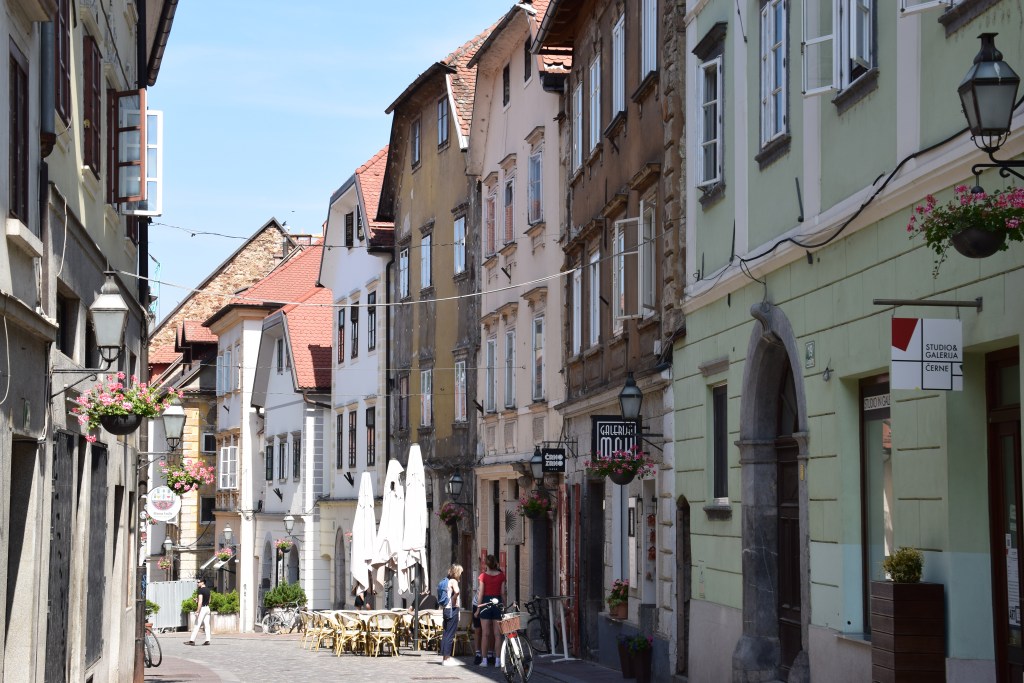
Wedged between the Castle and the river, the cobbled streets of the Old Town offer up alleyways and small squares, fountains, shops and cafes -there might even be an art exhibition in the Baroque Town Hall…



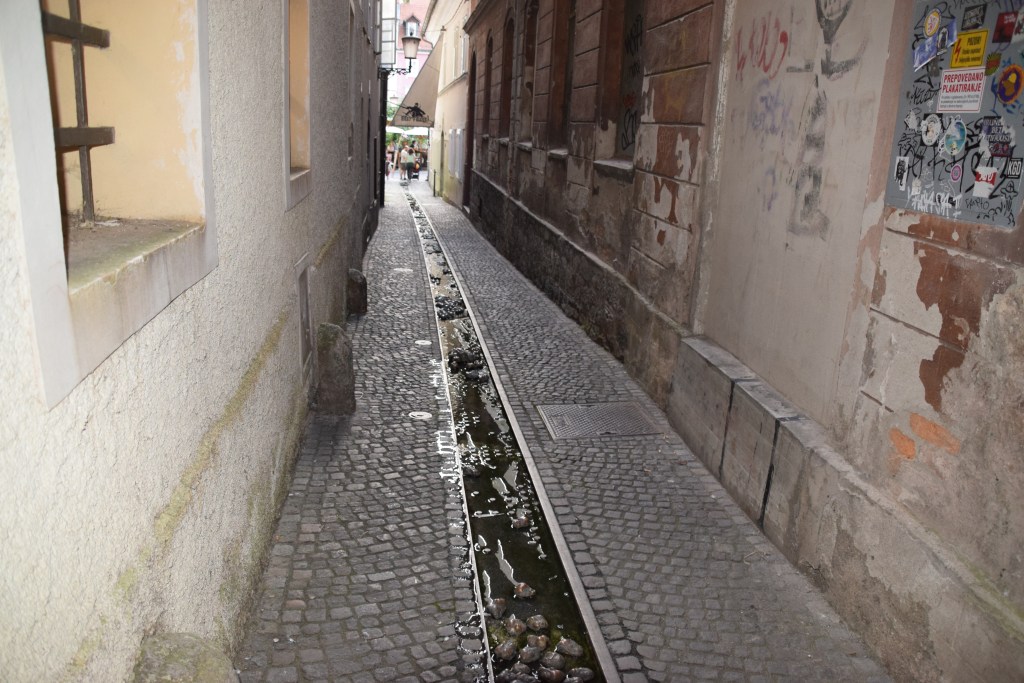
There’s one alleyway you can’t miss! Ključavničarska ulica – Locksmith Street – is marked with an image of a key, historically used to note the street name for those that couldn’t read.
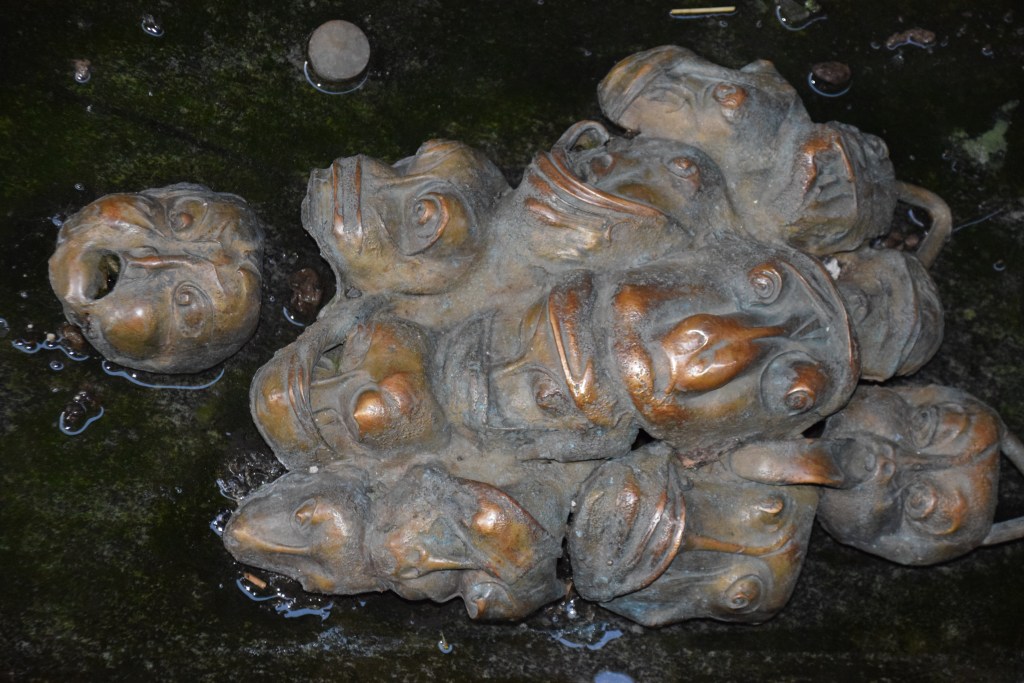
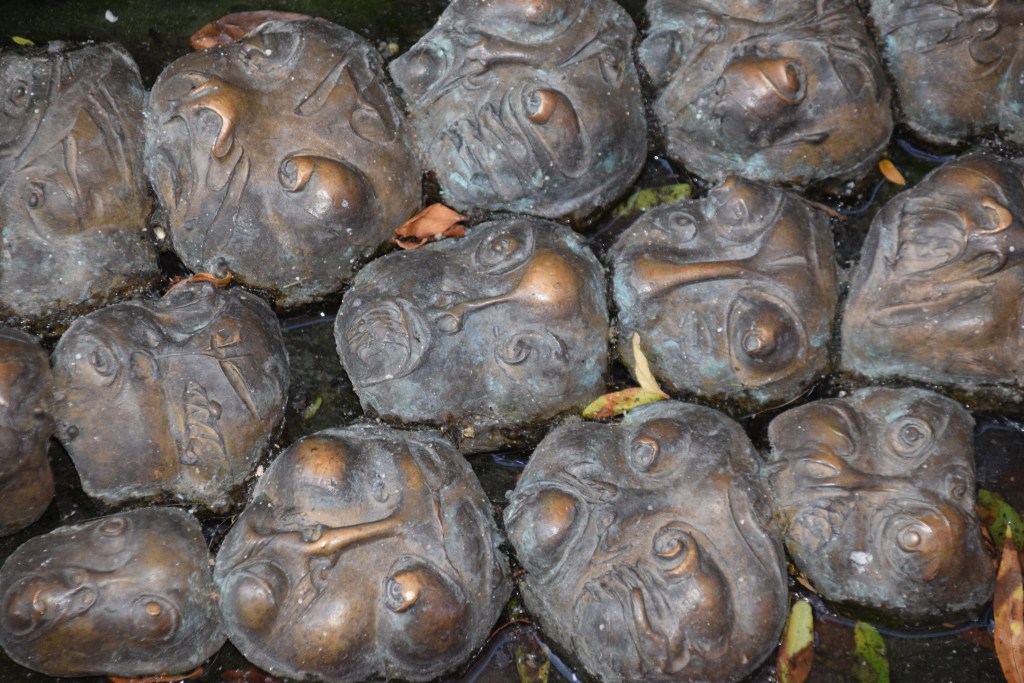
A gully runs the length of the alley and is filled with strange little bronze faces – 700 to be exact! Some are happy, some sad, but all rather disturbing! This is the work of our friend Jakov Brdar – remember his sculptures on Butcher’s Bridge? He was influenced by a piece written by Austrian poet Rainer Maria Rilke. ……
To think, for instance, that I have never been aware before how many faces there are. There are quantities of human beings, but there are many more faces, for each person has several…….
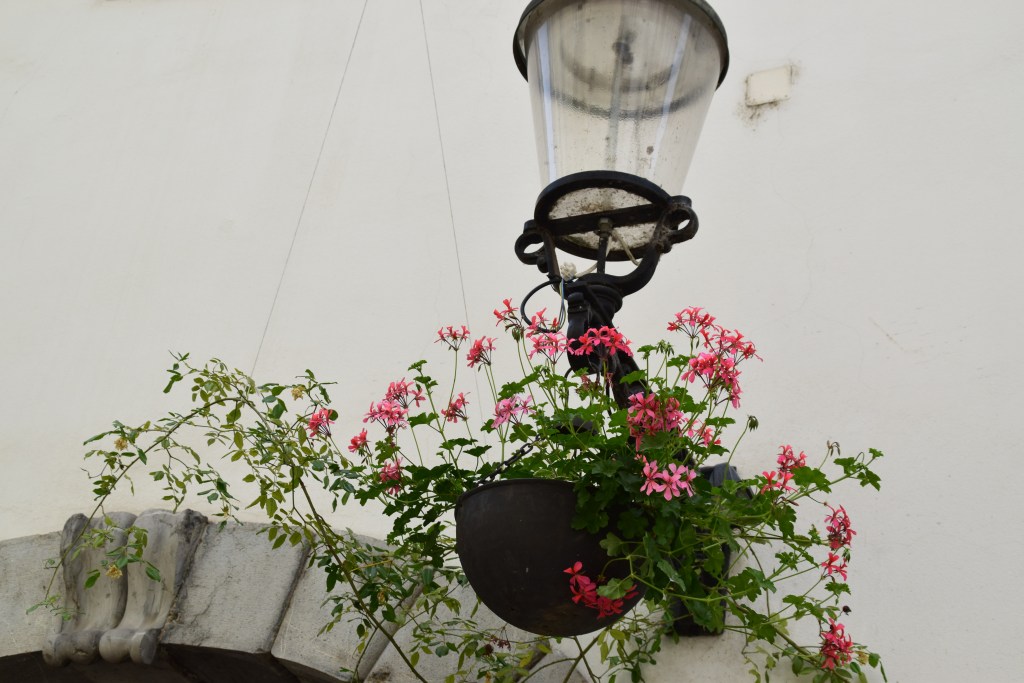
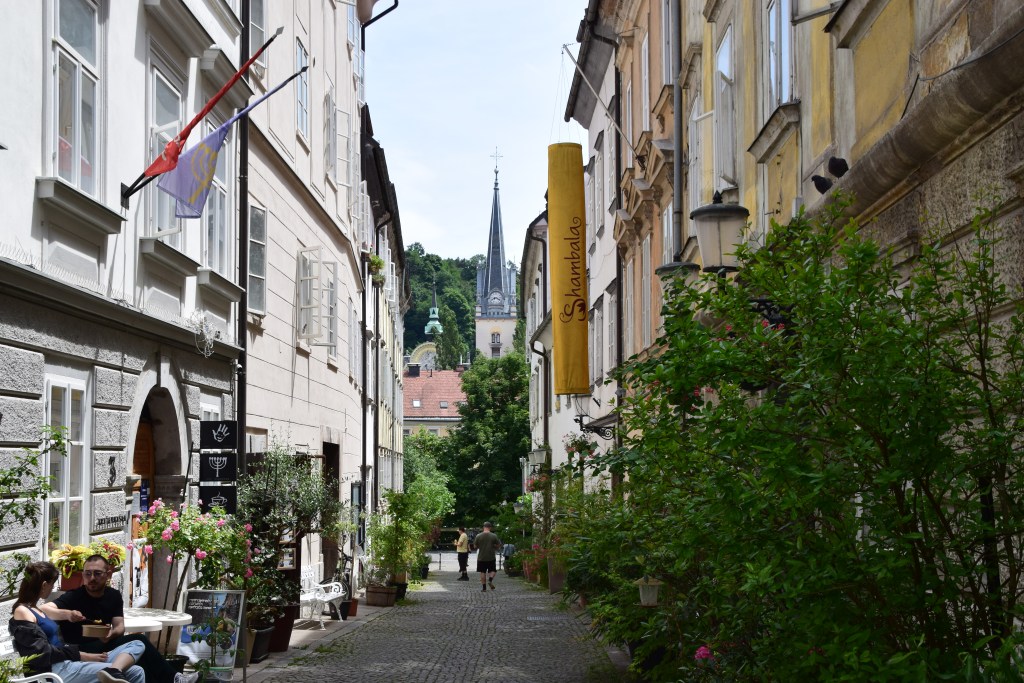
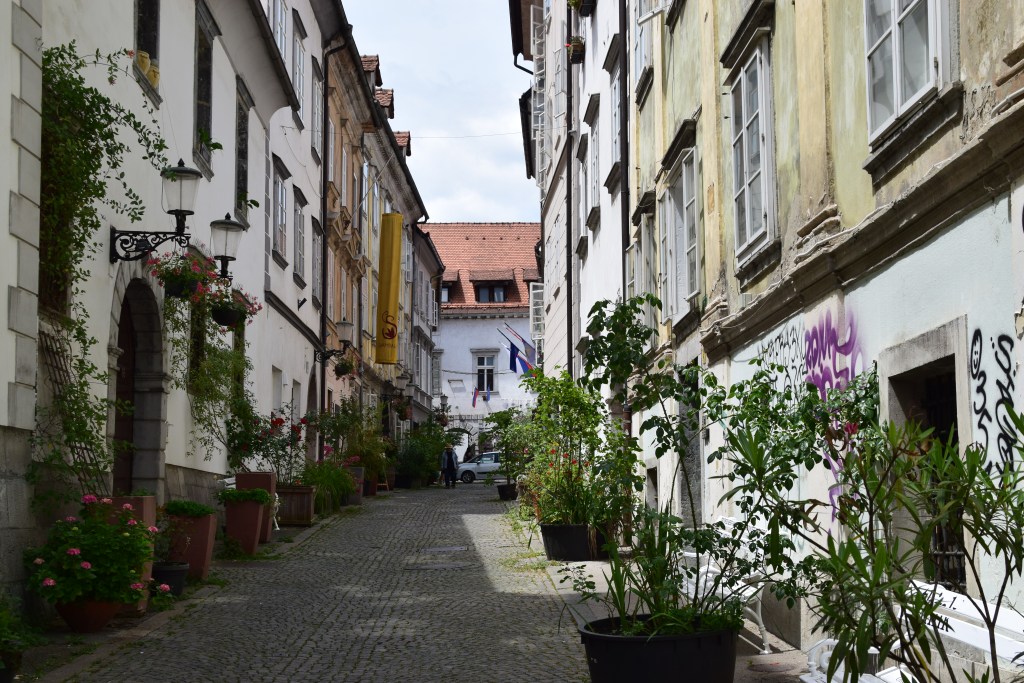
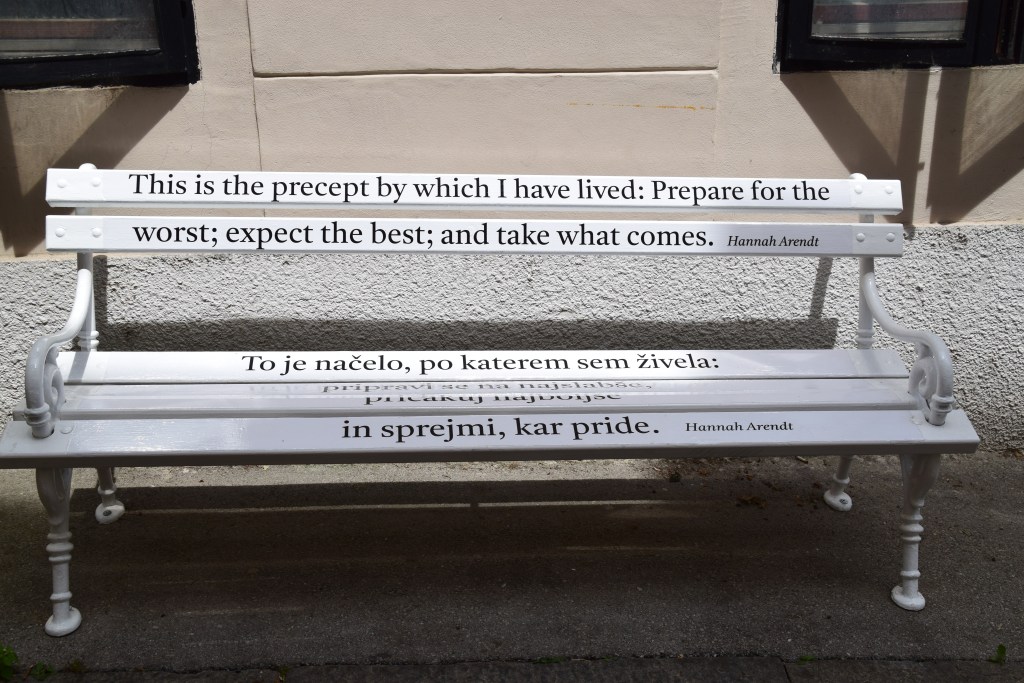
We cross the river again and wander up Križevniška ulica – a small street with flower pots, ivy covering façades, and benches, inscribed with quotes, inviting you to sit and relax.
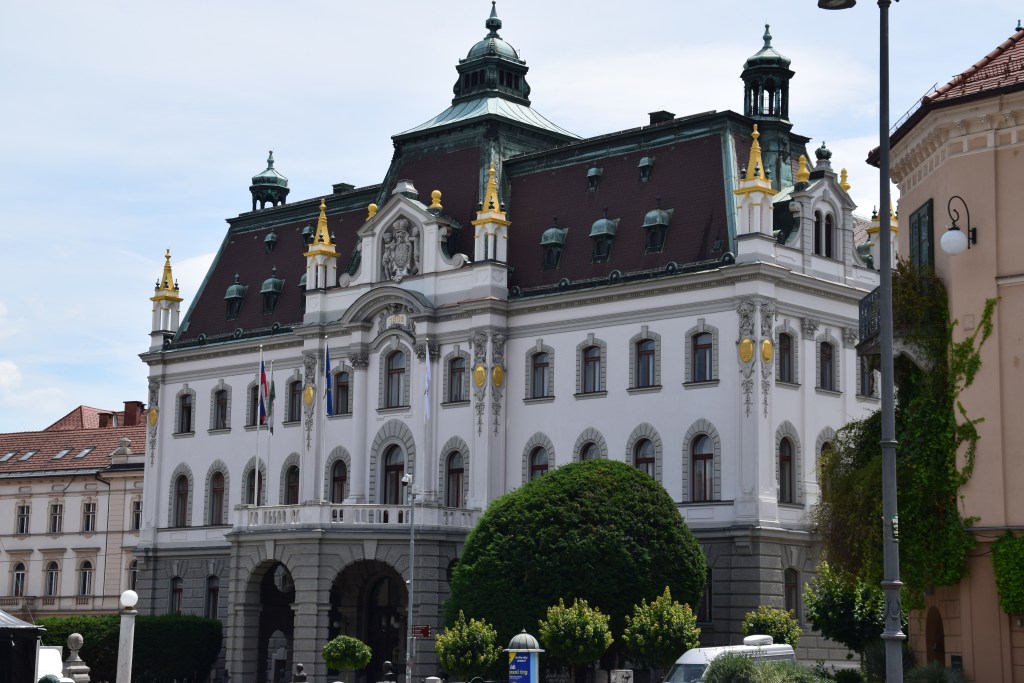
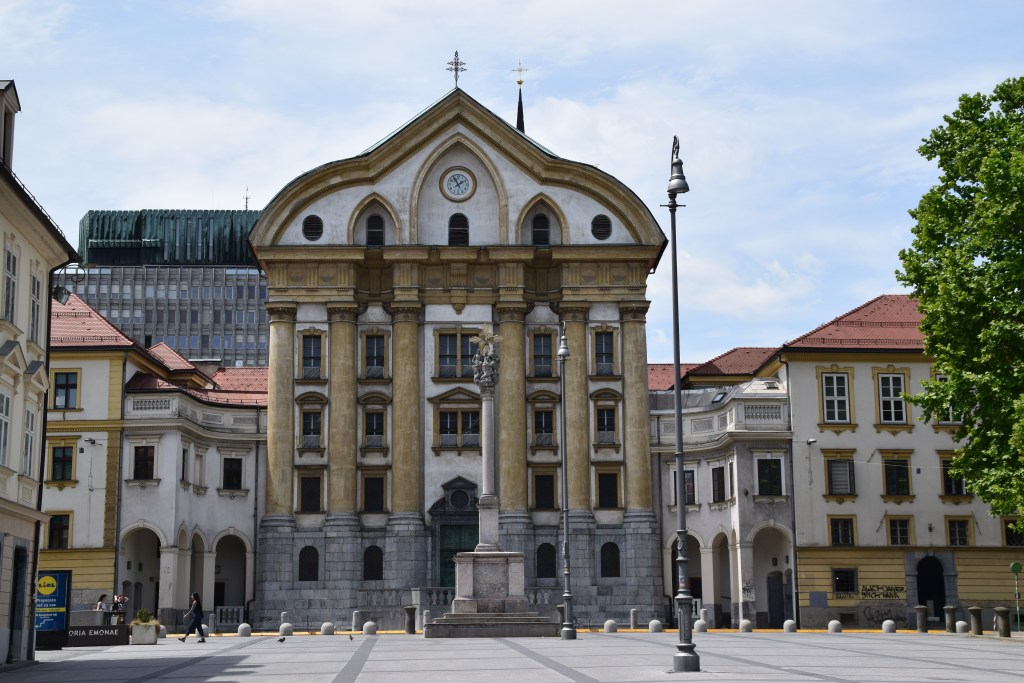
Kongresni trg – Congress Square is occupied by several beautiful buildings including the Ursuline Church of the Holy Trinity, and the University (former Provincial Palace).
Two thousand years before Ljubljana, the Roman settlement of Emona played an important role in the defensive system of the Roman Empire and flourished here from the 1st to the 5th century AD. – its 5,000 inhabitants engaging in farming, trade, and crafts.
Archaeological Park Emona features ten heritage sites throughout the city. Highlights include an Early Christian Centre with a baptistery and mosaics, as well as parts of the Roman Wall.
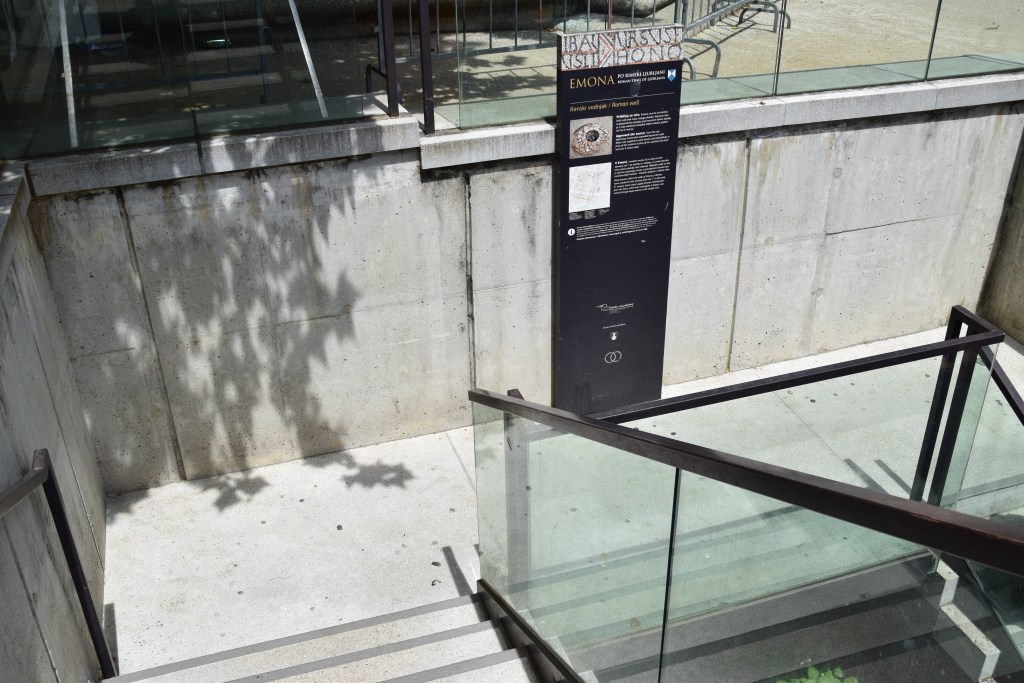
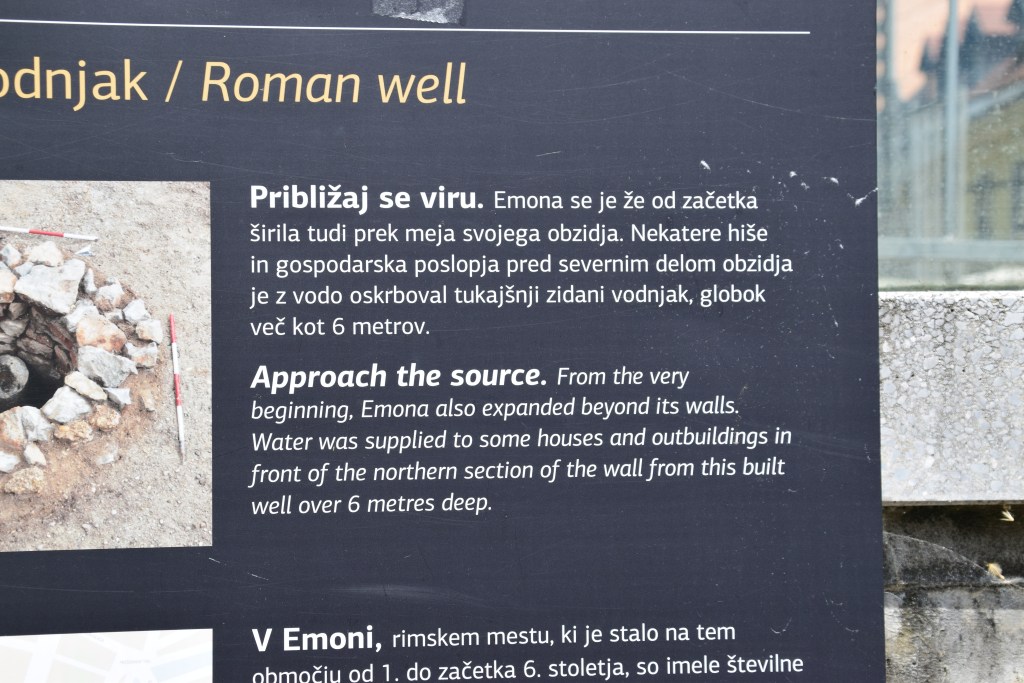
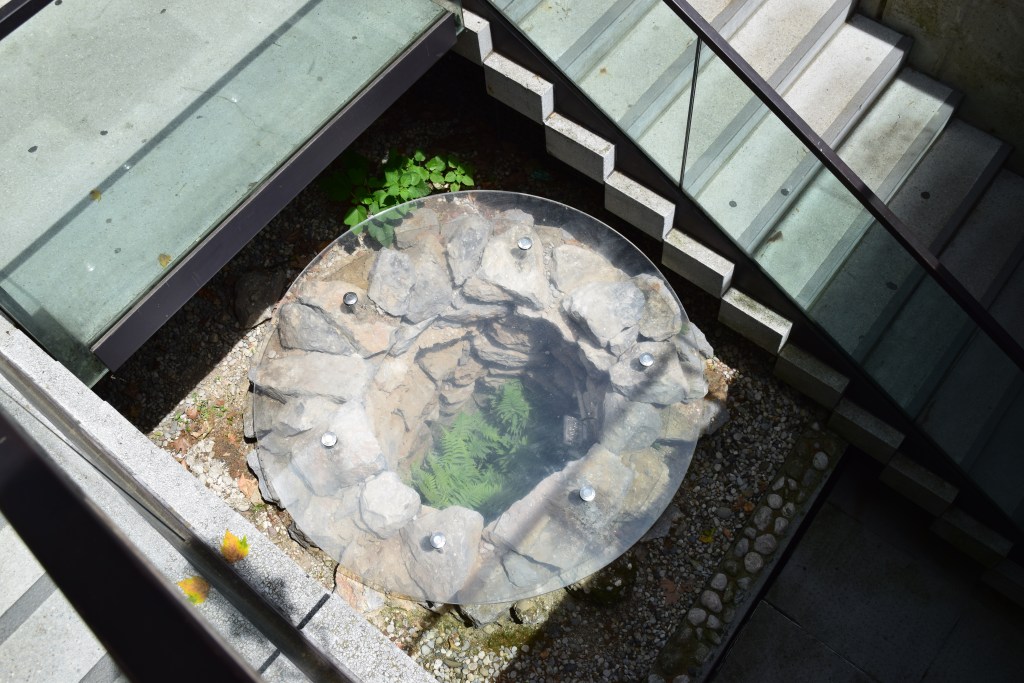
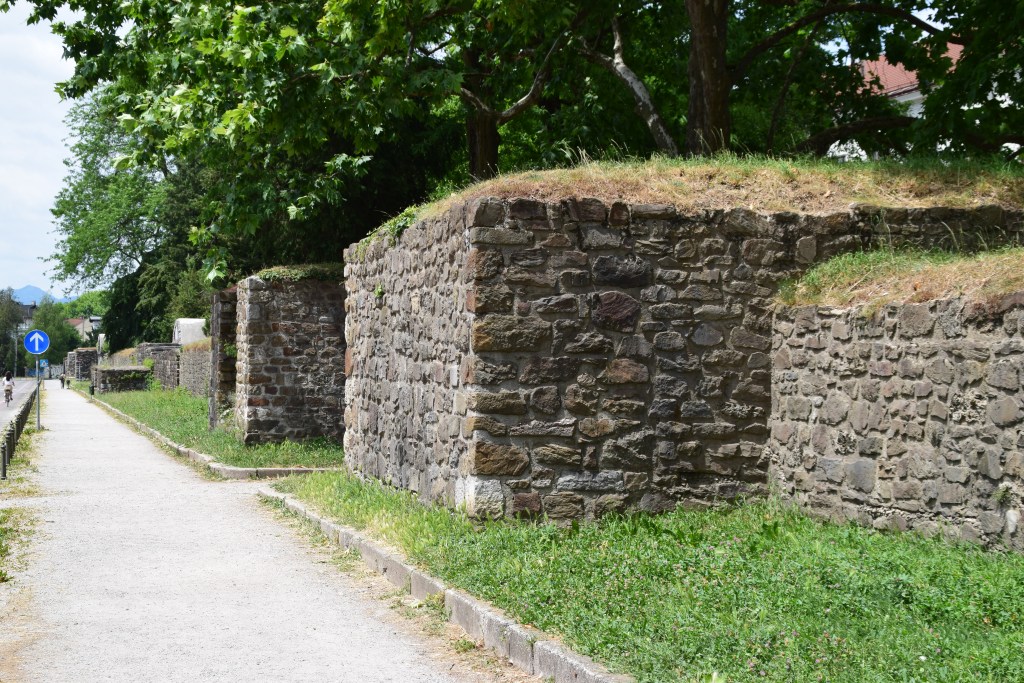
In the 1930s, the ancient city fortifications were renovated by our friend Jože Plečnik. A stone pyramid, elevated wall sections, entrances, and a lapidarium (a vaulted space displaying stone remains from nearby Roman houses) are all based on his designs.

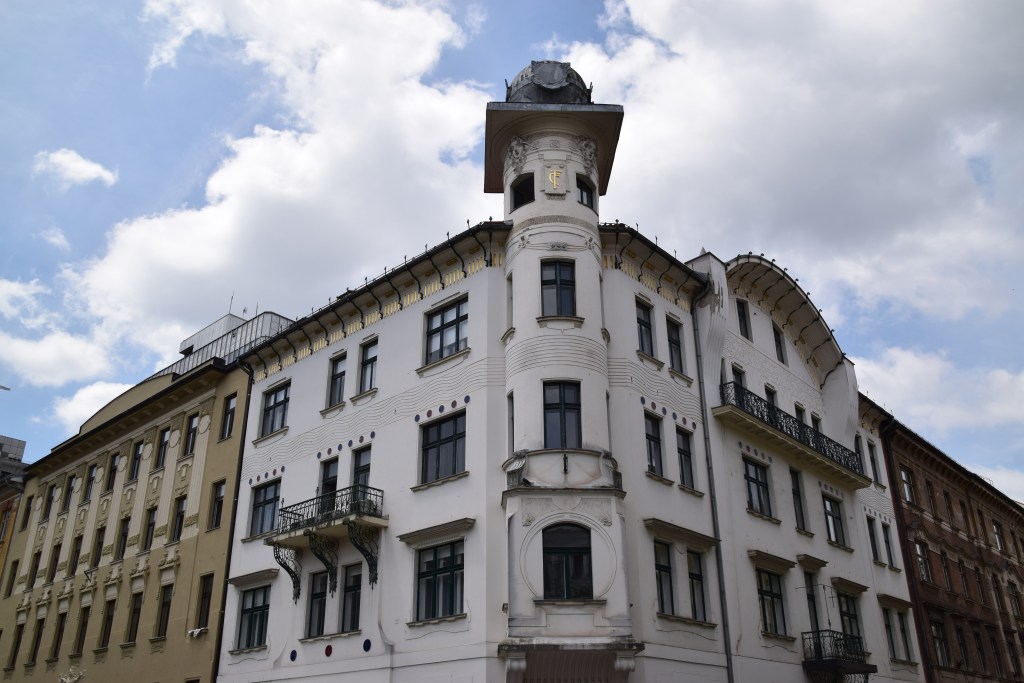
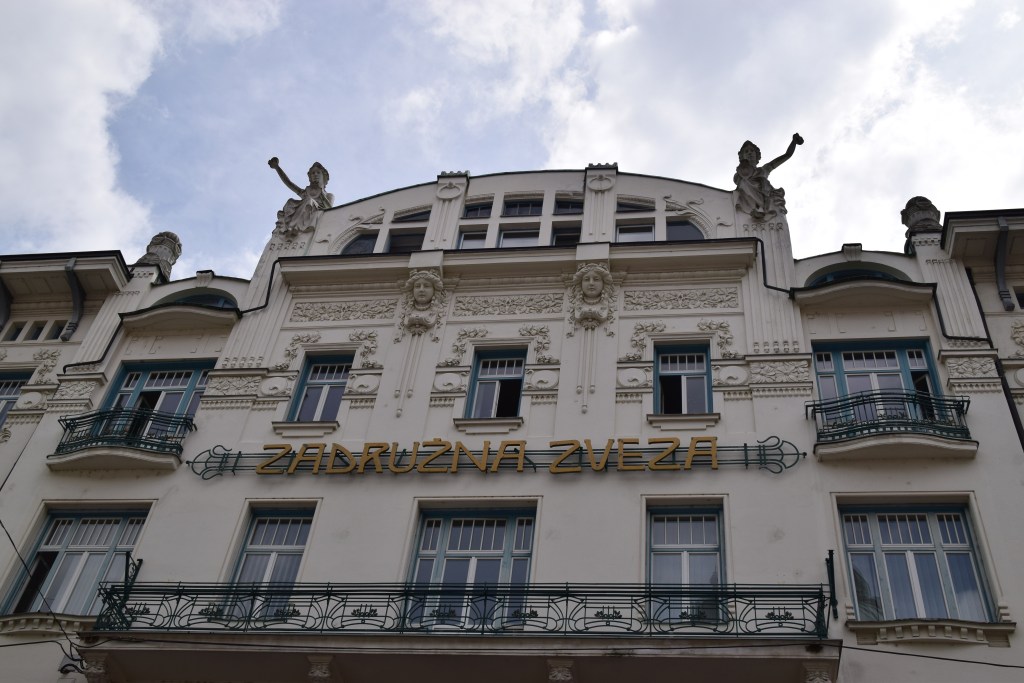
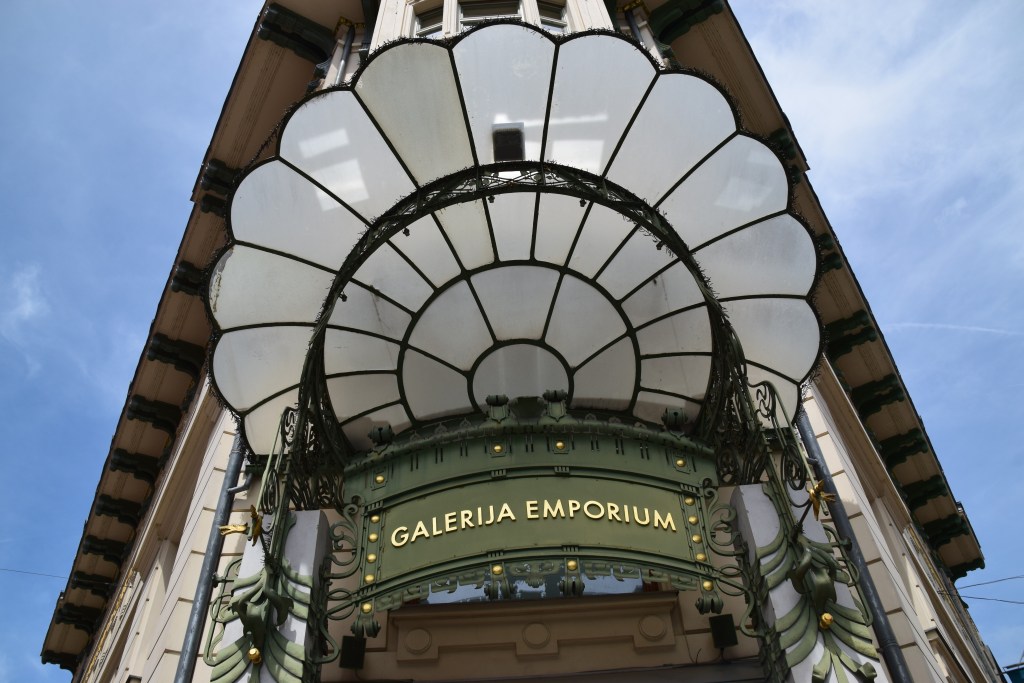
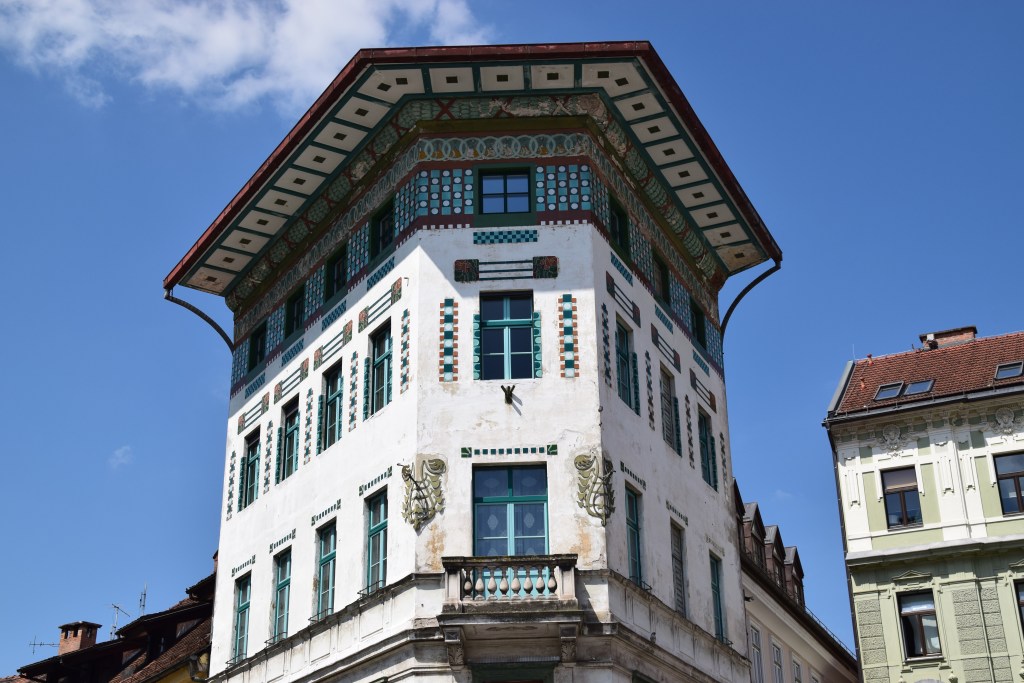
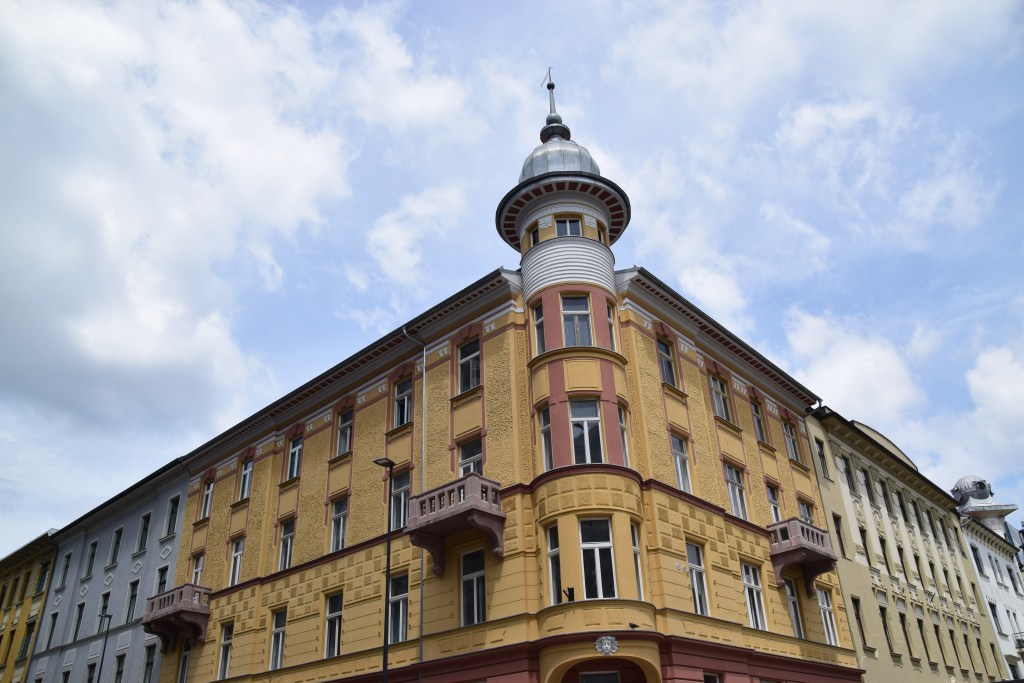
Following a major earthquake in 1895, about 10% of the city’s buildings had to be demolished and the rest were in need of restoration. The next decade was one of major reconstruction which coincided with the emergence of the Art Nouveau / Secession movement throughout Europe. While electric public lighting was introduced, and the sewage system improved, Ljubljana’s architects embraced the Secession’s principles – giving the city a fresh start with functional but artistic spaces. In the neighbourhood between the old city centre and the railway station, beautiful buildings and parks were constructed for wealthy merchants, lawyers and businessmen. A walk along Miklošičeva cesta and the adjoining area is a must for all art and architecture enthusiasts!


The Cyanometer is a simple measuring tool, invented by Geneva-based scientist Horace Bénédict de Saussure in 1789. He systematically documented the blueness of the sky using a simple circular tool with 53 shades of blue. He concluded that blueness is influenced by both moisture and the amount of suspended particles in the atmosphere and thus determines the quality of the air.
This 10ft tall monolithic sculpture by Slovenian artist Martin Bricelj Baraga is inspired by the original Cyanometer. Its software periodically captures images of the sky which are measured against the 53 shades of blue. The machine changes colour to match the sky. Air quality data is recorded on the Cyanometer website.
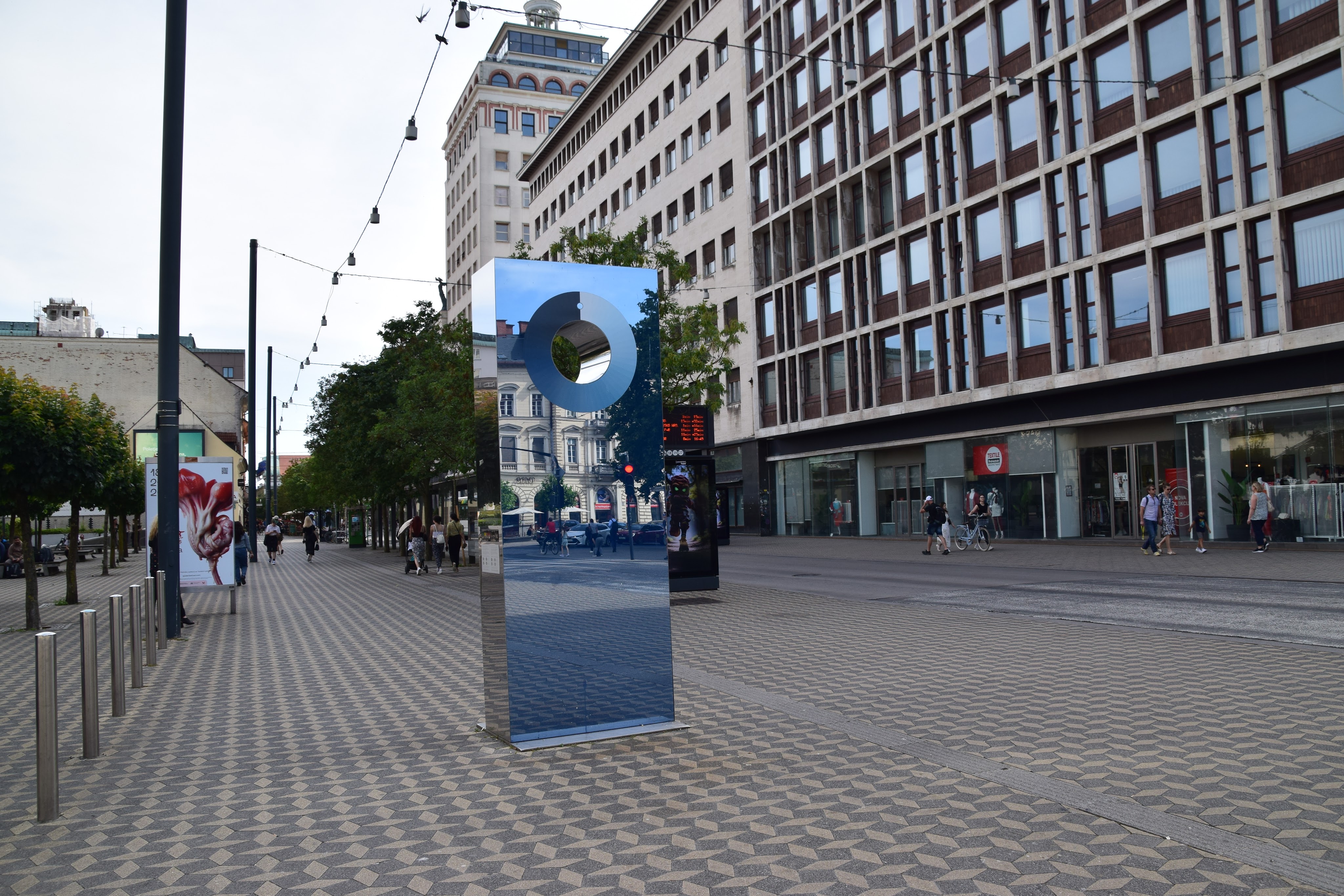
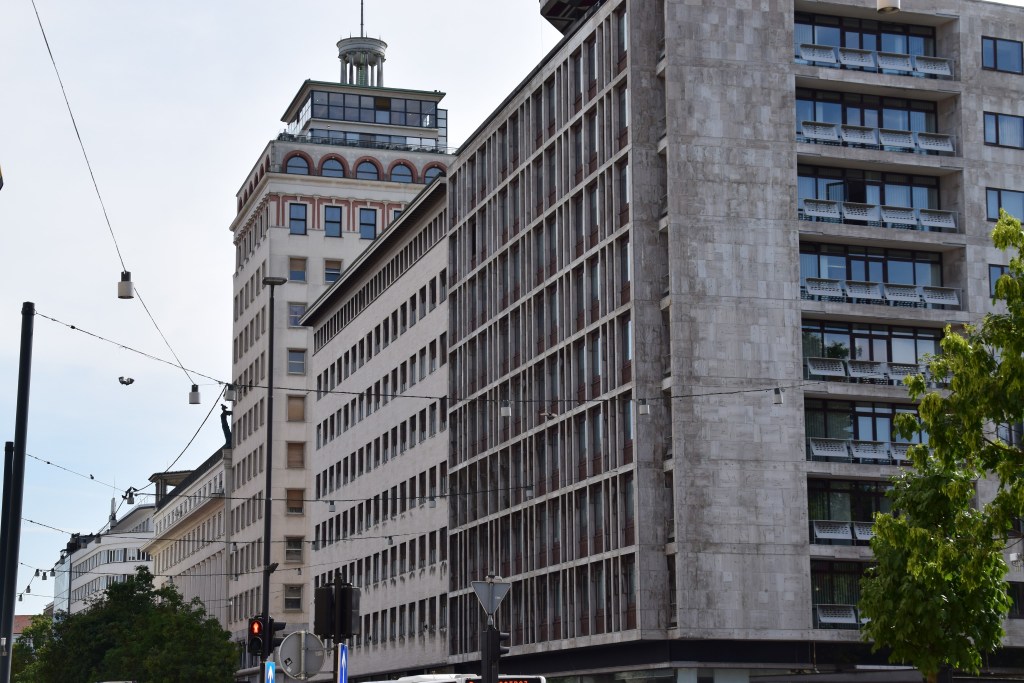
Behind the Cyanometer we can see Neoboticnik – the 70m high tower, was, at the time of its completion in 1933, one of the highest residential buildings in Europe and the first multistorey building in the Balkans. Inside, we can admire the spiral staircase and the views from the rooftop.
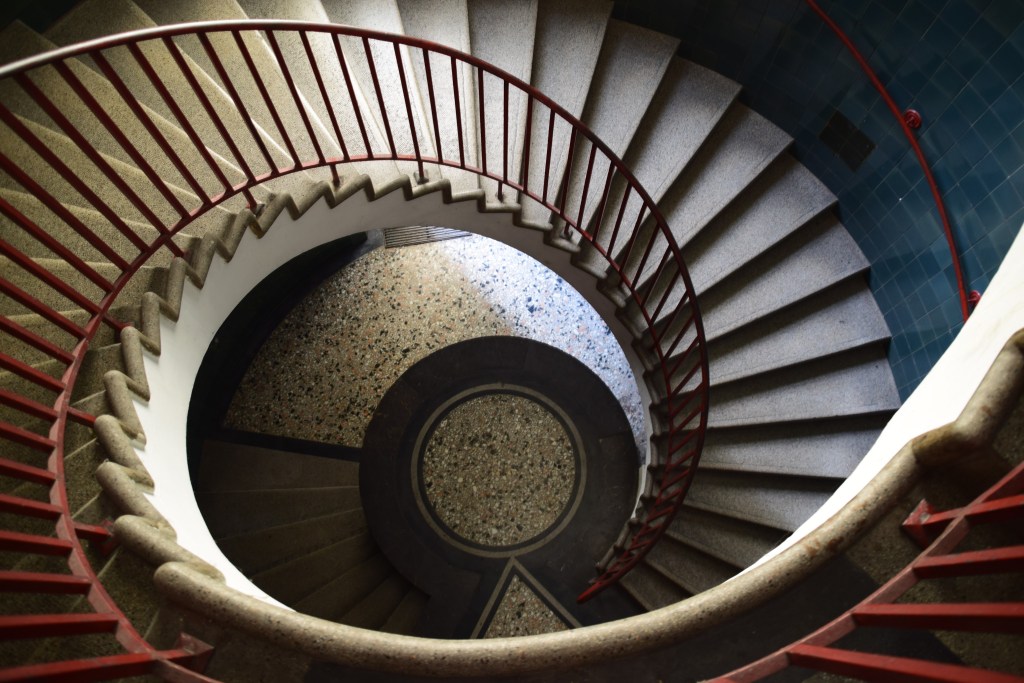
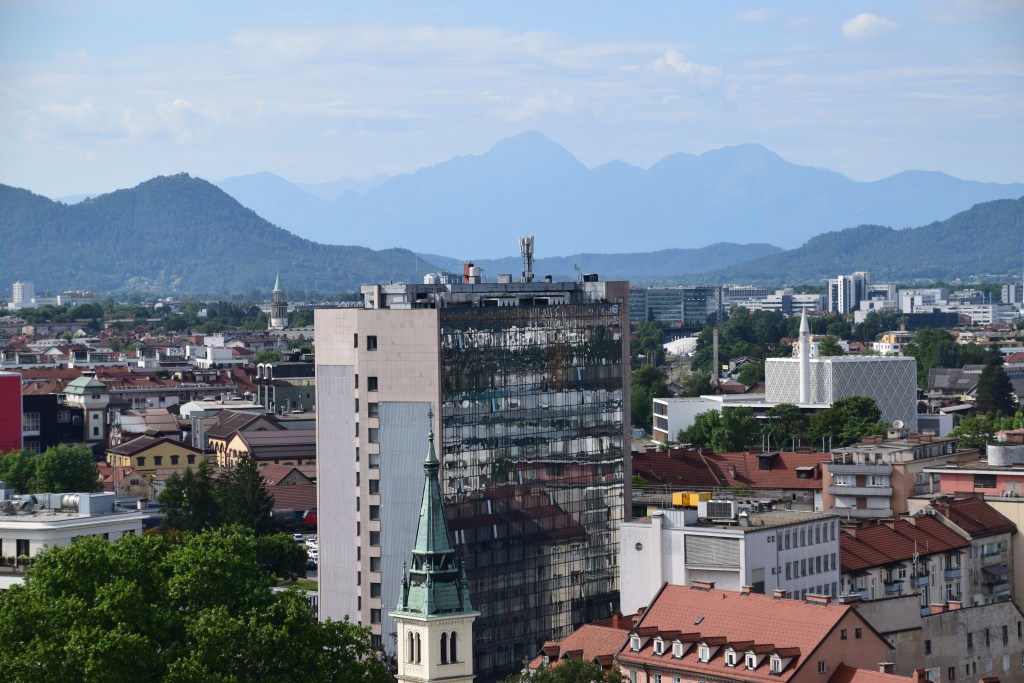
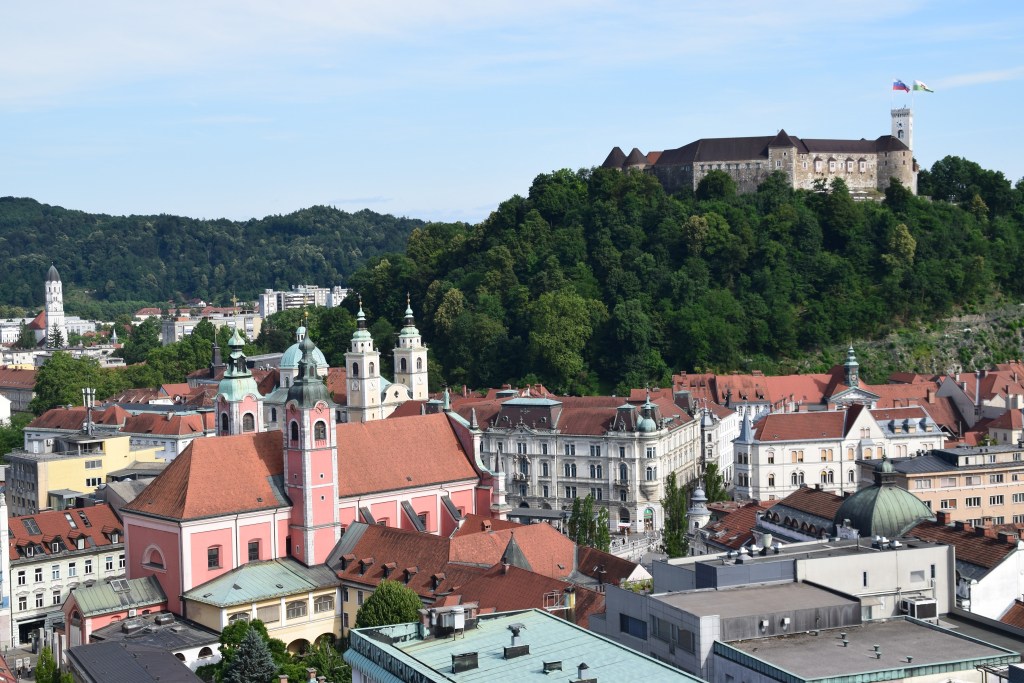
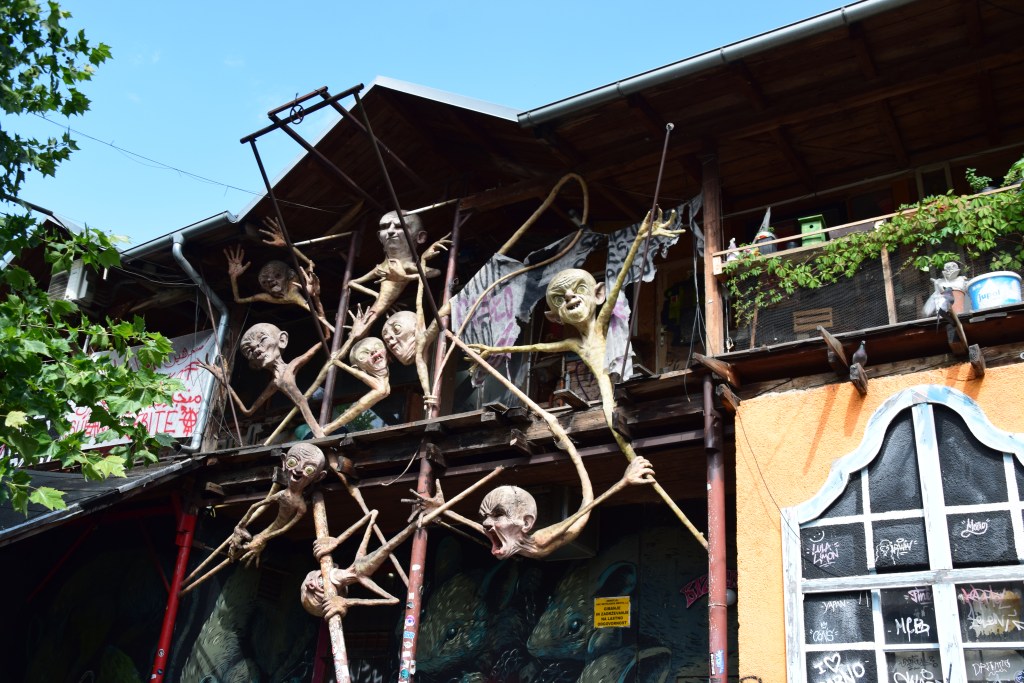
The Slovenian art commune now known as Metelkova was once a Yugoslav military barracks. The site was abandoned by the army in 1991 and eventually taken over by squatters. Despite several attempts by the authorities to clear the site, the squatting community remains and the decorated buildings host cultural events and house some small galleries, a bar and nightclub. Hostel Celica occupies a converted military prison.


We end our walk on an Irish note! No, not a pub (although there’ is’s at least one in the city of course), but rather a nod to one of our great writers ……
In October 1904, novelist James Joyce and his future wife Nora traveled by train from Zurich to Trieste where he would take up a teaching position. When the train stopped in Ljubljana, Joyce assumed they had reached their destination and they got off with their belongings. By the time they discovered their mistake, their train had left. They spent the night in a nearby park before catching the next train.
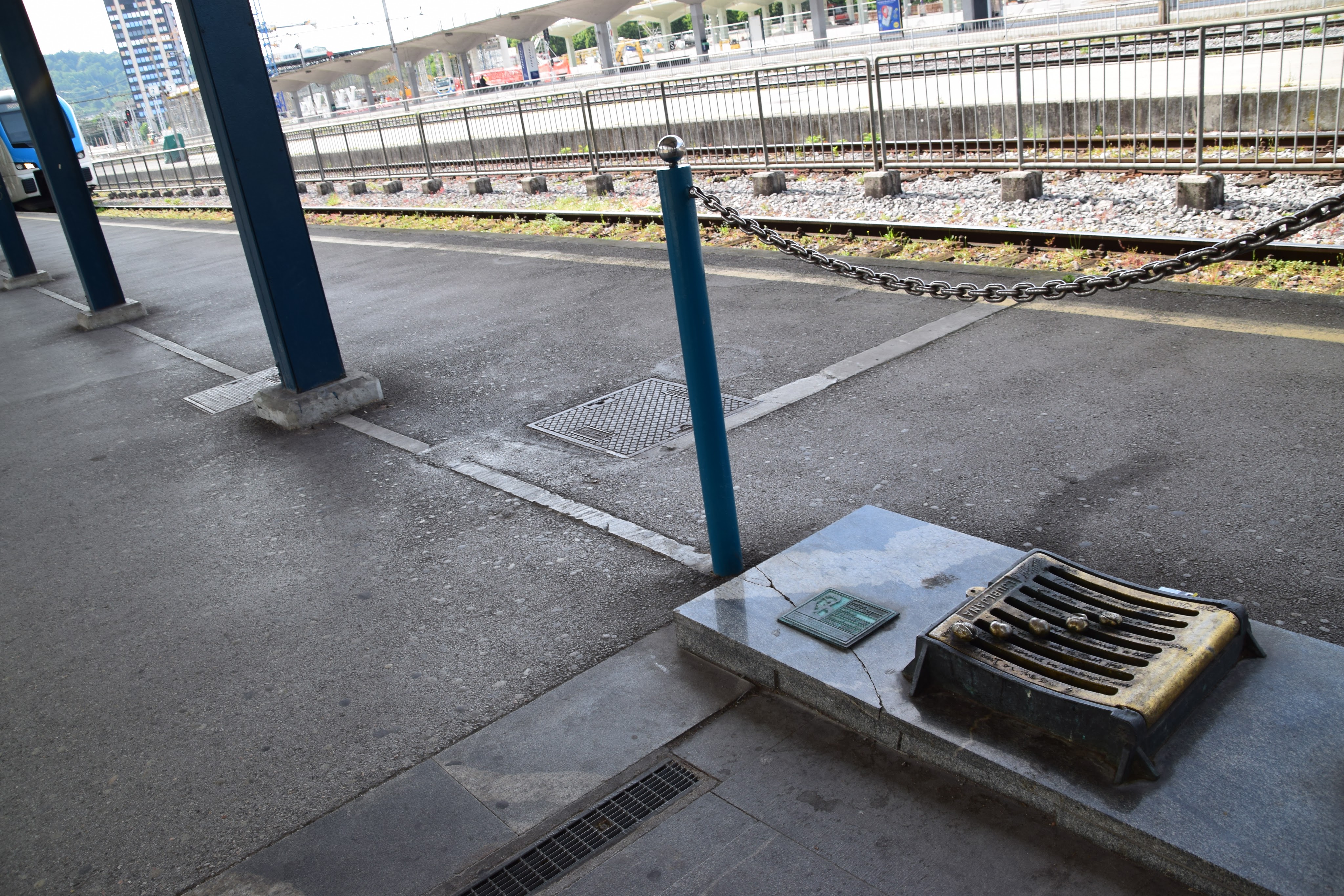
At the train station, you will find a plaque ( but only if you look for it!!!) featuring his portrait and and announcing ‘On October 19, 1904, James Joyce spent the night in Ljubljana.’
Nearby is a bronze gutter grate with a sentence from Ulysses printed in Slovenian and in English: V polkrogu je zavrtel ogledalo po zraku, da razpošlje to novico v soncu, ki je zdaj zarelo nad morjem. / He swept the mirror a half circle in the air to flash the tidings abroad in sunlight now radiant on the sea.
Small Stuff
Language
Slovenian is the national language. Italian is a co-official language along the coast and there is some functional knowledge of German in particular areas of the country. English is widely spoken, especially among younger generations and in the major tourist areas of Ljubljana and Bled.
Currency
Euro
Getting There
Ljubljana Airport is about 30 kilometres away from the city centre. As well as the usual taxi and shuttle services, a public bus will take you to the main bus station in about 50 minutes. You buy your bus ticket – €3.30 – directly from the driver (NOTE – CASH only).
There is a regular bus service from Trieste – taking about 90 minutes.
Getting Around
Ljubljana is very compact and it is easy to see the main sights on foot. If you are staying a bit out from the centre, the local bus service is very cheap and reliable.
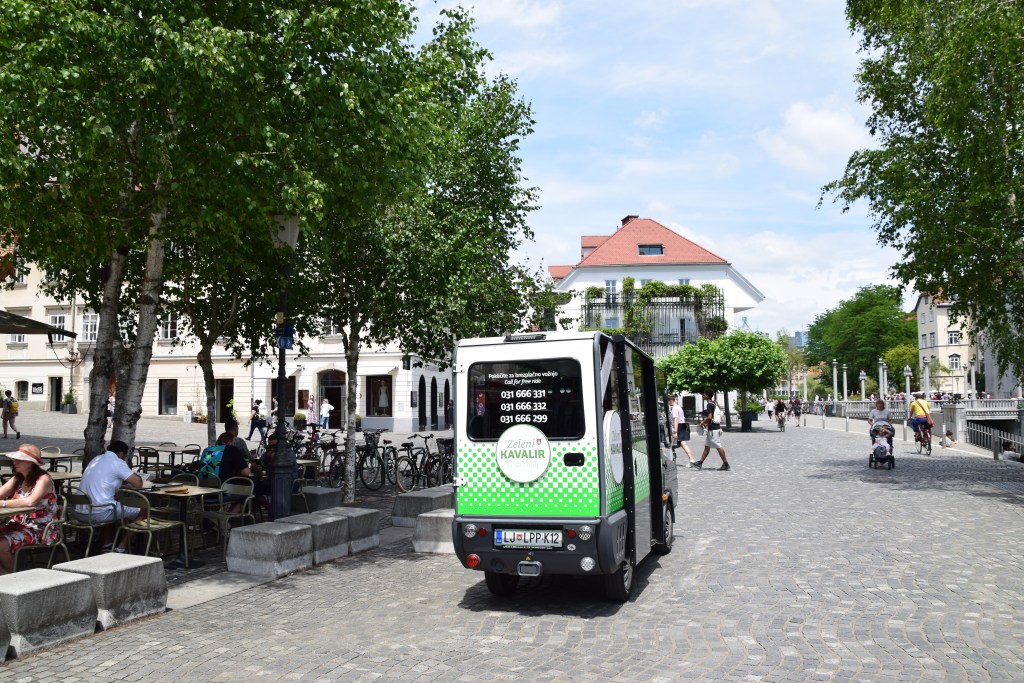
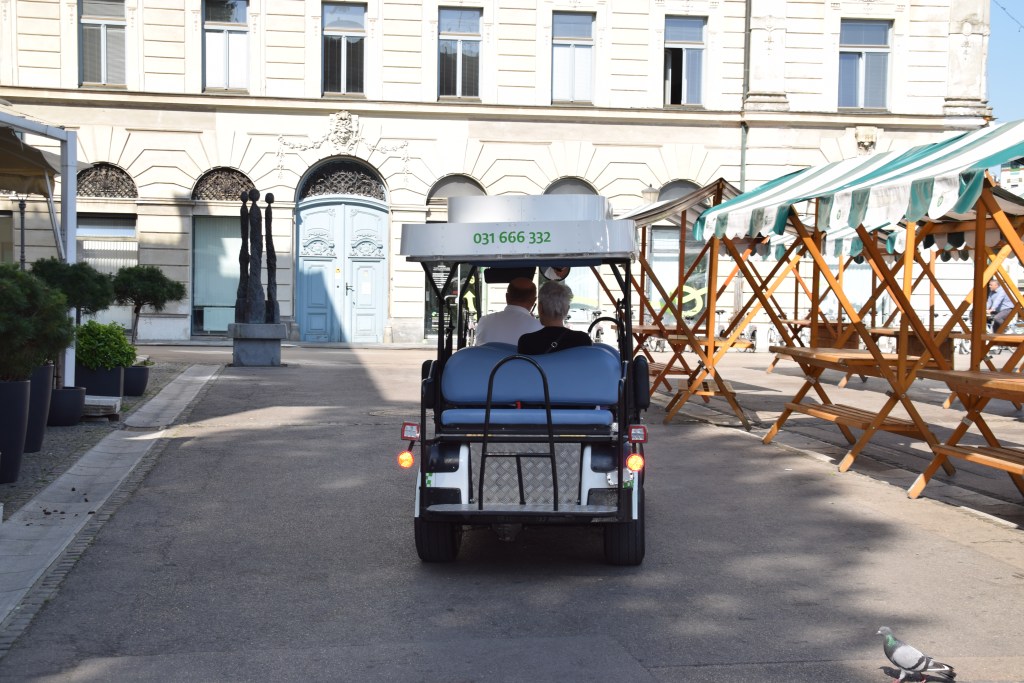
The Kavalir is a free electric shuttle operating in Ljubljana’s pedestrian zone. It can be boarded at designated stops or hailed within its service area.
When to Go
We visited in June. Temperatures were lovely during the day and we just needed a light jacket or wrap for nighttime. There were no crowds so no queues for dining and we’d our choice of seating alongside the river. Autumn is supposed to be beautiful when the city is draped in colourful foliage.
As with most of Europe nowadays, I wouldn’t be mad about the place in high season ( just imagine the crowds on Triple Bridge!!!) – but that’s just me getting older and wiser!!!
How Long
That depends a lot upon your time of arrival. You could easily see everything above in a day ( I haven’t included museums, etc.). The place is lovely at night so you should definitely stay for a least one.
We arrived early afternoon and had 48 hours (2 nights). So we had that evening, the following full day and then a morning before moving on.
Where we Stayed
The Best Western Premier Inn Slon (€331 for 2 nights inc good breakfast) is 300m from Triple Bridge and about a 10 minute walk from the bus/train station. It was close to everything so we could come and go as we pleased. We’d a huge corner room with great views of the beautiful Central Post Office next door and the wide avenue leading up to Tivoli Park.


20/20 Vision!
With even another half day, we could have fitted in a guided tour of Plečnik’s home ( now that we know so much about him!!!) and use up the last of our energy with a stroll around Tivoli Park which seems to offer up lots to see and do. As we were travelling on by public bus to Bled, we could easily have stayed a while longer and caught an evening connection….
I’d have loved the Friday Open Kitchen at the market.
Because we were heading back to Trieste anyway, I should have done a bit more research re flying there instead and getting a bus to Ljubljana. We might have saved a bit on flights.
Otherwise??? I’m happy!!!
What a great post. Thank you for your fantastic pictures and commentary. It brought back such wonderful memories.
Steve
Ah that’s good, Steve – it’s definitely a city i’ll be recommending to friends….
Wonderful city. Loved everything about it. Missed a couple of things on your walk but I was there for the Friday chefs market. The Opera house is also worth seeing a performance.
I’d have loved the Friday Market – the timing just didn’t work out for us. maybe it’s a reason to return sometime!!!
Such a great post on lovely Ljubljana. I adored the Slovenian capital and enjoyed a 3 night stay there in 2023 – I was also struck by those doors on the cathedral, and enjoyed the castle very much 🙂 Thank you for brining back some nice memories!
It has actually whet the appetite to check out more capitals in the region – But Ljubljana has set a very high standard!
This is such a wonderful post, dear Marie. I visited Ljubljana just before the pandemic and instantly fell in love with the city’s beautiful buildings, cafes, and parks. One of the reasons why I have not returned to Slovenia is that there are no direct flights from Dublin to Ljubljana, which is a pity, because it is such a beautiful country and city to explore and photograph. Thanks for sharing, and have a good day 🙂 Aiva xx
It’s a lovely option for those who have visited Croatia a few times and are looking for someplace new. The flight is a bit of a deterrent – we’re not so bad – we went through Amsterdam with KLM – but I wouldn’t fancy it with smallies in tow like you Aiva!
You’ve given me so many reasons to keep Slovenia and Ljubljana on my list. Its true, I’ve read a lot about the country, but not as much about the capital. It seems to have a bit of everything, an old town, a castle and arte-nouveau. Maggie
I know thee are lots of places in Europe for you to visit Maggie but it’s definitely worth keeping on the list. It’s a region we will have to pay more attention to, ourselves…
I’ve never been to Ljubljana, nor to be honest considered it, but it does look a lovely city for a wander. Some of the architecture looks especially impressive!
I think you’d like it Sarah. Imagine your photos!!!
This reading brings back memories. I am one of those who took a flight to Ljubljana. At that time, I still had Paulo Coelho’s Veronika Decides to Die in mind, seeking to find the places described in the novel. Prior to a week-long stay in Slovenia, I was charmed by my visit to the capital.
Did you recognise any locations from the story? – I haven’t read it. We did something similar – just over a week there – lovely just pre season….
🙏
lovely post. Ljubljana is really charming, I’ve visited it a couple of times
It must be convenient for you for short breaks. I’m trying to get some pals to go but they are put off by the indirect flight – I know they’d love it.