
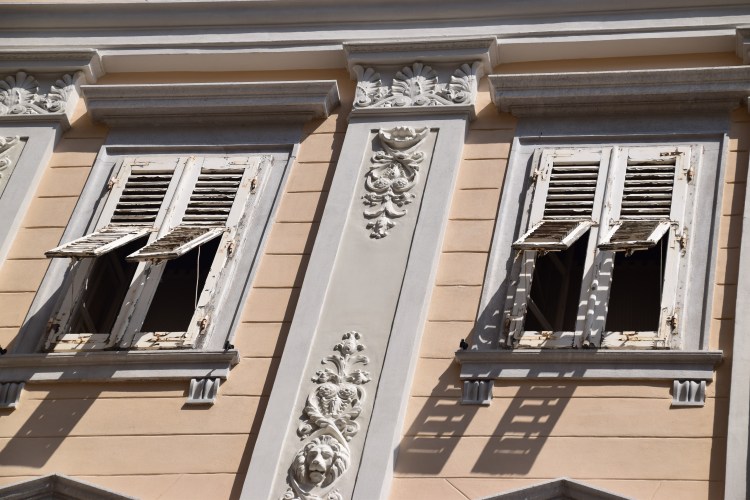
It’s hard to put your finger on it – you know you’re in Italy but it’s not quite like her other cities. Italian is spoken in the streets but not by everyone. Goulash or strudel is as likely to pop up on your menu as is gnocchi or pizza. And then there is the architecture – those grand boulevards and squares, surely more reminiscent of Vienna than Rome….
But – it’s no wonder at all!
Perched on the Adriatic, in Italy’s far northeastern corner, Trieste’s strategic location has exposed her to quite a mix of cultures and traditions…. Romans, Venetians….. sure in the 20th century alone, the city existed under the rule of the Austro-Hungarian Empire, the Kingdom of Italy, Fascist Italy, Nazi Germany, a Free State and eventually the Republic of Italy. It’s also a city defined by the sea – under the Habsburgs, it became the port for Vienna, replacing Venice as the great port of the Adriatic and becoming fabulously wealthy in the process.
Without a massive list of tick-the-box sights, the city never really competed with Rome, Florence and Venice. But its popularity has soared in recent years, especially since Venice banned large cruise ships in 2021. So now, everyone’s talking about Trieste again – and the city is very much open for business!
Let’s go walkabout…..
Standing by the Canal Grande, it’s hard to picture this as salt marsh. The plan was to excavate the existing channels running perpendicular to the seafront to create a series of canals which would allow boats navigate further in to the city and facilitate the loading and unloading of goods. The area was reclaimed in the 18th century but the project was eventually abandoned, leaving Canal Grande as the city’s only canal.
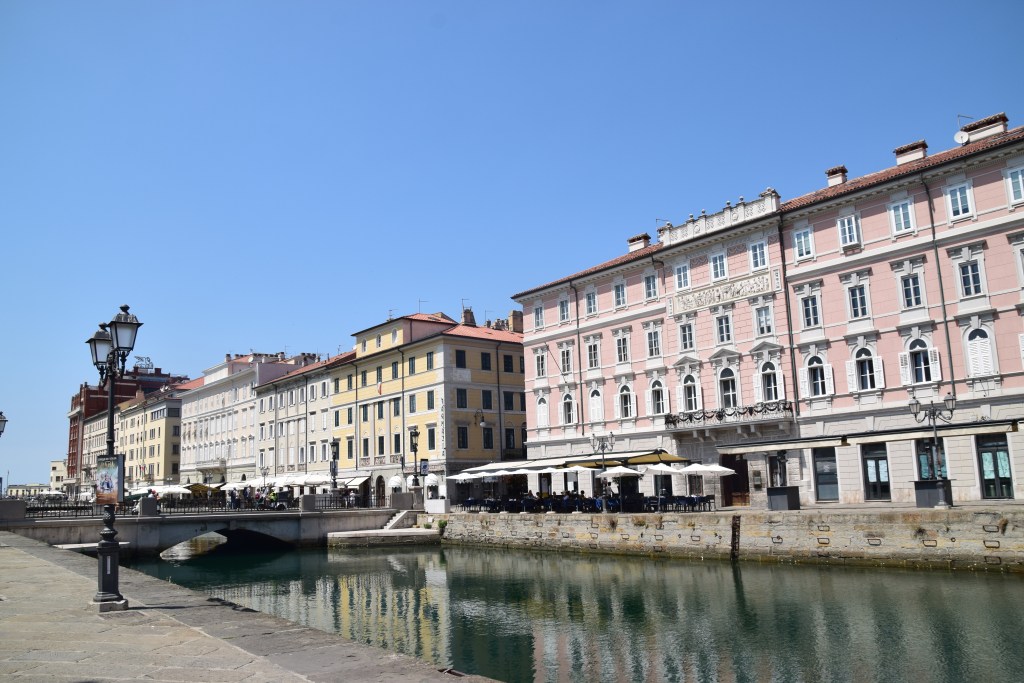
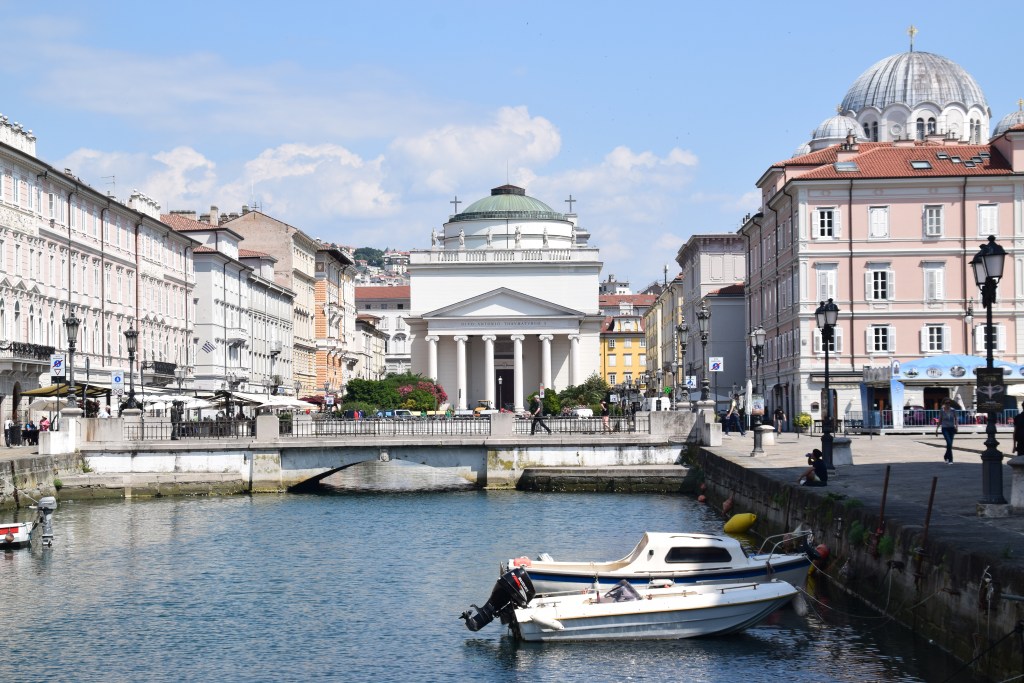
Its banks were lined with fine palazzos and piazzas. Nowadays, some of those palazzos are homes to museums while the piazzas house imposing churches and facilitate tourists in their bars and cafes.


Serbian Orthodox Church of San Spiridione and Church of Sant’Antonio Taumaturgo
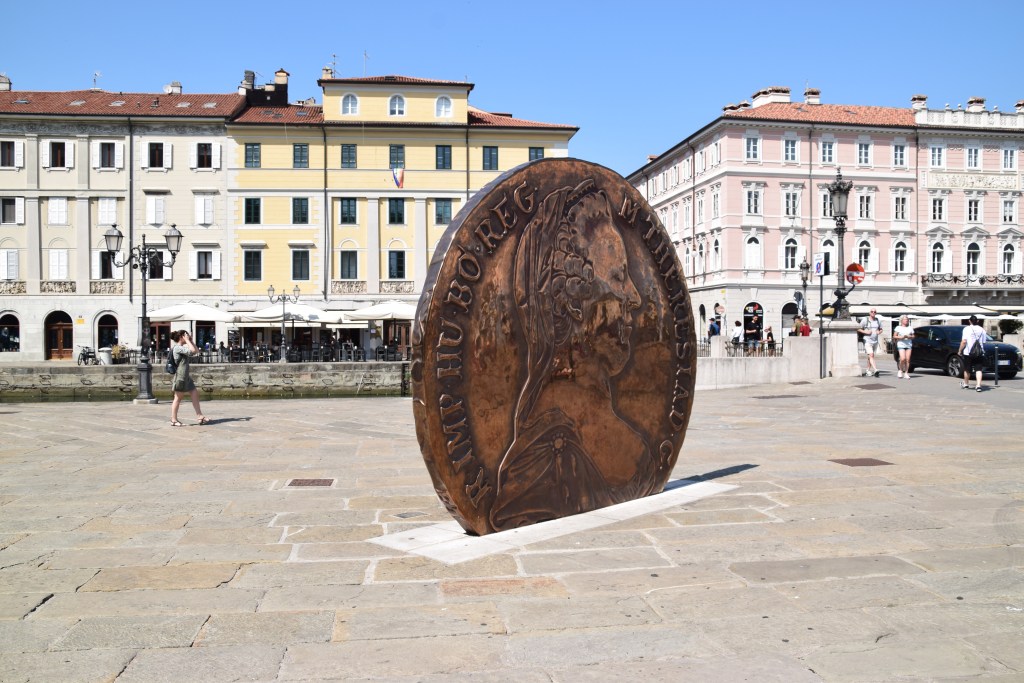
This is the Monumento a Maria Teresa – an massive replica of a Maria Theresa Thaler. Although she never actually visited the city, it commemorates the huge impact the Empress had on the city and its historical significance as main port and commercial hub of the Austro-Hungarian Empire.
(A thaler was a large silver coin minted for the Holy Roman Empire and the Habsburg monarchy during the Early Modern period).
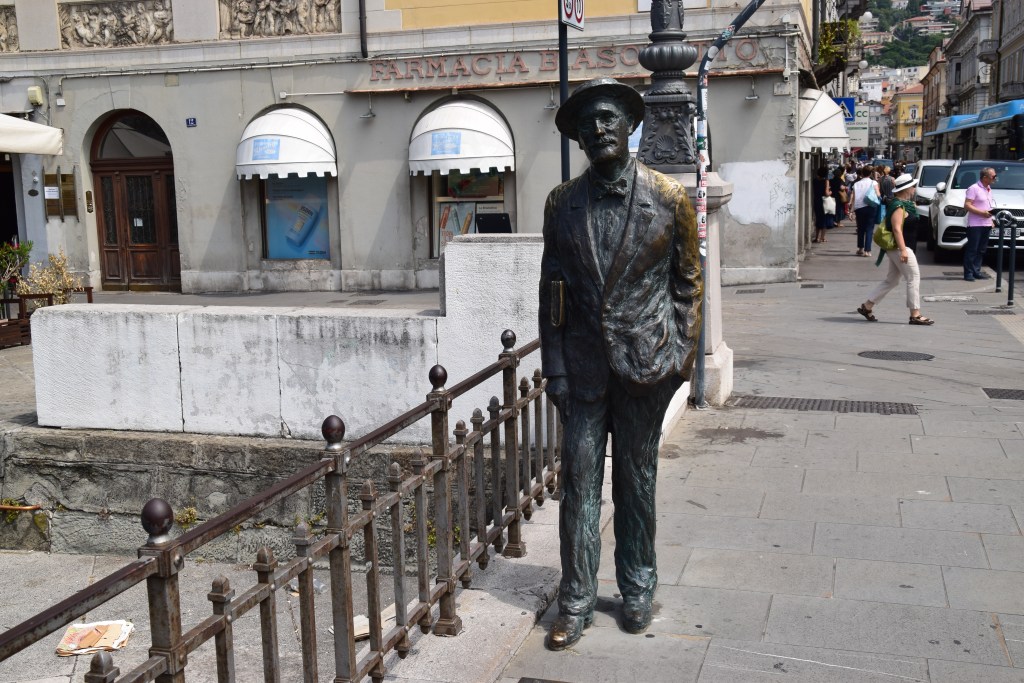
James Joyce lived in Trieste on and off from 1904 to 1920. He considered it his home and spent most of his adult life here. During that time, he taught languages at Berlitz to get by while writing A Portrait of the Artist as a Young Man and most of Dubliners, as well as starting Ulysses.
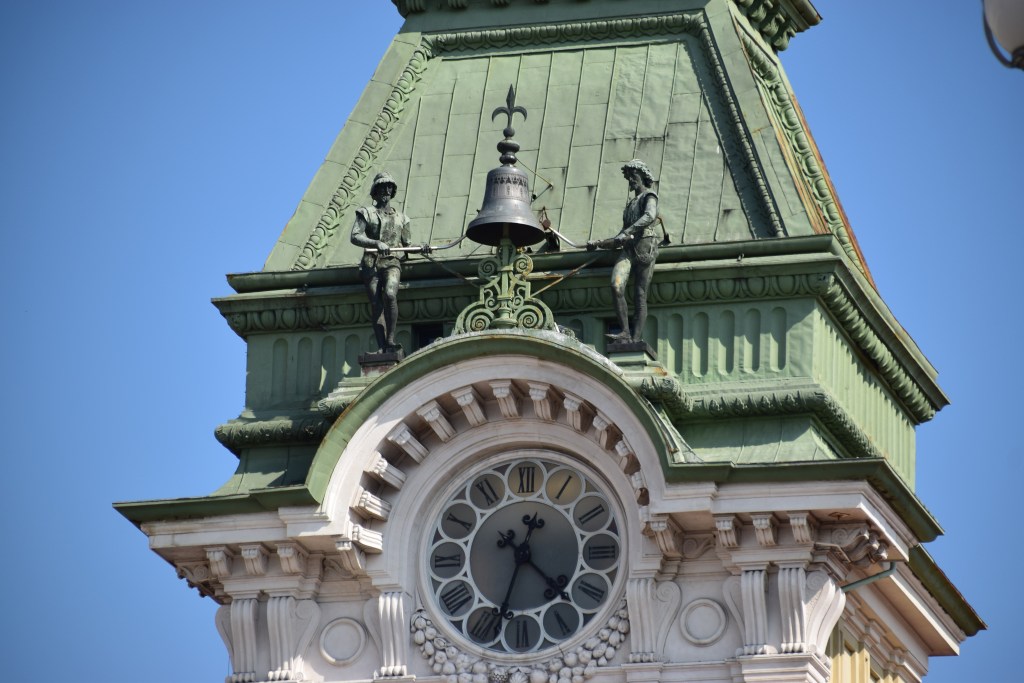
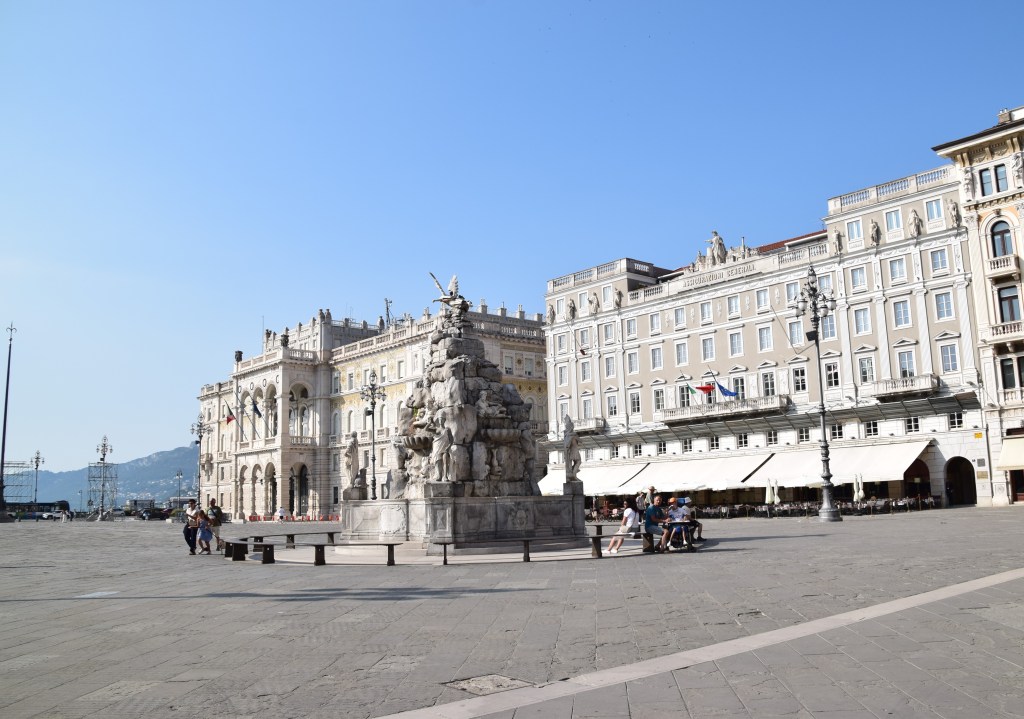
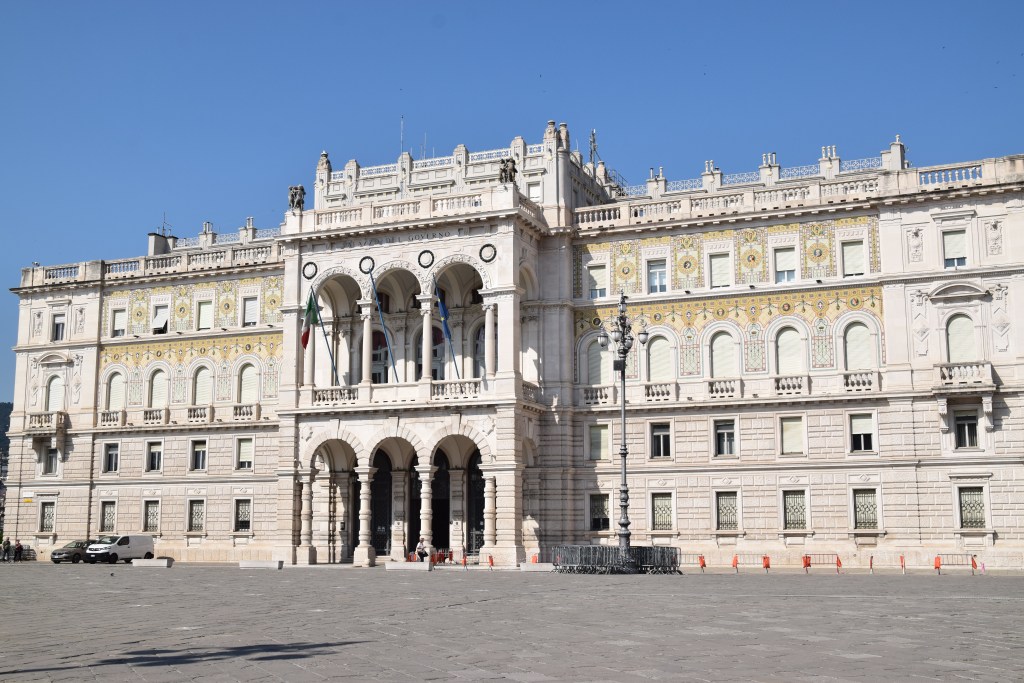
The grand Piazza Unità d’Italia owes its creation to the empress Maria Theresa of Austria whose reign heralded the city’s most prosperous age. With the Bay of Trieste on one side, this is the largest sea facing square in Europe. It is surrounded by elegant, Habsburg-style buildings with pride of place belonging to the City Hall where two bronze Moors – Michez and Jachez – strike the hour up on the clock tower.

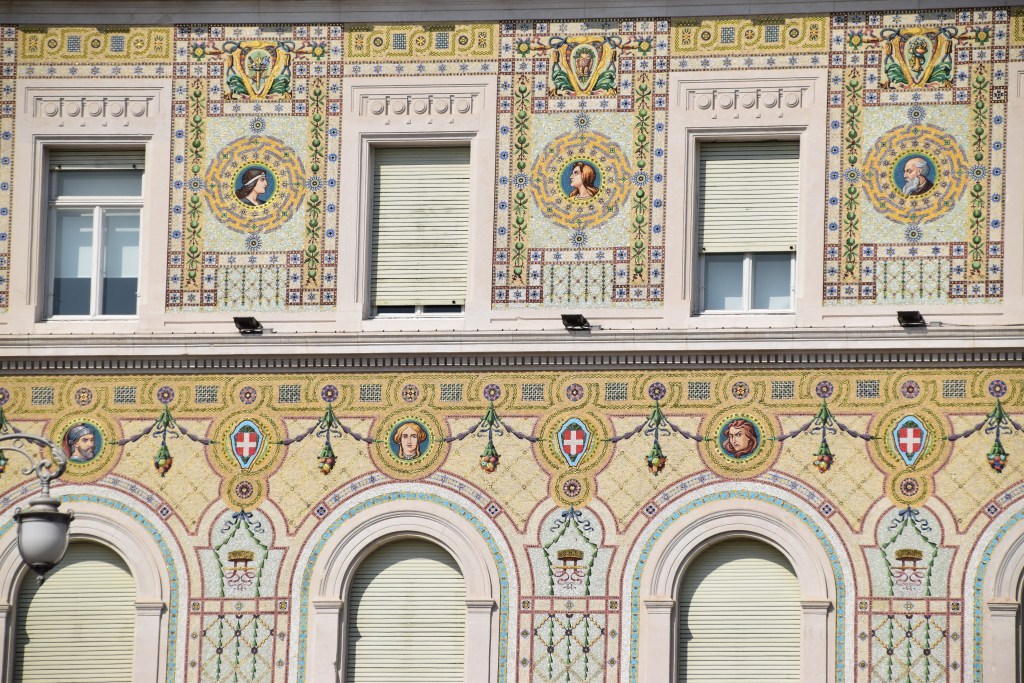
Just a stone’s throw away is the irregularly shaped Piazza della Borsa which would have served as the economic centre of the city in the 19th century. The beautiful Palazzo della Borsa was commissioned for the Stock Exchange. The building boasts all the trappings of a Greek Doric temple – complete with columns, tympanum, portico and plenty of statuary.
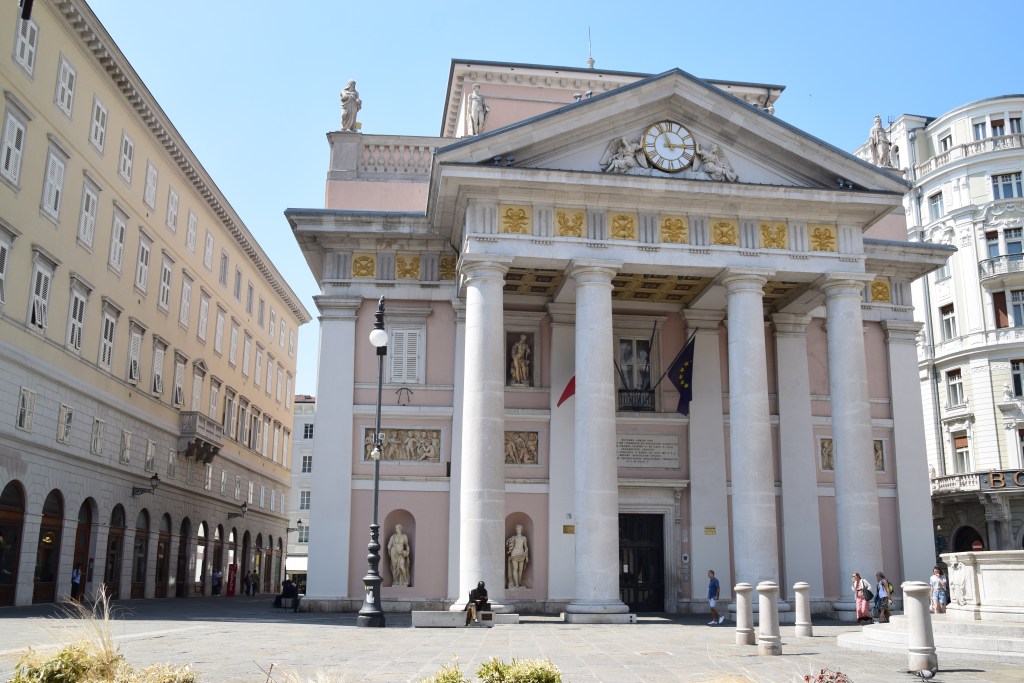
Outside, a 12-metre long sundial was built in 1820 to synchronize the marine clocks of the ships arriving in Trieste.

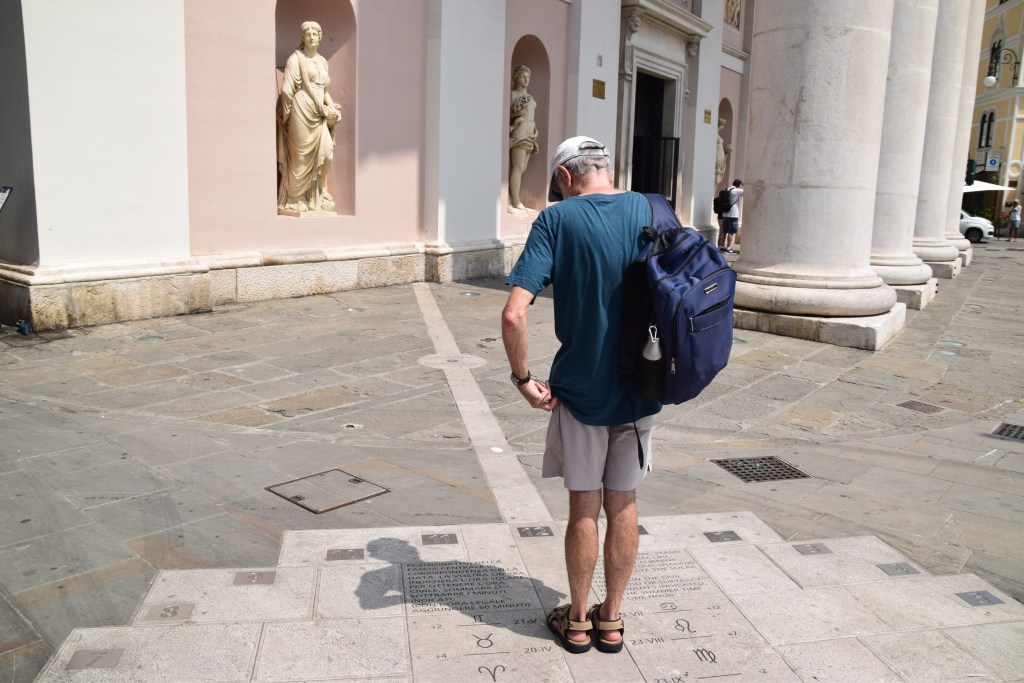
Yep – it works!
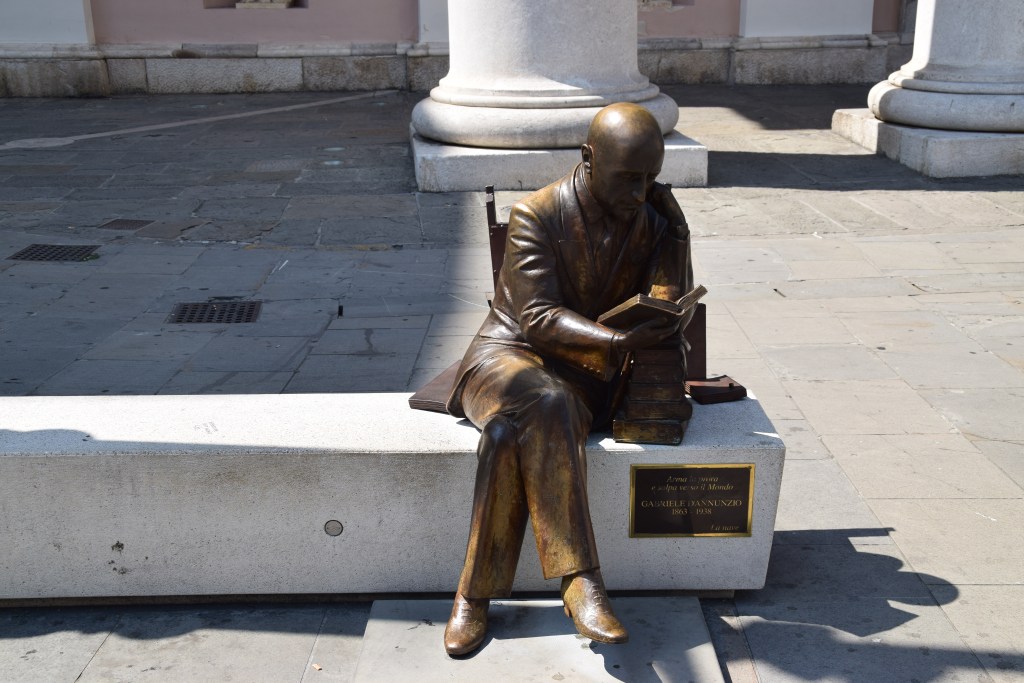
Gabriele D’Annunzio sits on a concrete bench in front of the Palace. He was not only Italy’s leading writer in the late 19th and early 20th centuries but also a World War I hero before going on to become a proto-fascist leader.
In 1919, the port of Fiume (present day Rijeka in Croatia) was to be incorporated into the new Yugoslav state. D’Annunzio, believing Fiume to rightly belong to Italy, formed a private army that occupied the city which he ruled as dictator for several months until compelled to abdicate by Italian military forces.
He cultivated a nationalist and militaristic public image and, although not a fascist himself, is widely considered a major influence on Italian Fascism with Mussolini in particular adopting his ideas and style.
The installation of this statue in 2019 raised criticism from the Croatian government and some local citizens who claimed it glorified an aggressor, tyrant and enabler of Italian fascism.
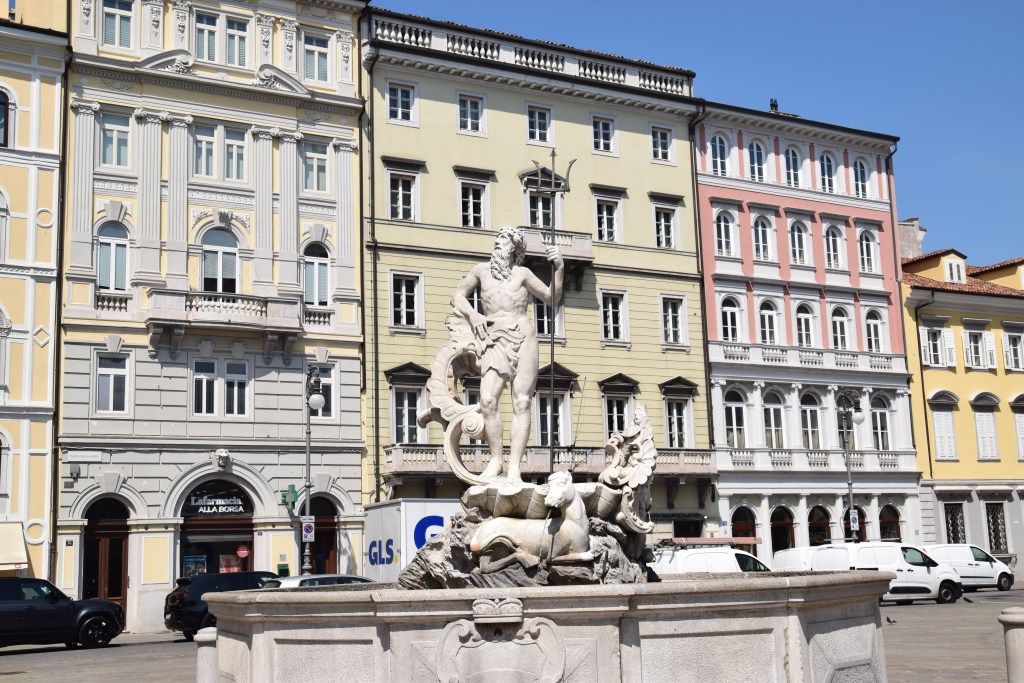
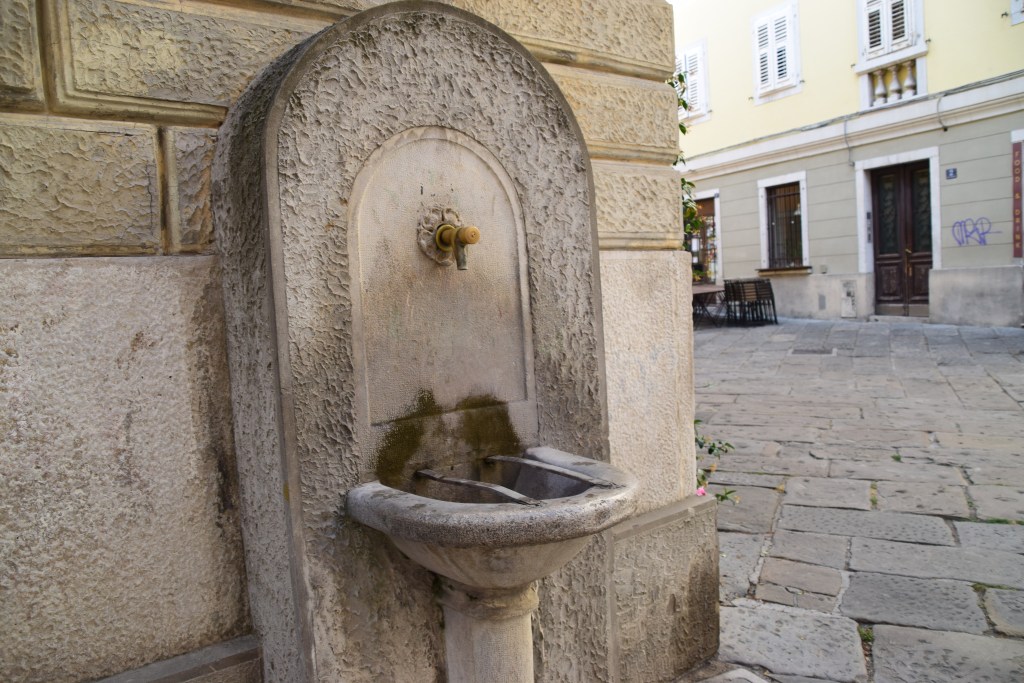
Fountain of Neptune was built in 1750 and, as with many fountains of the day, was used by local women to wash clothes.
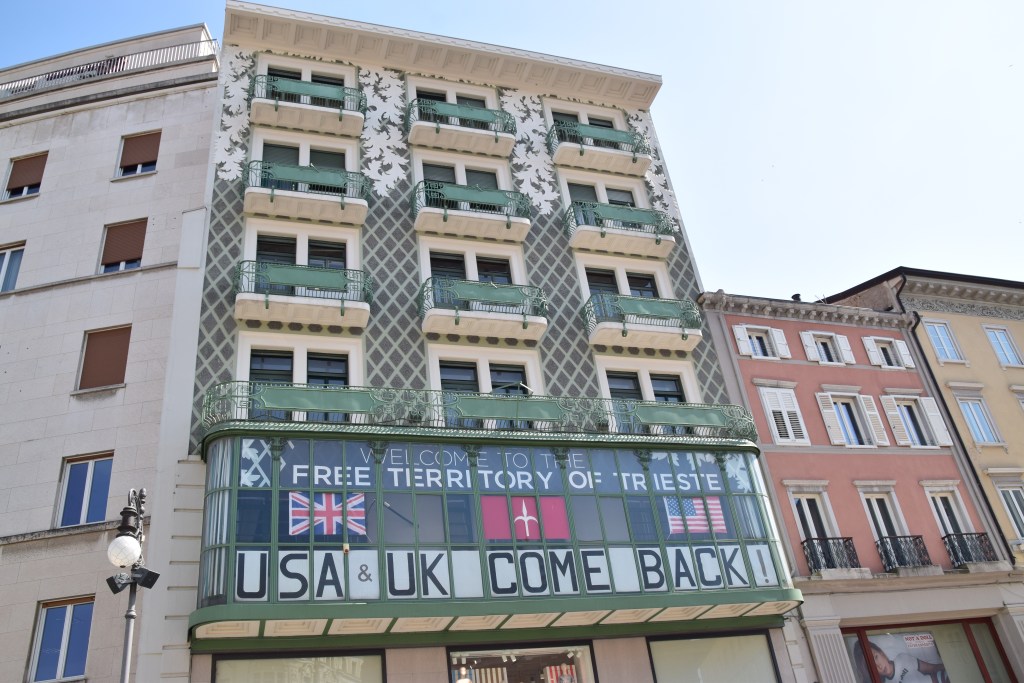
The stunning Casa Bartoli, the most elegant Art Nouveau house in the city, is as famous nowadays for the huge sign advocating independence from Italy as it is for its architecture.
The Portizza was formerly a gate in the city’s medieval walls and during the 1700’s linked the piazza with the former Jewish Ghetto.
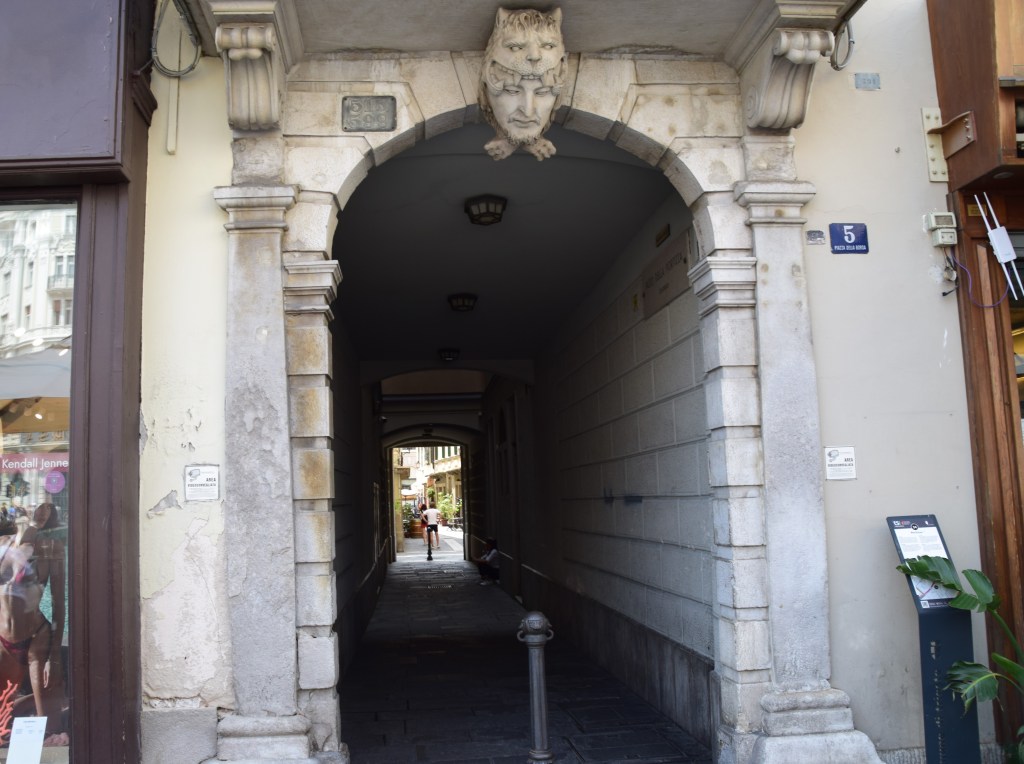
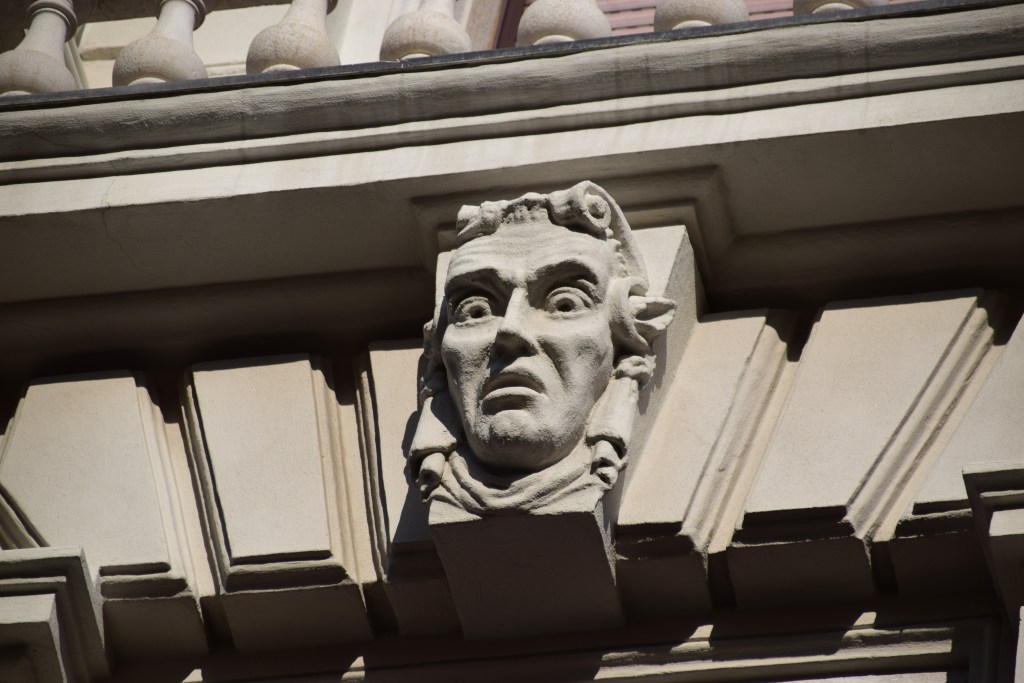
The stone face placed at the keystone is actually a common sight throughout the city. Panduri were named after fearsome Habsburg warriors who defended the borders from the Ottoman Empire for centuries. There are an estimated 150 or so remaining throughout the city – many with threatening expressions suggesting their role was to guard the house.
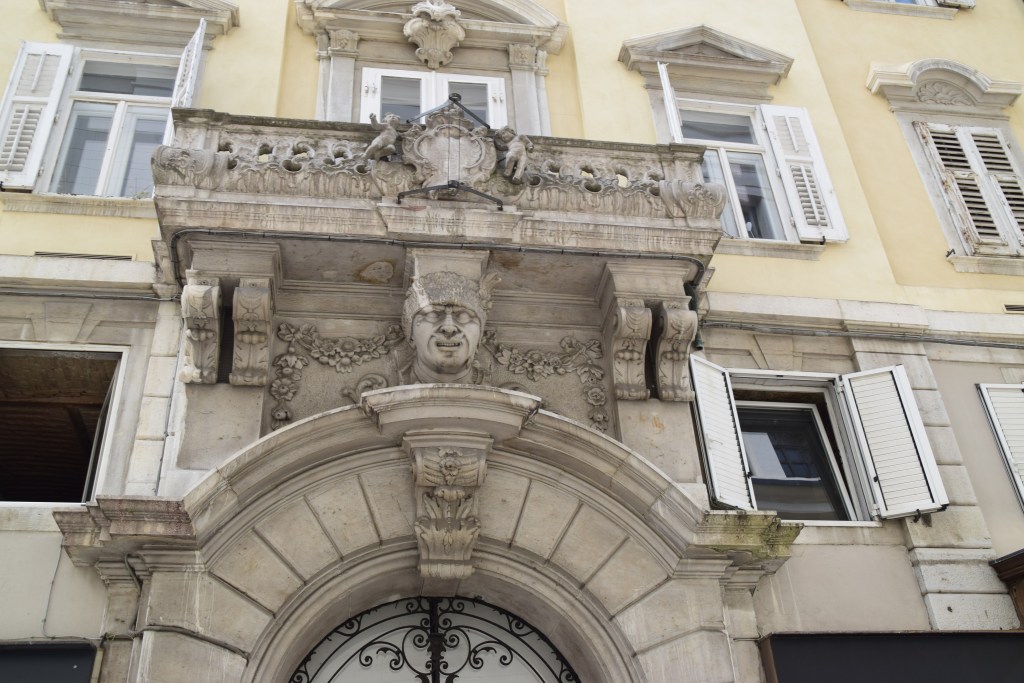
There’s a change as we move away from the fine squares through the older part of the city and towards San Giusto Hill.
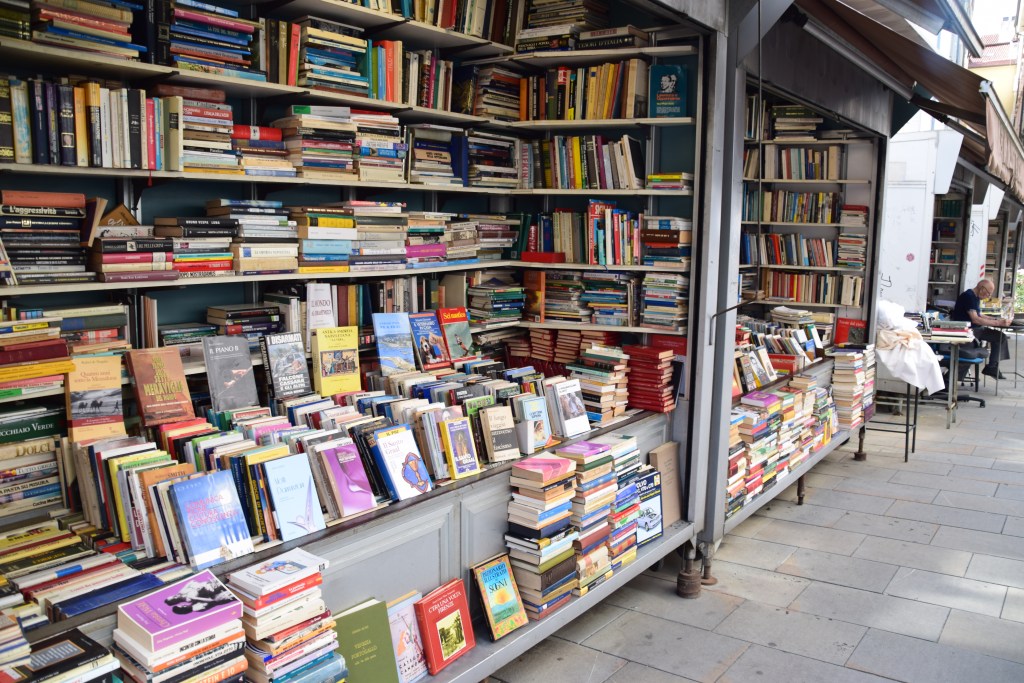
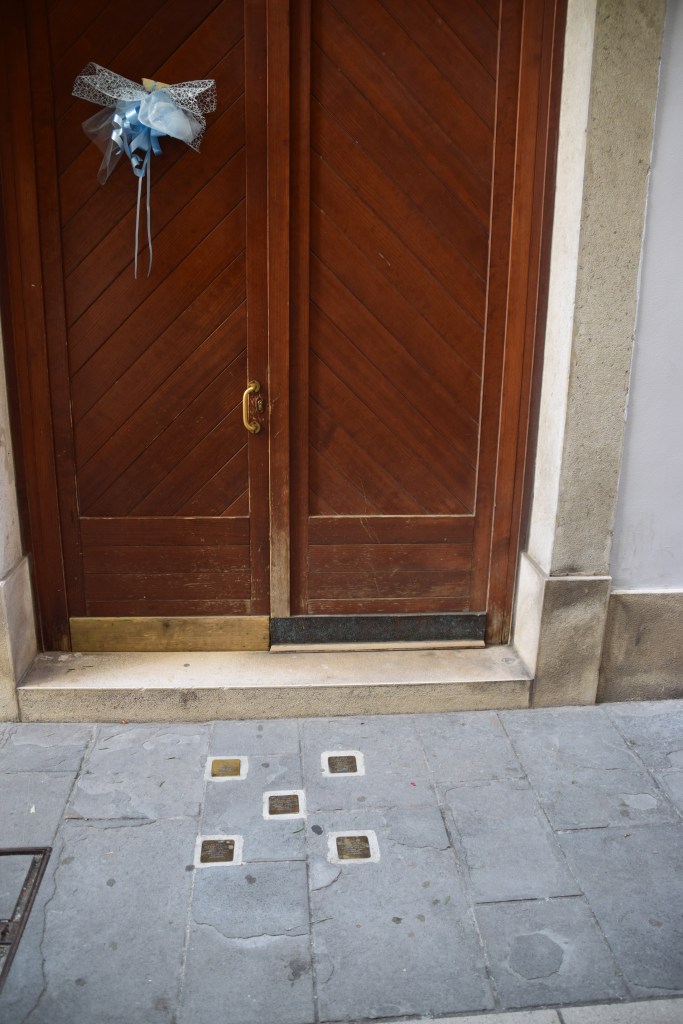
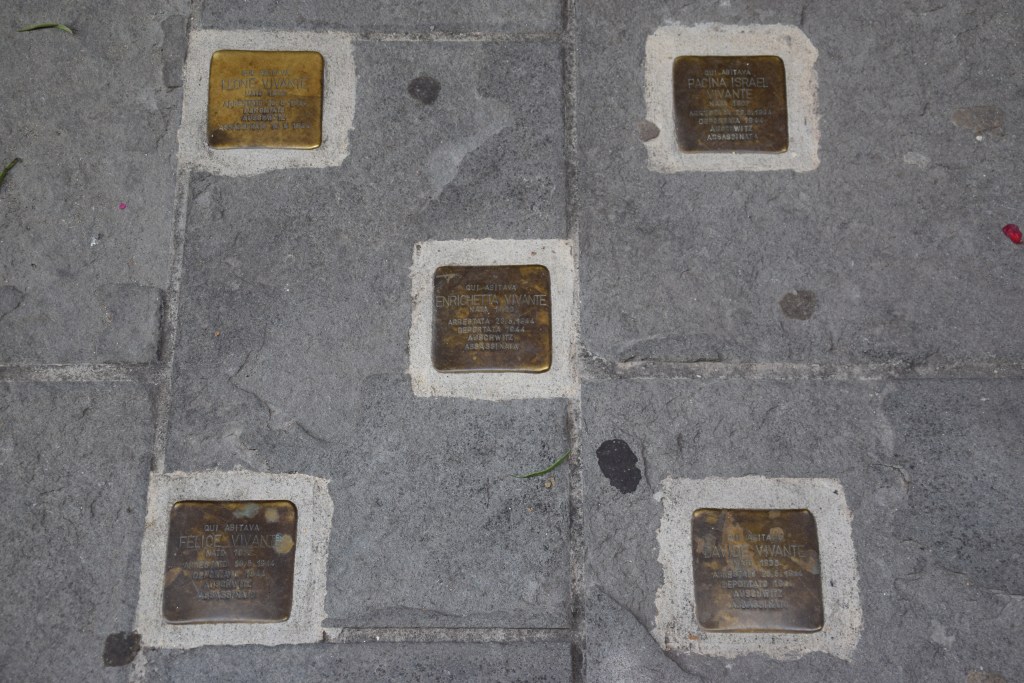
Behind the piazza lie the alleys and streets that made up the Jewish ghetto for centuries (it was vacated and partly demolished during the fascist regime in 1937). Some bookshops and stalls have remained in families for generations. Several stumbling stones are embedded in the pavement in front of known residences of Holocaust victims. The small brass plaques include name, birth and date of deportation or death with the aim of honouring their memory and preserving their stories.
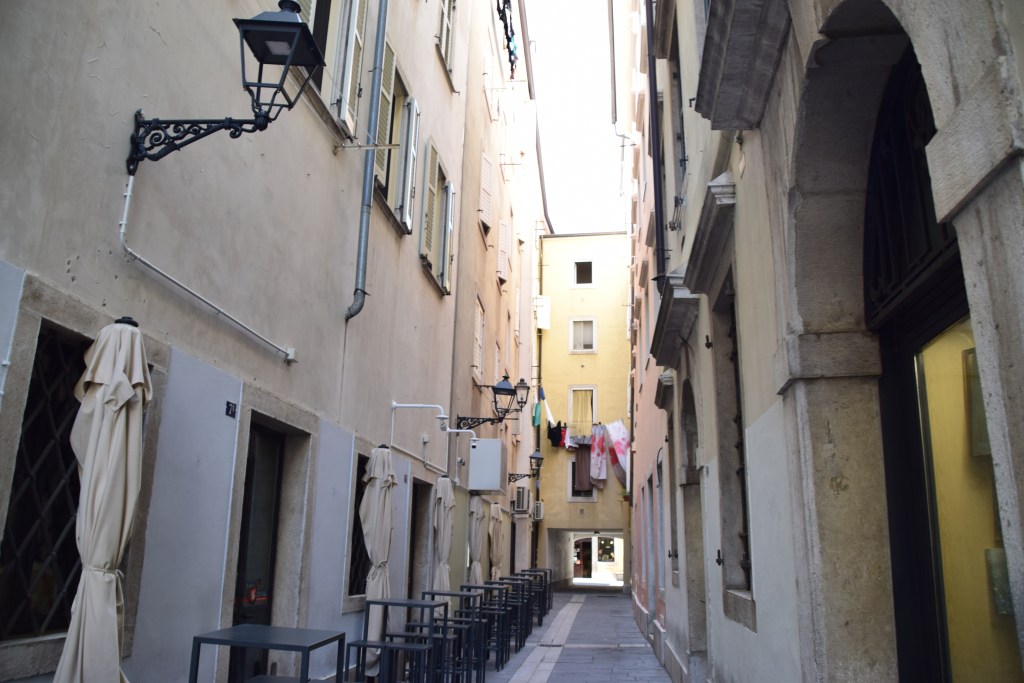
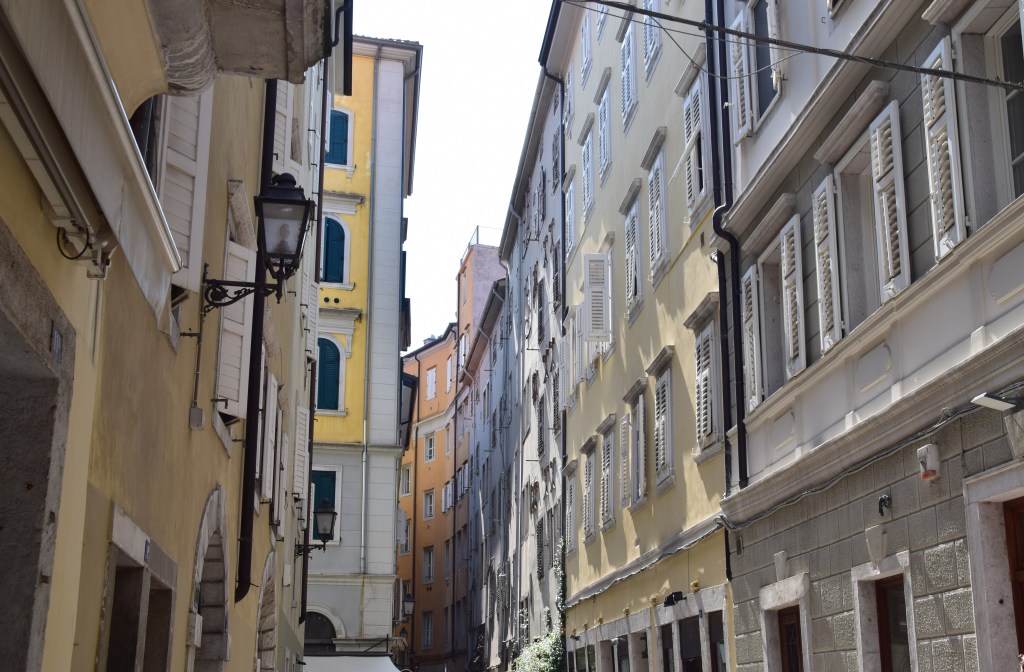
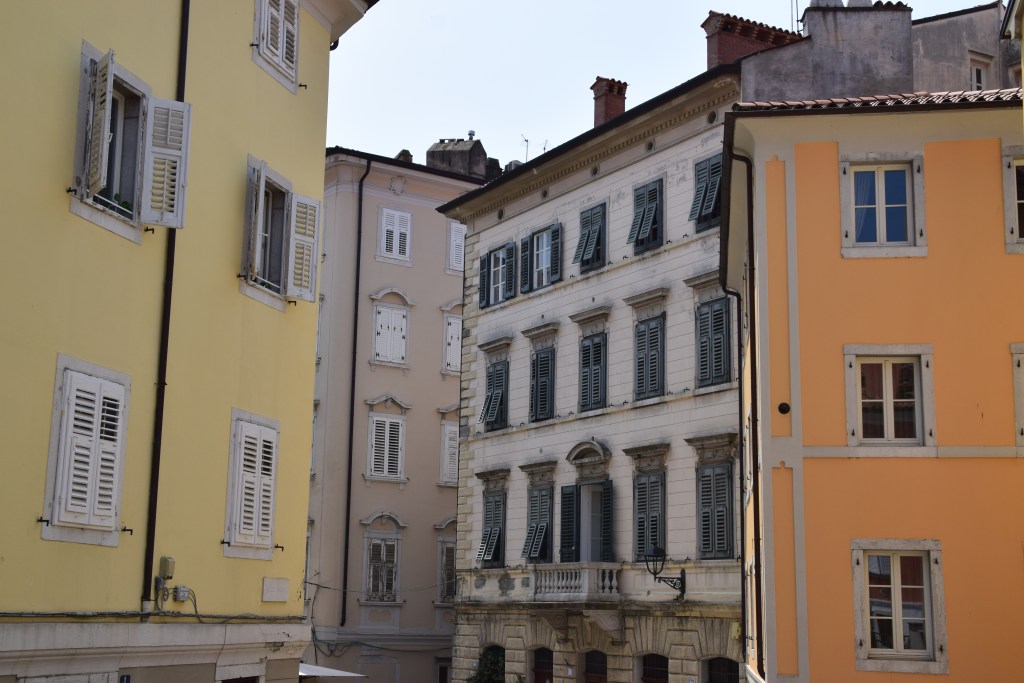
You’ll spot metal window shutter holders in all shapes and sizes…….
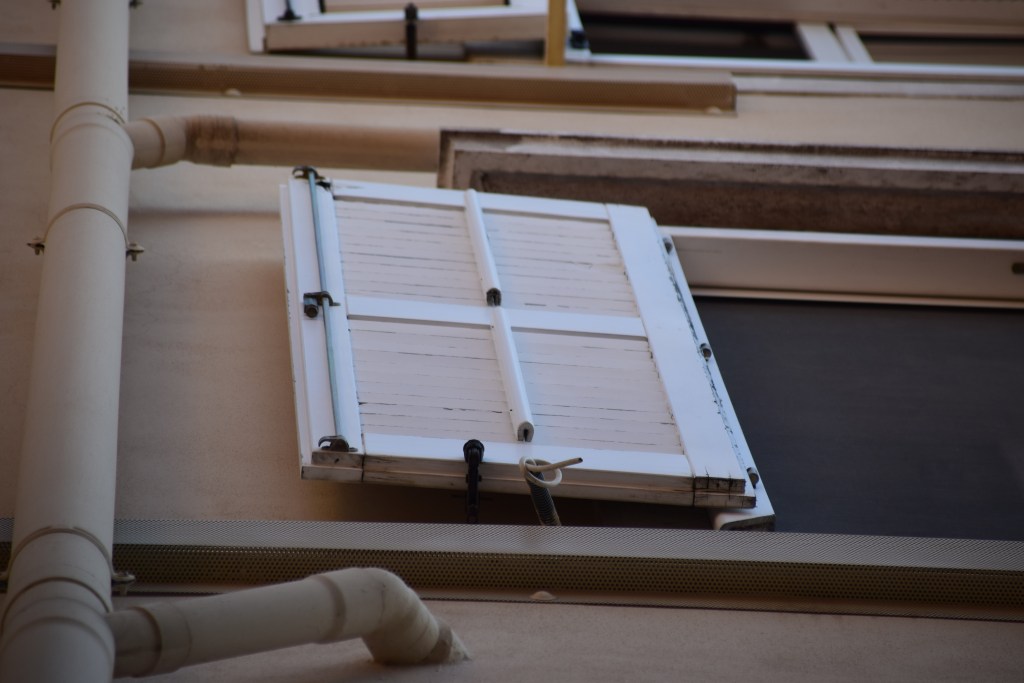

….and look out for windows such as these over the main doors – the glass base allows the occupant to see who’s at the door before deciding to make the journey downstairs to let them in!!!!

It’s impossible to miss the flood protection panels on your walkabout. The city is vulnerable to high tides and while it has moderate annual rainfall, intense storms can overwhelm the drainage systems and leave the central streets temporarily submerged.

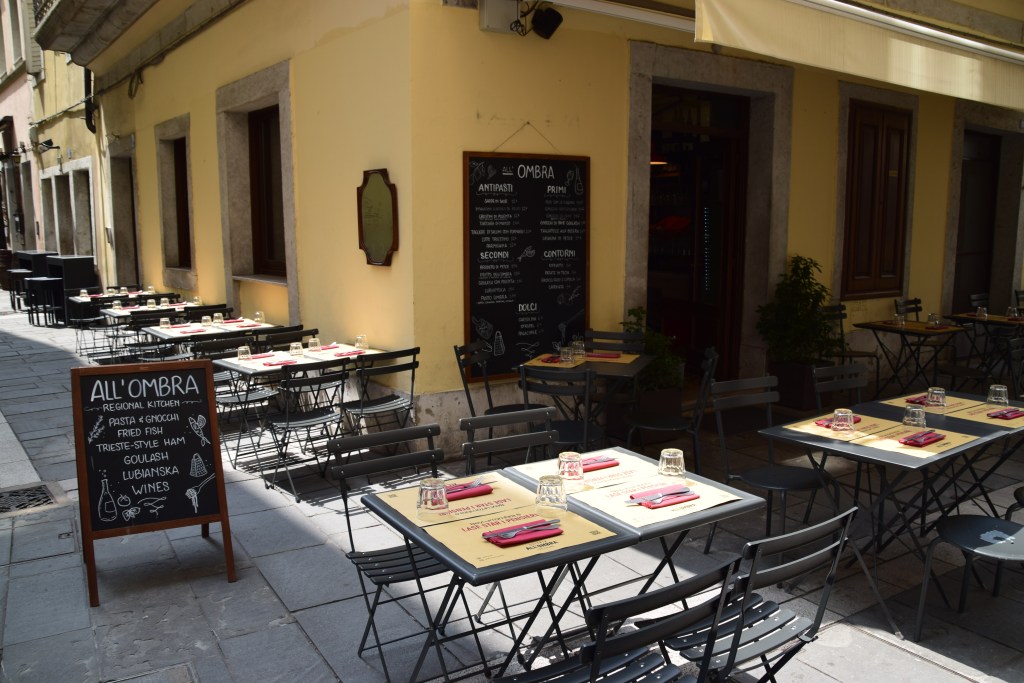
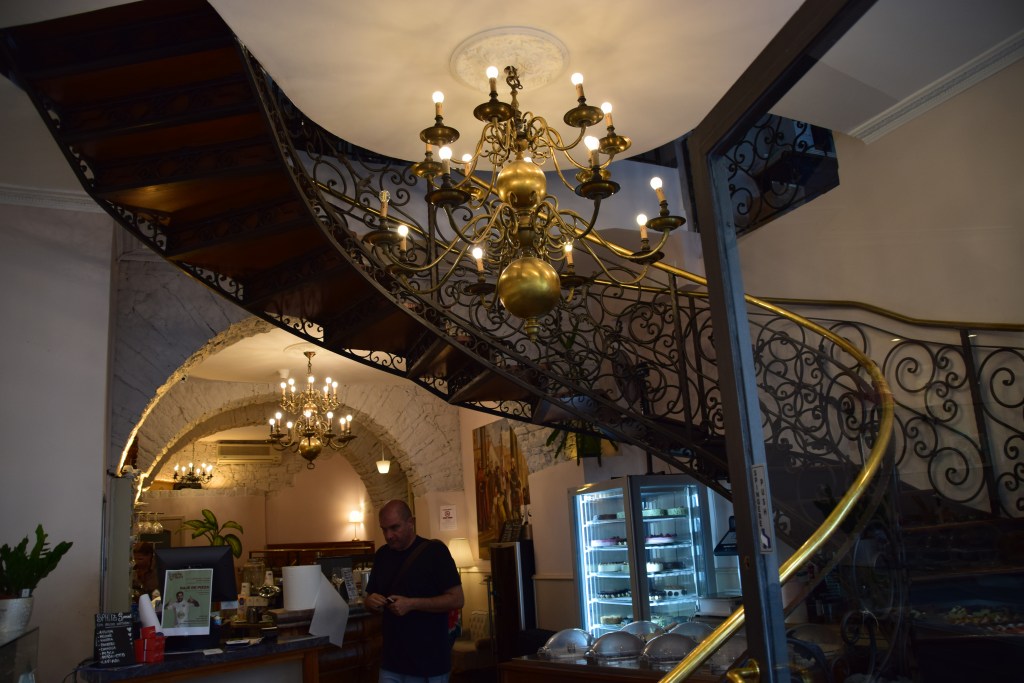
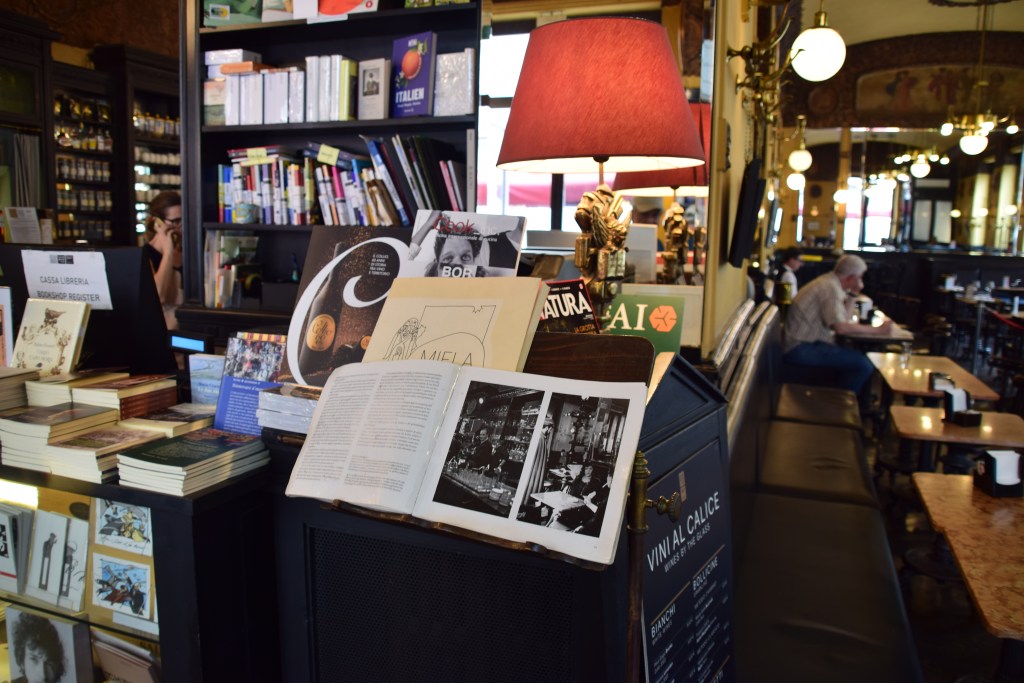
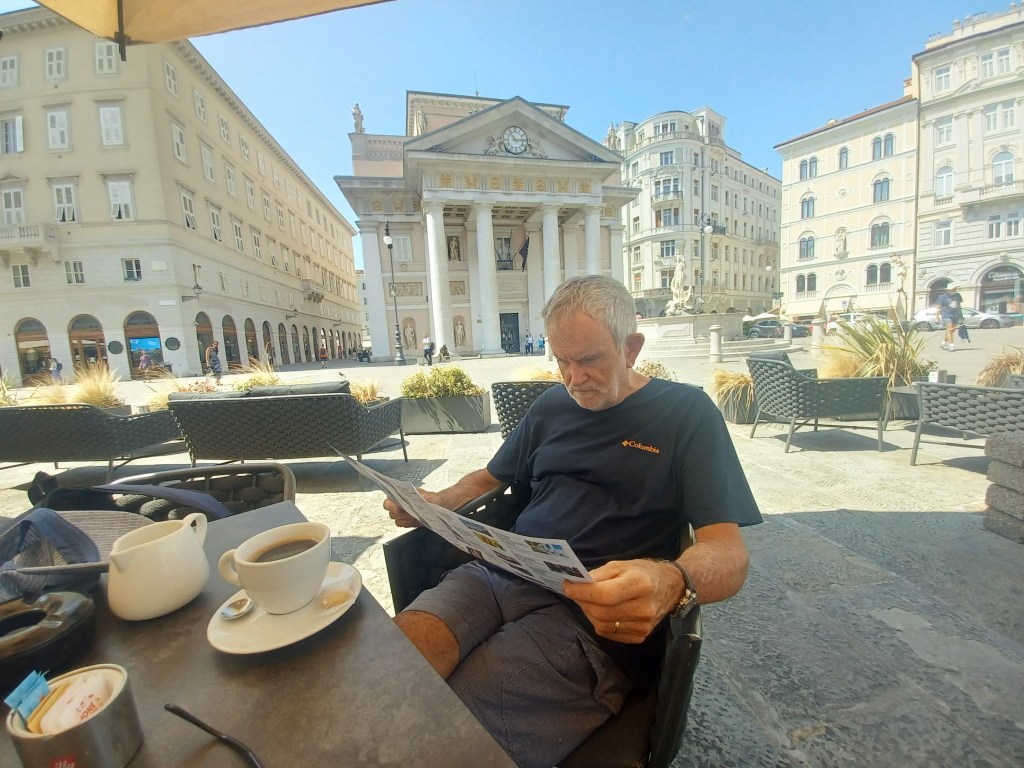
Somewhere along the way, you’ll be stopping for a coffee of course! This is, after all, the undisputed coffee capital of Italy!
As a seaport, Trieste has been the gateway for coffee imports to Europe for centuries. And coffee is taken very seriously here! Many of the historic coffee houses have been around for decades – even non coffee lovers should have a look inside at the chandeliers, marble tables and wooden bars. The city is the headquarters for the famous Illy Coffee Company – at the Universita del Caffe, the company runs serious courses in coffee economics and science. as well as training for bar professionals. If you’re spending a while here, you’ll pick up some of the local coffee language – a nero is an espresso, capo is a macchiato served in a small glass and cappuccino is a caffelatte.
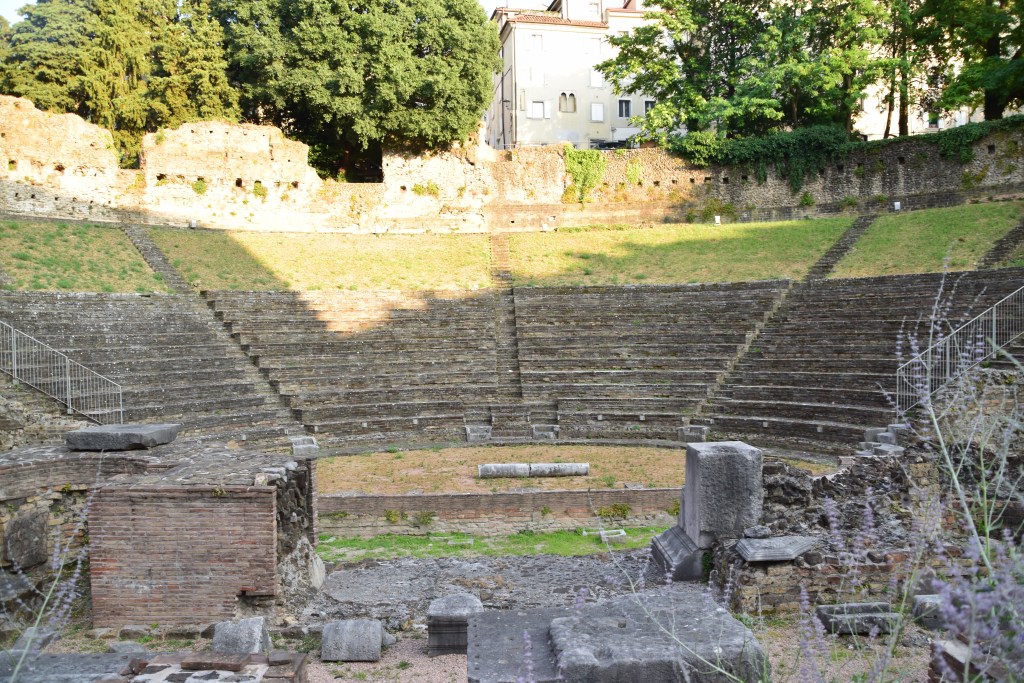
Teatro Romano dates from the first century B.C. The sea came in to this spot in Roman times so the arena must have offered great views for its 3500-6000 seated spectators.
The arena gradually fell into disrepair and was buried under subsequent layers of housing. It was unearthed in 1938 during demolition in the area. Artifacts were moved up to San Guisto Castle.
It’s a bit of a slog uphill (although there is an elevator in a nearby carpark if you want to cheat!) but the huffing and puffing is worth it of course.
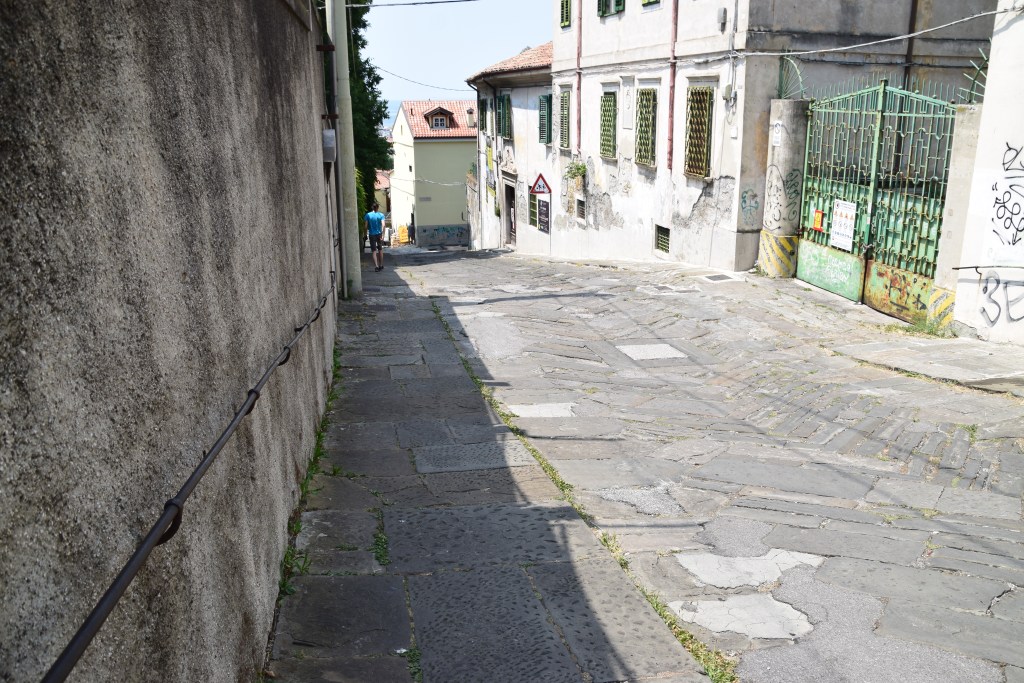
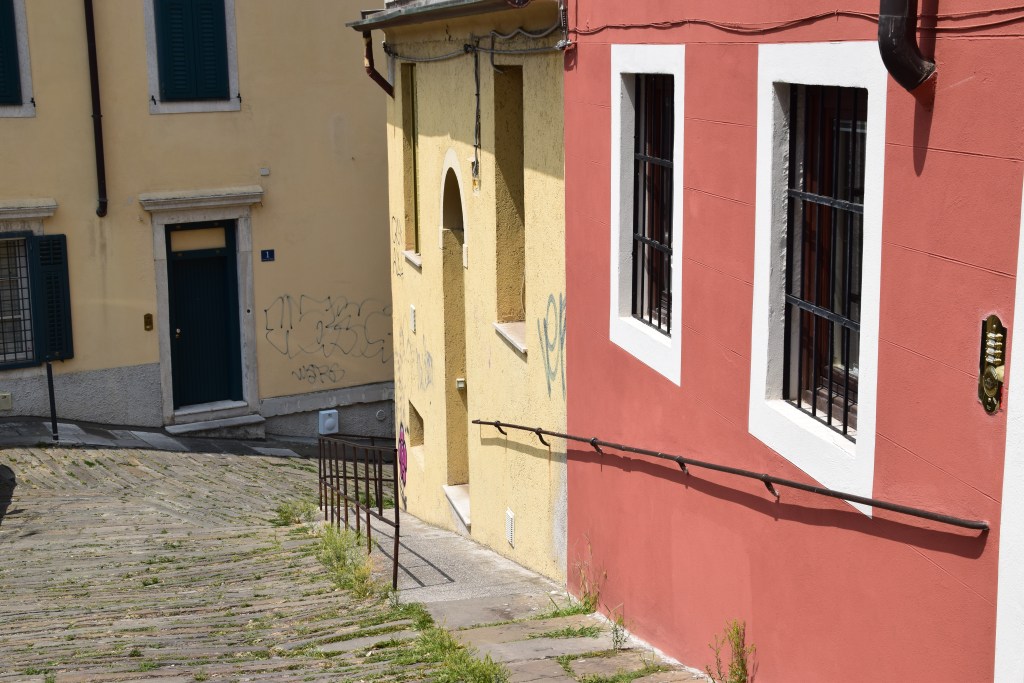
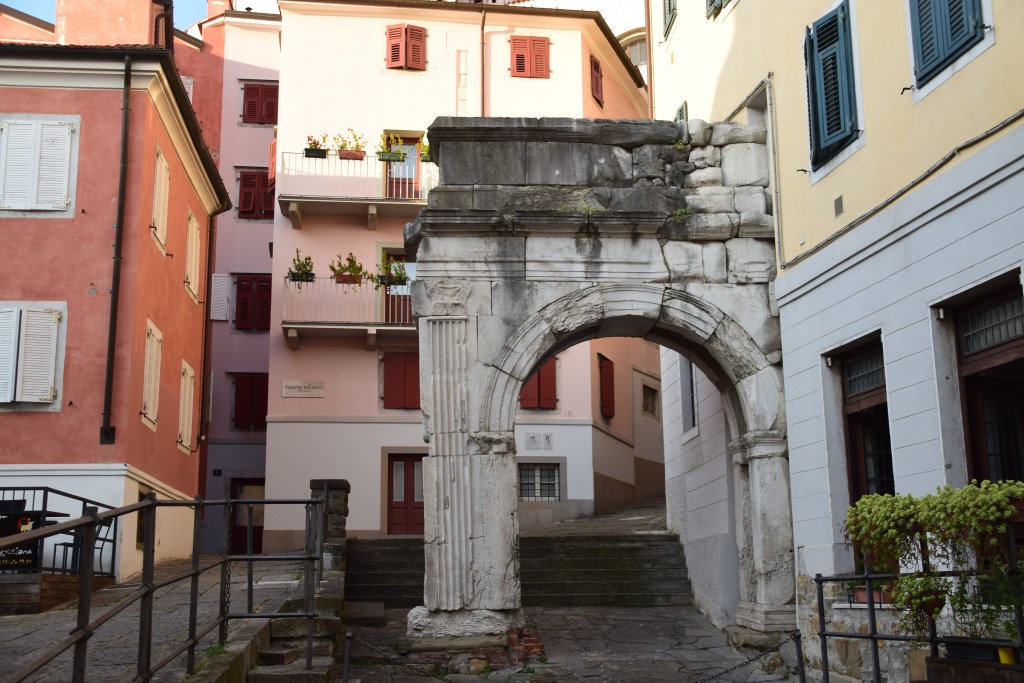
On the way up, you’ll pass Arco di Riccardo (Richard’s Arch) which was once part of the city’s Roman walls. Today, it’s the only section of the walls still standing in Trieste.
There are several theories as to the origins of its name. Riccardo might refer to English King Richard I the Lionheart, who may have passed through on his way home from the Crusades. It might originate from cardo – the name of one of the two main roads in Roman times, or refer to ricario – the name of a medieval courthouse, located in the area.
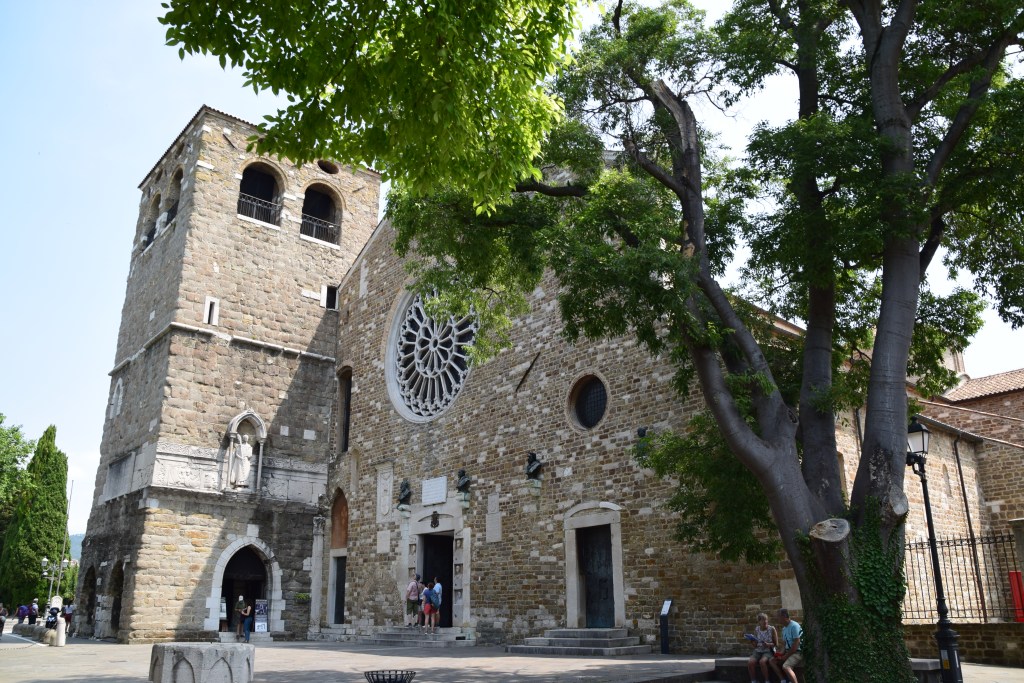
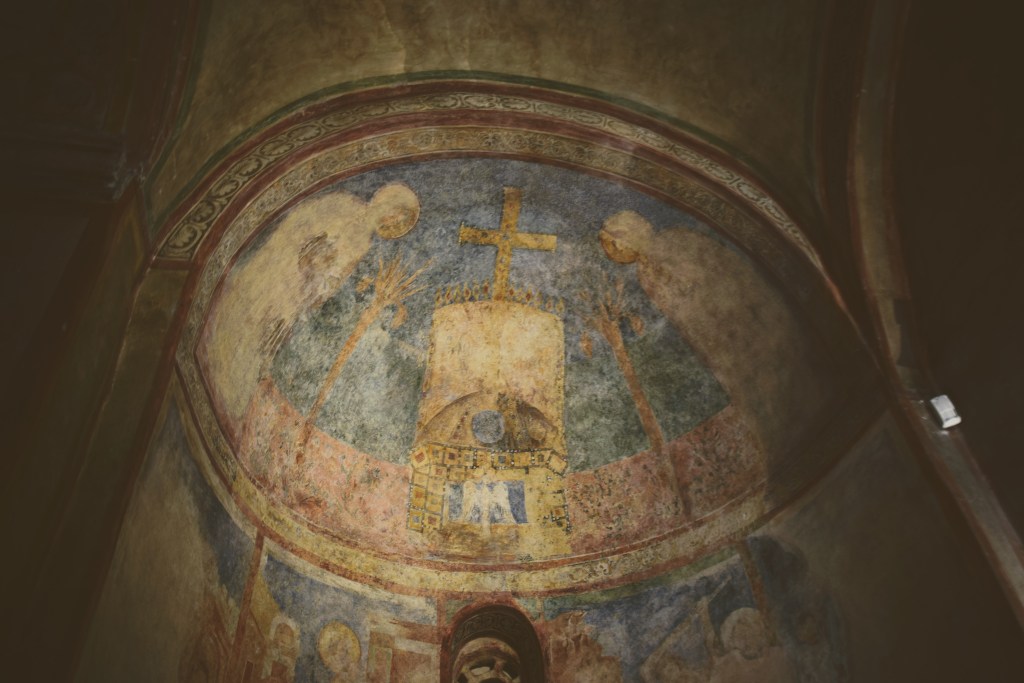
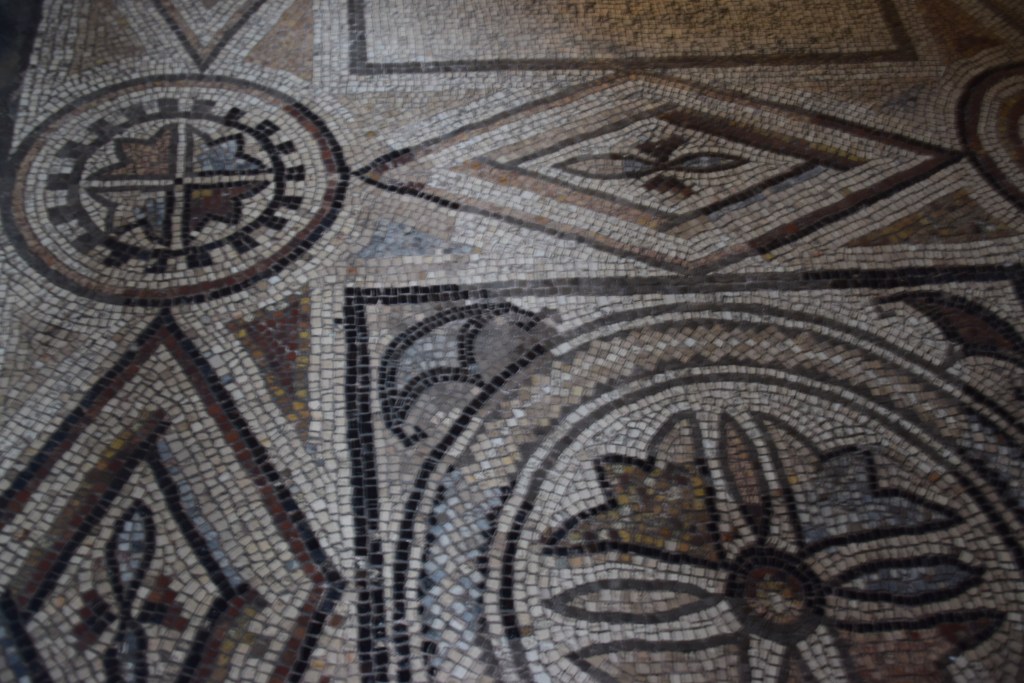
The Romanesque-Gothic Cathedral of San Giusto was created from two separate buildings from around 1302 to 1320 with the adjacent bell tower beginning construction in 1337. The floor mosaics date back to the original structures and there are traces of medieval frescos high up in the nave.
The adjacent San Giusto Castle, built in the 15th century, houses a museum with medieval artifacts and historical exhibitions…..
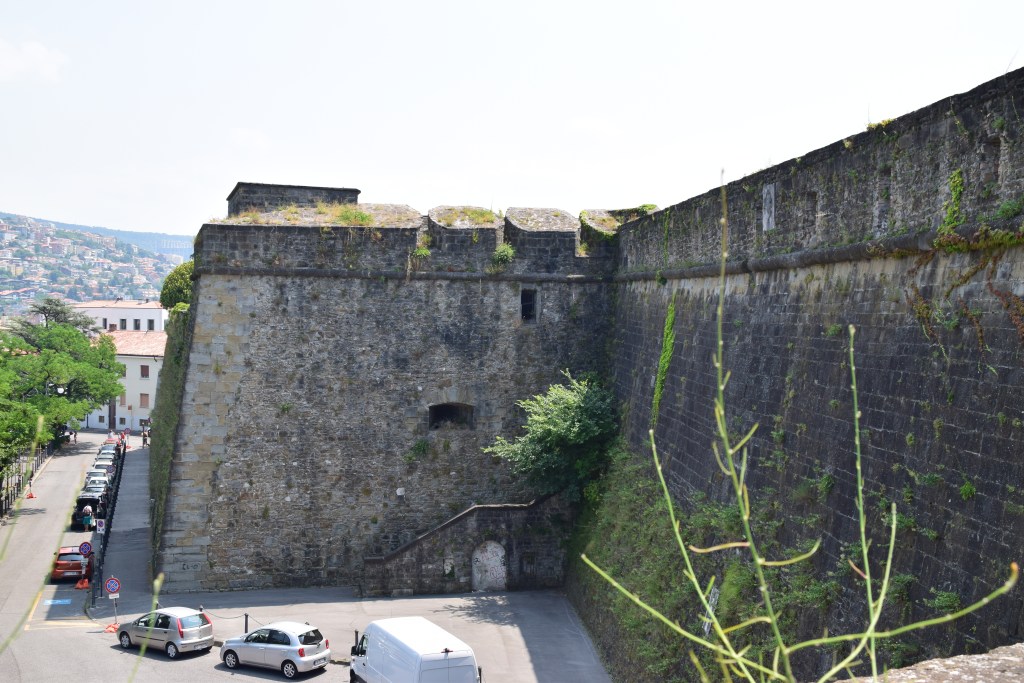

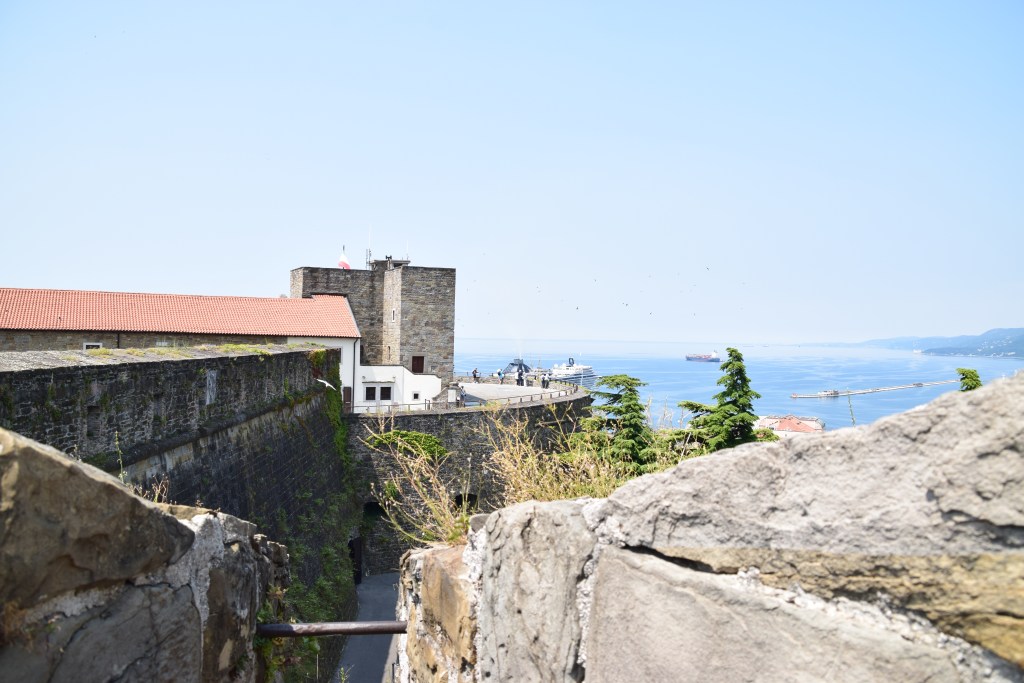
….and the views aren’t bad either!!!

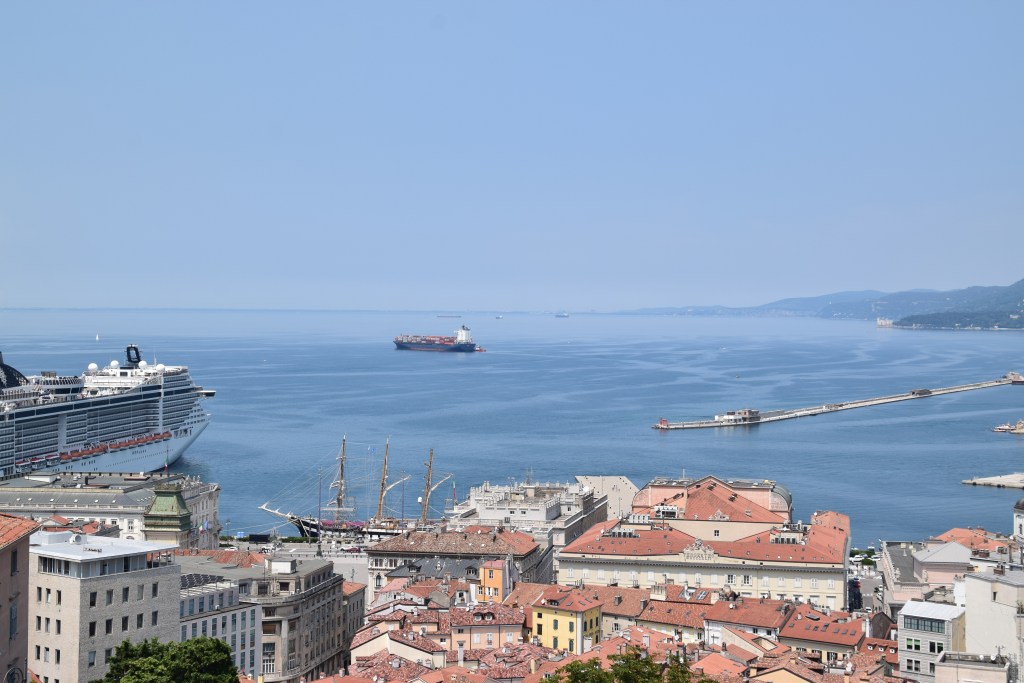
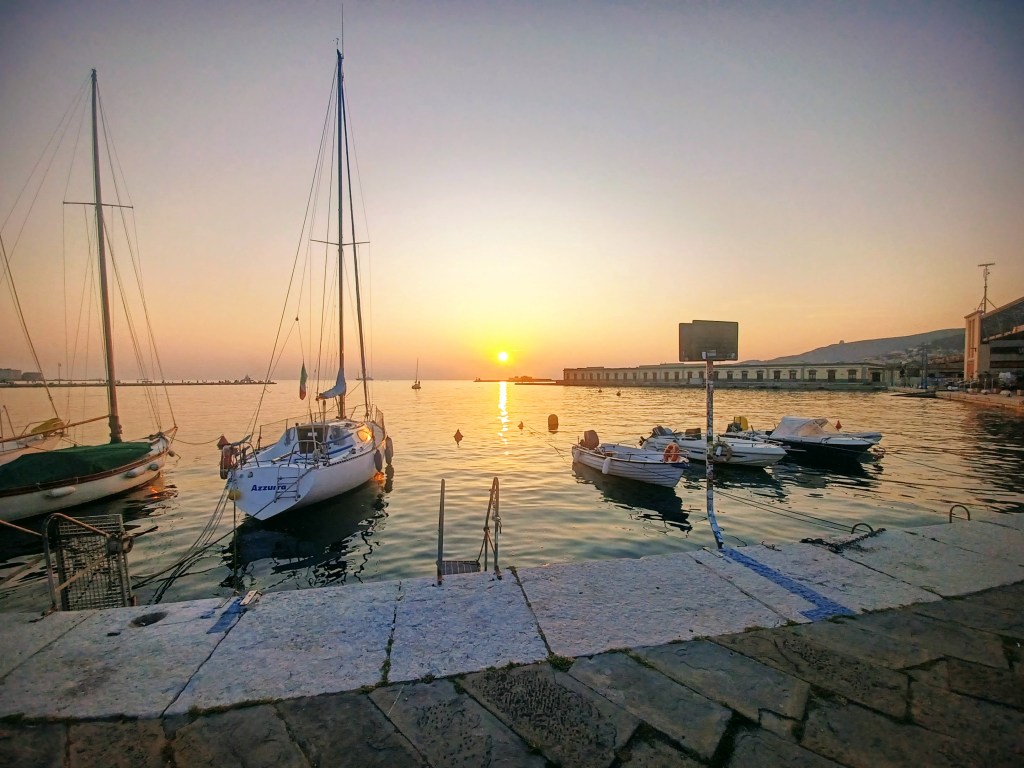
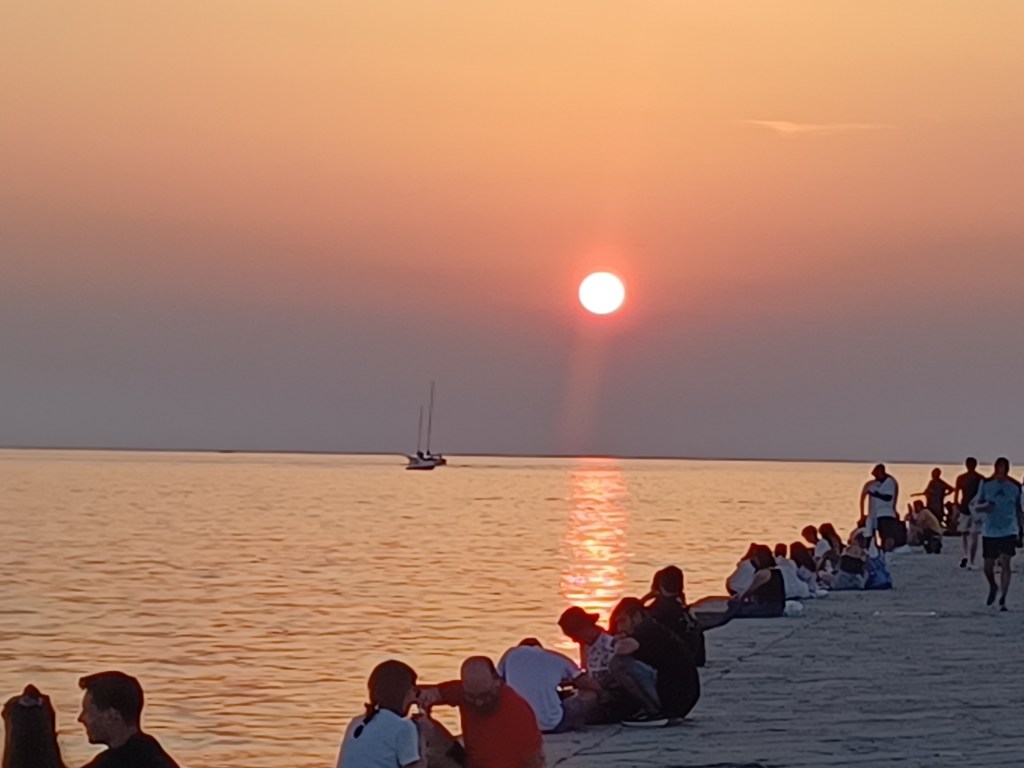
The seafront – or Rive -is probably best kept for evening. Mole Audace is the pier where most people – locals and visitors alike – head to enjoy the sunset over the Adriatic.
Have a look out around the bay at that fine white castle perched out over the sea…..
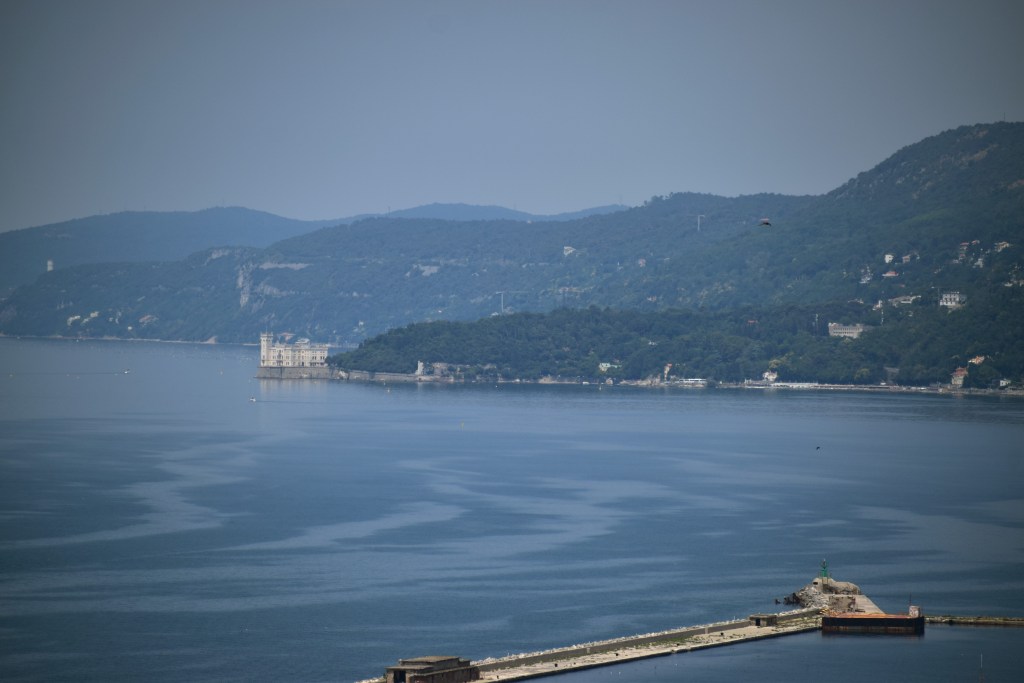
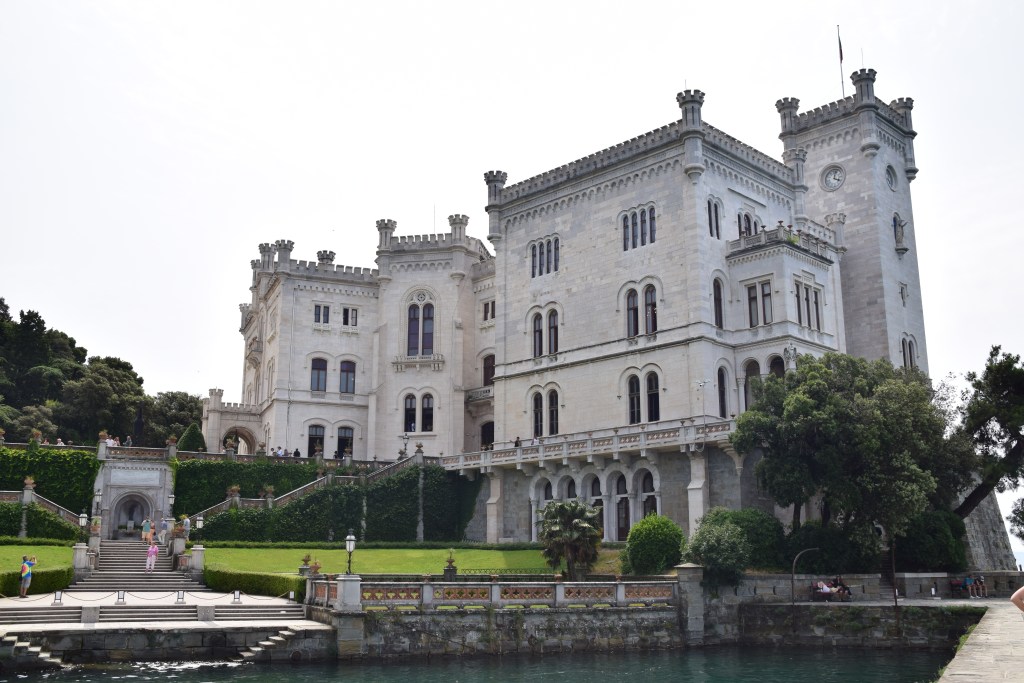
Just 5 km outside the city, Castello di Miramare was commissioned in the mid-19th century by Archduke Fernando Maximiliano – yes – that Maximiliano – the ill-fated brother of Austrian Emperor, Franz Josef.
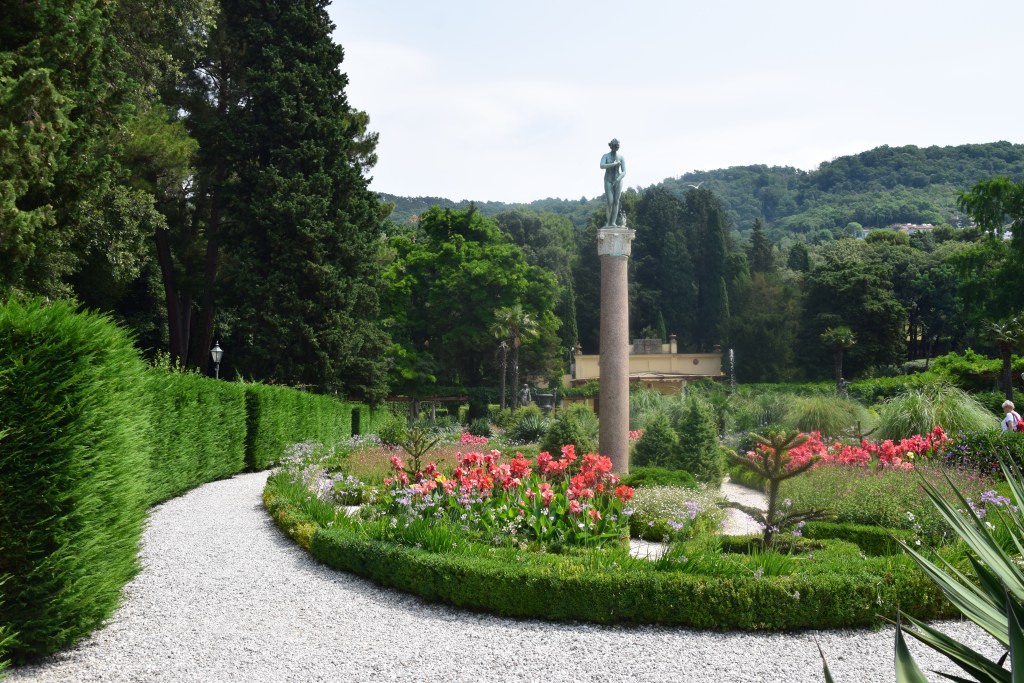
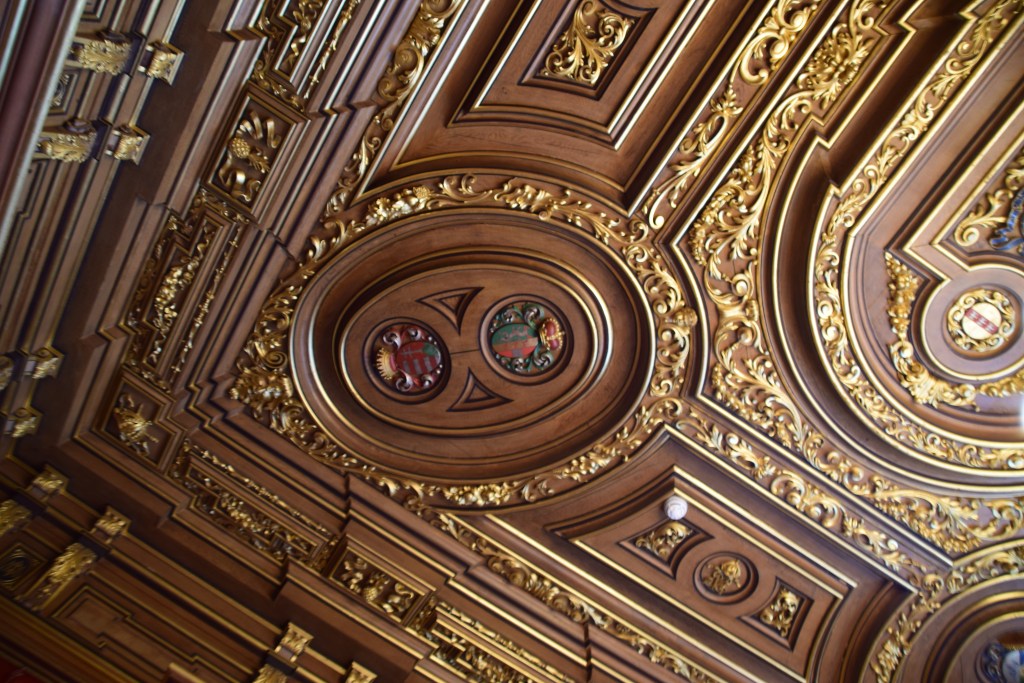
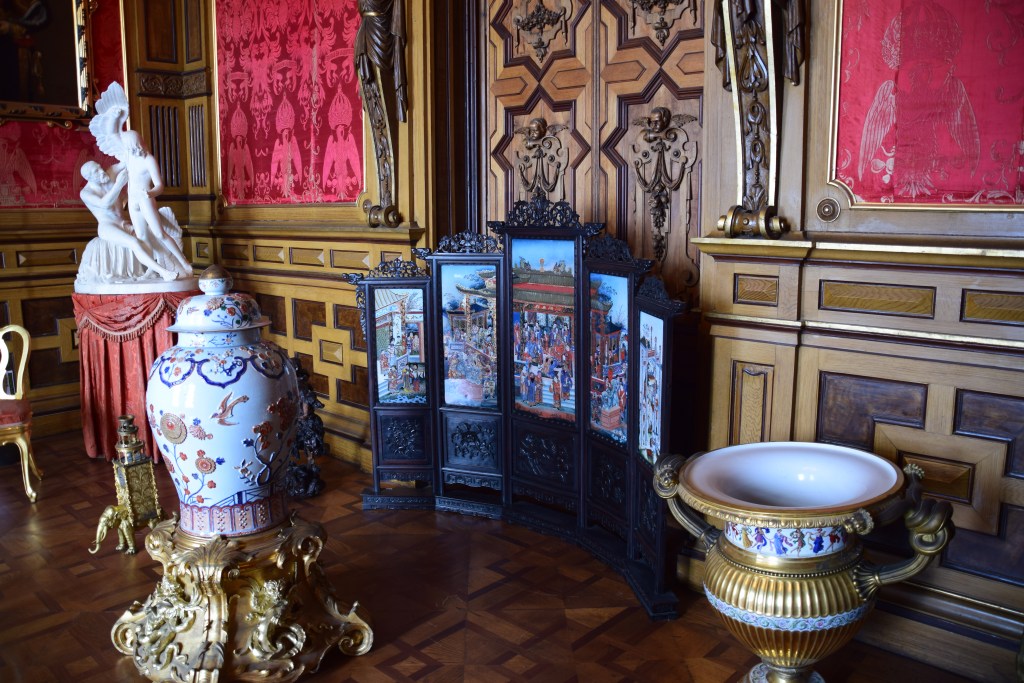
He seems to have been an OK guy and popular enough – although, if the number of mirrors in the place are anything to go by, vanity was not in short supply! Nor was money it seems – no expense was spared on the interior decor and furnishings and on the lavish gardens.
Unfortunately, the Archduke didn’t get much time to enjoy his investment. He let himself be talked into becoming Emperor of Mexico. He lasted three years before ending up in front of a Mexican firing squad.

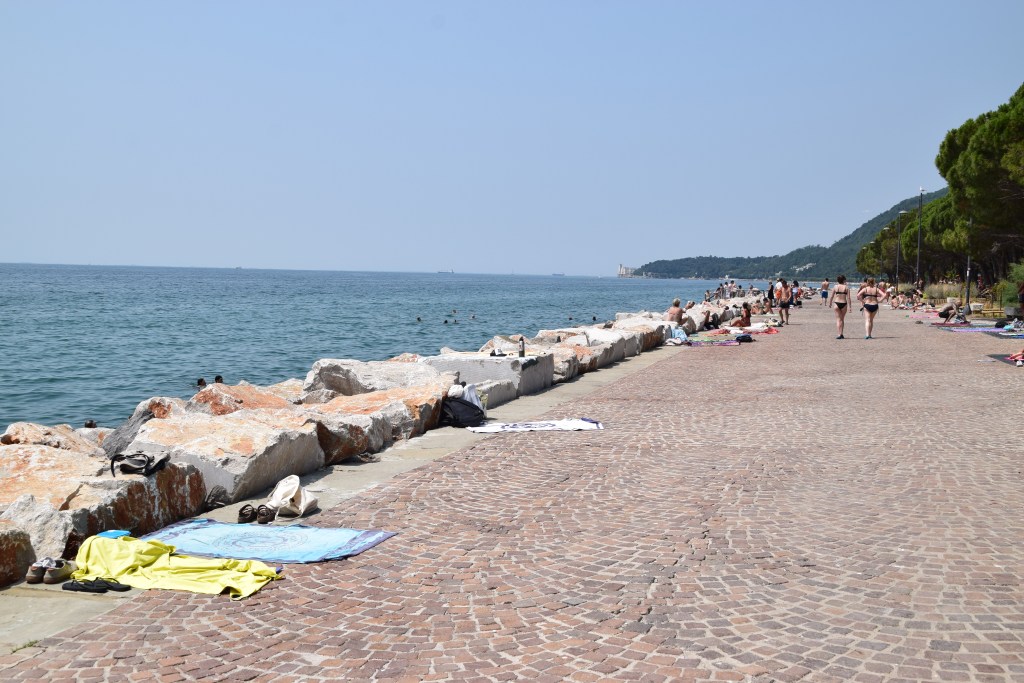
Bring your togs with you – the stretch of road between Miramare Castle and Trieste city center doubles as a beach. Well – not exactly a beach – you’ll find a long park and promenade with access to the water. It’s easily accessible by bus or you can even walk out to it. You can stay for lunch – there’s a handful of bars and restaurants in the area.
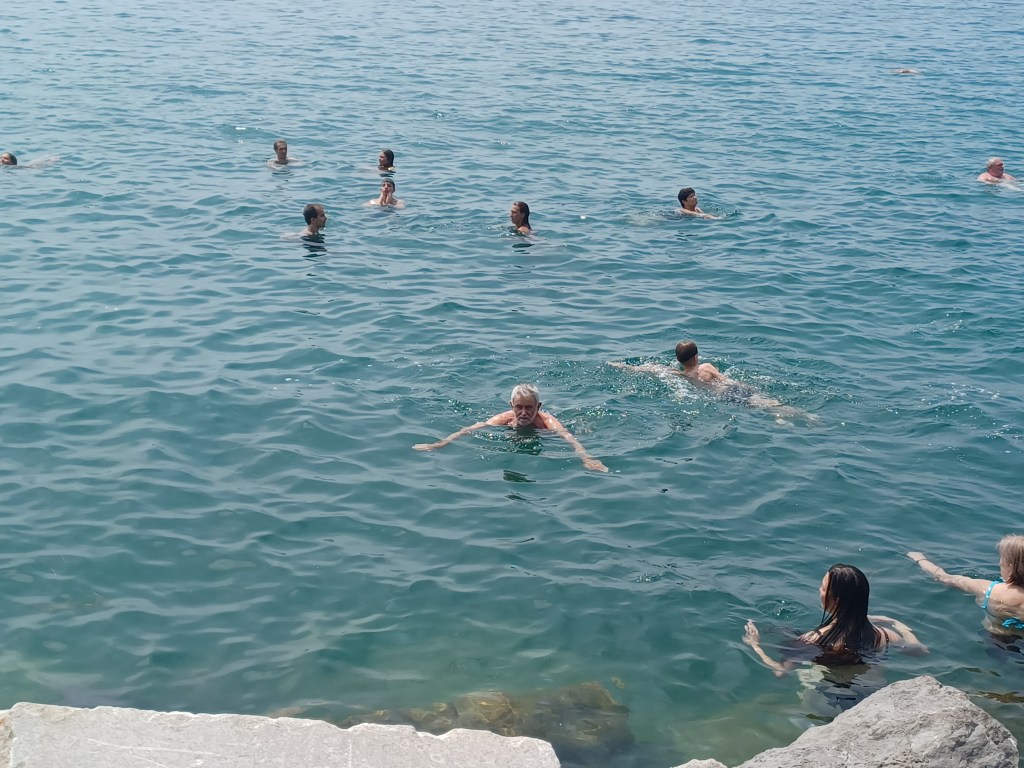
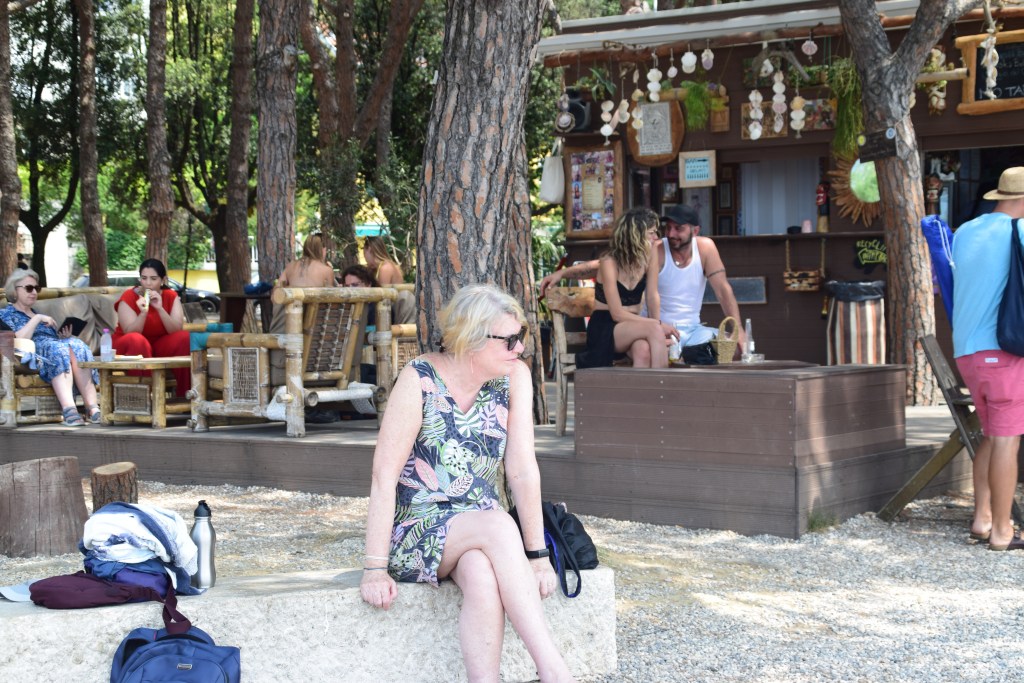
Not for me, thanks!!!!
Some Trivia to finish up on……
Trieste is famous for the Bora – a powerful wind that sweeps through the city from the northeast. Reaching speeds of over 150 kilometers per hour, it has been known to knock people off their feet! The city puts up chains or ropes to serve as railings during particularly bad storms
Italian is the official language, but this is a multilingual city and you’ll also hear Slovenian, German, and even Triestine dialect (a local variation of Venetian). Many Triestini are fluent in multiple languages, and street signs are often written in both Italian and Slovenian.
I’ve been saying it ALL wrong! I’ve always dropped the final ‘E’ and said TREE -EST….. Nope! it’s TREE -EST -AY…….. Don’t you just hate it when everyone knows you’re a tourist!!!!!!

Trieste (pronounced correctly😊) looks absolutely charming with such a variety of influences that are widely visible on the streets. Do the cruise ships though spoil the atmosphere? Maggie
I have to admit that although there were a few ships in port, we were scarcely aware of them and the public spaces are big enough to absorb a crowd. I suspect that many on board would opt for a day trip to Venice- about 2 hours – or maybe Ljubljana which is just over an hour by bus. And then I suppose they dine on board so are not choking up the restaurants. High season might be different of course – we were there at the end of June…
Oh, that makes it better. The passengers have somewhere else to go.
It’s not a bad place actually for options – if cruisers were country ticking then its beside Croatia as well…
Thanks for such a wonderful tour of the city. Brightened up my day.
Ah that’s good Steven!!!! I know you’ve been to Italy – we’ve been there many times but never got as far as Trieste – I don’t think I’d suggest it to someone on their very first trip to the country – I think they’d be disappointed in missing the full ‘Italian experience’ to be honest. I think it mostly suits Europeans looking for a mini break for a couple of days. Hope all is well with you both… XXMarie
It’s a delightful place that feels more Austrian than Italian IMHO.
Oh very much so … won’t suit everyone. Glad we got to visit – but it just fitted naturally into an itinerary for us – we were in Slovenia and heading to Verona for a wedding so it worked out perfectly. But I think we’d eventually get there anyway for a few days.
It’s well-worth it
Trieste has been on our radar for a long while but never made it up to the top of the list. Your thorough post may just have changed that as you make it look and sound even more appealing than I’d expected 🙂
It combines perfectly with Slovenia Sarah – right beside it. We finished up on the Slovenian coast for a few days after Ljubljana and Bled and then just bussed in to Trieste and onwards – very easily done..
A lovely tour, thank you for taking me there🥰
Glad you enjoyed the walkabout, Christie!
So many beautiful photos. It looks like a place full of charm and history, dear Marie, at the crossroads of cultures. Thanks for sharing, and have a good day 🙂 Aiva xx
There’s enough to occupy one for a few days – and anywhere I can sit outdoors with a coffee or vino is ok by my!!!
🥰🥰🥰
That looks like quite the trip. How long were you there?
We’d 3 nights / 2.5 days Marie. We arrived around lunchtime and did a walking tour of the city centre that afternoon which was great for orientation and getting a feel for the place. The following day we went up the hill to the castle etc and then really retraced the walking tour route at our leisure. Next morning we went on the bus to Castle Miramare and stopped off at the beach area on the way way back for a while before wandering a bit more of the city. That was it – we headed off the following morning. It’s amazing what you can fit in isn’t it!!!!
You’re right, Trieste isn’t like other Italian cities, which is interesting. Since so many other cities have copied the Italian style, it evens things out.
That’s so true! I don’t know if you’ve been there? You’d get great photos for your Photo of the Day!!
It looks like a really beautiful and interesting city, with its own identity – I’d love to visit one day!
Easily accessed Hannah – nice for a weekend sometime … Could visit any time of year I suppose but I love being able to eat and drink outdoors…
UnItalian Italian city is a great way to describe Trieste. Love the sprinkling of Roman ruins throughout the city and among the buildings. Beautiful captures, especially of the sunset.
Thank you – There was a distinct contrast between the fine squares and then the narrow streets with the ancient ruins thrown in for good measure! The roman theatre was built right in to the hillside- must have been rather slpendid with the sea right in front of it….
You’ve given a lovely guide to a city I visited some years ago and I was pleased to see it photographed so beautifully. I only spent 3 days there as an off-shoot of Venice (the contrast was startling) and my main reason for visiting was its history. It reminded me very much of the Dolomites, as much Austrian as Italian and yes, it did also offer Sachertorte!
It must have been quieter then Marie? And a pleasure after the crowds…. We camped a few times along that coast between Venice and Trieste and I must admit it never crossed our minds to go visit!
Lovely photos and what grand memories! Oh yes, Trieste is a gorgeous, different, and barely known Italian town. I’ve loved it ever since my first visit forty years ago (almost exactly! How time passes). And it is not far to the Sudtyrol (important for its history), a hop away from Venice, and close to Dubrovnik.
Forty years ago! Weren’t you the trailblazer!!! It’s actually very well placed as a base for the region – especially if one gets a reasonably priced flight in…
Trieste is on my wishlist – the history alone sounds fascinating with such a unique heritage. My cousin has stayed there and it is is one of his favourite places. He says the architecture is magnificent. I also have a friend who is currently visiting there. Her mother came from Trieste and her father from Slovenia – somehow they ended up here in Perth Western Australia after travelling to a few other places. She also told me it was Tree-est- ay (I was mispronouncing it too!).
I’m sure whenever you get back to Europe that most of your time is spent catching up with family and friends. I know you’ve been to Italy.. I’m repeating myself but this would combine with Ljubljana for you – it’s just a little over an hour by bus.
BTW – I’m not a bit surprised they ended up in Perth. While a lot of Irish headed to Sydney and Melbourne in the past, nowadays they seem to be discovering Perth..
Perth is certainly very popular with so many people from many places and backgrounds 🙂 We have Irish friends here too!
Yes have been to Italy a few times. One of our favourite regions was the Sud Tyrol. It’s not too far away from Trieste and has a distinct Austro Hungarian/Germanic flavour – our son in law’s grandfather (b 1919) came from there. He was from a German speaking family but forced to speak Italian at school in the 1920s. They moved to Innsbruck (Nord Tyrol) in Austria in the 1930s to escape the persecution of the German minority in the north of Italy under Mussolini. He emigrated to Perth with his Austrian wife (from Salzburg) in the early 1950s.
I’ve heard Ljubljana is lovely too 🙂 In fact Slovenia in general sounds well worth visiting!
As you say most of our recent visits to Europe have been seeing family in the UK. Unfortunately my father is very frail now and in a nursing home and there has been a lot to sort out (I was back again earlier this year). It makes planning trips a little tricky at present.
It’s very hard to be so far away when a parent is ageing… That’ll be your focus now for the next while…
Looks like an incredible place to visit! I’ve never heard of Trieste before but it looks worth a visit for sure.
There are SO many places in Italy to see first, I know… we’ve had the privilege of return visits so it’s a different situation. Now that its becoming more popular as a cruiser liner port, you’ll probably hear more of it in the future….
great post about Trieste. It’s a lovely town which I visit often since I live close. Oh yes, D’Annunzio isn’t a popular figure in my hometown of Rijeka (Fiume). There’s actually an award winning documentary about his occupation of Rijeka.
I must check it out – I’d never heard of him of course until now…