

Cape Verde? Really? Lovely! So where’s that then?
And that, my friends, had been the overriding response to the Where are you off to next conversation before our most recent trip. The reaction has been very positive however, with lots of interest – both before and after – from pals looking for a new sun destination that isn’t too far away. Of course it’s not a new destination at all and by not too far away I mean not crossing the Atlantic or heading to Asia!
I thought, before sharing our 2 week / 4 island whirl round trip with you all, that I’d put the place in context and get the practical bits out of the way!
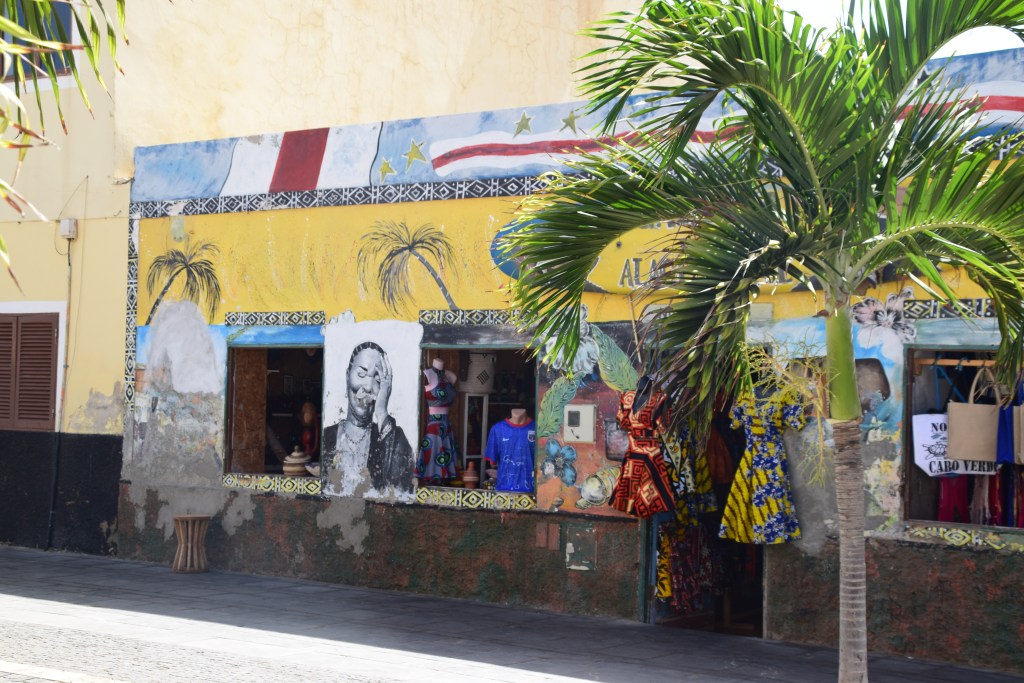
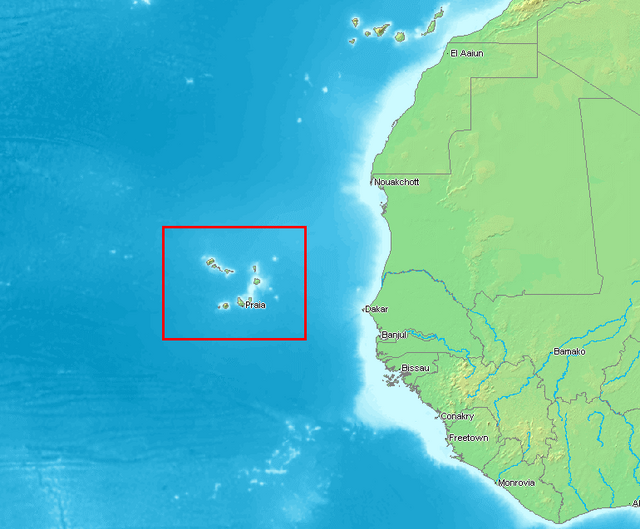
So – Where is it!!
The republic of Cape Verde (Cabo Verde) – consisting of 10 volcanic islands (9 inhabited) – lies in the Atlantic Ocean, some 350 miles west of Senegal.
The Past and Present
Created through volcanic activity, the archipelago remained blissfully uninhabited for millions of years until the Portuguese arrived in 1462 (it was actually the first European settlement in the tropics).
Its strategic location allowed for new trade routes connecting Europe to West Africa, America and Brazil – the Portuguese Crown happily collecting taxes from each vessel that docked.
While it thrived as a commercial outpost for all sorts of goods and services, it was to particularly flourish in the transatlantic slave trade. Africans were brought here from mainland West Africa before being transported to the Portuguese colony of Brazil.
The boom wasn’t to last of course. In 1675, the Portuguese Crown agreed the purchase of slaves directly from the West African coast, thus bypassing Cape Verde altogether. Meanwhile, other European powers – France, Holland, England – were gaining dominance in the region, leaving the archipelago increasingly vulnerable to attack from rivals and pirates.
The end of the slave trade was a huge blow but the islands still served as an important stopover for America-bound ships needing coal, supplies and repairs. Eventually however, they couldn’t compete with the improved port facilities in Dakar and Grand Canary nor the Suez Canal which rerouted a lot of traffic away from the Atlantic.
Cape Verde was part of Portuguese Guinea (now Guinea-Bissau). In 1951, the status of the islands changed when Portugal rebranded its colonies as overseas provinces. The country was officially declared independent in 1975. At that time, its new constitution envisaged unity with Guinea-Bissau but attempts were abandoned after a 1980 coup in Guinea-Bissau.
Nowadays, Cape Verde is considered one of the most politically stable countries in Africa. However, it continues to struggle economically. These once lush and productive islands have been long plagued by severe drought and several are now quite dry and barren. It has hardly rained in the past few years and the half million population has to import most of its food. An estimated million more have left the islands for mainland Africa, Europe and North America. Remittances from this diaspora are hugely important to those left behind – at the time of independence in 1975, they accounted for an estimated 25% of GNP.

Cape Verde and Tourism
With minimal natural resources and limited agricultural opportunities due to the dry climate, the economic prosperity of the country is depending hugely on the growth of the tourism industry.
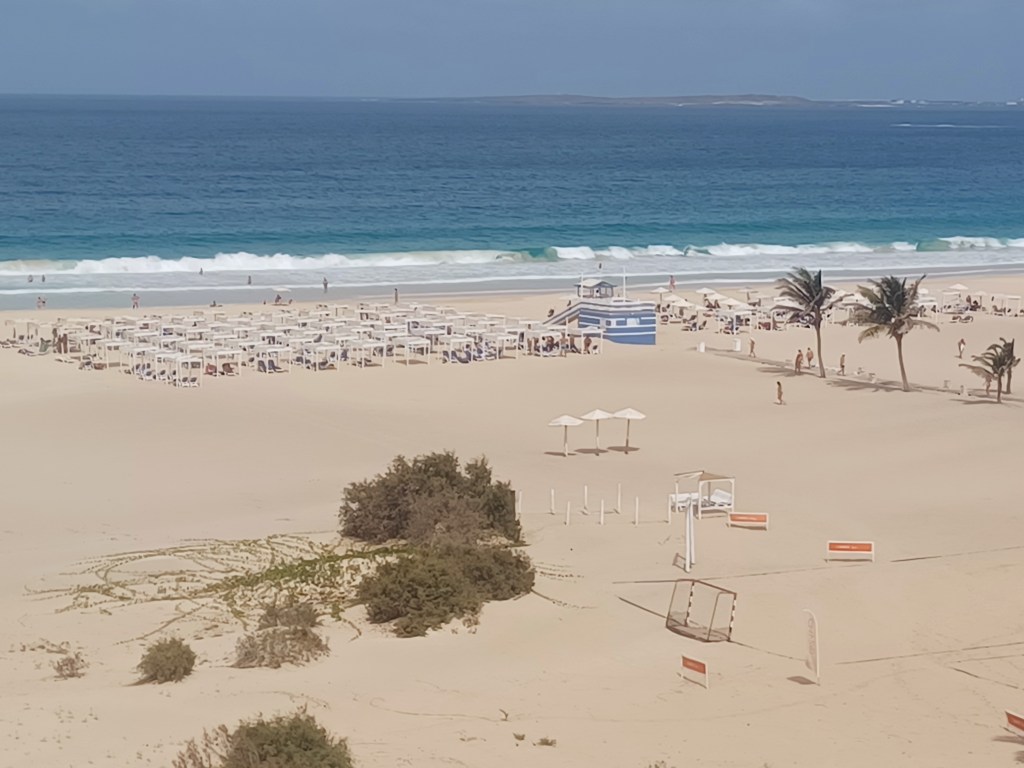
To date, the islands of Sal and Boa Vista have the most to offer by way of tourism infrastructure with international airports, hotels, tour companies, etc. With a lack of major ‘attractions‘, these destinations have suited the fly and flop holiday maker – happy with resort and beach getaways.
Efforts are being made to develop other pursuits and to spread business across the rest of the islands. So the government is promoting activities such as hiking and trekking, sea turtle nesting, fishing, volcanic exploration, music events and cultural festivals as well as a wide range of water sports.
While tourism is seen as a saviour here, Covid was a tough lesson on the vulnerability of the industry. It exposed the dependence of many sectors of the community – not just hotels and tour operators but taxis, shops, even the fishermen had no restaurants to buy their catch. Visitor numbers are on the rise again and now top 1 million per year.
Global pandemics are not the only concern, going forward. Limited fresh water, dependency on fossil fuels, climate change and waste management are challenges for the growing industry. Islanders are benefitting very little from the provision of food for hotels etc. as most supplies are imported. Meanwhile, more accommodation options are needed to provide an alternative to the all-inclusive resorts which provide even less financial benefit, apart from employment, to local communities
Getting There
The islands are served by 4 international airports and airlines fly in from several European cities as well as a few West African countries. There are more direct flights available in high season and there has been a recent increase in cheaper international airlines.
We flew from Dublin via Gatwick – out with Easyjet to Sal and back with TUI from Boa Vista. Flights from London take just under 6 hours. Surprisingly – for us at least – both airlines consider this a mid-haul flight (so you have to pay for all snacks and drinks)
Arriving
All non-resident international visitors must pay an airport security tax of €31 (3,400 CVE) which can be paid online in advance.
Expect a queue at immigration.
There are facilities to change currency and SIM cards in the arrivals hall.
Time Zone
GMT -1 (So no jet lag for us then!)
Getting Around
The main cities of Praia and Mindelo have a public bus system.
Most islanders travel by aluguer – a shared fixed-route minibus that fills its seats before departure.
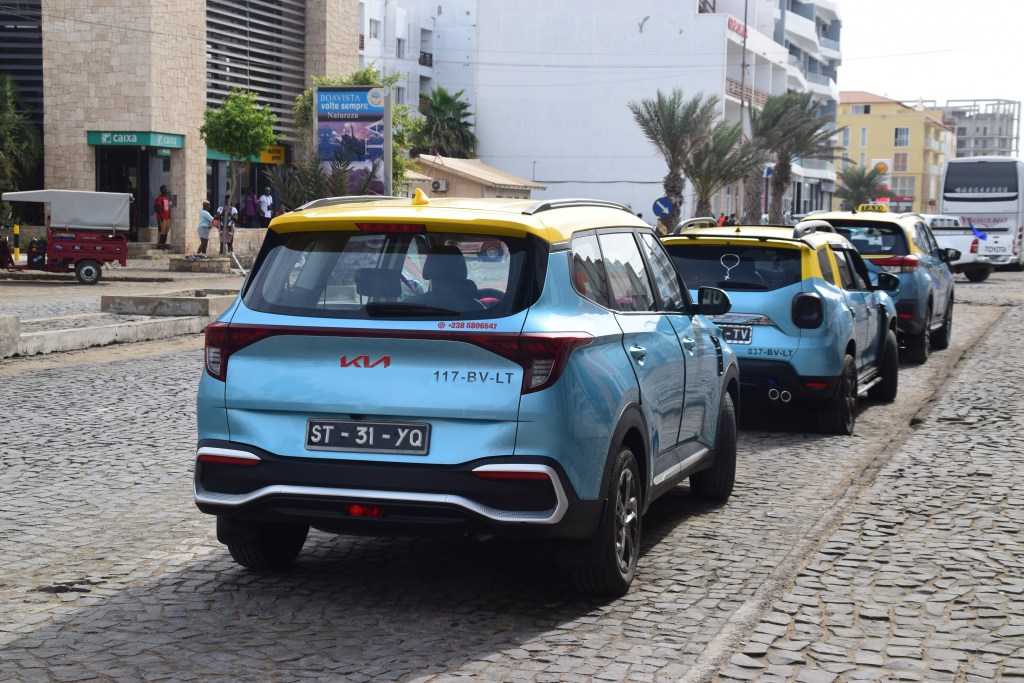
Taxis are common in urban areas (but don’t expect the driver to speak English).
It is possible to rent a car – preferably a 4WD – with rates similar to Europe. The handiest place to rent from is the airport.
Many island tours use open backed 4WD pick-up trucks.
Inter island travel is a bit trickier. Some are only accessible by boat and, while the idea of arriving by sea sounds appealing, the ferry service seems to be poorly organised with regular delays and cancellations. If you’ve plenty of time then you can allow for some flexibility. Otherwise, several island are connected by air but flights fill up quickly.
Safety
Apart from the capital Praia, where caution is advised in certain areas, the country is very safe. The usual common sense rules apply – no leaving valuables lying around the beach or flashing wads of money late at night. Make sure your travel insurance is in date.
When to Go
There IS a rainy season – July to October – but there doesn’t seem to be a lot of rain – not nowadays anyway! The holiday season picks up in November with an increase in direct flights from Europe. Temperatures seem to be consistently pleasant so you can really travel here at any time! (For us in November, it averaged 28-32°C – gorgeous!).
High winds might be more of an issue than rain. They blow all year round but more so November to March. So good if you’re a kite surfer – not so good for snorkelers!
Accommodation
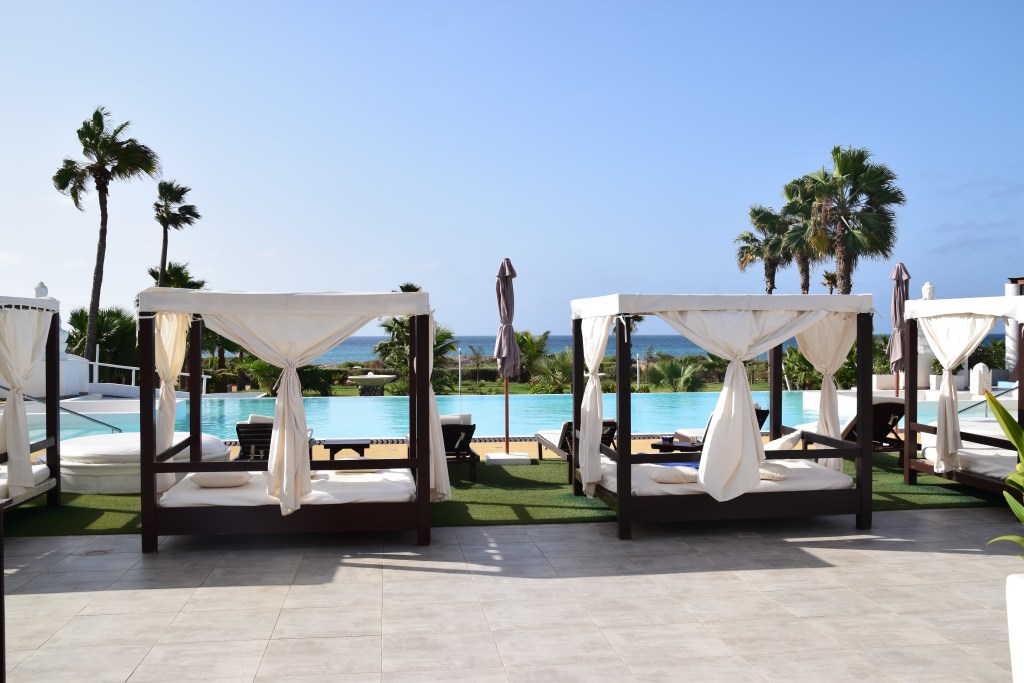
You’ll find the usual range of accommodation – all-inclusive resorts, hotels, guest houses, apartments and hostels. Be aware that service levels and health and safety standards may be below those in Europe and other more established holiday destinations. So don’t assume there’ll be hot water for your shower every where you go….
Communicating
The official language is Portuguese which is used in most written communication. People speak Kriolo (Creole) among themselves.
Many of those dealing directly with visitors – hotel receptionists, tour guides, waiters, traders, etc – will speak English.
Connectivity
WiFi is available in most hotels.
If you’re a dinosaur like me, then your phone doesn’t support eSIM functionality ( I looked that up BTW!!!). You can buy a SIM card at the airport and the nice, helpful staff will switch it in to your phone.
Money Matters
The currency is the Cape Verdean Escudo (CVE).
ATMs are available in towns.
Cards are accepted in most restaurants and hotels in tourist areas.
Many shops and traders accept cash only.
On islands more frequented by visitors, Euros may be accepted €1 =110CVE approx (Oct, 2025).
Tipping isn’t expected but always greatly appreciated.
What you’ll eat!
It’s useful – but not essential! – to like fish! There’s a fantastic range of fresh seafood available and it’s usually served with chips / rice and veg. But don’t panic – you’ll still find plenty of pasta, burgers and pizzas! You can expect to pay €8 – 20 for a main course depending on the restaurant.
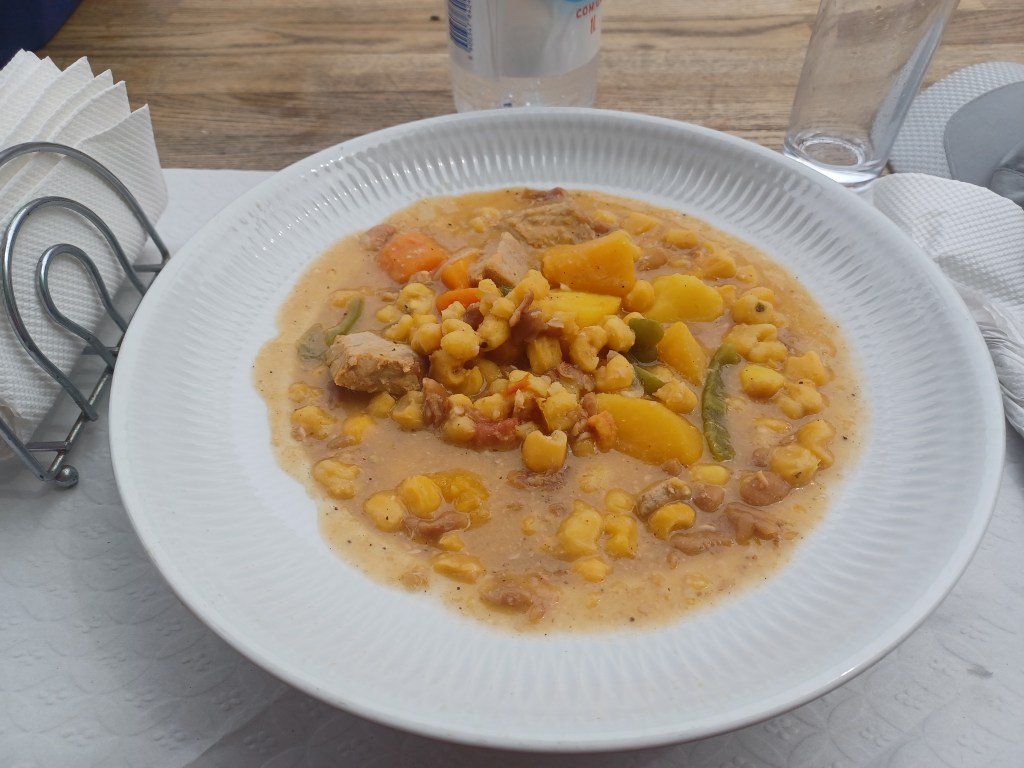
The national dish is cachupa – a stew of corn, beans and vegetables. It is served as a stew with fish or meat or in a less liquid form – maybe with a fried egg on top!

What to Pack
Your holiday wardrobe will be perfect in the tourist towns. Just be mindful of local culture if you’re away from the resorts or visiting some of the more remote islands.
Stick in a jacket or wrap in case it’s windy.
Remember that almost everything has to be imported. So pack enough sunscreen, insect repellent, medications, etc.
Bring Euros ( stock up on €5 and €10 notes)
Adaptors – for plug types C and F – the typical European 2 pin plug.
Reusable water bottle
If you know you’re going to arrive in late to your accommodation then buy a bottle of water at the airport – just in case there’s none in your room (it happened to us).
Pringles and Lays are available but not at Lidl prices!!! Stick a few tubs in your bag before you set off – you’ll be allowing a bit of space for shopping anyway!!
And finally…..
Remember that time has a different meaning here – you’re main course will arrive at some stage and that stall holder might disappear for a while but he’ll always come back with the size you were looking for! After all ….. what’s their motto??
NO STRESS
An amusing and very useful guide to visiting Cape Verde. I’ll make sure to keep it in case we’re lucky enough to travel there!
It won’t be top of everyone’s list but has it’s charms and they are working hard at trying to make a go of it. And who doesn’t love a tropical island!!
This is an interesting read on Cape Verde, it’s been on our radar for a while but never quite made it to the top of the list! 🙂
You’ve been too busy travelling, Hannah!! If you were just looking for a sun holiday then you could consider it – especially now with Easyjet flying directly. I’d see it as an alternative for those who search out winter sun in the Canaries and are looking for a change.
We were in Cape Verde for a fairly short (ten days I think) winter break a few years ago. My husband rates it as possibly the least good holiday we’ve had, and if we only consider the last 20+ years when we started to visit more ‘adventurous’ destinations, he could be right. There was nothing wrong with the trip (apart from the wind on a couple of days) and there were several sights that I enjoyed or found interesting, but it didn’t grab us as most other places have done. So I’m going to be very interested to hear about your experiences as a comparison.
It’s ages (if ever even ?) since we found ourselves for 2 weeks in a place with so little to do so I know exactly what you mean. Because we did 4 islands, we were at least on the move every few days so that definitely helped. And we met a group on a walking tour of the islands and were loving it so there’s potential for options away from the beach…
Marie, this swept me straight into that Cape Verde sunshine. You’ve wrapped history, hard truths, and very practical advice into such an inviting read. I love how you move from slave routes to Pringles and plug adaptors without losing the thread. Whatever their official motto is, your post suggests one of your own: arrive curious, leave sun-drenched and much better informed
You’ve hit it on the head Michael! That’s exactly what happened. We were talking of heading off for a city break somewhere but ended up with extra time available and the idea of idling in the sun appealed more than pounding city streets. Nothing on the usual ‘winter sun’ lists caught my eye until I saw this. It was doable and not too far. And we knew NOTHING about it! But now we do! Unfortunately we did leave sun-drenched only to arrive into Dublin to torrential rain – an Irish welcome!
Have to admit I wouldn’t have been able to locate it on a map. Looking forward to reading more about it!
A bit of a distance from Manhattan, Lissy!!
Good advice for almost any place in the world. Don’t stress, keep smiling, be polite and be patient.
That sums it up Marie! It’s the same everywhere….
I’m looking forward to learning more about Cape Verde. Aside from being able to roughly locate it on a map, I know nothing about it.
A few islands are promoting hiking holidays, Diana – something that would appeal to you, I think….
Definitely!
That’s a nice first-timer’s guide to the islands – you can’t go wrong if you print this out. Interestingly, Cape Verde’s football team have qualified for the 2026 World Cup, leaning heavily I believe on those of the diaspora who have progressed in the sport in their new countries.
They are SO excited about qualifying – and as for the diaspora- there’s a Dublin guy included in the squad!!!
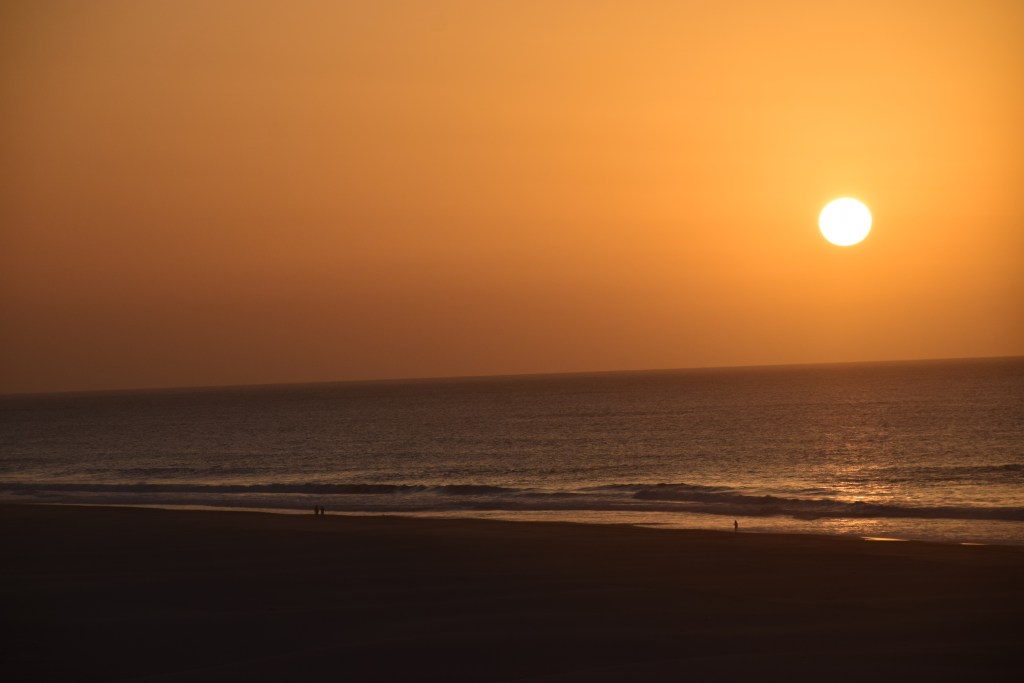
I haven’t heard that much about Cape Verde so thanks for the overview. Stunning sunset shot at the end of your post. I’m feeling less stress just looking at that picture!
It’s nice to come across new places isn’t it. As for the sunset – a dreary grey evening here in Dublin – I think I’ll just sit and look at the picture!!!
Thank you for the introduction to Cape Verde. Cape Verde seems like an exceptional winter destination, with its golden beaches and year-round sunshine. Whether you go hiking in the volcanic landscapes of Sal or enjoy the lively music scene in Mindelo, its ‘stress-free’ atmosphere is perfect for recharging your batteries. It is a great and sunny destination in the Atlantic.
It certainly seems to be a new suggestion for lots of readers – although I don’t know why that should be surprising as we knew nothing of it ourselves before we booked…There’s probably something there for everyone – from cruise lovers to hikers and everyone in between!