
Wow – Posh wot!
We spot the isolated 4X4 on our descent from Isla Incahuasi.

We’ve been on the go for hours, having flown that morning from La Paz and straight into a full day tour.
We scan the empty picnic tables….mmmmm….we’re definitely ready for something to eat and I’d murder a coffee – we know there’s a packed lunch in the car…
Wouldn’t you be mortified all the same – says she – everyone looking over at you!
No immediate response from himself … until…
You know – they all look pretty much the same… but I think that might be our car…
No!
We look over at our guide – he’s absolutely beaming! We’ve played it perfectly!
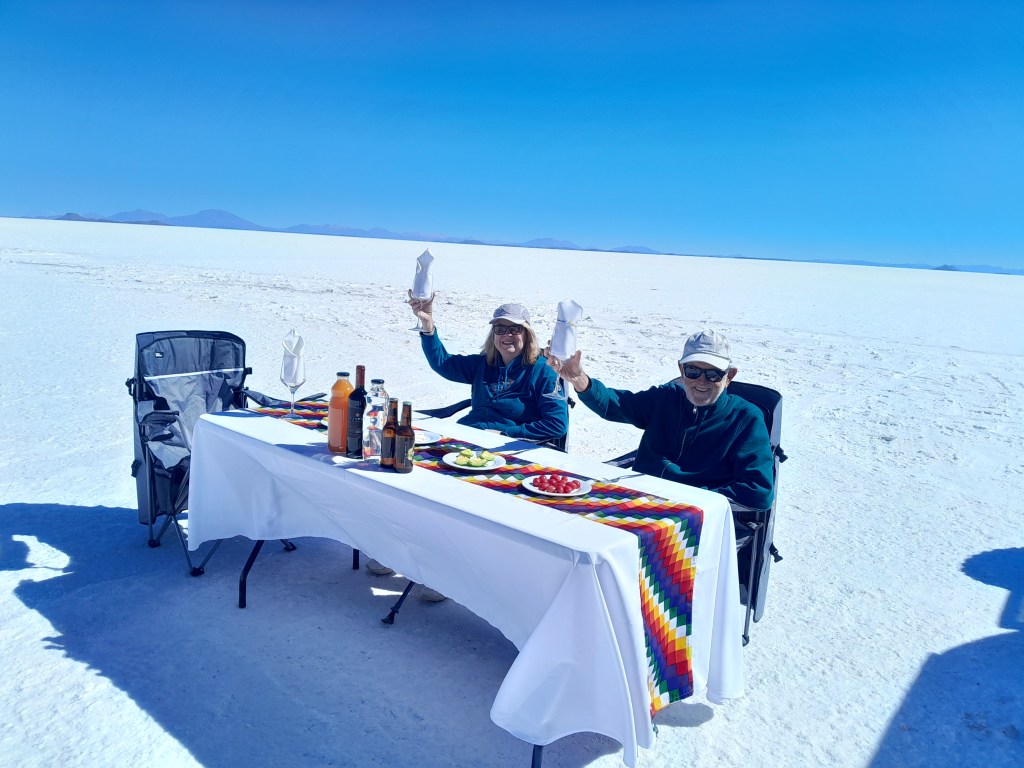
Lunchtime he announces!
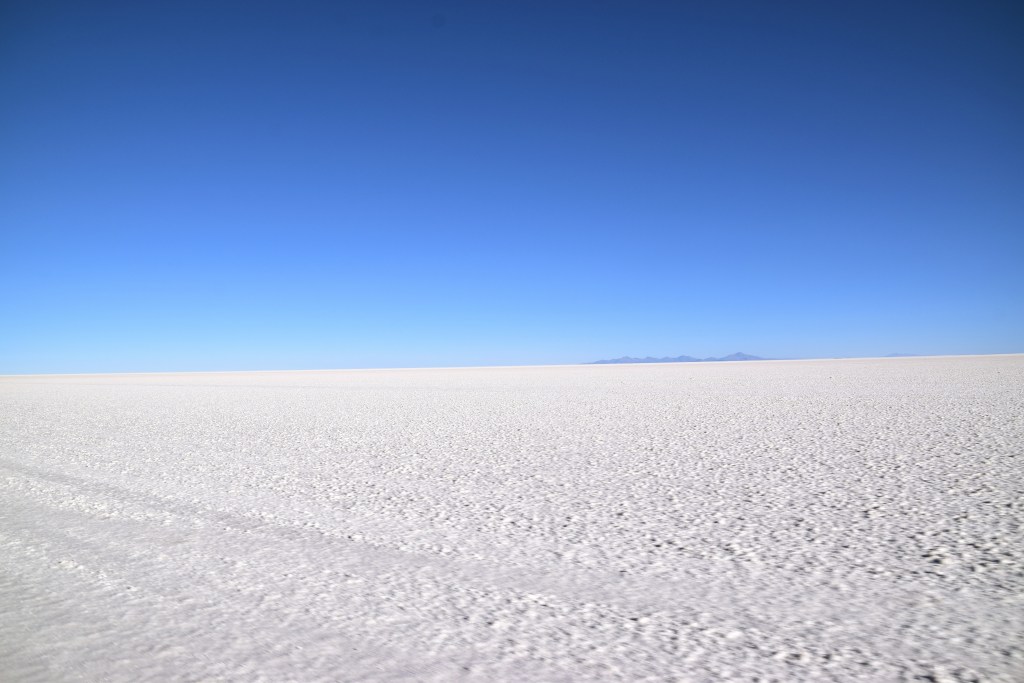
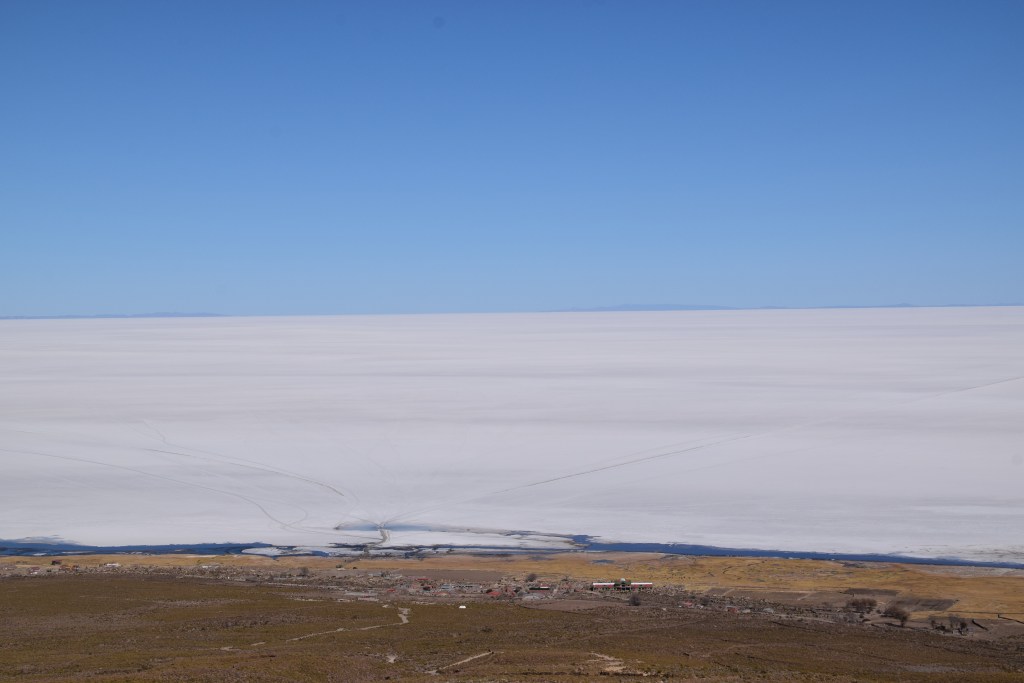
We’re in Salar de Uyuni in southwest Bolivia. We’ve come a long way to see the world’s largest salt flat – covering some 10,000 sq kms in the high Andes (yes – high – we’re 12,000ft above sea level!).
The Salar is part of the Altiplano, the high plateau that covers regions of Chile, Argentina, Bolivia, and Peru. It was left behind by prehistoric lakes, long evaporated. It is now covered by a few metres of salt crust which extends over the landscape with an extraordinary even flatness – the elevation varies, on average, within a single metre over the entire area.
Despite its geographical remoteness and extreme conditions, this has become one of the most popular attractions in South America. The tourism industry is hugely important here – but it’s not the only gig in town. The extraction and refinement of the estimated 10 billion tonnes of salt has kept local saleros – salt gatherers – busy for generations. Even more importantly however, is the treasure underneath the salt – a large percentage of the world’s lithium (used to power the batteries in your laptops, mobile phones and electric cars) is buried here.
Most tour operators in the area offer almost identical one-day itineraries – it varies a bit then if you have two or even three days. We were in Uyuni for two nights and two full days (flying out on the morning of the third day).
DAY 1
Not much time is spent in Uyuni itself – the small dusty town is packed with tourist agencies and budget accommodation options and lies about 30 minutes from the salt flats.

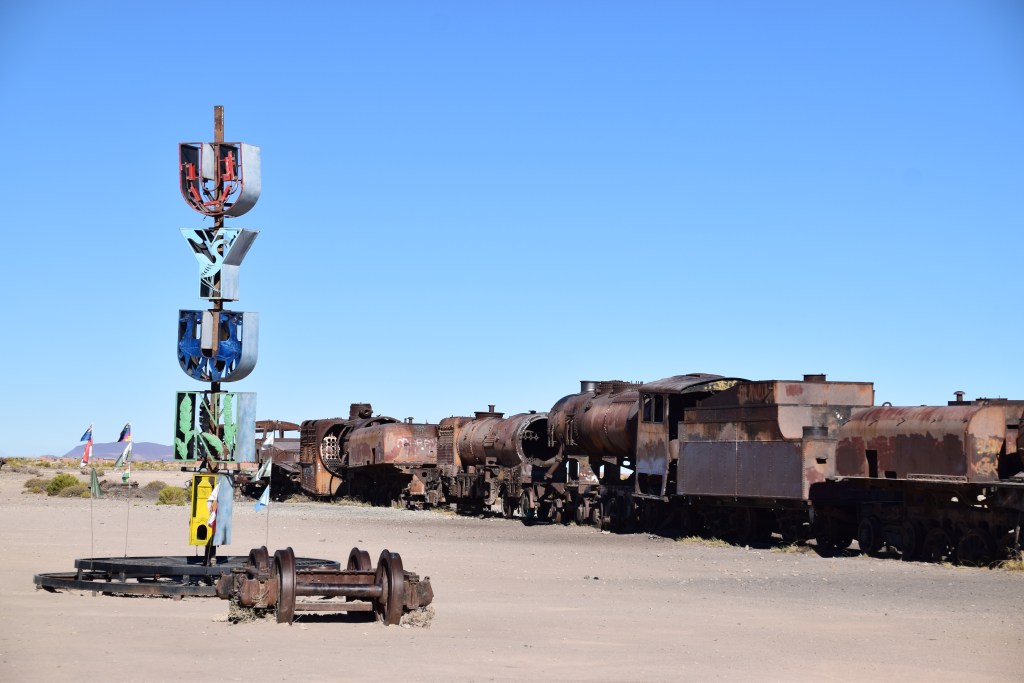
The railway line from Uyuni to Antofagasta in northern Chile was built by British engineers towards the end of the 19th century. It was hoped that Bolivia would flourish with a good transport system but it was constantly sabotaged by the local Aymara Indians who saw it as an intrusion into their lives. The trains were mostly used by mining companies, transporting tin, silver and gold to the Pacific coast. In the end, the mining industry’s collapse in the 1940s halted development and the huge expectations of economic progress were never fulfilled.
Rather than being sold for scrap, the trains were just left to rust in the harsh salt-laden winds. Today, on the outskirts of the town, Cementerio de Trenes contains the remnants of Bolivia’s railway boom.
The tiny village of Colchani is home to Bolivia’s largest salt-processing cooperative, with its inhabitants excavating some 25,000 tonnes annually. Once upon a time, the salt was carried by llamas to other indigenous communities in the Altiplano and bartered for coca, maize and other necessities. Nowadays, an improved transport infrastructure enables the cooperative to sell the salt throughout Bolivia and into Brazil.
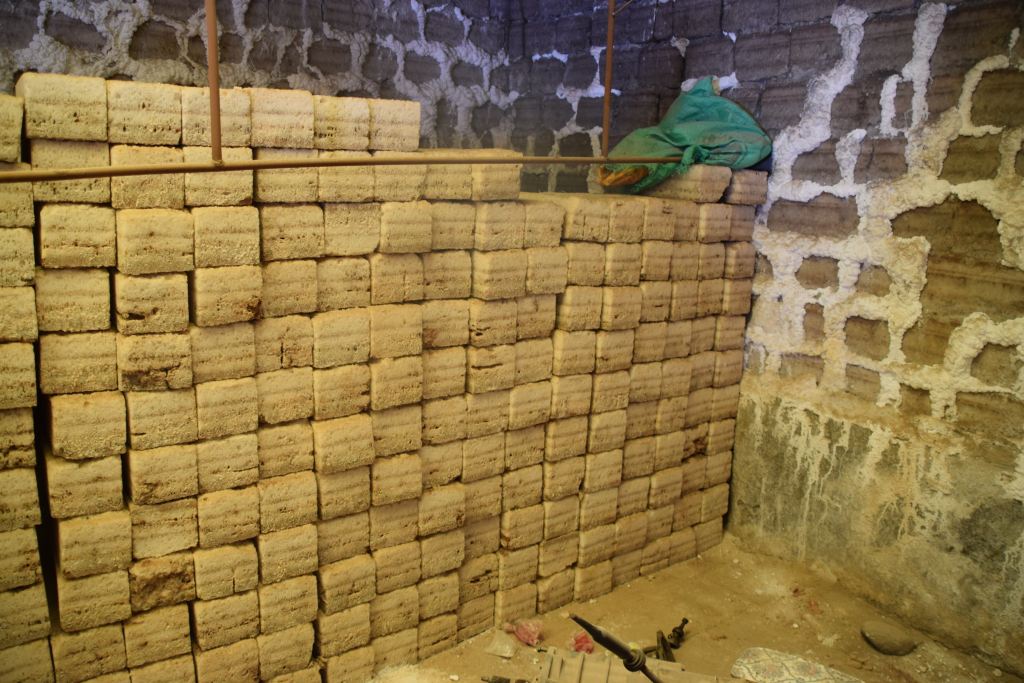
Inside the traditional salt factories (made of salt of course), you learn about the extraction and processing – the production is carried out manually. Salt is dug and moulded into piles to dry. It is then loaded onto trucks and milled in the village with a hand-operated device.

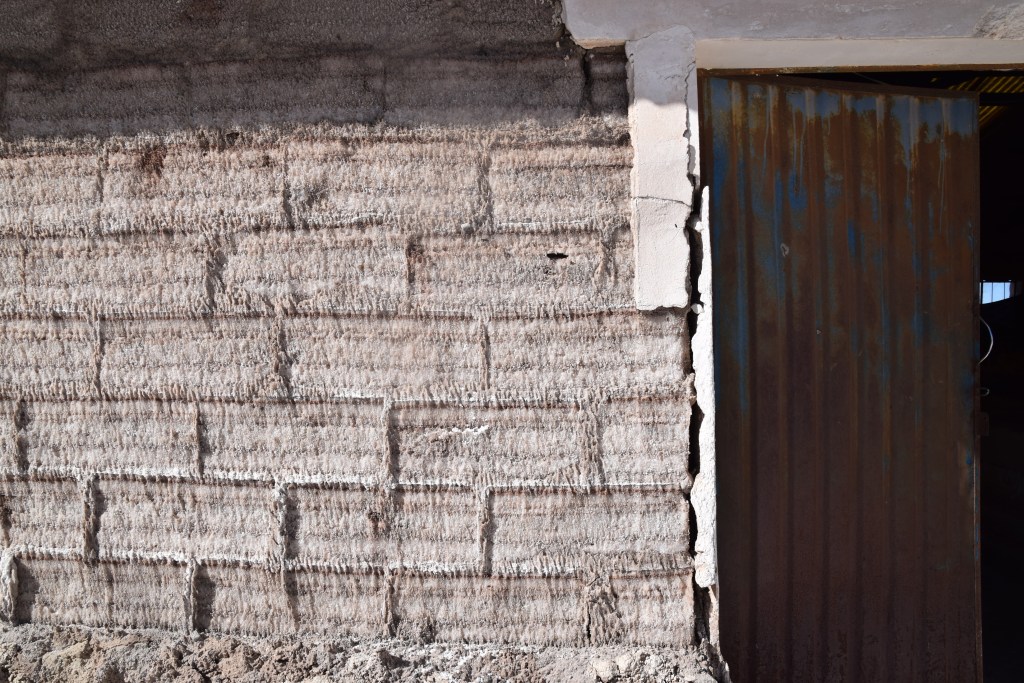

Walls and floors are made from salt bricks

Salt – bagged and ready for distribution
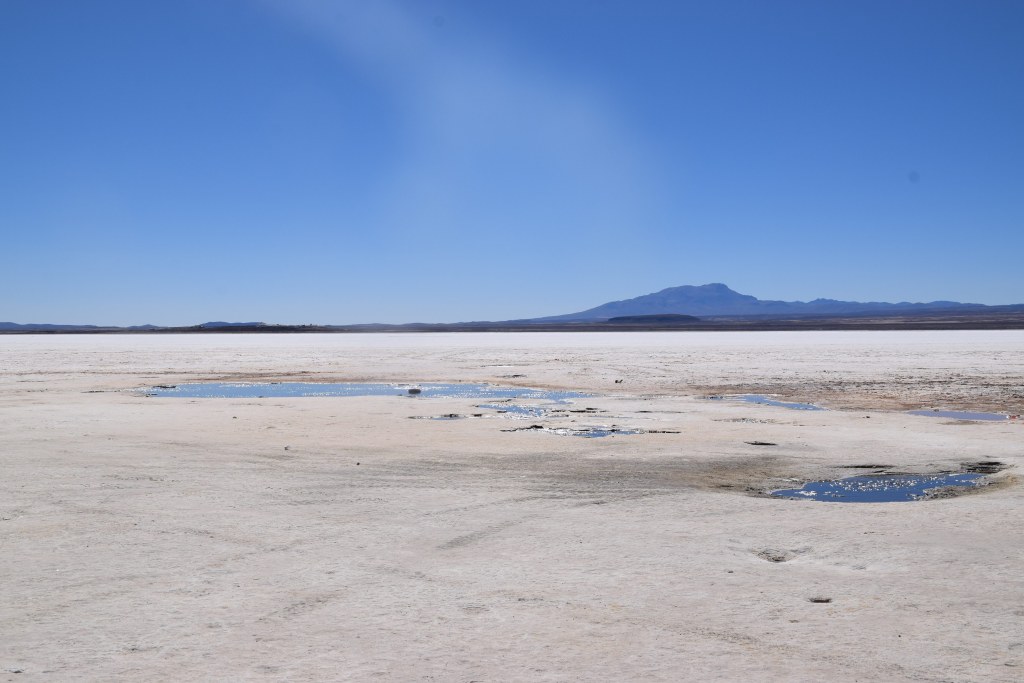
The drive out on to the flats is truly extraordinary – clear blue sky contrasting with dazzling white desert in an endless panorama.
And then you begin to notice things on what you thought was a relatively homogenous terrain….
The surface is actually covered with polygonal shapes which have formed during the dry season as a result of natural evaporation.

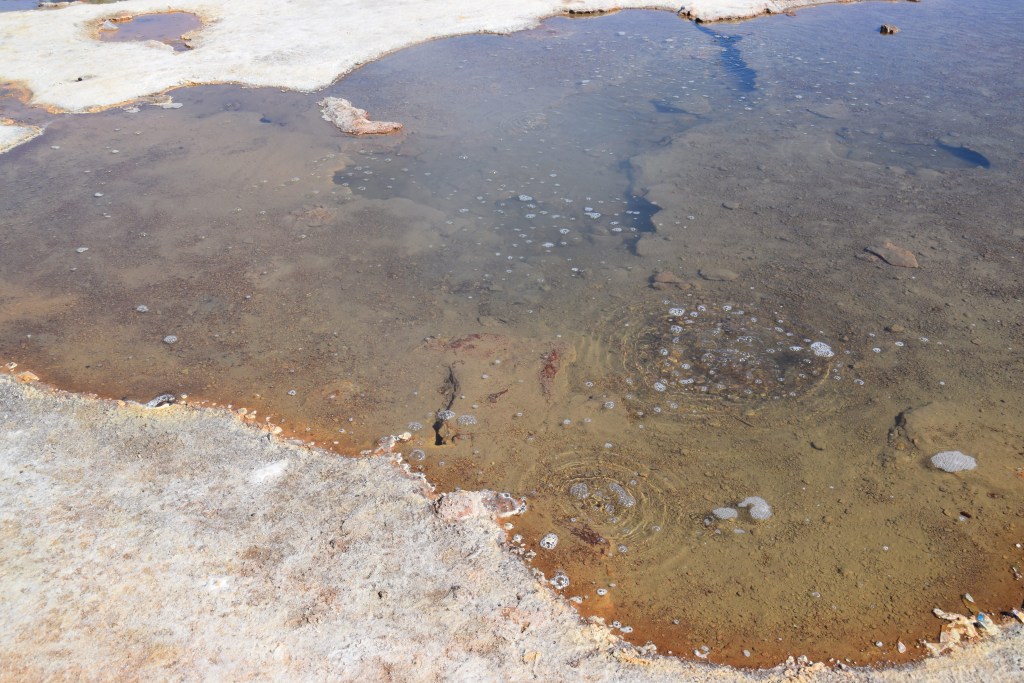
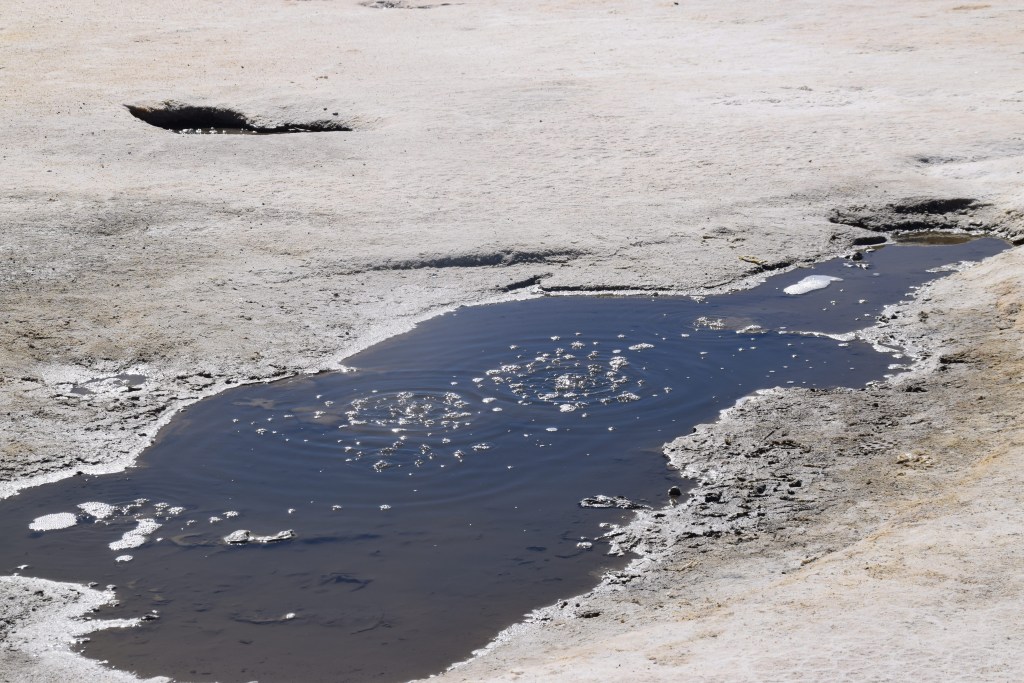
The Ojos del Salar – or Eyes of the Salt Flat – are outlets for subterranean rivers flowing beneath the salt flats. Water bubbles through the crust, its colour contrasting with the surrounding white…

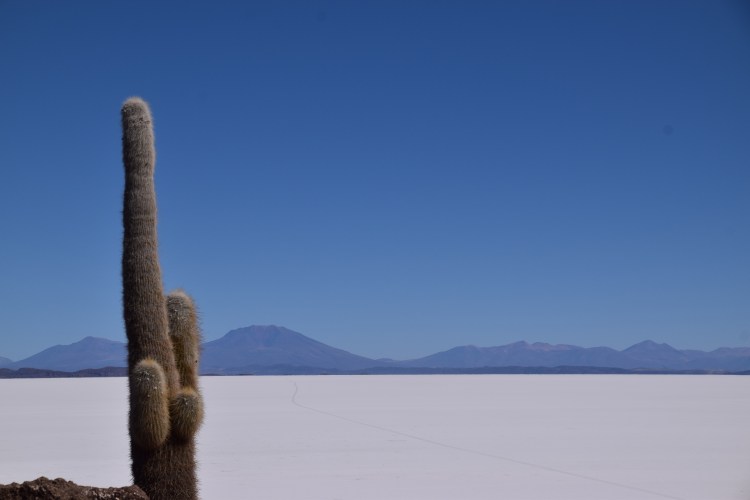
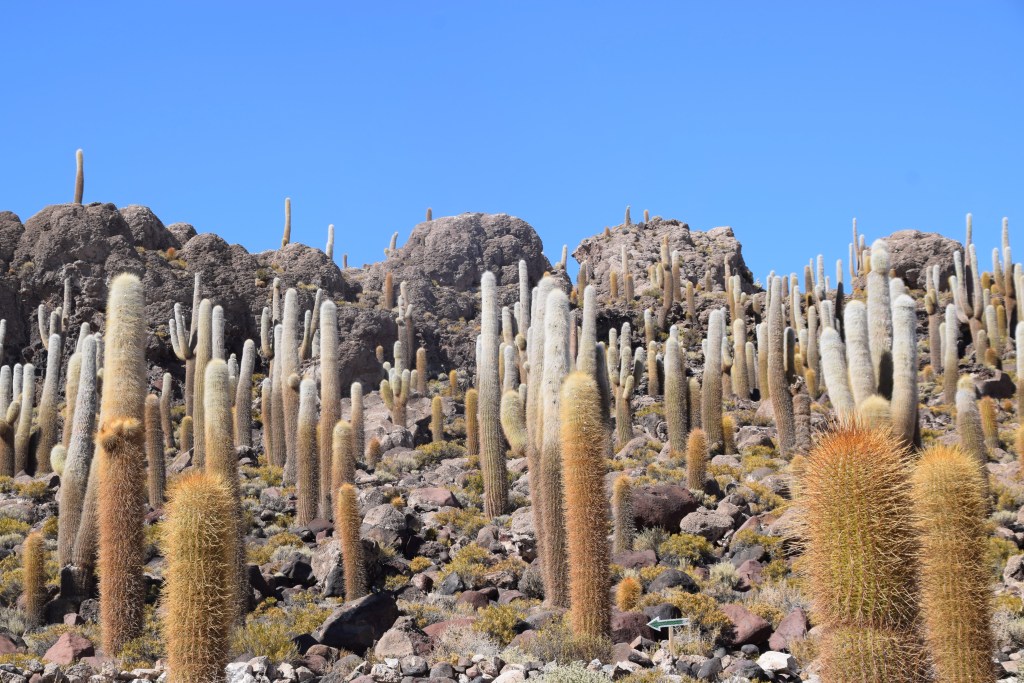
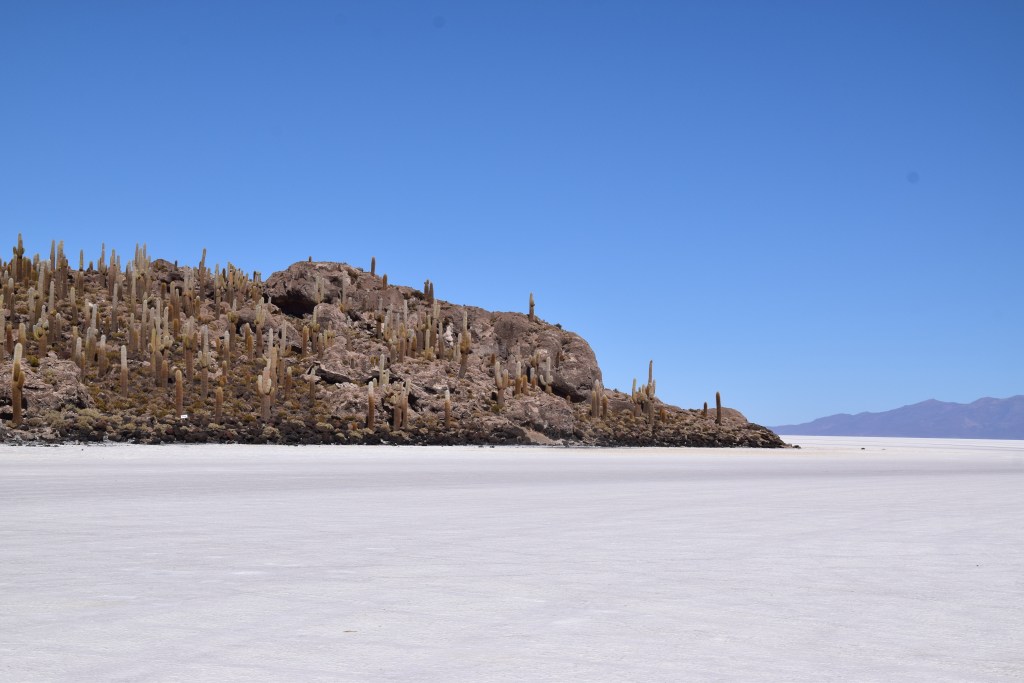
Ilsa Incahuasi, a rocky cactus-covered island in the middle of the flats, is actually set on the remains of a volcano. It once served as a resting place for those crossing the salt flat and now is home to a forest of giant cacti. Growing at a rate of one centimetre per year, some plants must be several hundred years old! The approach is dramatic with the contrast of the plants against the barren white salt. Then a hike up the short looped trail to the top of the island is worth it for the wonderful views.

And that brings us back to lunch!!!!!


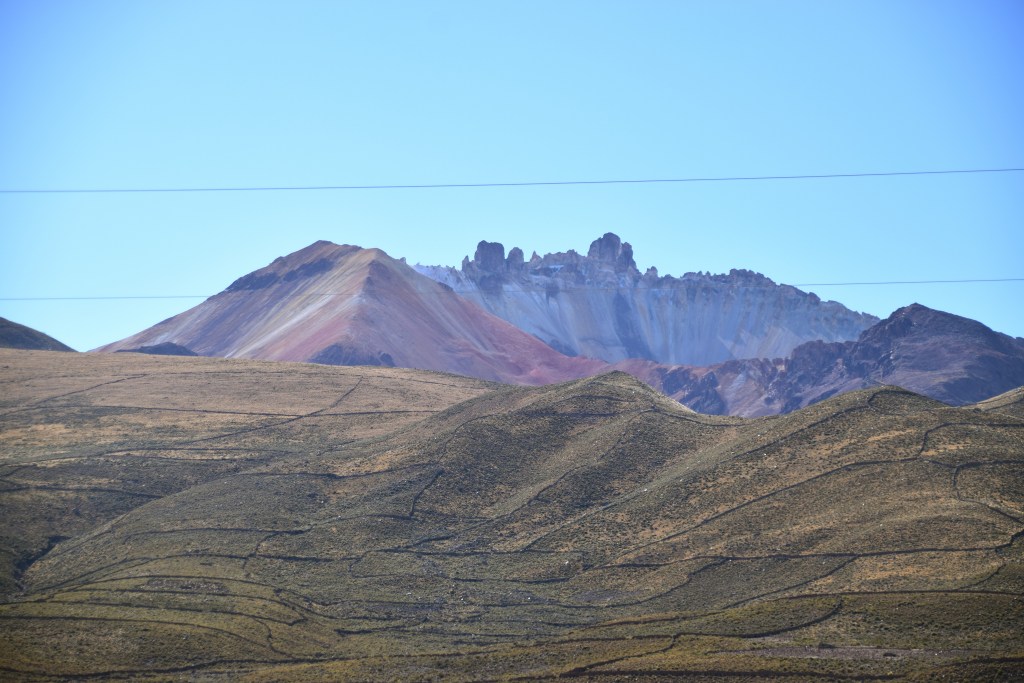
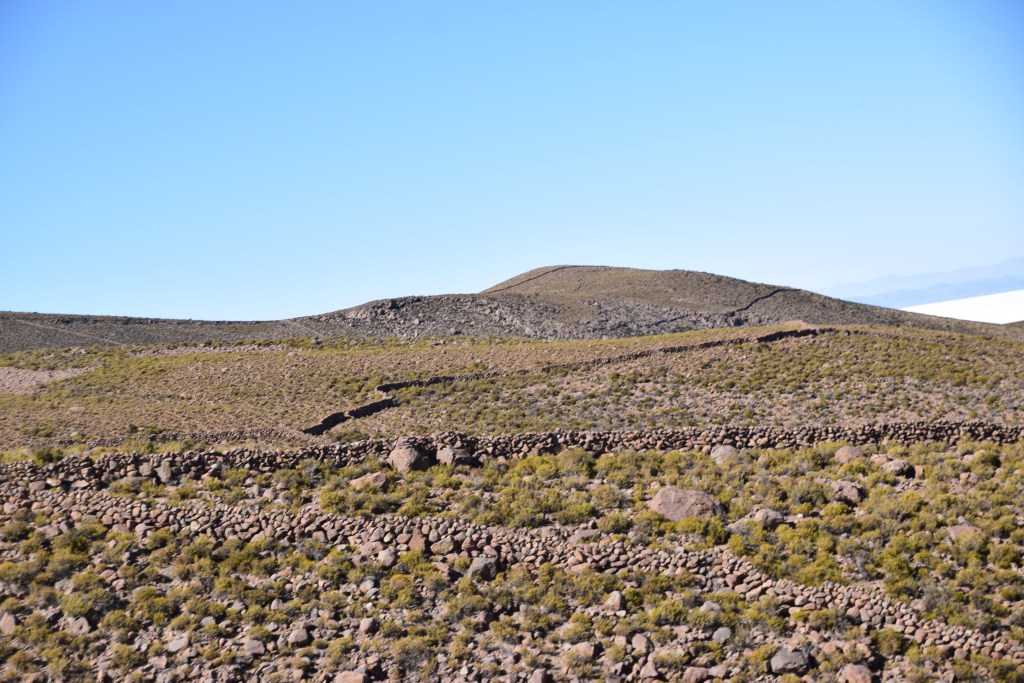
We head across the flats to the dormant Tunupa Volcano. The more energetic tourist may spend a night here in the village of Coquesa before climbing to the summit. Most, like ourselves, are content to just drive up a bit of the way beyond the village and enjoy the views. Once again, we can appreciate the immensity of the Salar and the beauty of the landscape. Below us is a small lagoon populated by flamingos. And just look at those dry stone walls! It’s like home! (except less greenery!!!!)


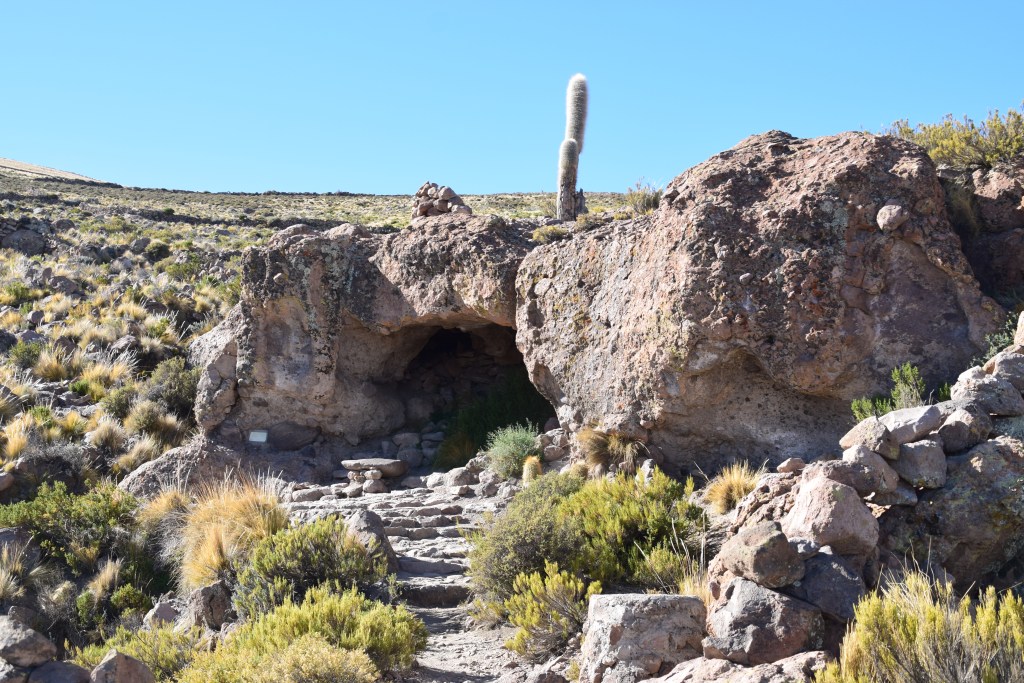
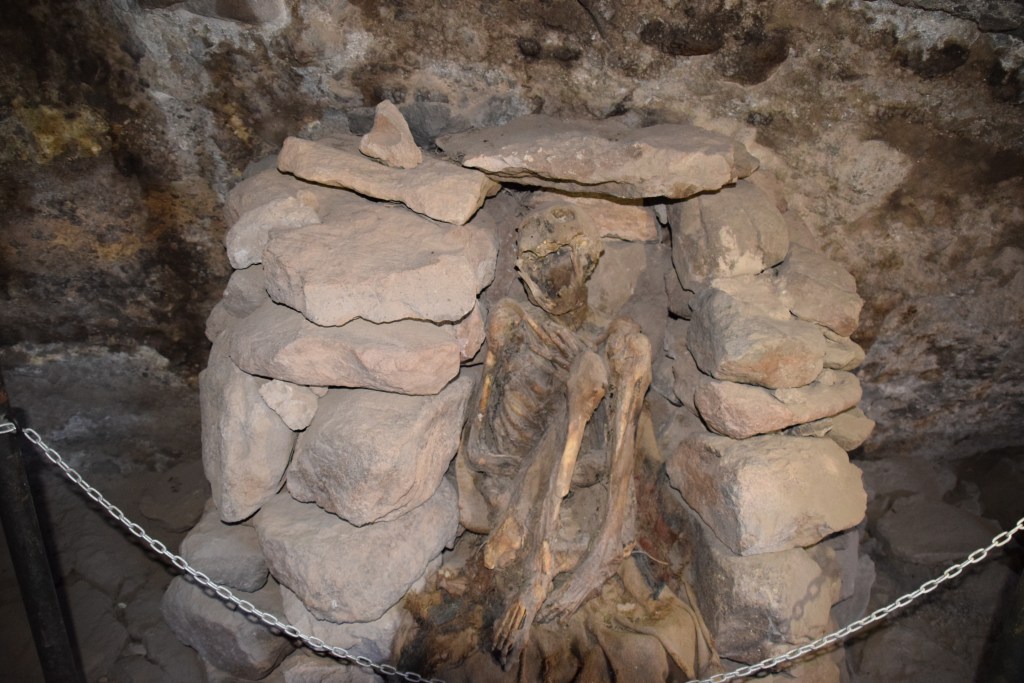
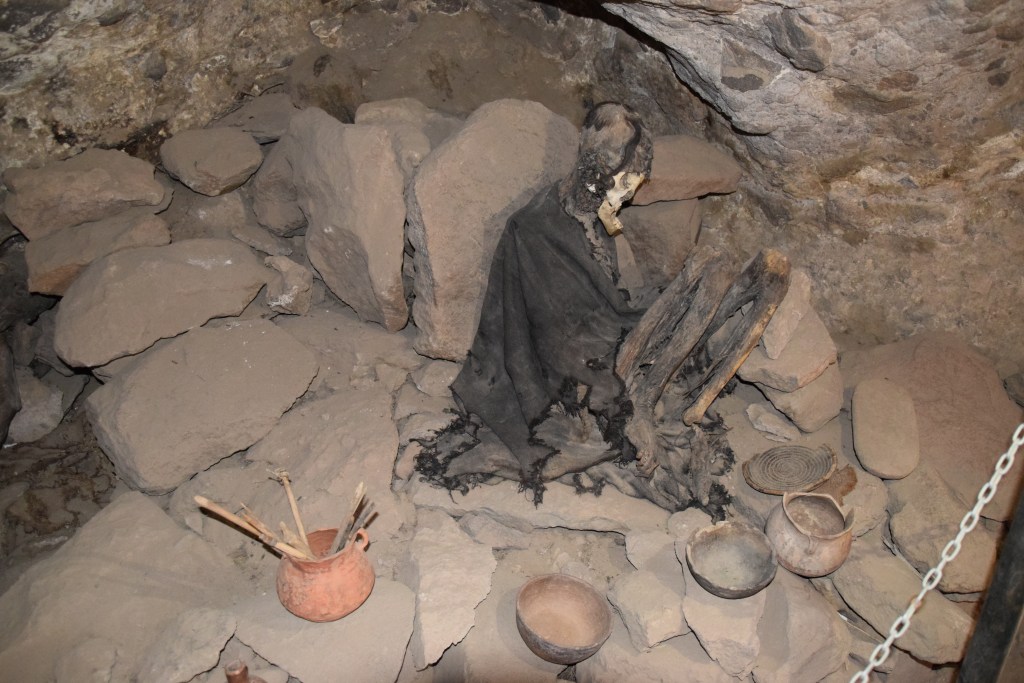
In a cave on the hillside, a few 500 year old residents lie (relatively) undisturbed. Their identities remains a mystery but it is believed they were from an important family. The mummies are remarkably well-preserved, with untouched hair and clothing. The accompanying ceramics and artifacts offer a glimpse into the lives of their indigenous neighbours of long ago.
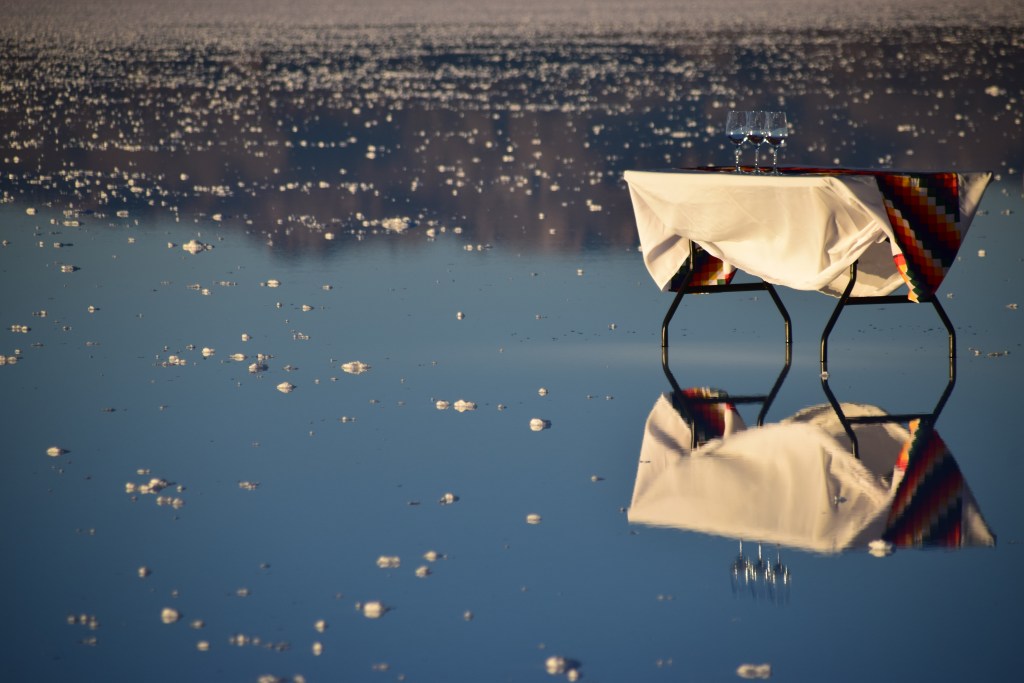
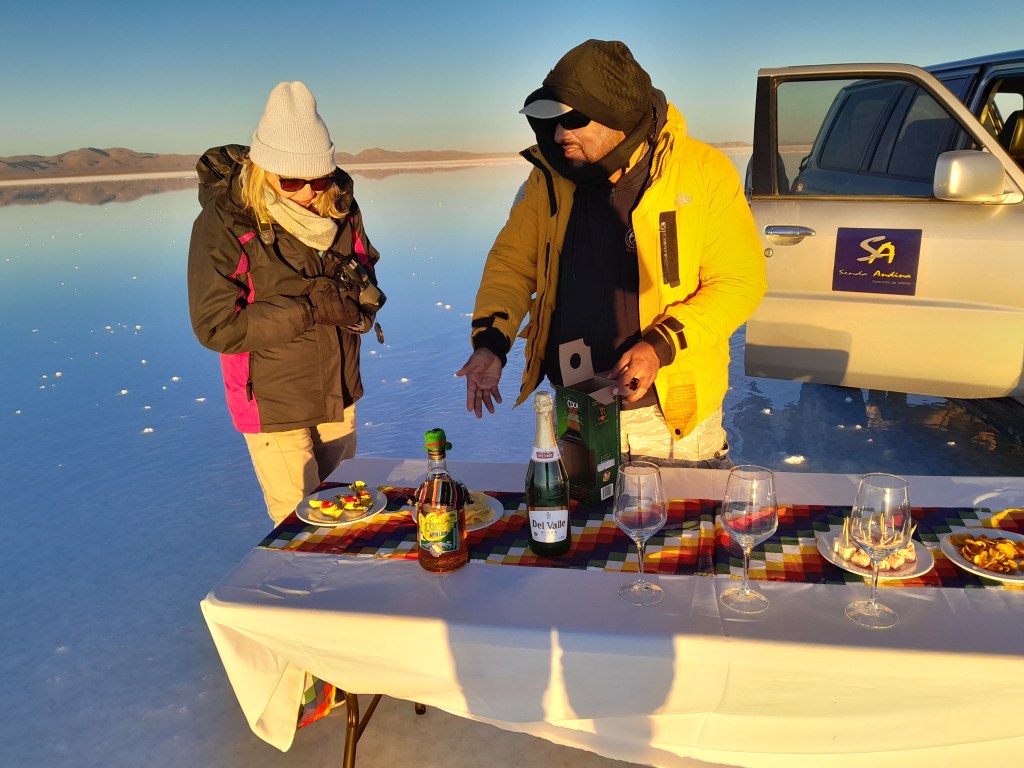
As we head for home, we’ve one final stop…… out come the wellies (they’ve thought of everything!) and we leave the car to enjoy the setting sun. The reflections are extraordinary – and as we watch the light fade, out comes the table again!! We’ve one more decision to make – which bottle to open!!


DAY 2
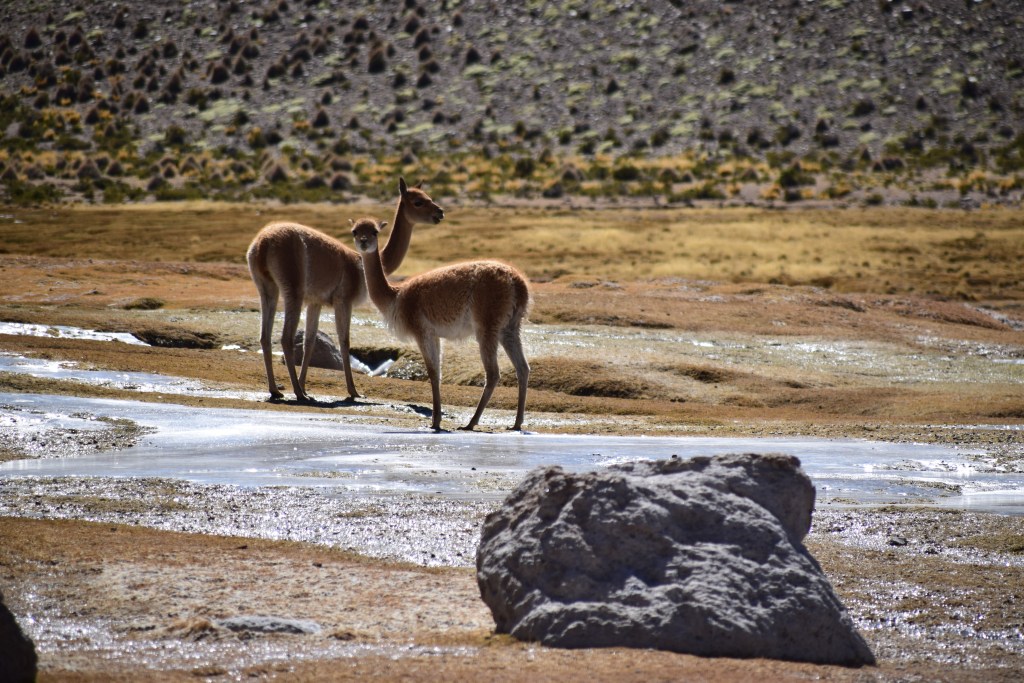
Day 2 is different. In contrast to the salt flats of the previous day, the focus is on the mountains with their striking lagoons, natural hot springs and lots of llamas and vicunas.
We head away from Uyuni and the salt flats…
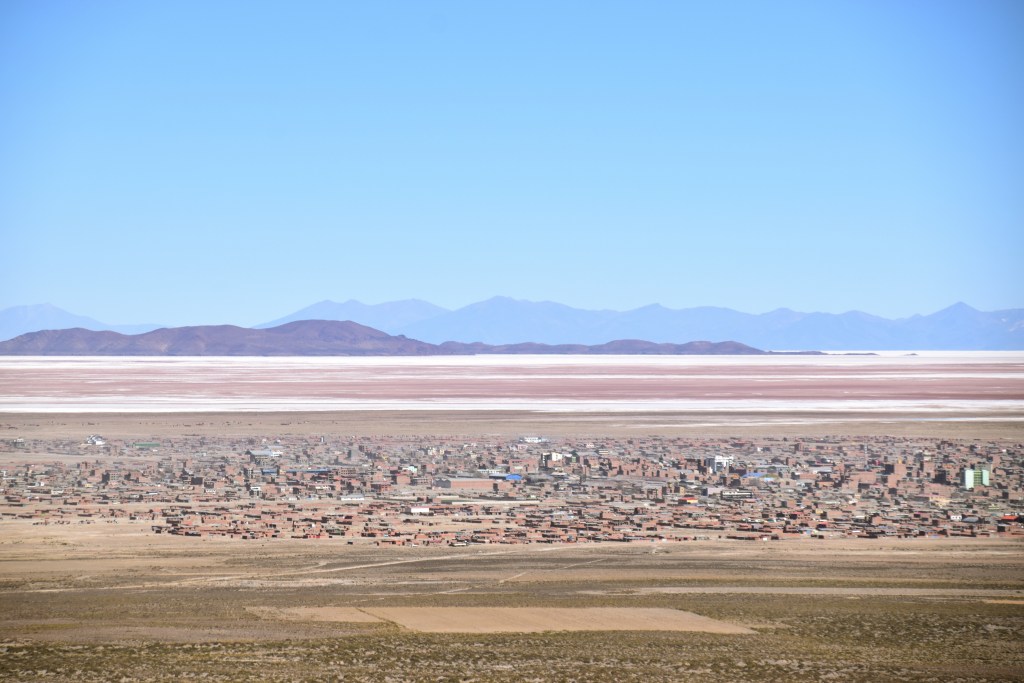
…which is a hive of buzz and activity compared to where we are headed!!1


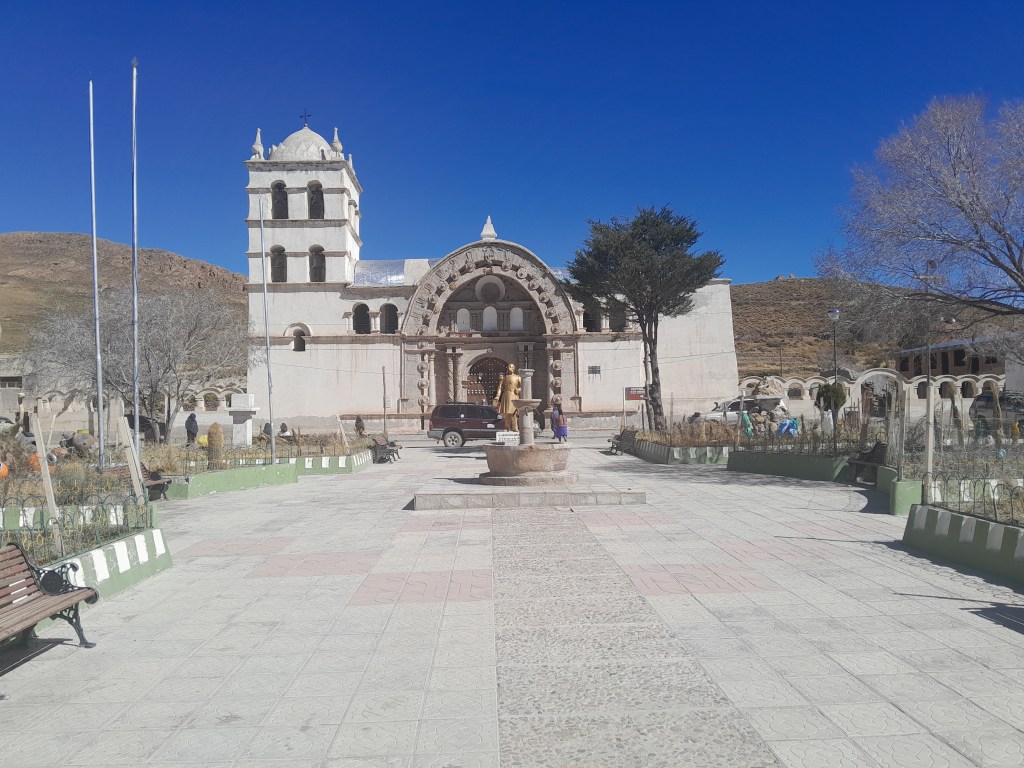
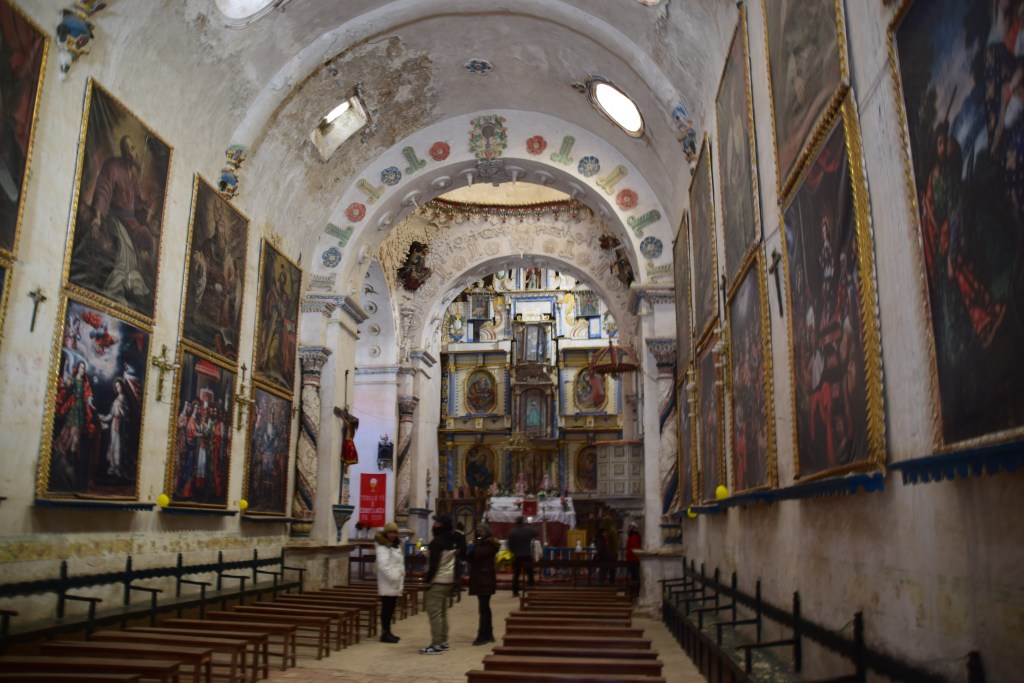
After some 50kms or so, we stop at the village of San Miguel de Tomave to visit the lovely little church….
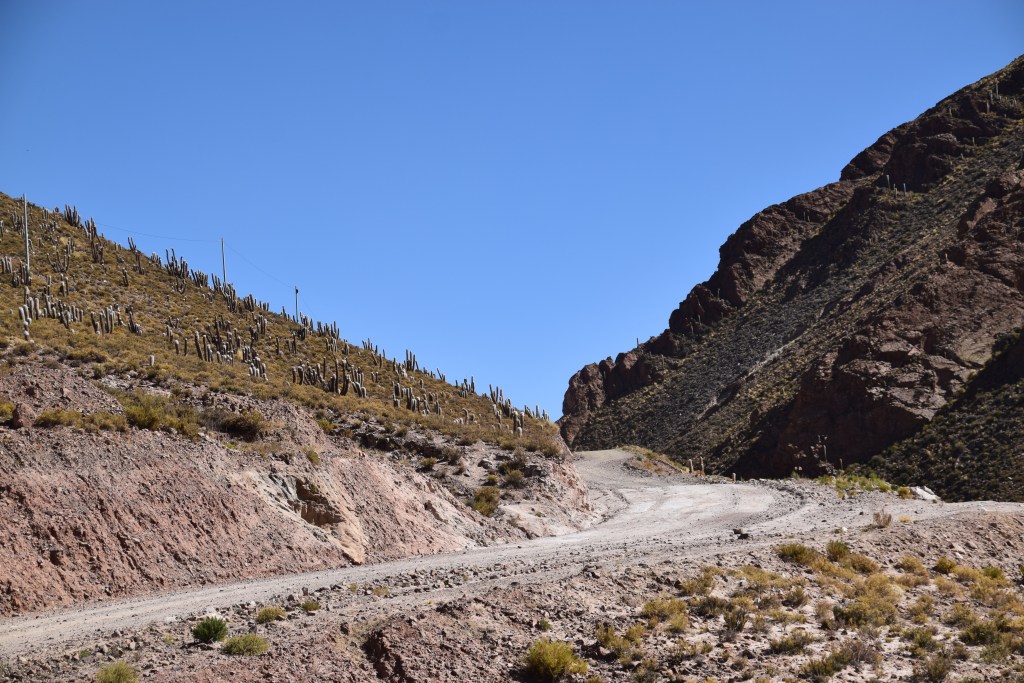
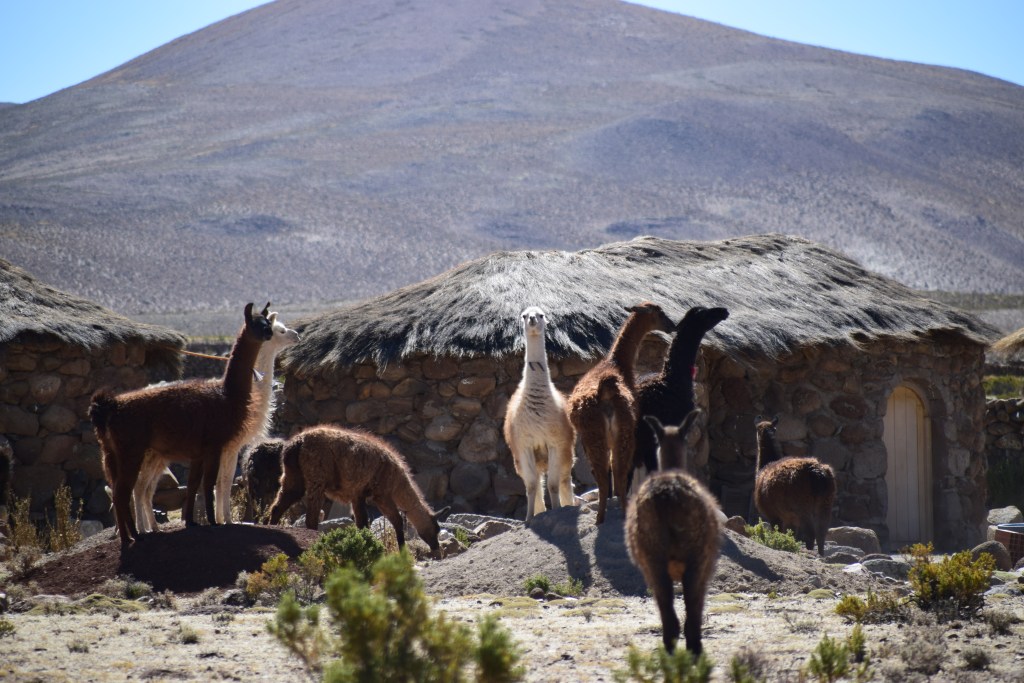
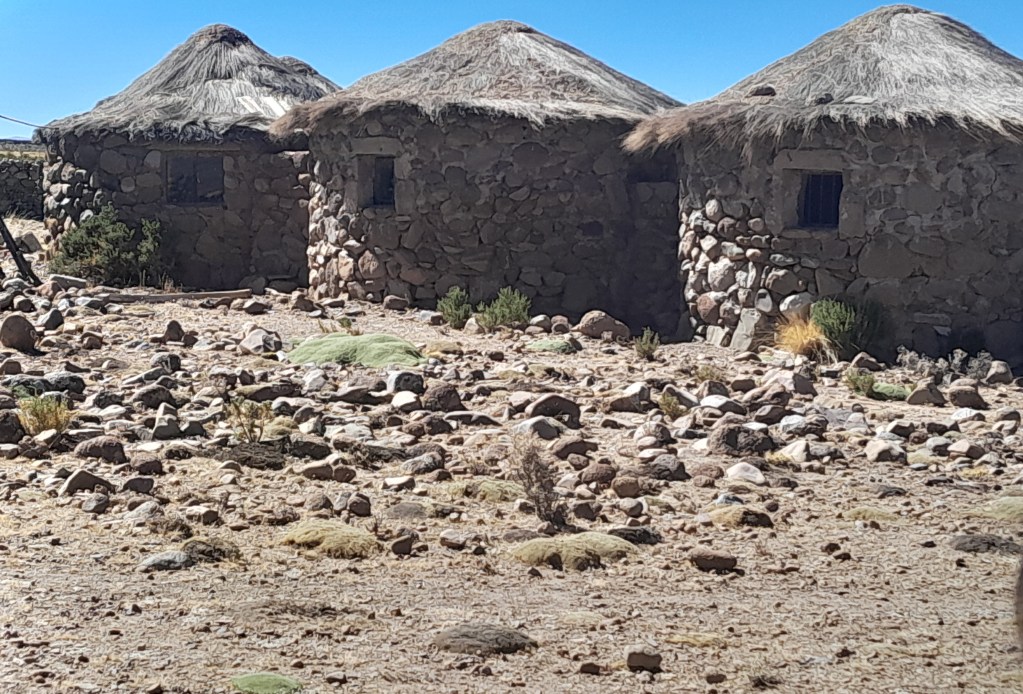
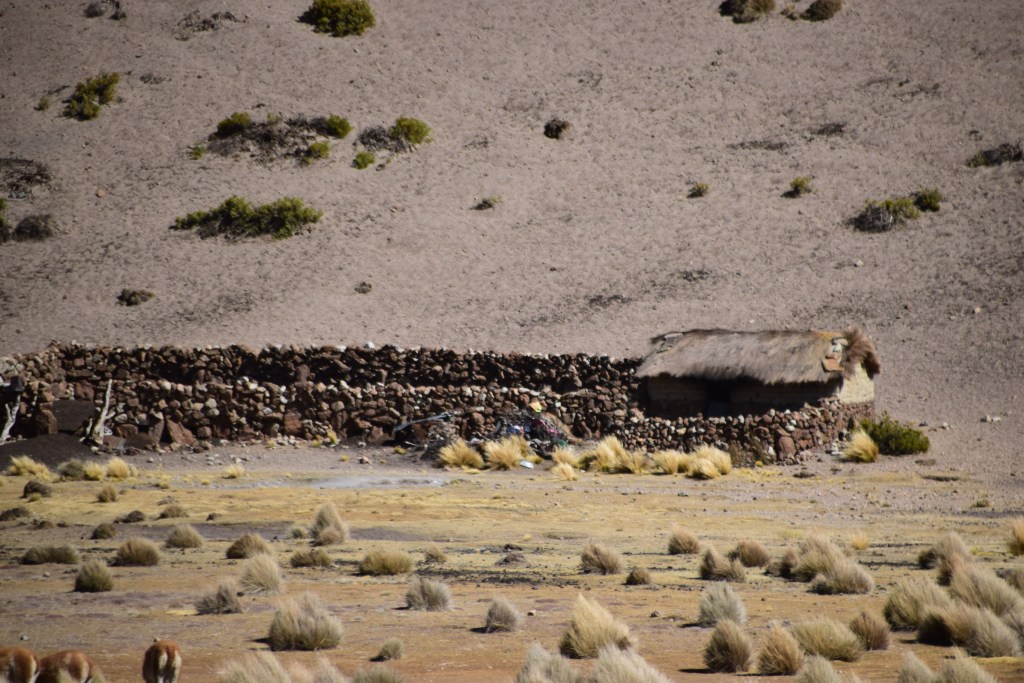
And then we’re back on the road, stopping occasionally to admire a lagoon or watch the llamas. The lakes vary in colour, not only because of their individual mineral content but also the direction of the wind. Isolated dry wall corrals for llamas and their herders are the only structures we see along the way….


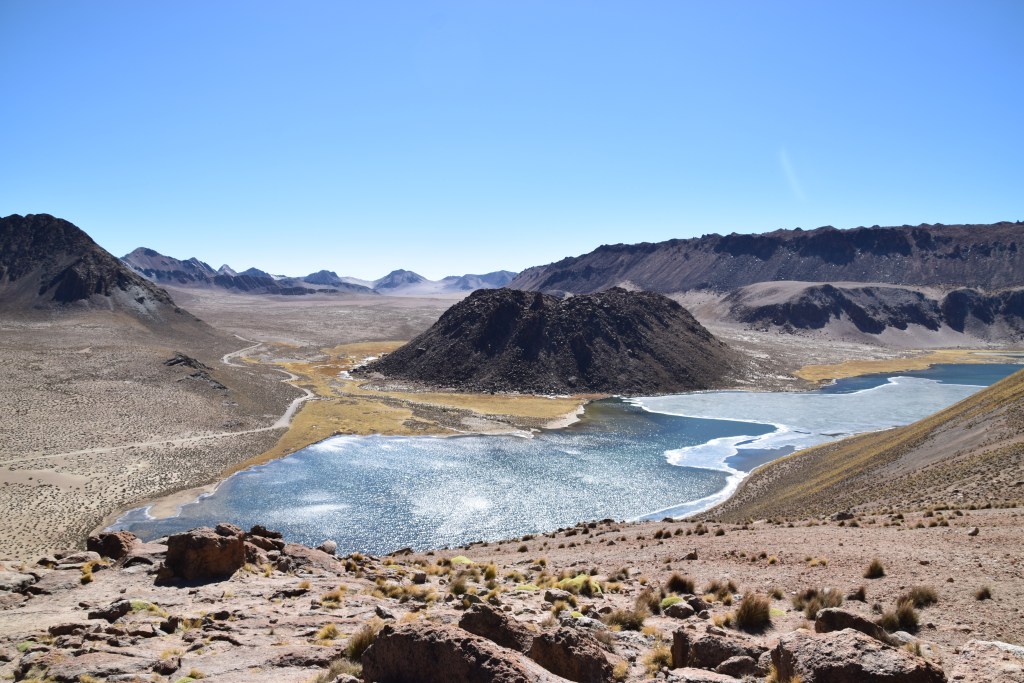


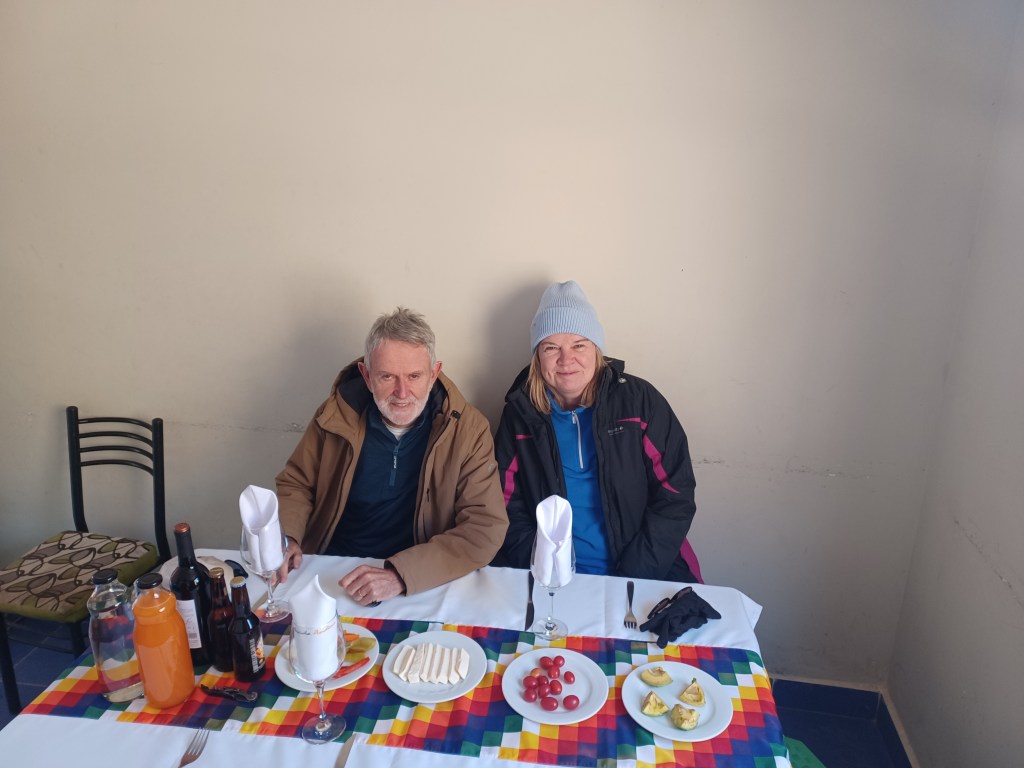
It’s cold up here – ice along the road hasn’t melted by lunchtime. We forego a picnic with the llamas in favour of an indoor venue. At a thermal spring, rooms are rented out for such eventualities – a few tables are made available in a small room and, somewhere, our food is heated and served. Not as posh as yesterday but not bad!
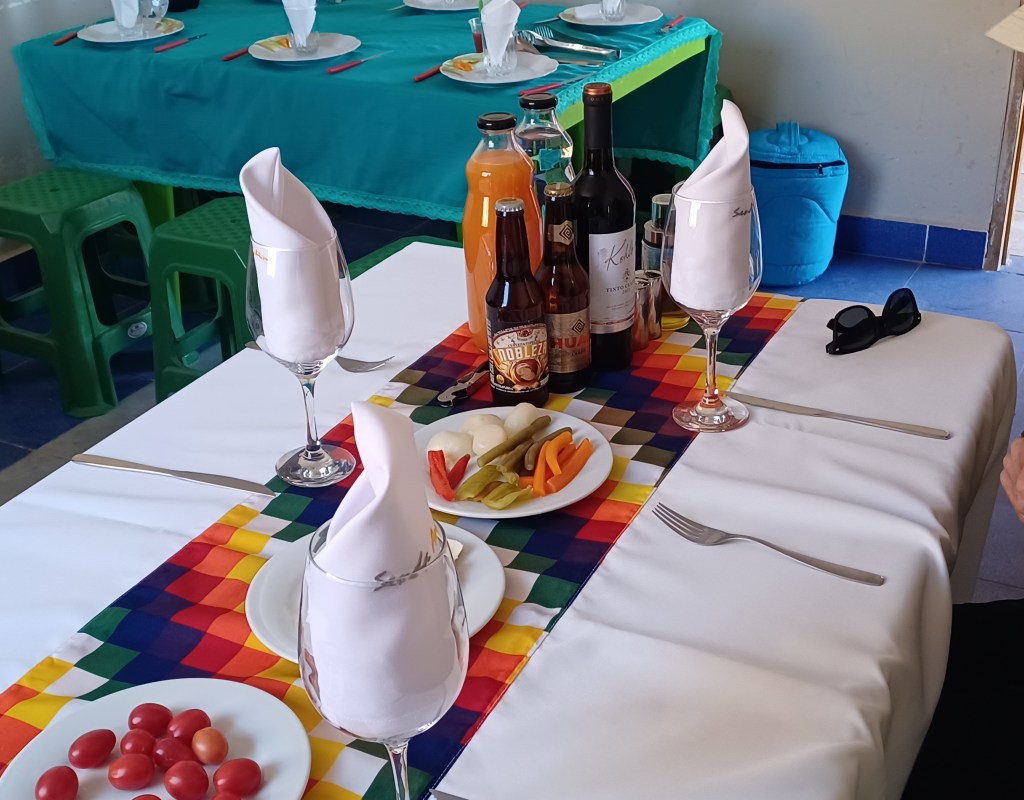
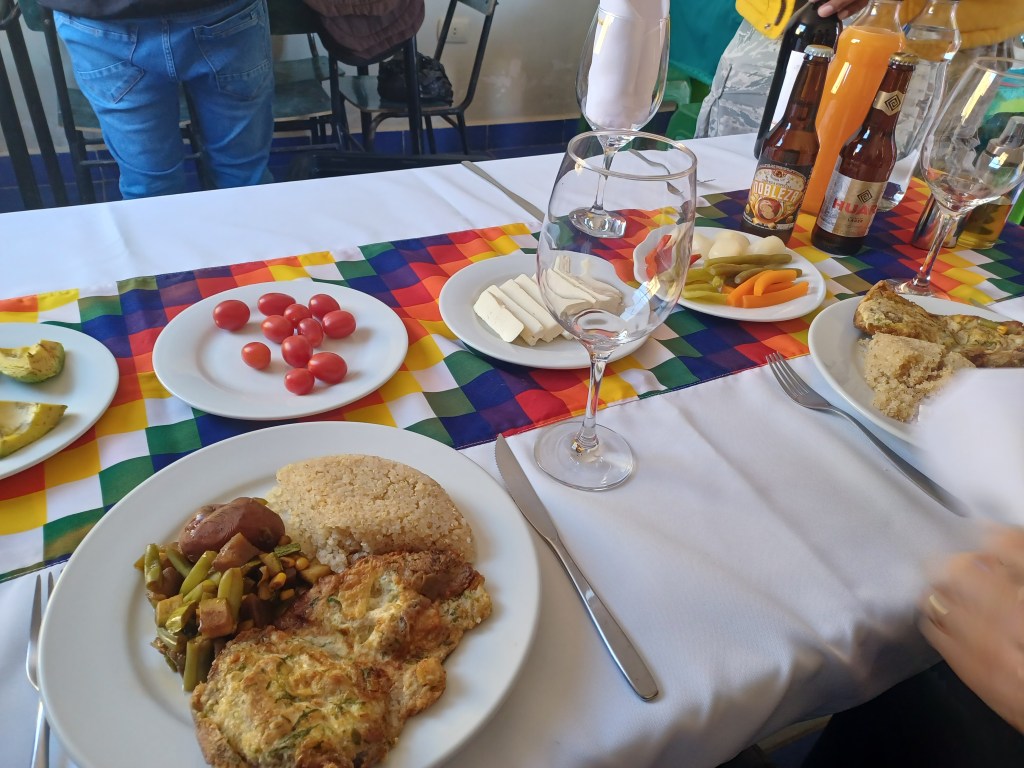
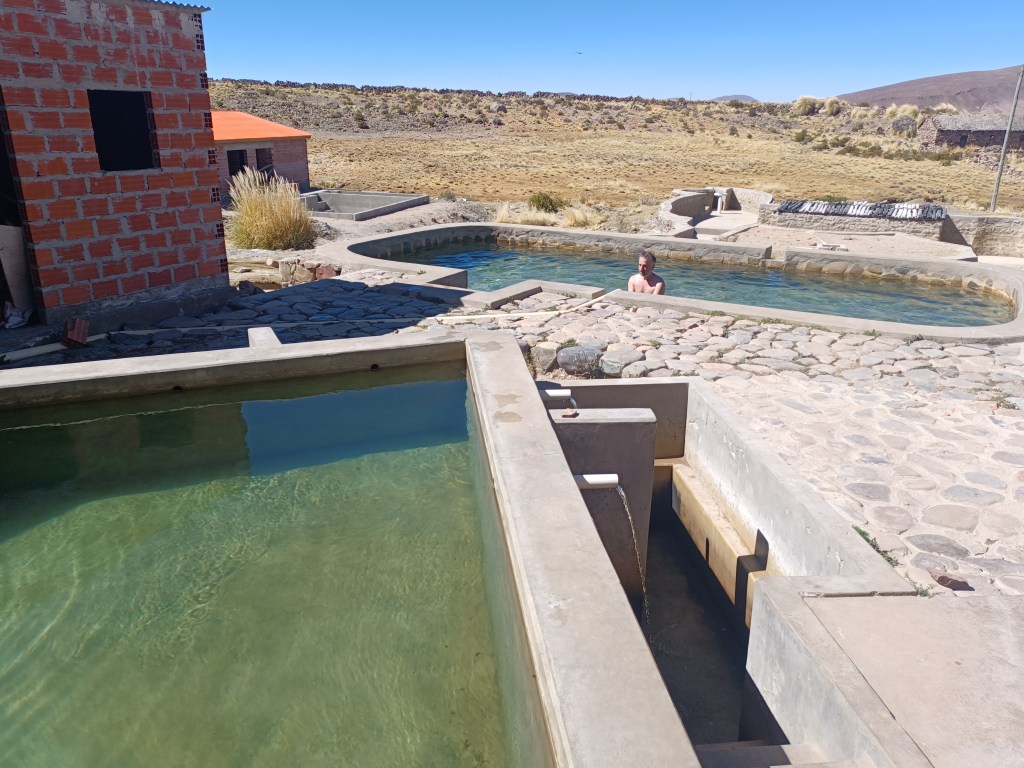
Outside, the natural spring is not a thing of beauty to be sure but the water is warm and the pools are hugely popular (they were full when we arrived!). We’d (thankfully!!) left our swimming gear back at the hotel so didn’t have that ‘will we, won’t we’ moment!!
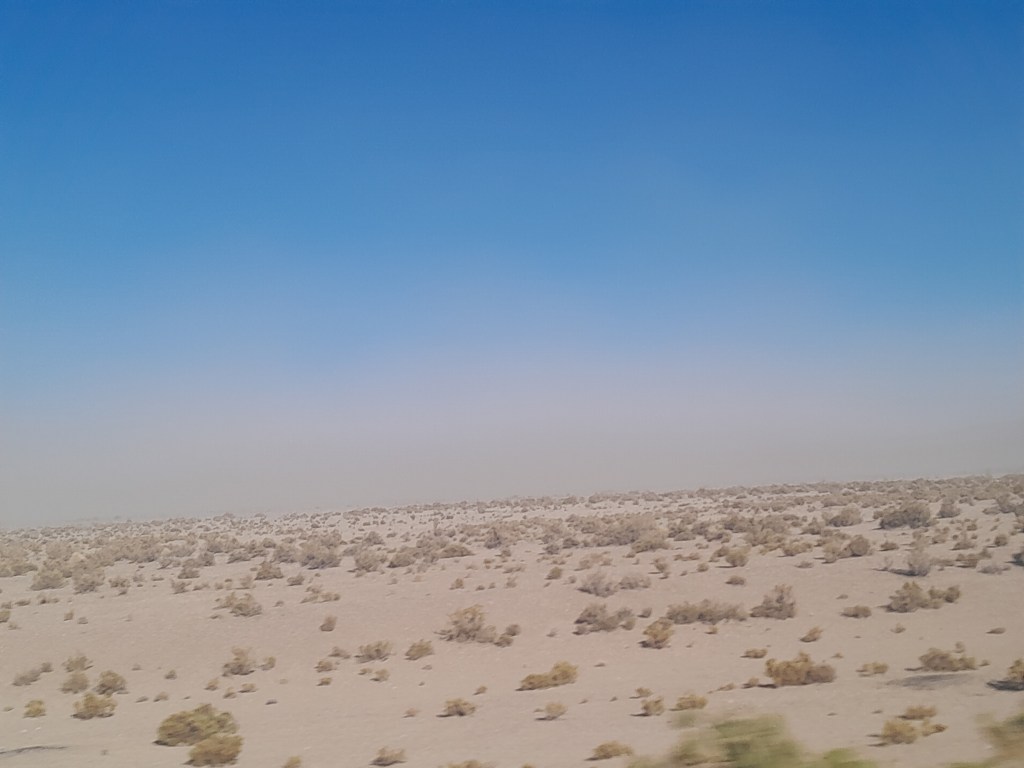
The weather begins to close in on us by mid afternoon but we are happy with our day and opt to cut the trip short and head back to our hotel ahead of the sandstorm…….

Next morning, we’re up and gone – knowing we’ve had the privilege of a very special experience…

Small Stuff
Getting There:
Uyuni is accessible by road, air and rail – mostly via La Paz, 550kms away.
Numerous bus companies operate the route – most people make the trip on an overnight bus with a bed or recliner. The journey takes 9-12 hours, arriving early in the morning.
A bus train combo is a bit slower but offers a great opportunity to enjoy the countryside – the bus from La Paz to Oruno takes 4 hrs, followed by a train journey of 7 hours.
Flights take one hour, making it the obvious choice for travelers who are short on time.
Getting Around:
It is possible to explore the area on your own – there are no restrictions. There are some buses to the surrounding villages and you can rent your 4X4 or bike. However, distances are deceptive – Uyuni itself is a half hour from the flats. There are no road signs and you will be driving on unsealed surfaces. Most visitors opt to go with a tour company – either prebooked, or arranged when they arrive in town.
When to go:
Salar de Uyuni has two distinct seasons.
During the wet season (December to April) rainfall transforms the flats into a reflective surface – this is when visitors come to witness the Salar’s fabulous mirror effect. (However, excessive rain in December and January can cause tour cancelations).
From May to November (dry season), the ground has hardened and more of the salt flats are accessible. Skies are clear and temperatures are cooler.
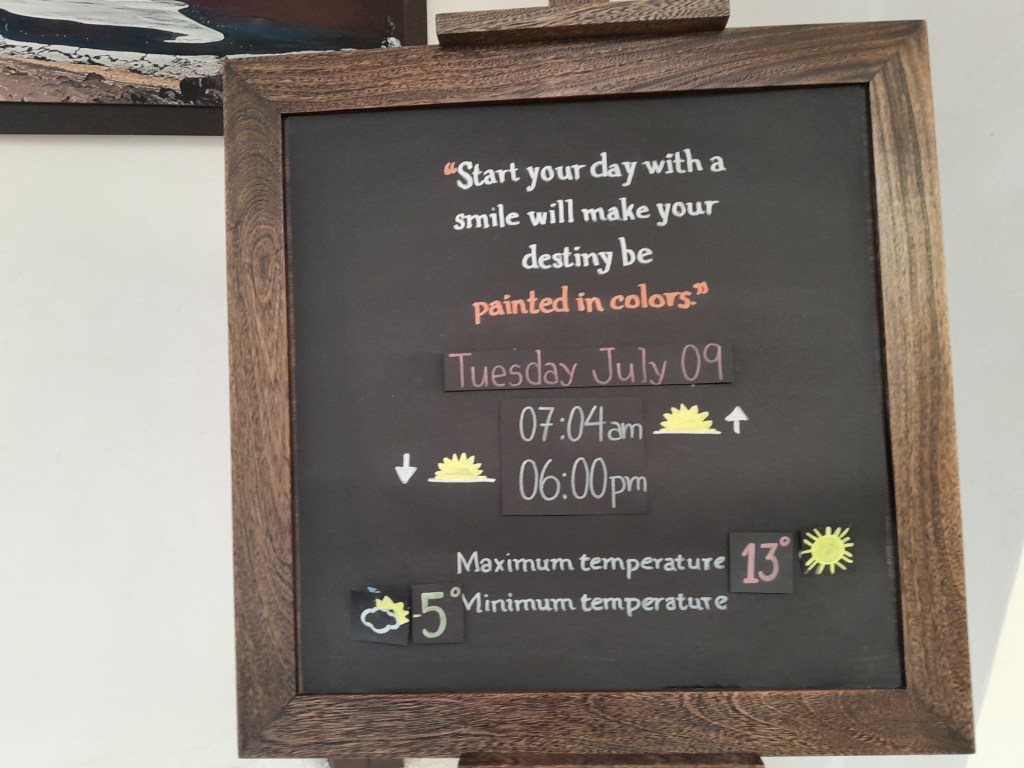
The area has a relatively stable average temperature with a peak at 21 °C in November to January, and a low of 13 °C in June. The nights are cold all through the year, with temperatures between −9 and 5 °C.
What to Bring
Cash -Major hotels and some tour operators accept credit cards, but smaller vendors usually prefer cash. You will also need cash for tips etc. Uyuni has limited ATMs, and they can run out of cash, so bring enough Bolivianos with you.
Clothes: Warm layers, decent shoes or boots (nothing too good – they’ll get ruined by the salt!), scarf, warm socks, gloves, hat, thermals , etc.
Sunglasses – The reflection of the salt flats emphasizes the effect of the sun.
Lip Balm to avoid dry chapped lips from the salt
Sunscreen
Water and snacks
Extra battery and storage for your camera
Binoculars
Torch
Props!!! There are props to rent for your perception photography (which we DID’NT do!) out on the flats but the creative among you might like to bring your own!
Where we Stayed:
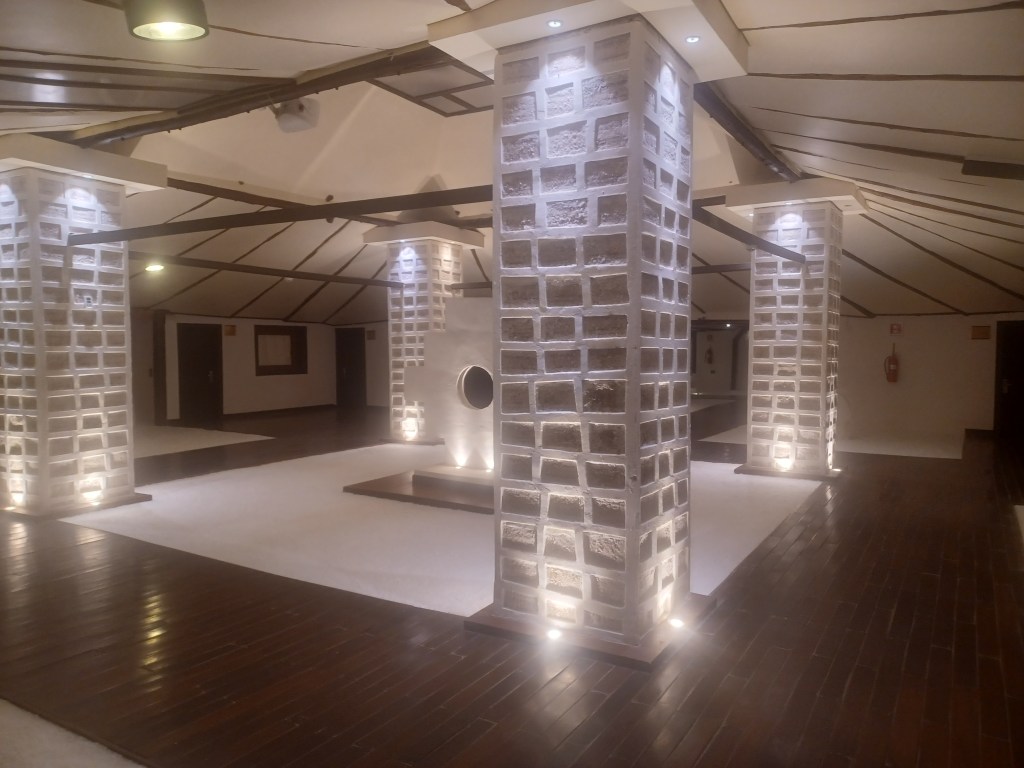
Palacio de Sal was the first hotel to be constructed from salt blocks cut from the Salar. It was erected in the mid ’90’s in the middle of the salt flats and became a huge hit with visitors. However, its location caused sanitation problems and the hotel had to be dismantled in 2002.
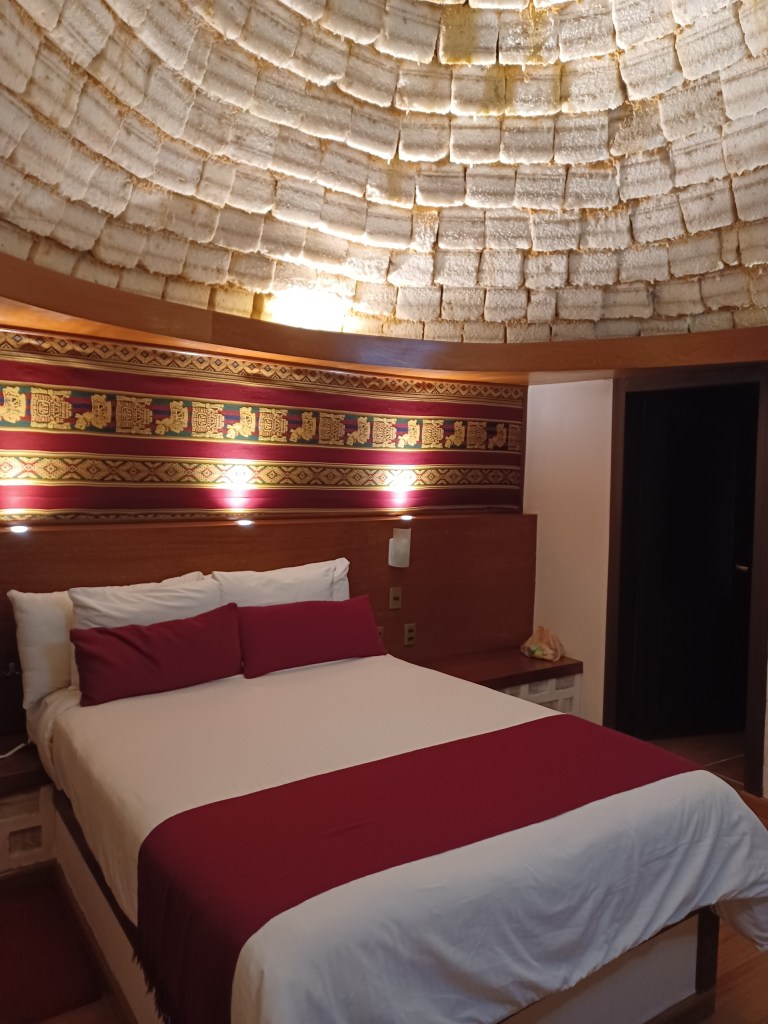
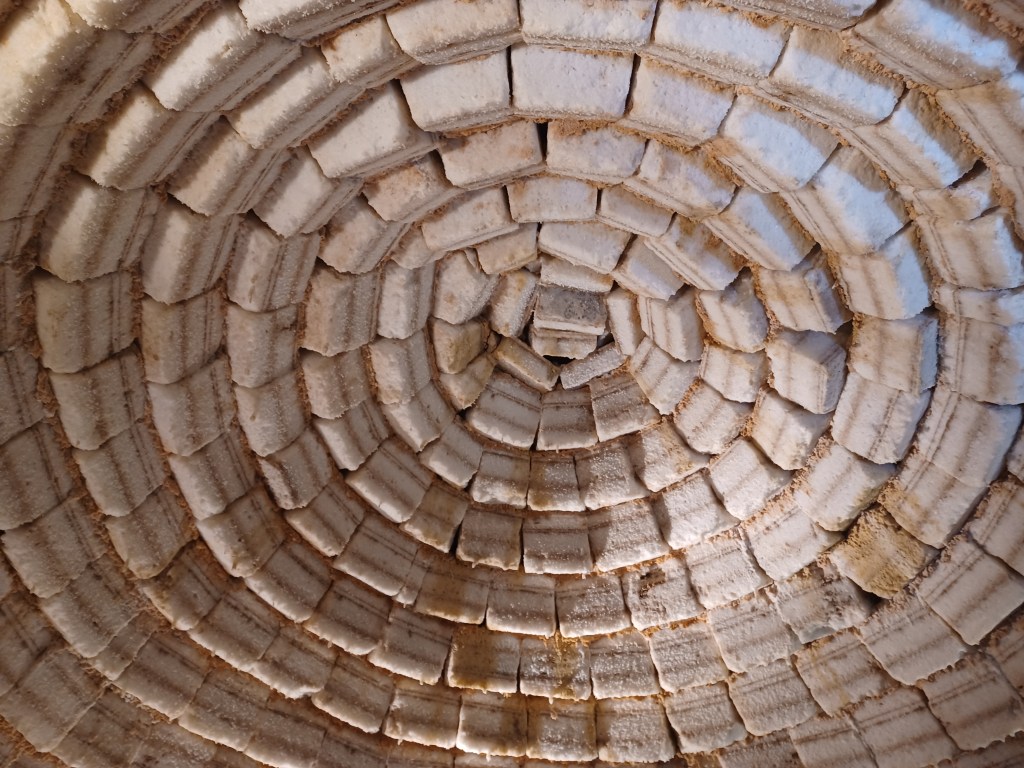
It was rebuilt (complying with government regulations) at the eastern edge of the Salar – 25kms from Uyuni. Salt and water is all that’s needed! Over a million salt bricks are joined together using a paste of ground salt and water. Every year, after the rainy season, the hotel loses about 10% of its composition and begins a reconstruction process using materials from the Colchani cooperatives.

The lobby and public areas are attractive with exposed salt pillars and scattered seating areas with warm stoves. Dining is buffet style – with a mixture of Bolivian and international fare and was fine but not exceptional. We didn’t get a chance to check out the spa.

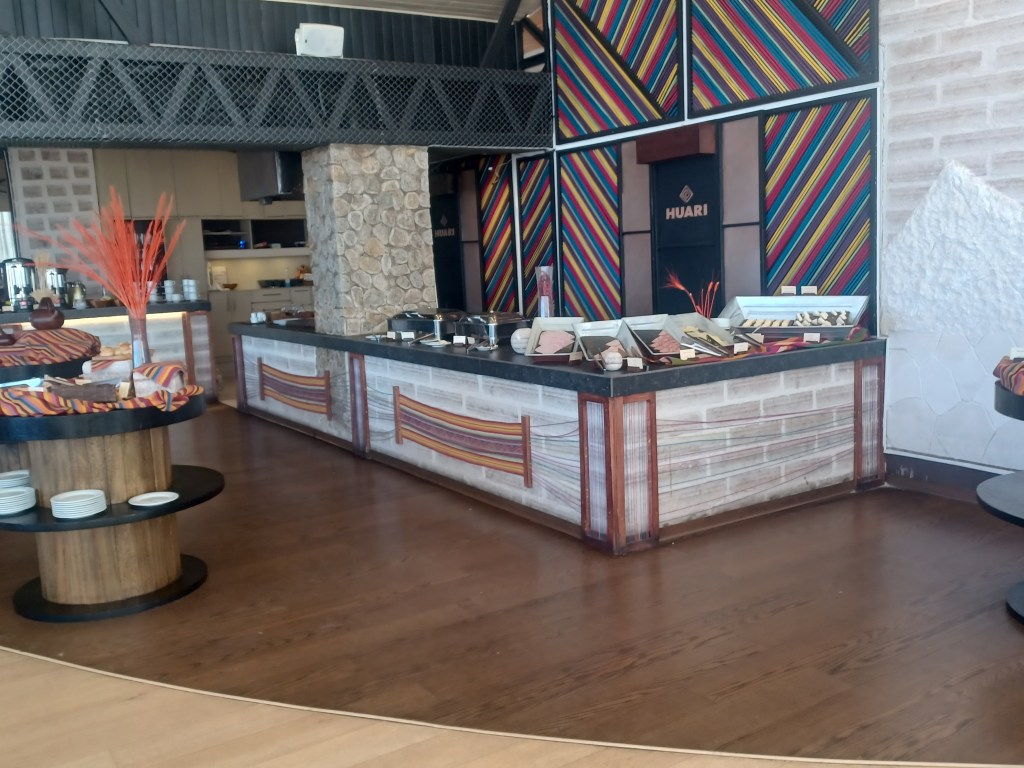
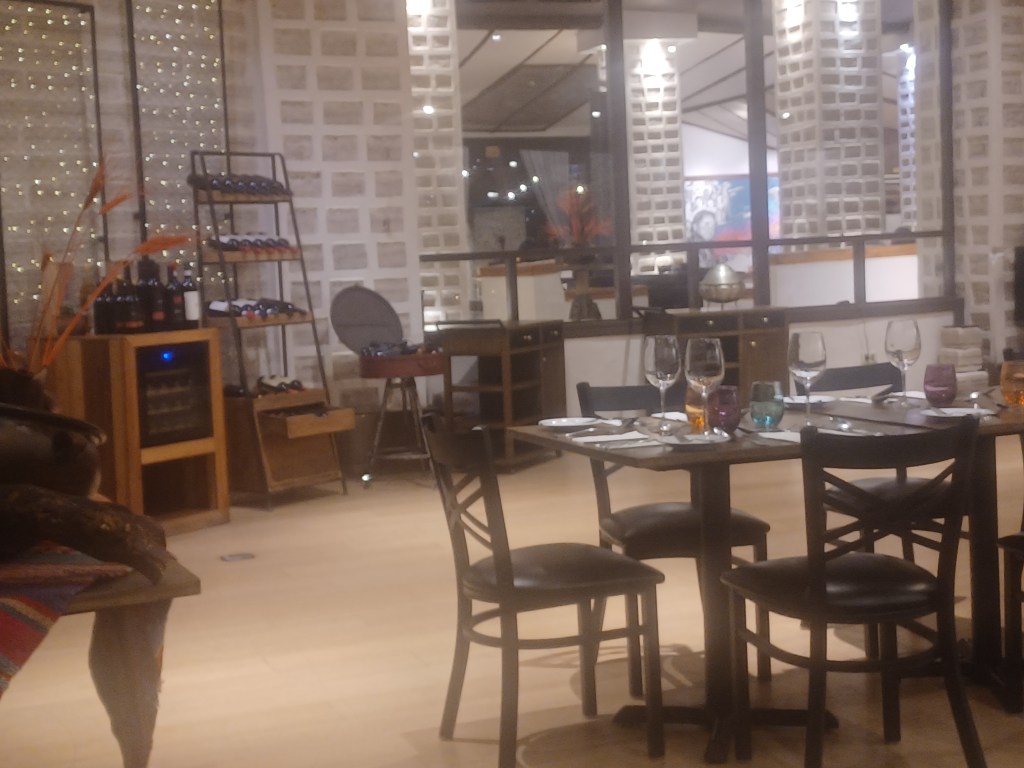
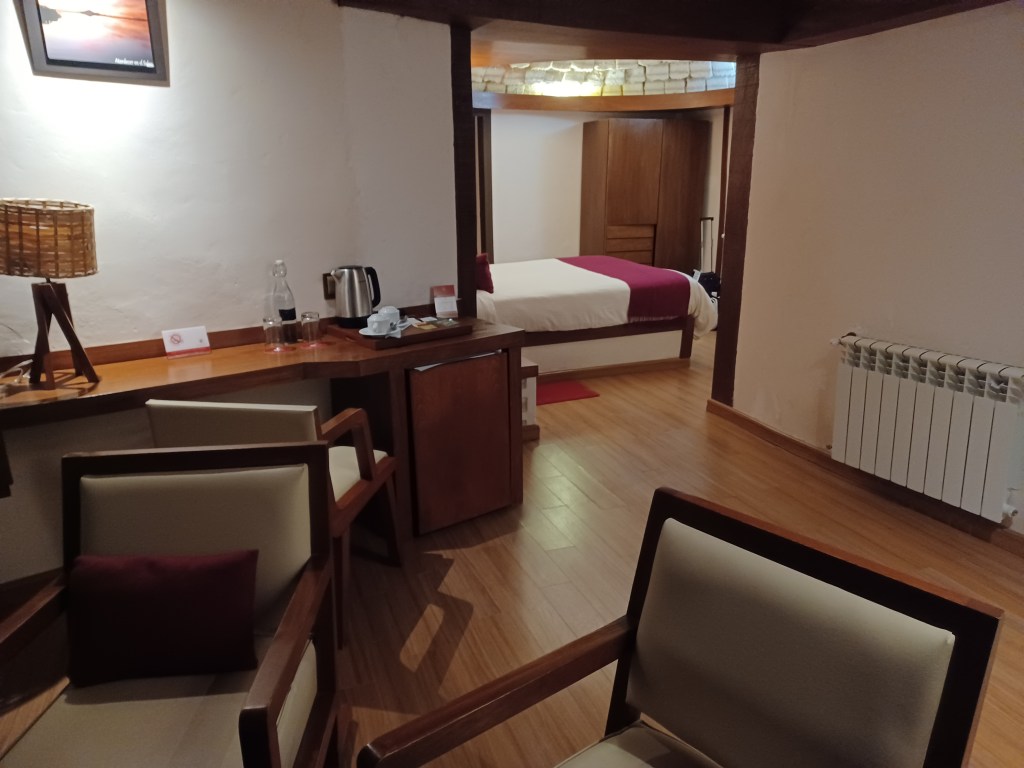
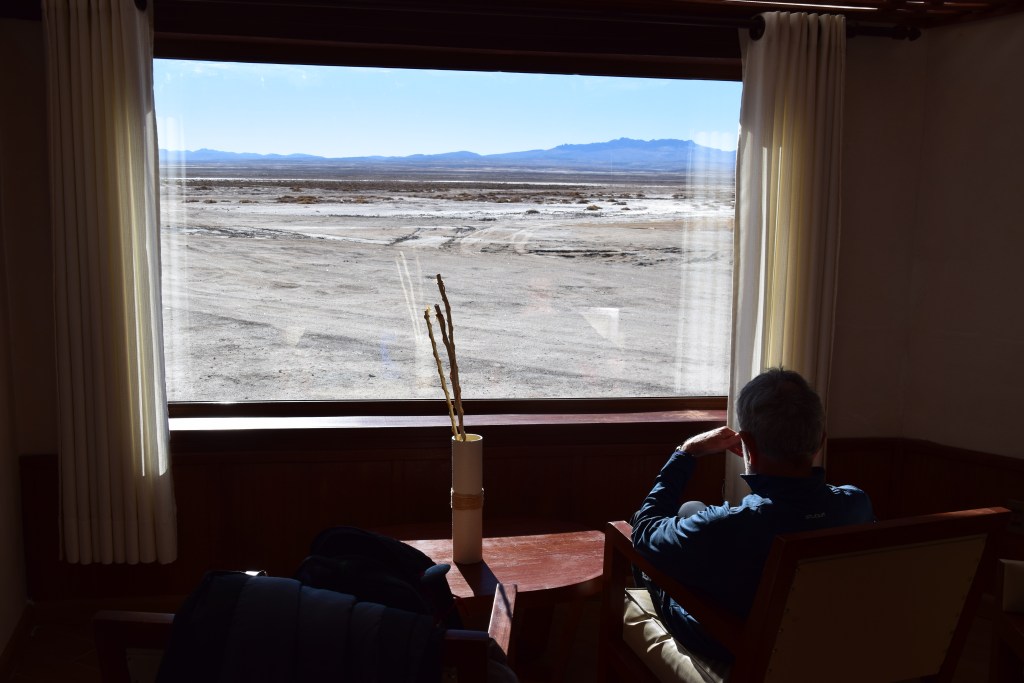
Our bedroom looked out on to the flats – but the best part of the room was the domed salt block ceiling!

We travelled in July, 2024 with Trailfinders from Dublin.

Amazing Adventure, fantastic photos, great travel story, and the food looked pretty good too!
Than you Therese – the place truly lived up to all our expectations – we loved it all- including the food!!!
Wow, incredible place and excellent photos to help us take the trip in our minds! 💯
For me, it was definitely the highlight of our 3 week trip – the travel agent originally suggested cutting it out because it was a bit of a detour but we’re so glad we insisted on fitting it in…
amazing!
—🙞🙟🙥🙤☙❀❁❦❁❀❧🙦🙧🙝🙜—
Thank you Graham!!!
🙏🙇♂️🌟✨💫
Oh wow Marie this is not just exceptional but timely. We are about to go out to the Philippines, but the next trip after that, starting late April, is a South America tour, including Bolivia. I have absolutely definitely put this place on our list. It’s right up our street and we would love to replicate your visit – and probably do the bus train combo. I’m excited to read your upcoming posts given our 2025 plans! We are thrilled and excited by what we’ve read here!
I CAN’T keep up with you two!! We had just 3 weeks in total – 2 in Peru and one in Bolivia – we really really needed more time – if only to draw breath and appreciate where we were. I think the bus/ train would be great – it would make an event out of the trip itself. Even one way… If you’re spending a few nights in Uyuni then maybe consider one night in a salt hotel – just for the experience. I would have liked a night in town – probably not a lot happening there but just to walk through it at least.. It’s very close to Chile if that’s on your agenda so you could go on from there. Looking forward to hearing all about the Philippines – safe travels Phil for yourself and Michaela…
Cheers Marie…I look forward to reading more!
Wow, what a truly incredible and unforgettable experience, Marie! It looks like aside from being the ideal location to produce mind-bending photographs, it’s also full of cacti-covered islands, dormant volcanoes, flamingos, and other wildlife. The world’s largest salt flat is a truly amazing sight to behold. Thanks for sharing, and have a good day 🙂 Aiva xx
It was a great experience, Aiva – how lucky are we! I’d thought of it many times but wasn’t sure I’d ever get there … so – message to self – never give up the dream!! Nice stretch in the evenings here in Dublin – hope the worst of winter has passed you by in the west! XXXMarie
I like that, Marie – never give up on a dream! xx
Wow! and another Wow! What a fascinating read. I’ve read it twice already but will read it again as it is such an unusual travel story, told in your usual vivid fashion and illustrated so beautifully. I love reading about such places, and now that I can no longer travel to them, I get even more pleasure when the experience comes from someone so enthusiastic as yourself. Thanks, Marie, keep on truickin’!
Ah thank you Marie – I’ll keep on going – especially for you!!!😘
Oh, this is fantastic, exactly the sort of trip we would love, all of it! The landscape, the food, the remoteness – all wonderful 🙂 If we go back to South America it seems it will have to be to Bolivia!
Ah Sarah – you’d love it – imagine your photos!!!
A really nice review of a totally unknown (to me) part of the world. Thank you
Thanks a mil Barry – glad you enjoyed and glad you learned something new!!
We absolutely loved Uyuni. The landscape is otherworldly and you captured it well. Maggie
Thanks Maggie – you had a wonderful long trip to Bolivia – we’d have loved more time…..
What a unique experience💛💛
It was indeed, Christy – and surprising busy. Our first choice of hotel was unavailable and there were plenty of 4×4’s out on the salts. so. despite the remoteness, it’s certainly getting attention – and rightly so..
It is on our bucket list too, so I guess like everyone else😀
Happy Monday!
Absolutely breathtaking!
It is Jyothi – and so very different from anything else we’ve experienced…
Brings back great memories. Thanks for the wonderful pictures. I’m bummed we missed the salt processing factory. Really looked fascinating.
Steve
Usually I can take or leave these little side tours but I was really keen to know about the industry and see the bricks, etc so I enjoyed that part very much. And I bought small bags of salt in lovely woven fabric packaging for less than 2 euros there – and that was my gift shopping for home sorted!
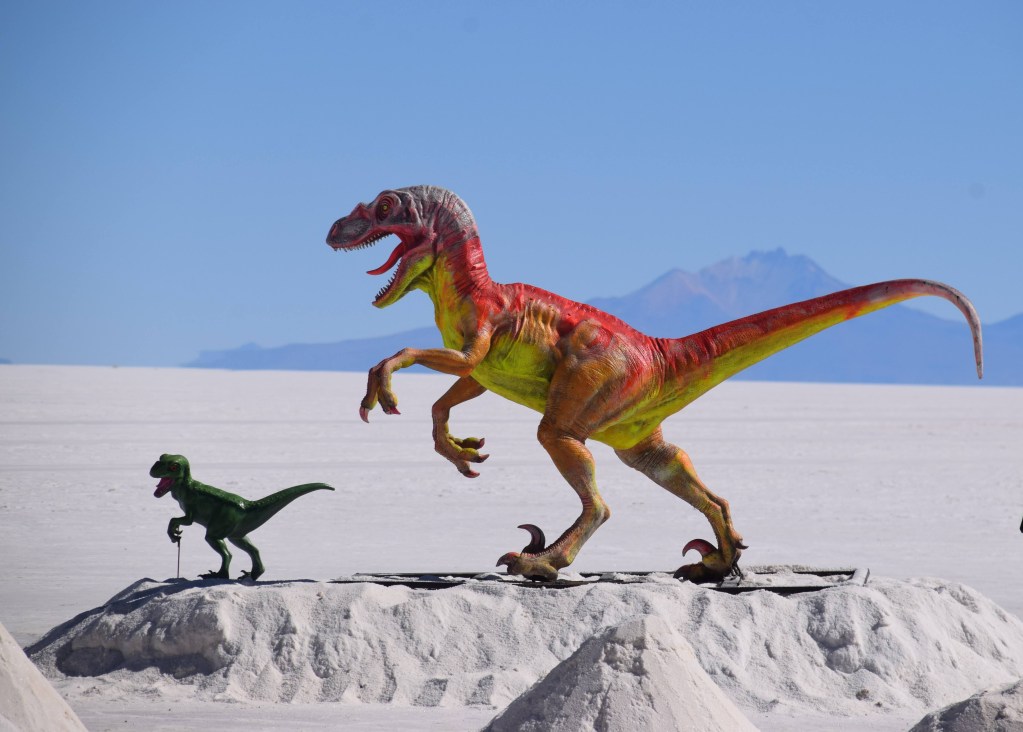
I echo comments made by others, Marie, about your two-day Salar experience. Steven and I also did the same trip a few years and were equally agog about the photographic opportunities in the vast salt expanse. We arranged our two-day trip on the fly from Uyuni which worked out very well, and dropped us off on the third day in Chile’s Atacama Desert. Our group had a hoot posing for perspective photos with a plastic dinosaur we’d brought and then skipping stones in a small lake. Your great photos brought wonderful memories.
I KNOW we should have posed for a few perspective photos – and our guide was only dying to show off his skills! – I love looking at the photos others have posted. I didn’t even realise at the time how close we were to Chile – although we’d never have fitted it in to our 3 weeks… Next time!!!!!!
Marie, If it gives you solace, just think you always have to leave something to see or do the next time you’re in the area! That’s been our travel philosophy for years anyway.
We took our first trip as a couple back in ’82! We spent a month in Greece and decided that the world is too big to be revisiting any place – no matter how great it is! I couldn’t tell you how many times we have eaten our words since that! I don’t think we’ve ever totally, completely, replicated a full a trip but we have found ourselves, so many times, retracing our steps or passing through dots on the map that we never thought we’d see again… Strangely enough – and I don’t know why – we never got to South America until 2023! So here’s hoping we do get back!
Wow, I can’t think of a better setting for a hard earned lunch. Your photos are just stunning, and I can’t get over how beautiful the salt flats are. They have long been on our wish list, and I think your post has just upped them that’s for sure. Beautiful!
Keep them on that list, Hannah – you’ll get there some day!
Uyuni and South Lipez boast exceptional landscapes. It’s also common to leave for three days and spend two nights in basic hotels, where cold and discomfort are part of the adventure.
I’d have loved another day all right – but…. the cold and discomfort part no longer holds the appeal of my youth!!! 😅
Looks like a phenomenal couple of days, the photos are great! Also that setting for lunch / dinner on day one is so cool!
Perhaps not as impressive as this but I’m a little more excited about visiting Salt Lake City in April now – thank you! 🙂
We were there – oh – maybe 2014? When I say ‘there’ we only allowed a half day en route to the Tetons and beyond – so it was all a bit of a rush. But we found it very interesting and were delighted we’d included it even though it meant quite a detour as I recall. Nearly February already so it won’t be long until your trip….
What an extraordinary country, a different world. I’d only ever learnt about Bolivia from when Butch, Sundance and Etta arrived there https://www.dailymotion.com/video/x36amdt
I was the same!! I’d romanticised the place ever since! Meant to watch it again before we headed off!
One of my dreams!
Then go for it!!!! It’s amazing!!