
I like finding a new self-guided London walk whenever I visit the city. I came across WALKS PAST when searching last week and Number 13 – PASSAGES, ALLEYS AND HIDDEN TREASURES fitted the bill! Not alone was it quirky and informative, it had the BEST directions I’ve ever come across – we didn’t once refer to the attached map. Most of it is set right in the City of London and while the walk concentrates on the history of the area, I’m as much interested in the modern city so I’m adding in other bits and pieces we came across on the route. I’ll certainly be dipping into WALKS PAST again but, for now, here is a summary of our walk.
Start – Barbican Tube Station
End – Aldgate Tube Station
Approximately 4 miles/6.5 Km. Allow 3 hours for a wandering pace and quick lunch!
There’s enough in the street names alone to keep one occupied – many Medieval names have survived so it’s easy to imagine the businesses practiced and goods traded as we walk along….

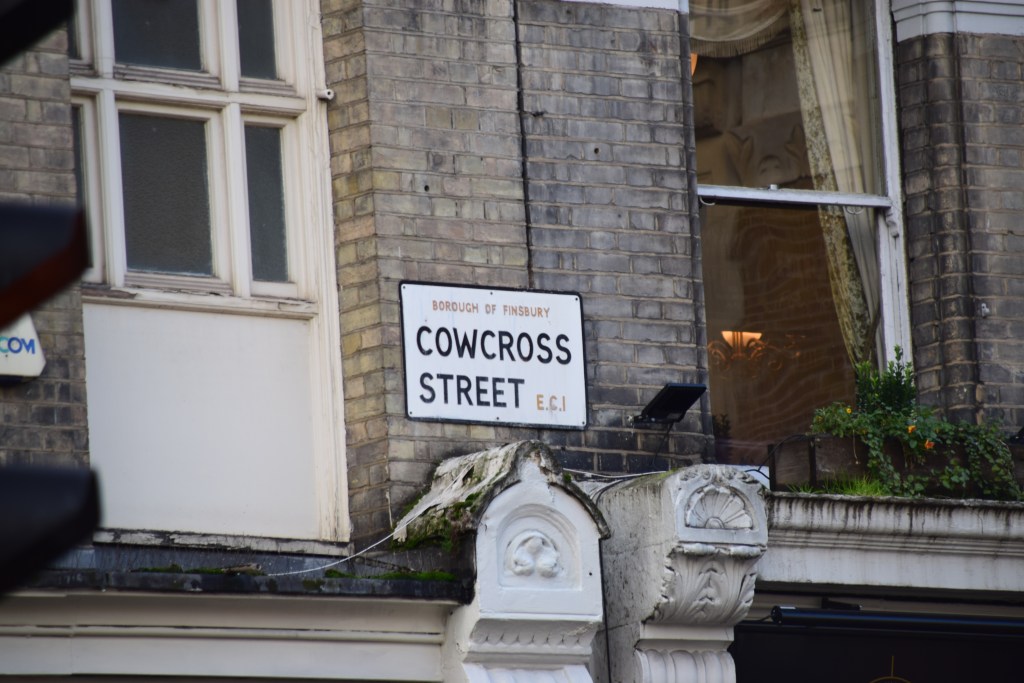
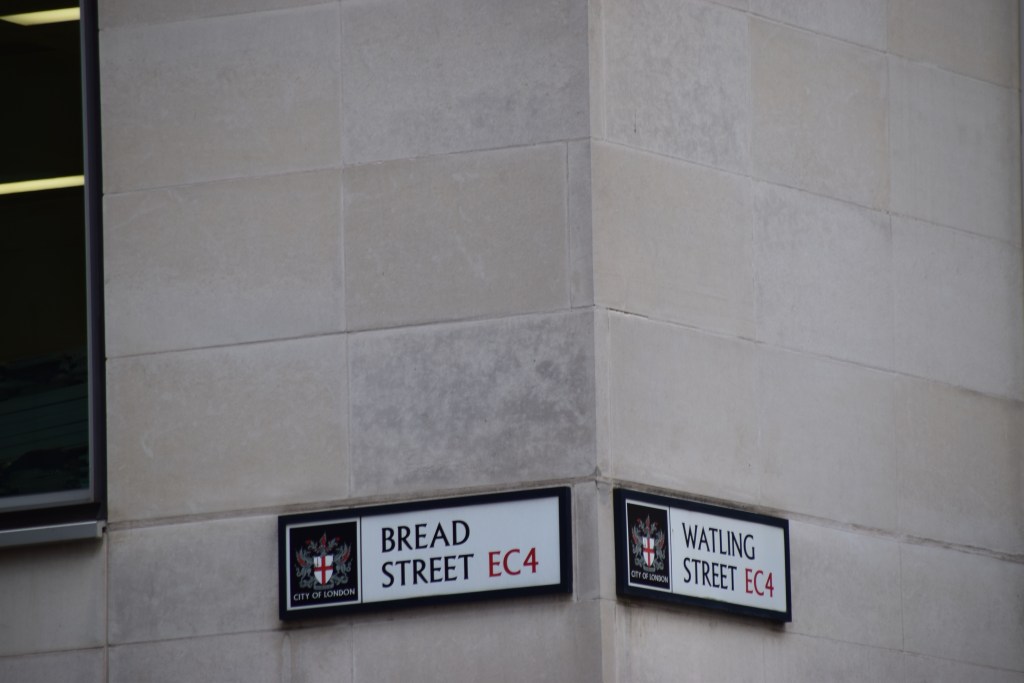
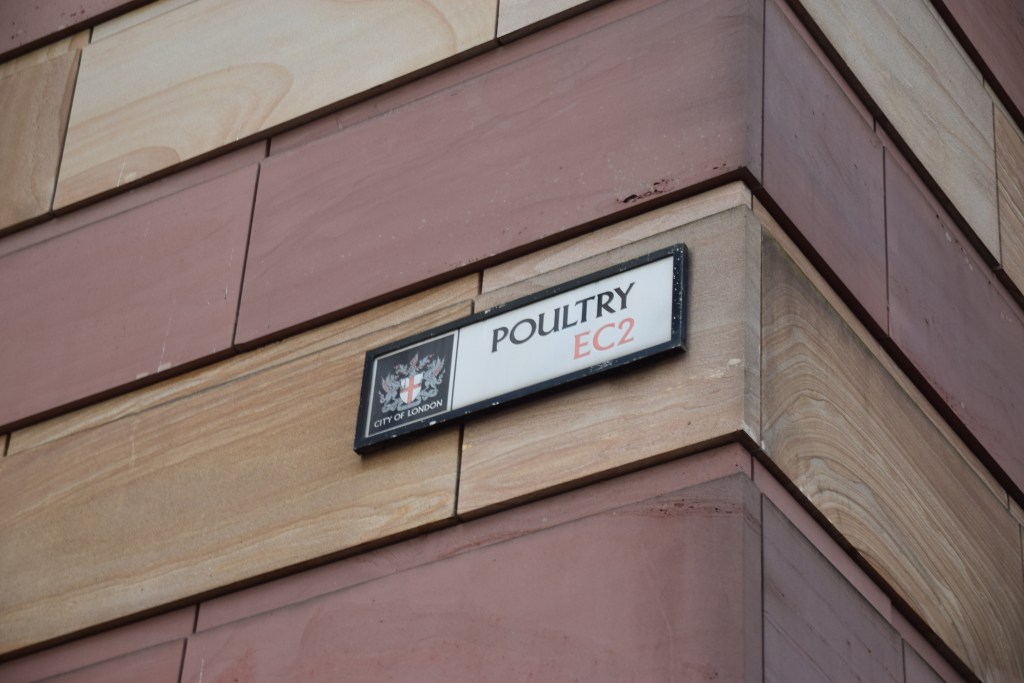
It’s hard to believe we’re in the heart of London!
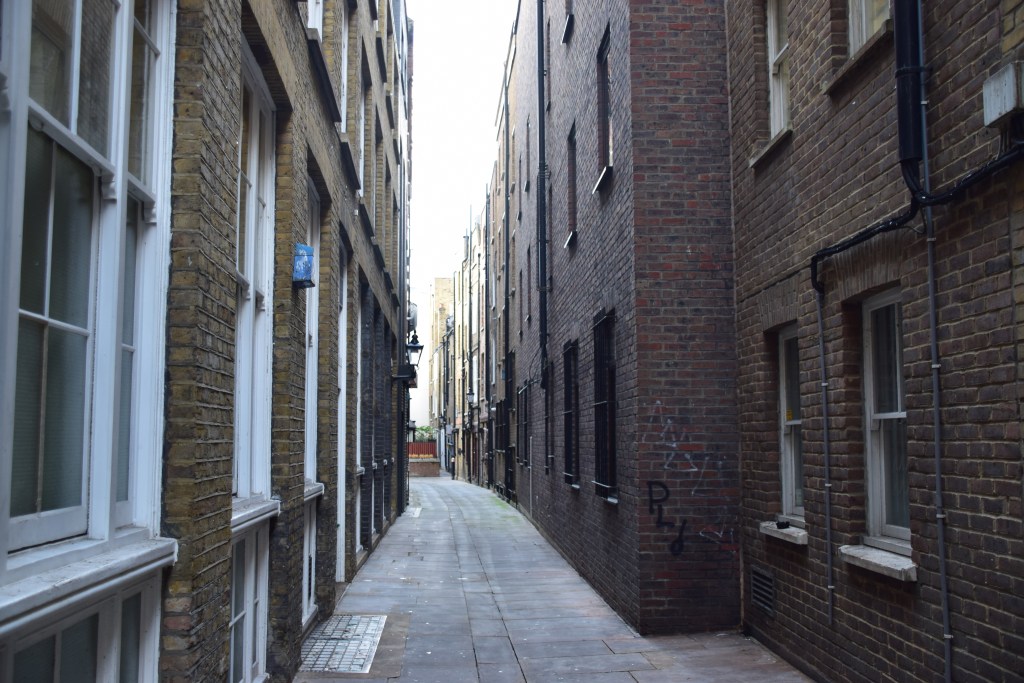
East Passage
ST. BARTHOLOMEW THE GREAT was founded in 1123 and lays claim to being London’s oldest parish church.

In more recent times, its where Hugh Grant almost got married in Four Weddings and a Funeral! Actually, it’s been used in several productions –

Several churches along the way were closed (Saturday morning) but this one opened its doors just as we were passing – a service (with TWO bishops no less!!) having just finished. We were warmly invited in to have a look around. We weren’t however, offered any of the vino that was being liberally dispensed! And, alas, the air was so thick with incense that I couldn’t take a photo!!!
The priory once extended out to its beautiful GATEHOUSE – a rare survivor of Tudor London. Originally a 13th century archway, a two storey timber framed house was added in 1595. The huge walls of the priory protected the building from the Great Fire of London in 1666. During the 18th century, a Georgian facade was built over the Tudor timber which remained hidden until bomb damage during a German Zeppelin raid in 1917 revealed it once again .
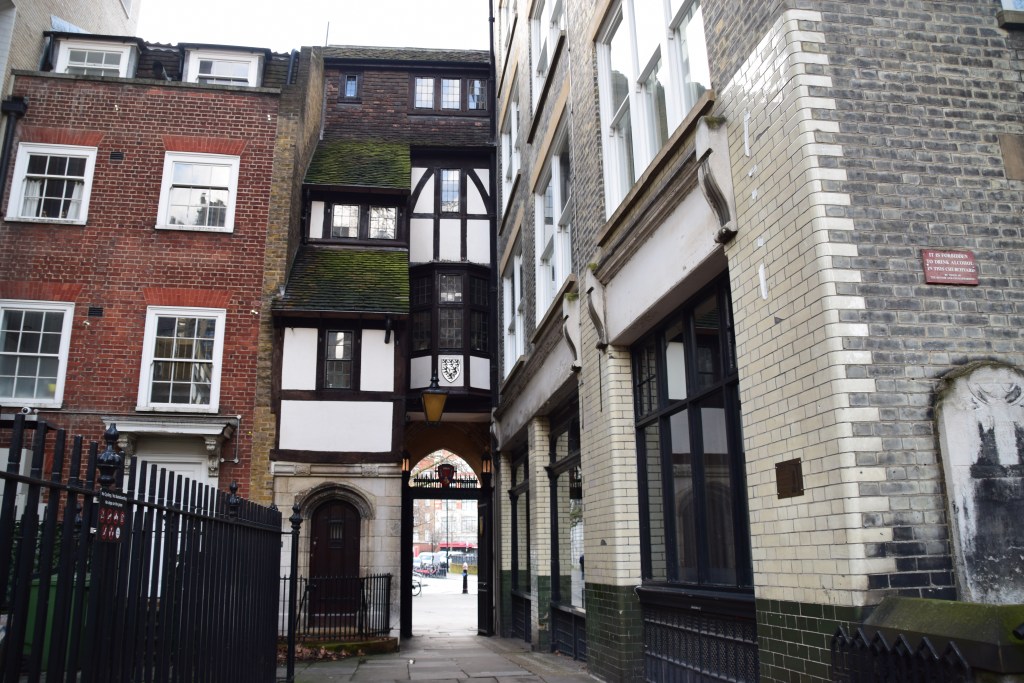
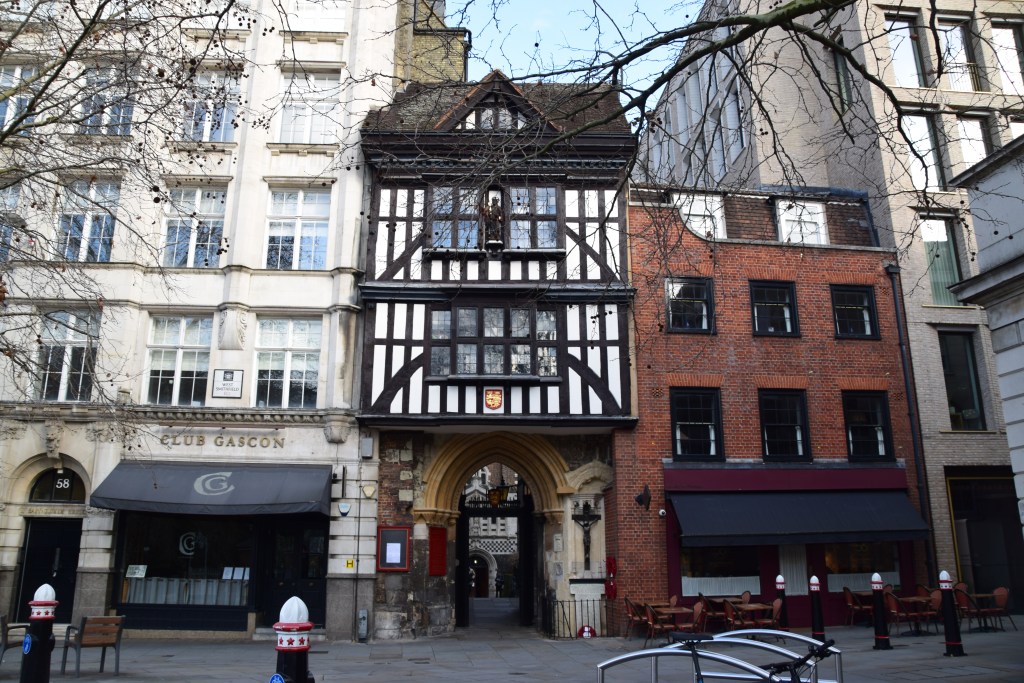
The priory walls saved not only the gatehouse during the Great Fire but also several houses on nearby Cloth Fair. Number 41 still survives and is considered the OLDEST PRIVATELY OWNED HOUSE in the City of London.

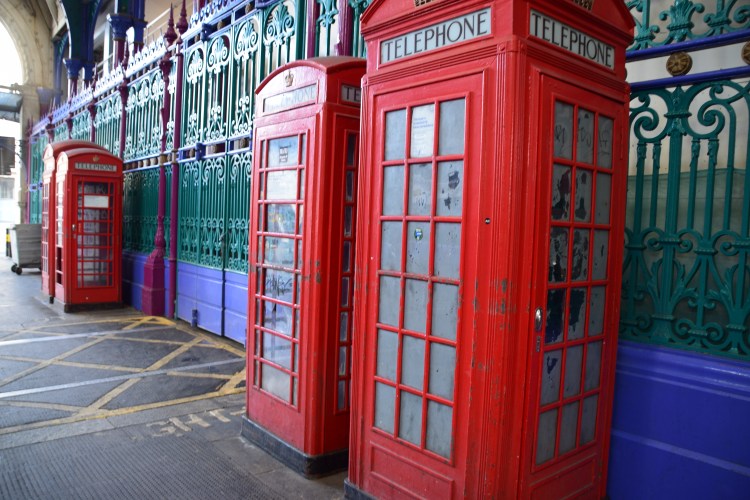
The Gatehouse opens on to SMITHFIELD which has plenty of gems of its own. The stunning market is unfortunately closed on Saturdays so we only got a glimpse of the famous iron work. Apparently the market is scheduled for closure in 2028 when it will be redeveloped as a cultural centre – pity.
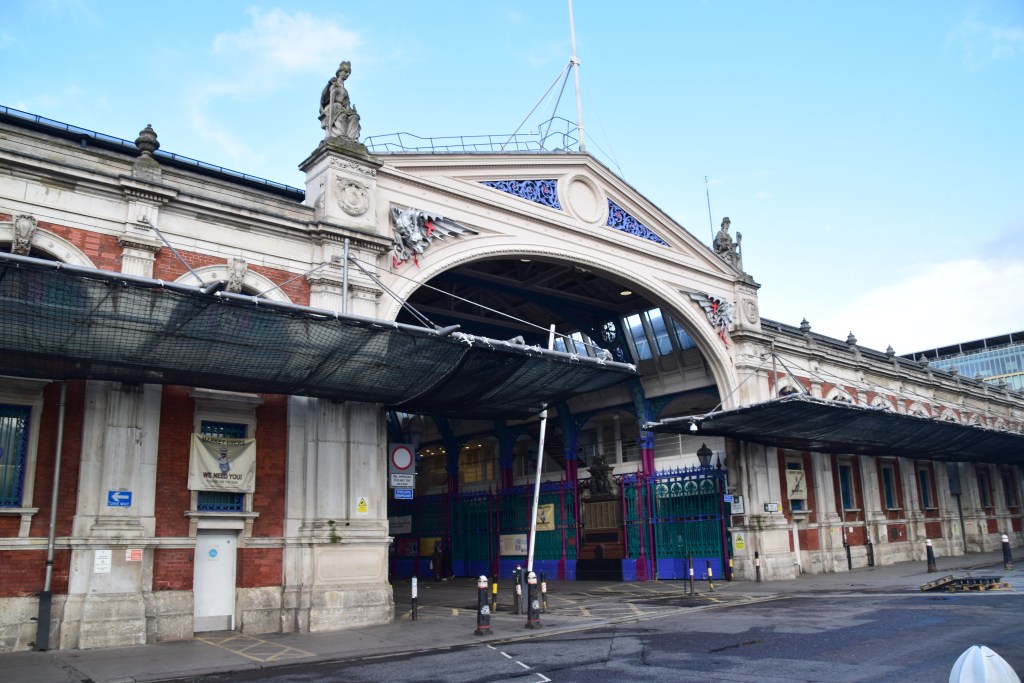

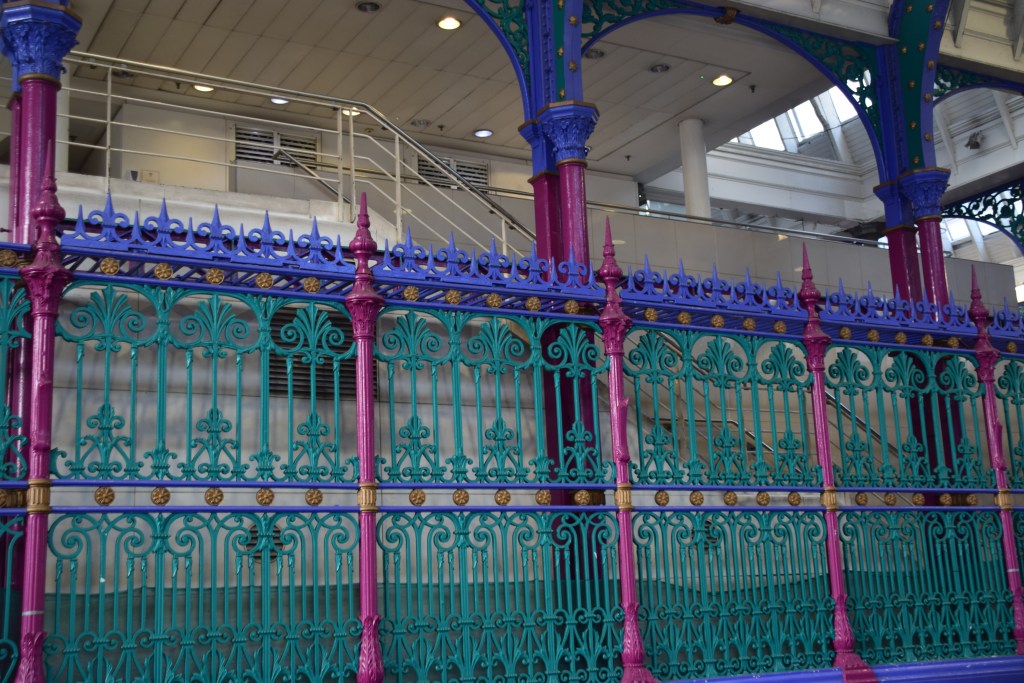
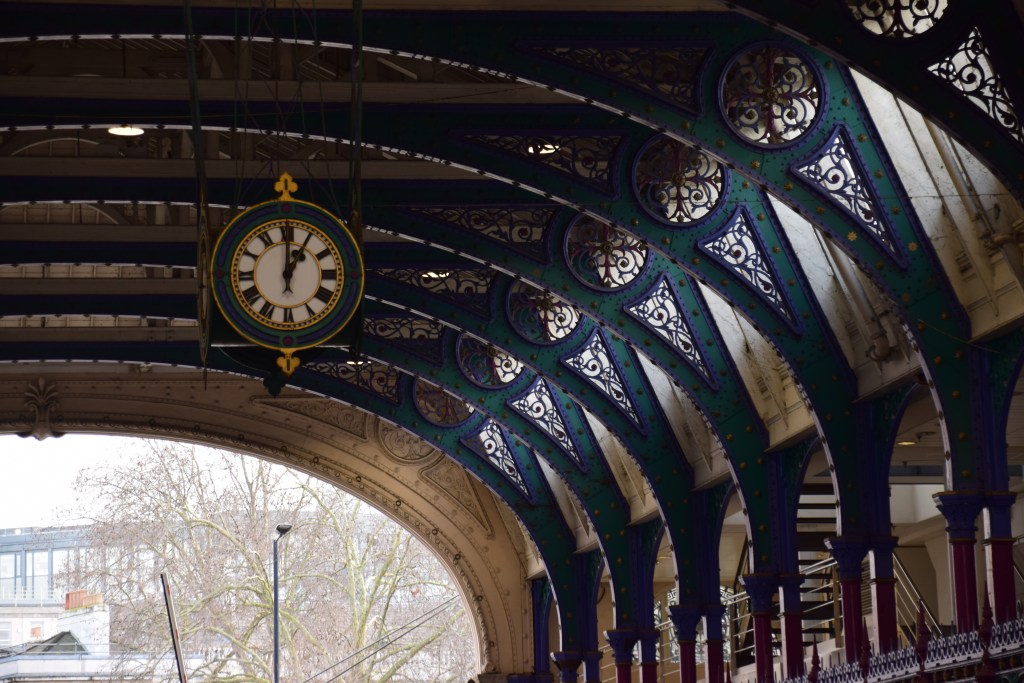
Smithfield was a popular site for summer fairs, jousting …… and …..executions! Burning at the stake was fashionable for heretics while the hanged-drawn-and-quartered method was preferred for those convicted of high treason.
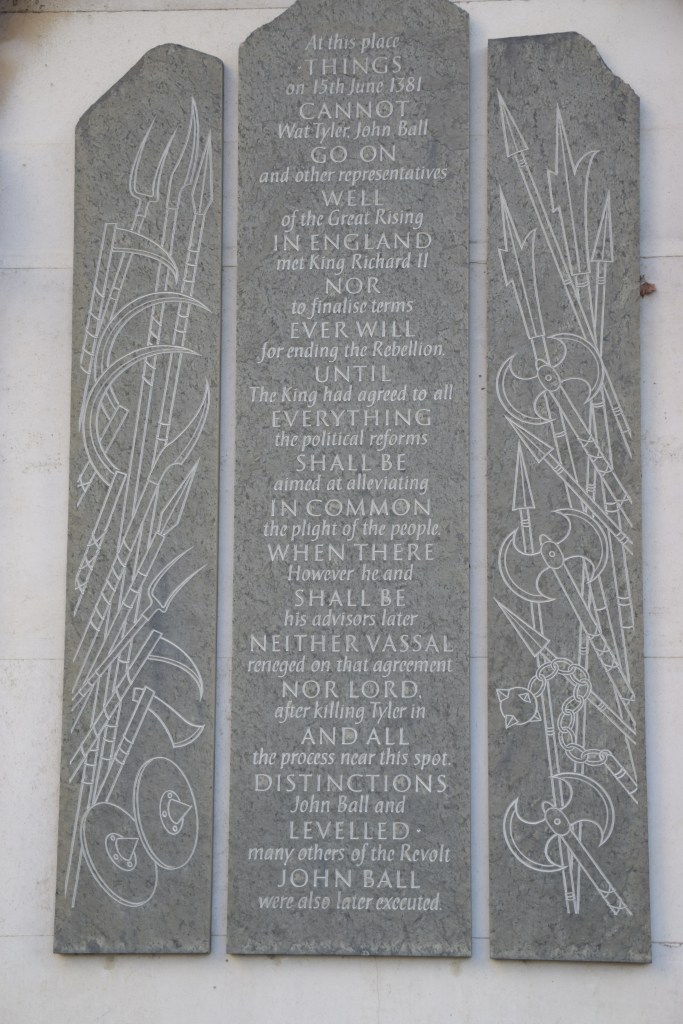
WAT TYLER, one of the leaders of the Peasants’ Revolt (1381) was killed here during negotiations with the King and Lord Mayor of London and then beheaded.
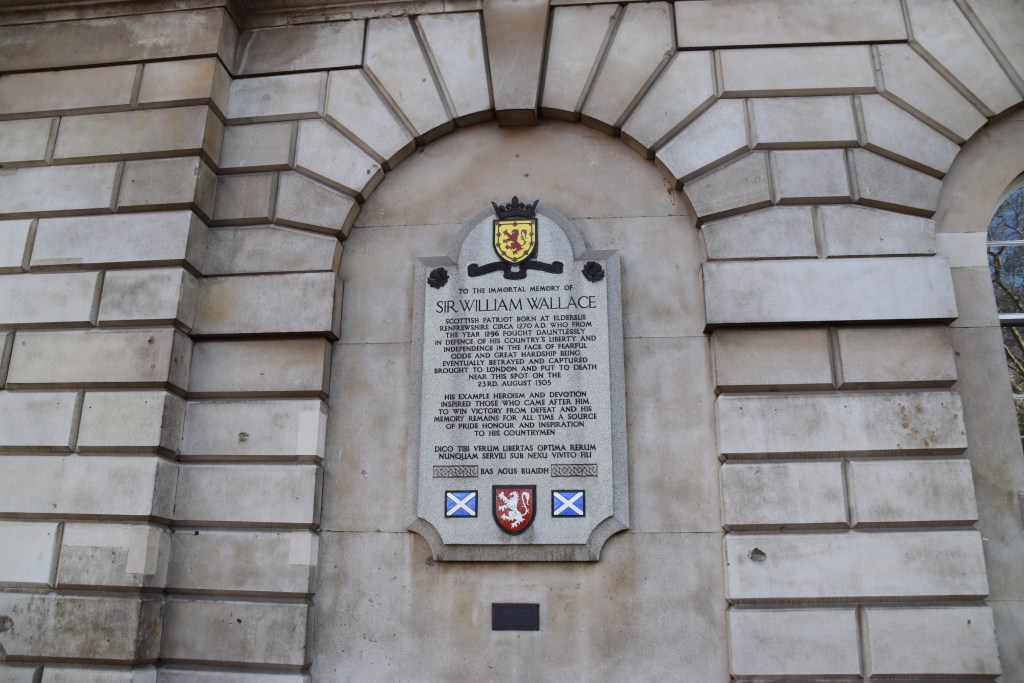
WILLIAM WALLACE (remember Braveheart – They may take our lives, but they’ll never take… our freedom!) was executed here in 1305.
ST. BART’S HOSPITAL dates back to the founding of the neighbouring priory in 1123, making it the oldest hospital in England still operating on its original site (although I’m sure they’ve updated it a tad since then!!)
Much nicer grounds than any hospital I’ve been in!
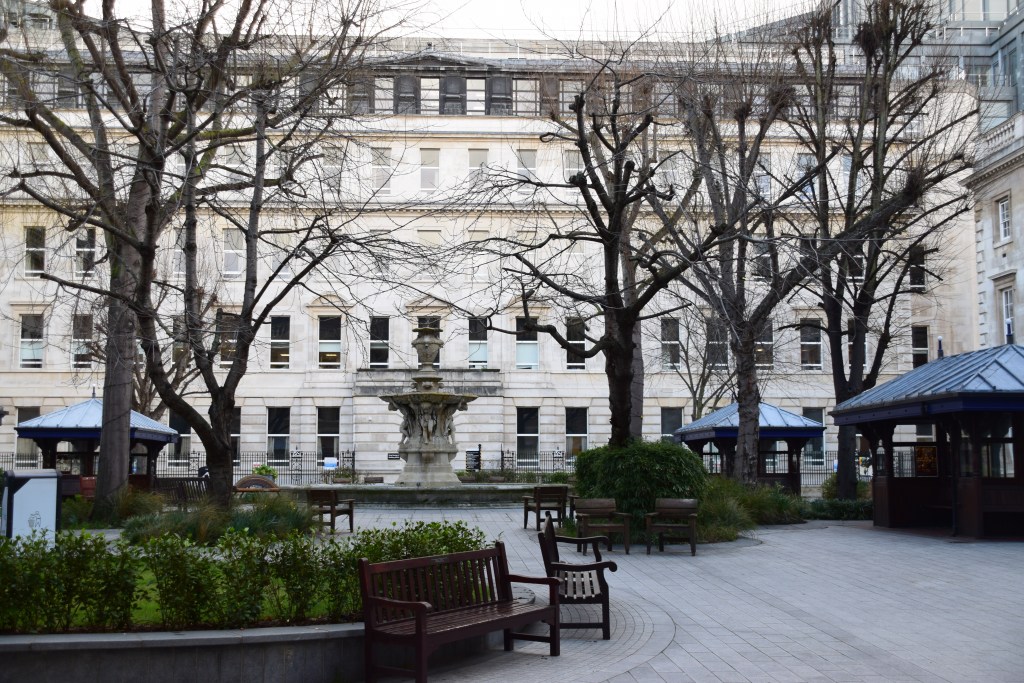
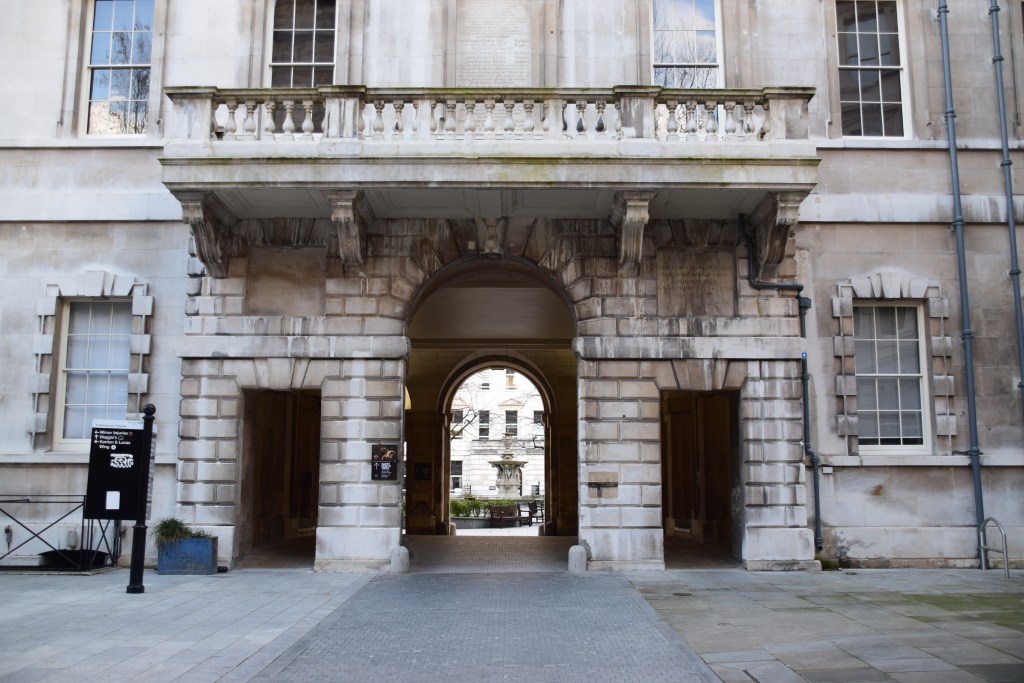

With the Dissolution of the Monasteries, the Priory was suppressed in 1539 but the city officials did not want the poor and needy back on the streets and so appealed to Henry VIII to grant the hospital to the city. It took him several years to agree but in 1546 he yielded, insisting on changing the name to House of the Poore in West Smithfield in the suburbs of the City of London, of King Henry VIII’s foundation. And that remained the official name until 1948!!
In 1701, the hospital governors rebuilt the gate and in tribute to Henry for saving the hospital, they placed a statue of him over the arch! This is actually the only public statue of Henry in the city.

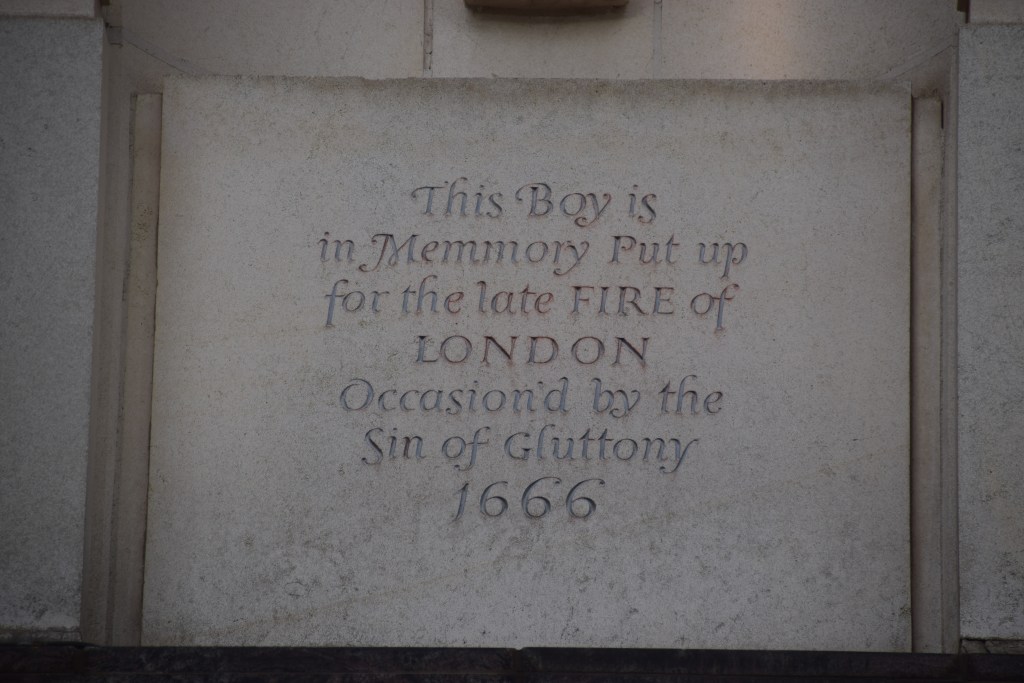
THE GOLDEN BOY OF PYE CORNER marks the spot where the Great Fire of London was stopped. The fire started in a bakery in Pudding Lane and burned for 3 days in September, 1666, destroying some 70,000 wooden homes and tenements. At the time, it was considered a Papist plot to destroy the city. However, the statue’s creator blames the fire on Gluttony!

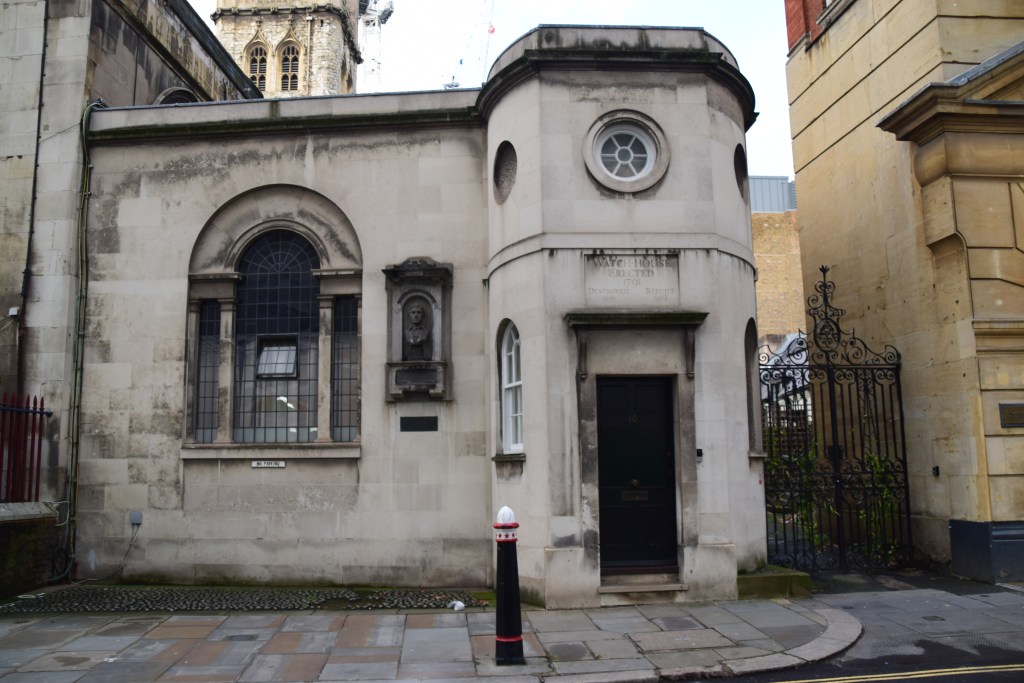
The nearby WATCH HOUSE on Giltspur St. is close to St Sepulchre’s Church and St. Barts Hospital so was probably used as a lookout for body snatchers who could sell a newly interred corpse to students in the hospital! The practice was epidemic in the 17th century – students could only legally obtain the bodies of murderers but there was never enough to go around!!
The monument on the wall commemorates the essayist CHARLES LAMB who attended school here for seven years.
The full name of St. Sepulchre’s is ST. SEPULCHRE-WITHOUT-NEWGATE – it being located just outside the City of London wall. It was probably named after the Church of the Holy Sepulchre in Jerusalem so Sepulchre was not an actual saint at all!!! Today, it’s the largest Anglican parish church in the City
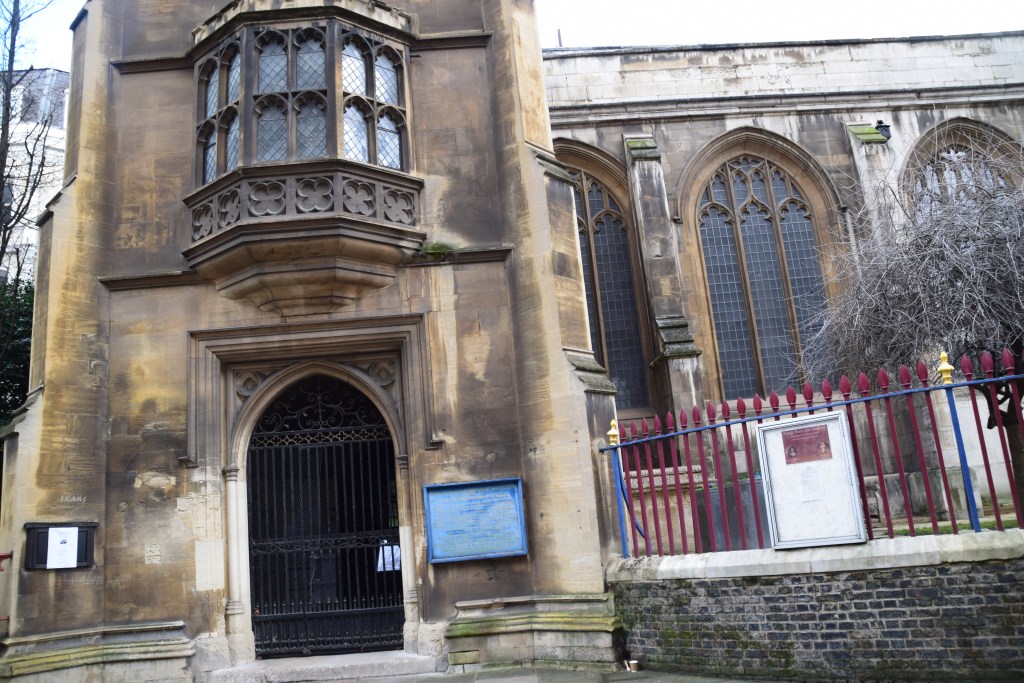
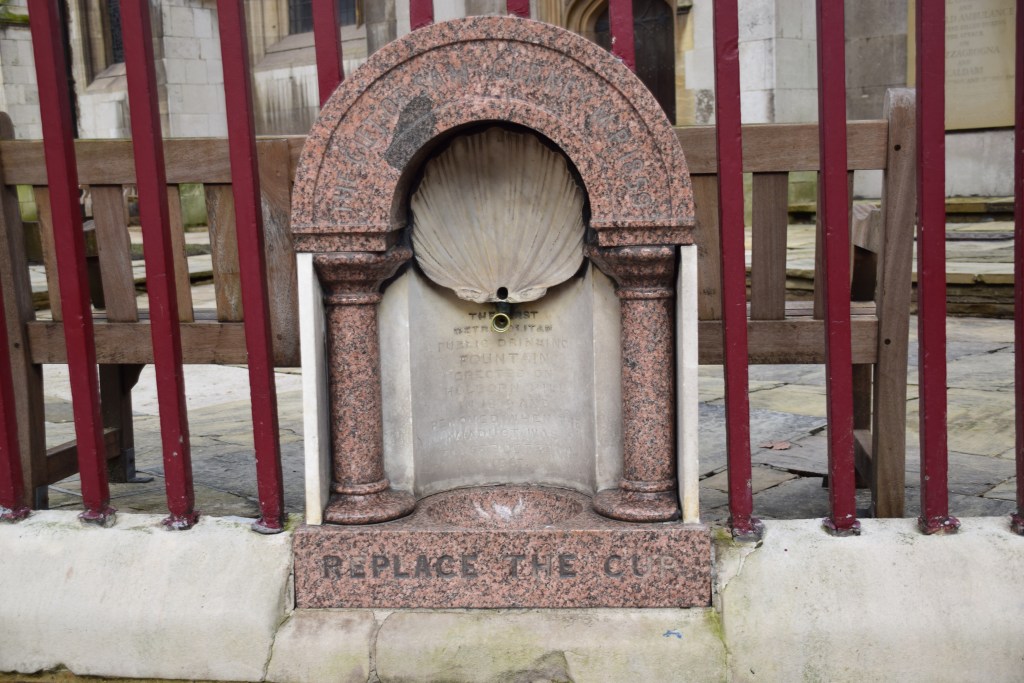
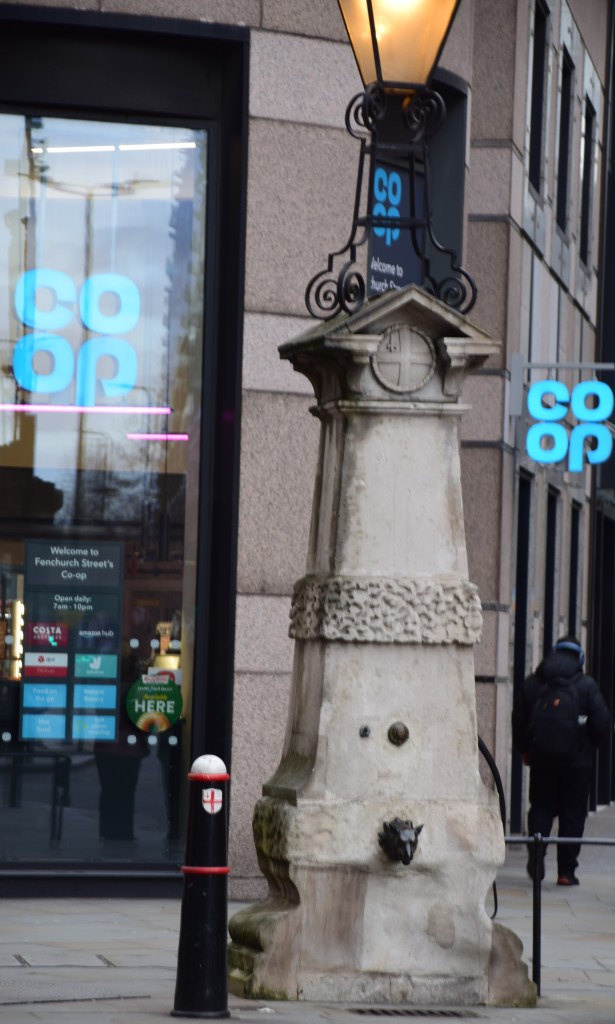
Set into the railings of the church is London’s OLDEST DRINKING FOOUNTAIN. It was installed in 1859 by the Metropolitan Drinking Fountain and Cattle Trough Association (what a wonderful name for a society!) to provide free fresh drinking water for Londoners and their animals – at its peak, it serviced some 7000 people per day. The project was so successful that the society went on to build another 85 fountains over the following 6 years.
You’ll be glad to know that the society still actually exists today, although they’ve shortened the name to the less grand Drinking Fountain Association. It still builds new drinking fountains, as well as restoring and maintaining the existing infrastructure.
There are BLUE PLAQUES everywhere, marking historic locations…
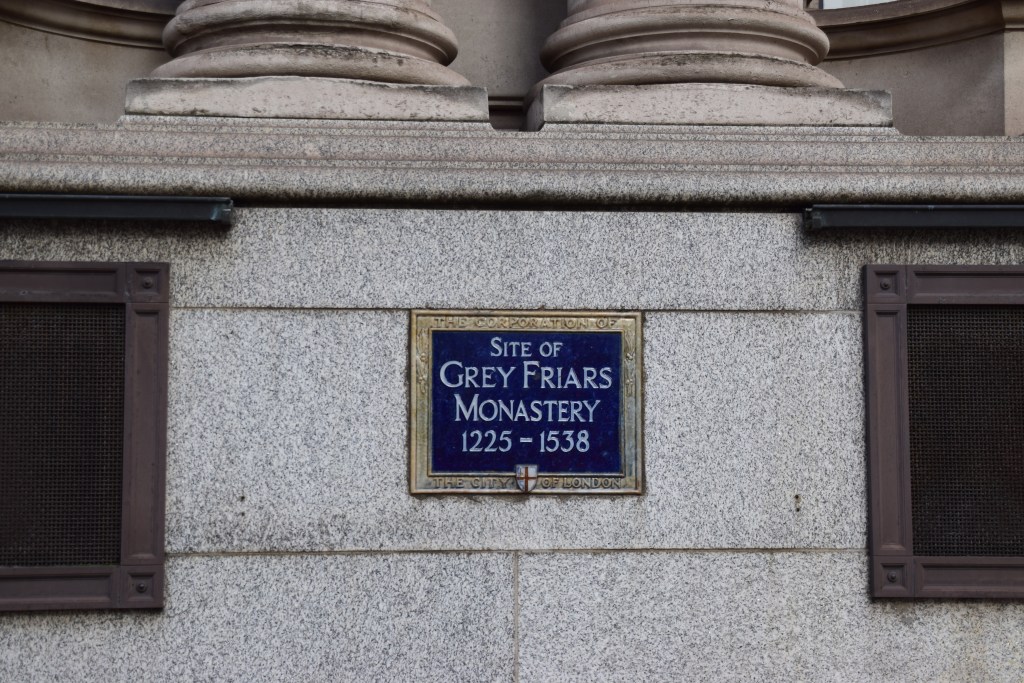
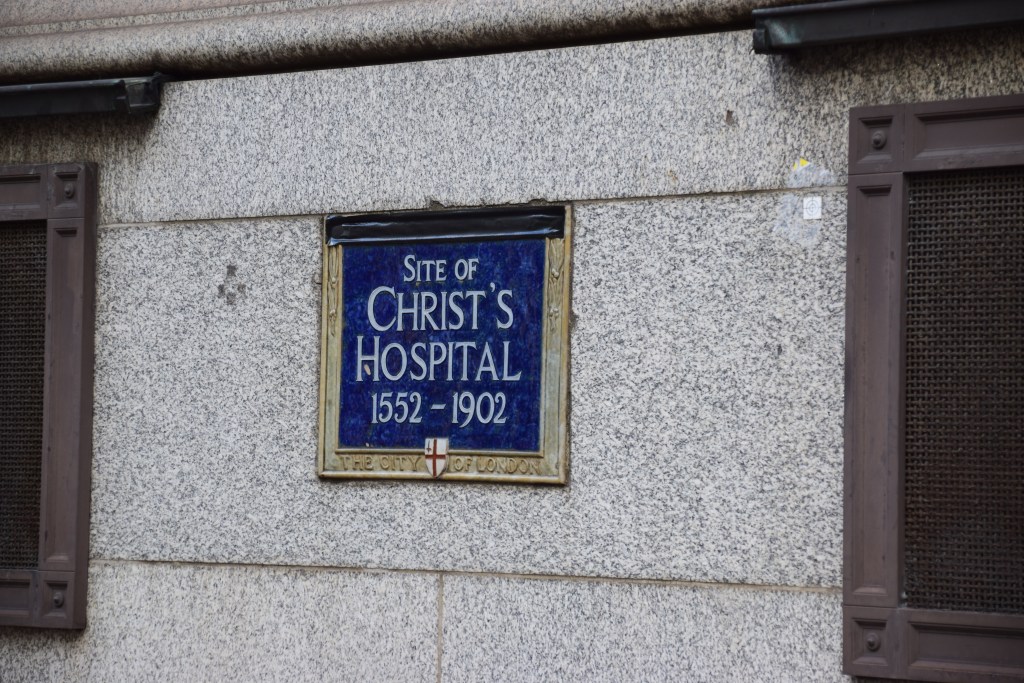

This is the fabulous facade of the CUTLERS’ HALL – The guild was for craftsmen who made items with a sharp edge, such as knives, swords and surgical instruments.
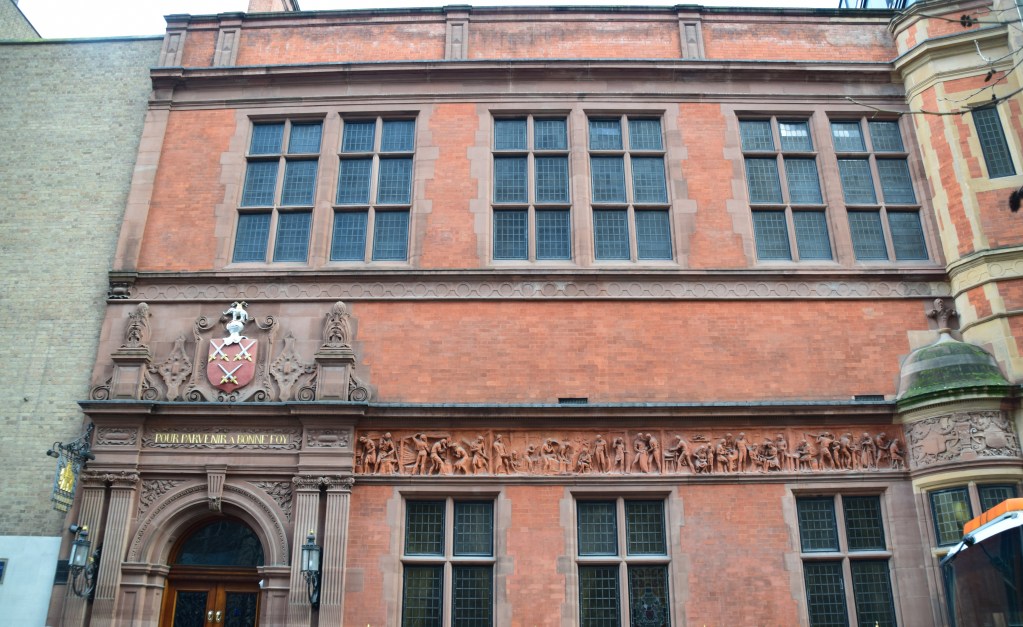

Through the gates of a private courtyard, we can see an old wall that was part of NEWGATE PRISON. The prison operated from 1188 right up to 1904 and was renowned for overcrowding and cruel conditions. It was demolished in 1904 to make way for the Old Bailey Courthouse.
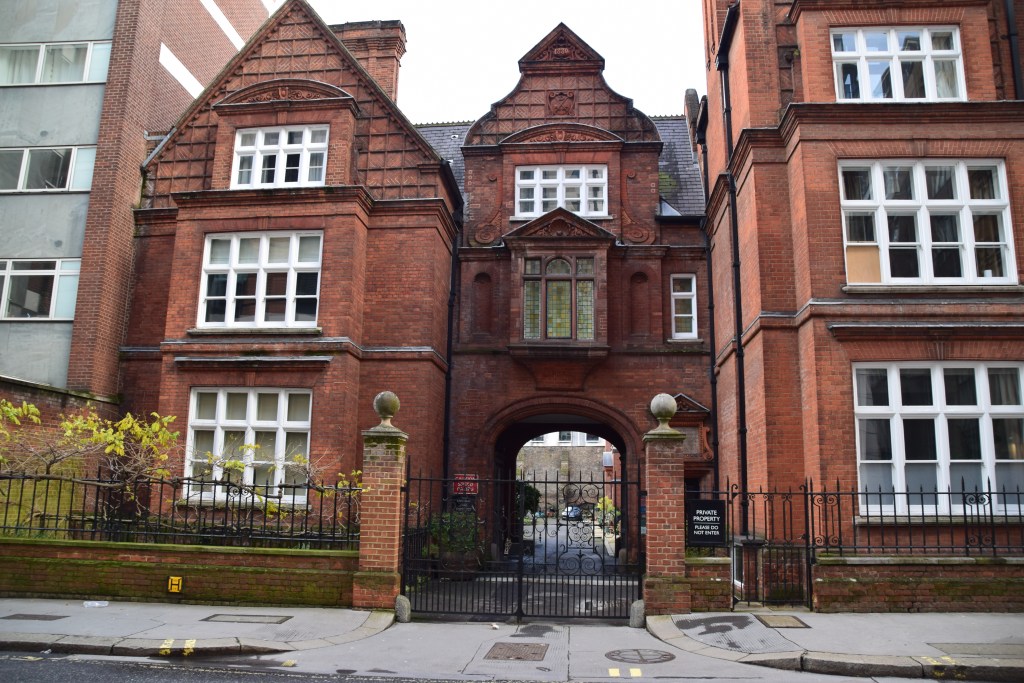
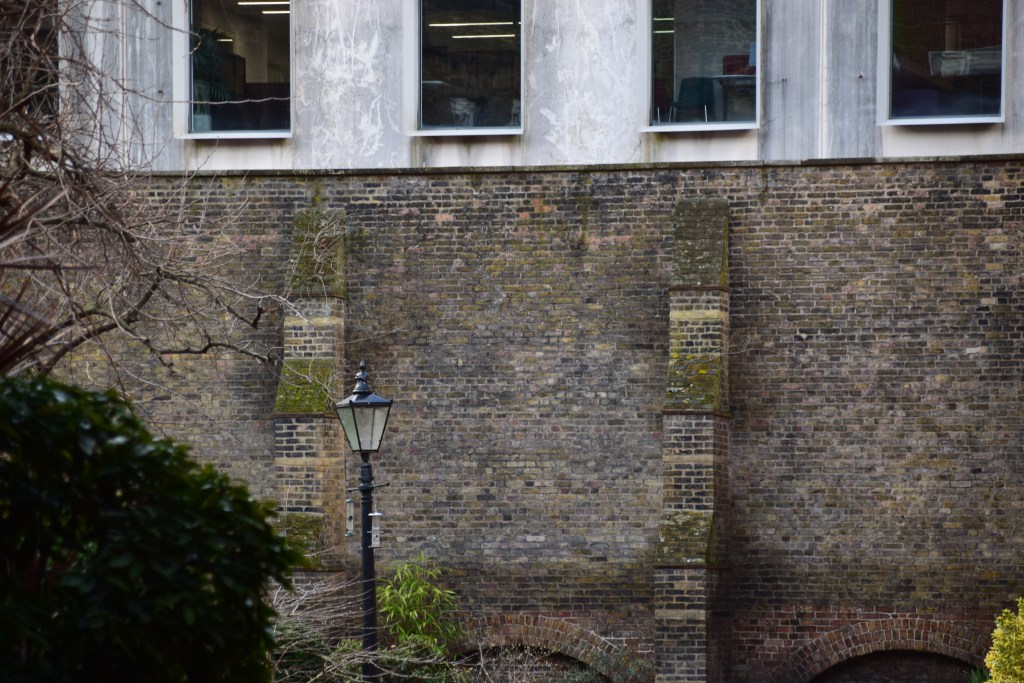
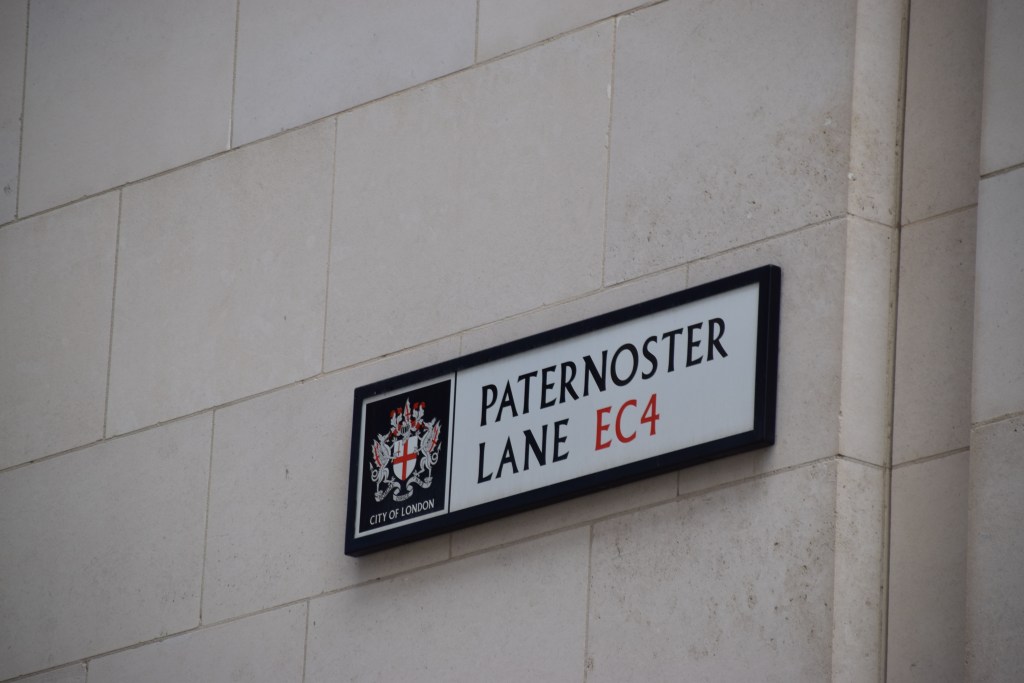
Street names take a religious twist suddenly – we’ve PATERNOSTER ROW and SQUARE, AVE MARIA LANE and AMEN CORNER! We’re getting close to ST. PAUL’S CATHEDRAL – the names date back to medieval, pre-Reformation religious processions, where monks chanted the Lord’s Prayer (Pater Noster) and Ave Maria (Hail Mary) while walking to the Cathedral, ending with Amen at the corner.

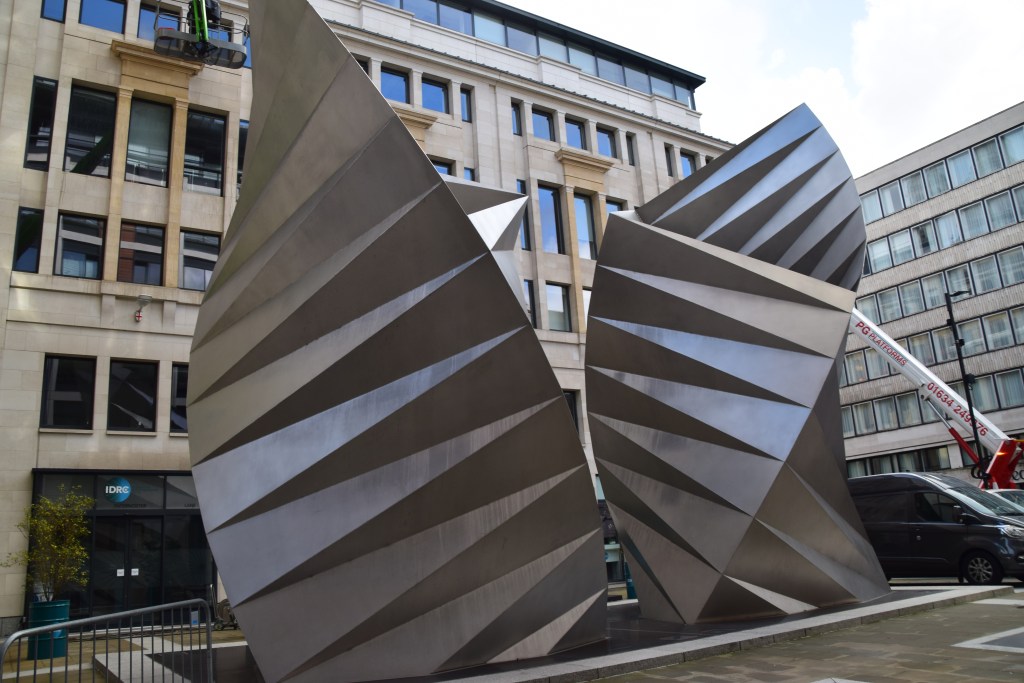
This drags us back to the 21st century for a minute – PATERNOSTER VENTS or ANGEL WINGS is a 2002 steel sculpture by Thomas Heatherwick. It actually provides ventilation for an underground electrical substation.
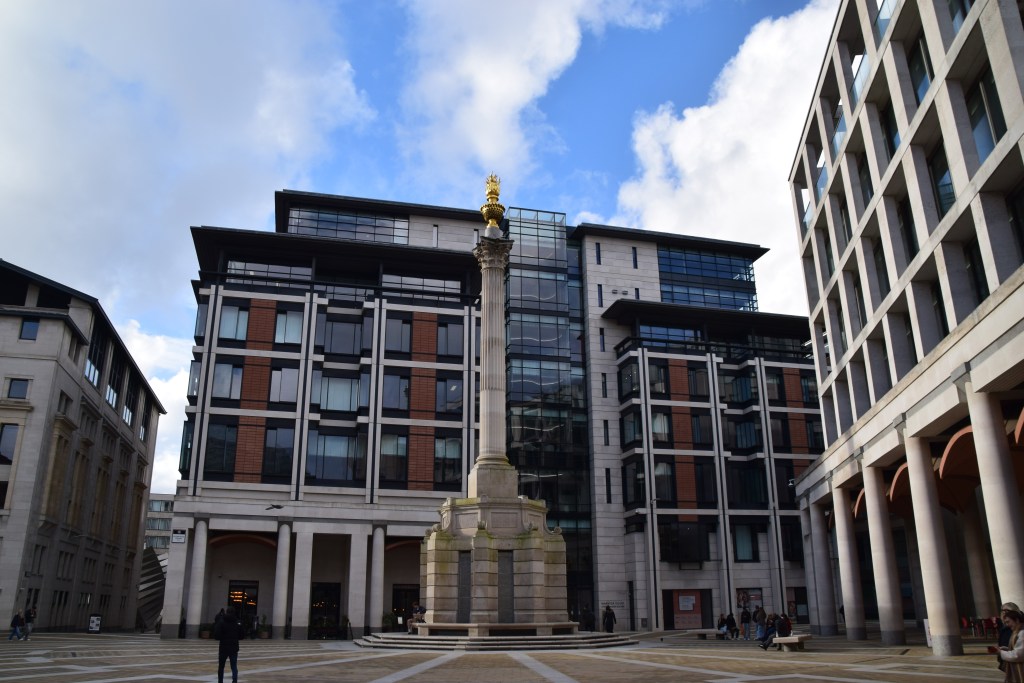
The lovely little PASTERNOSTER SQUARE has a Corinthian Column with a gold flaming urn – the flame is a memorial to the two huge fires that affected the Cathedral – The Great Fire of London and the World War Blitz.
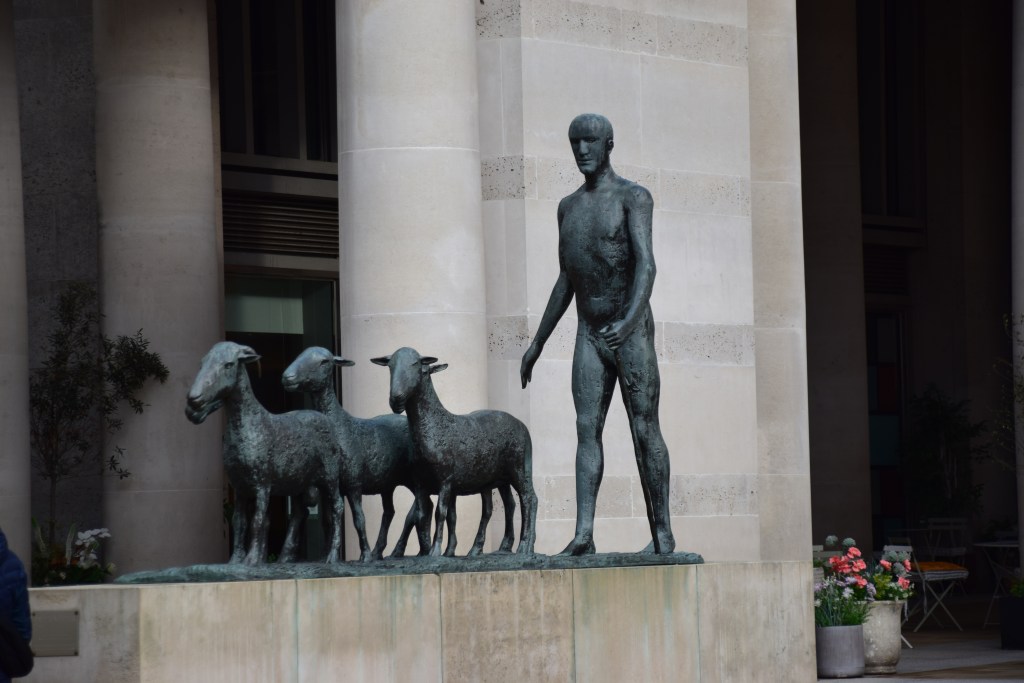
SHEPHERD AND SHEEP by Elizabeth Frink is a tribute to Newgate Meat Market that was on the site until Smithfield took over.
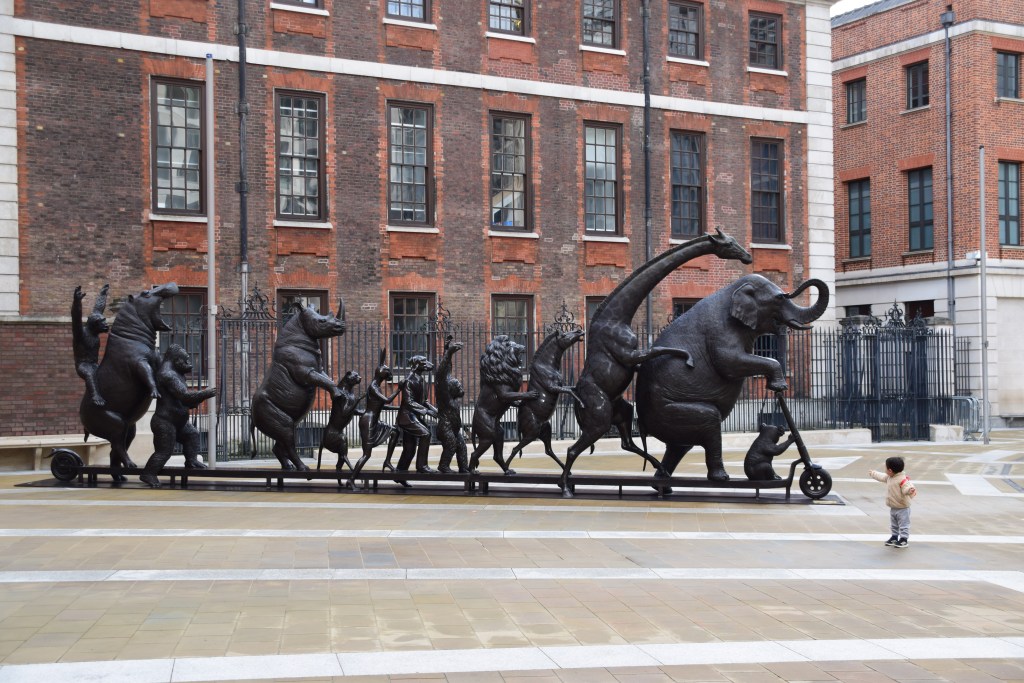
GO WILDLIFE GO features endangered species riding a scooter together, its purpose to heighten awareness of wildlife conservation.
Sir Christopher Wren’s TEMPLE BAR marked the gateway to the City of London for 200 years. It was moved from it’s original location on Fleet Street to facilitate road widening and eventually reconstructed on a Hertfordshire estate. It was moved to this location on Pasternoster Square in 2004.
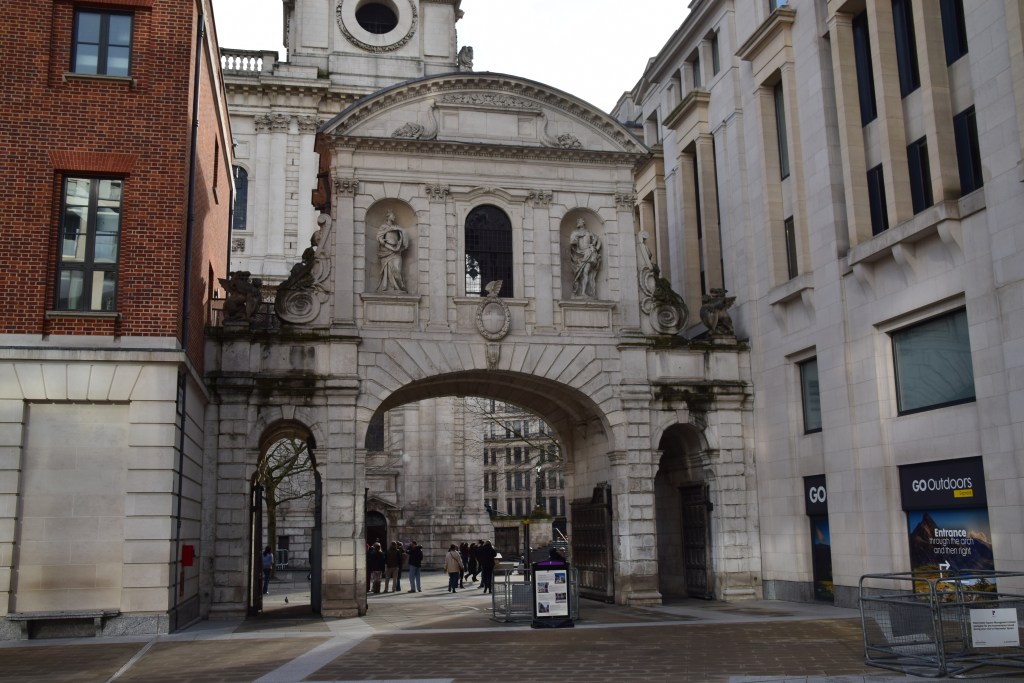
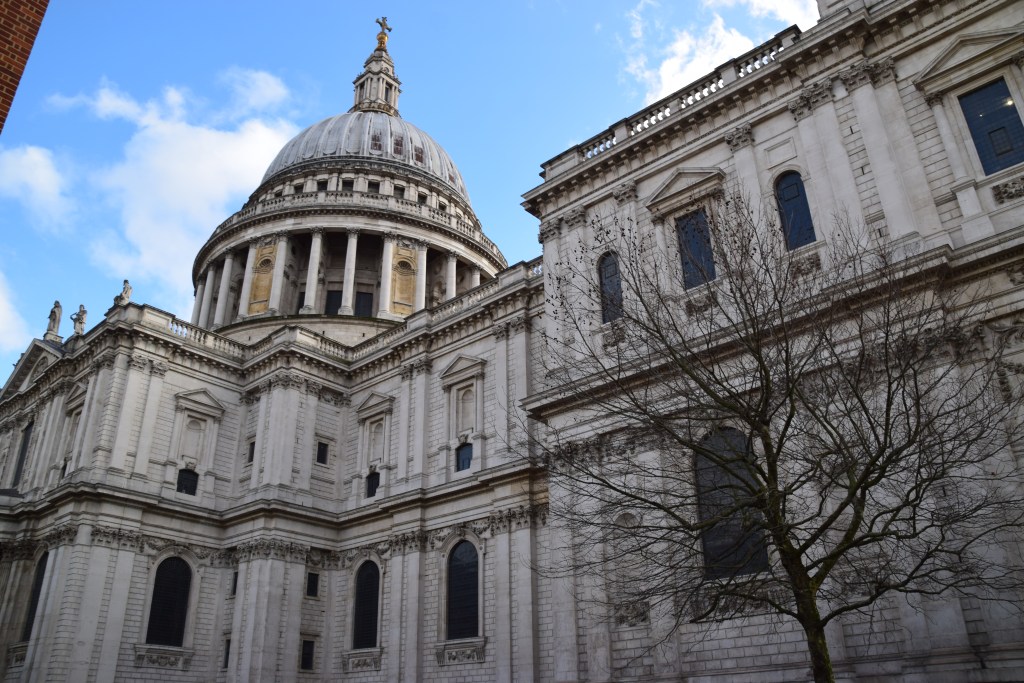
ST. PAUL’S CATHEDRAL was designed by Sir Christopher Wren and built between 1675 and 1710. Until 1963, it was the tallest building in London and its massive dome is second in Europe after St. Peter’s in Rome.
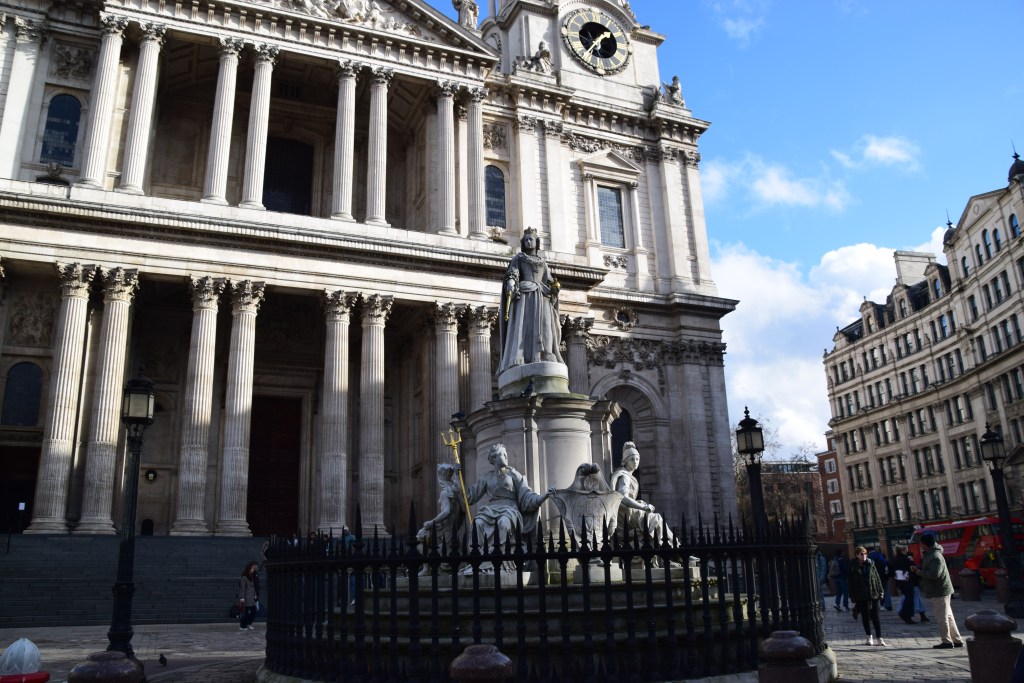
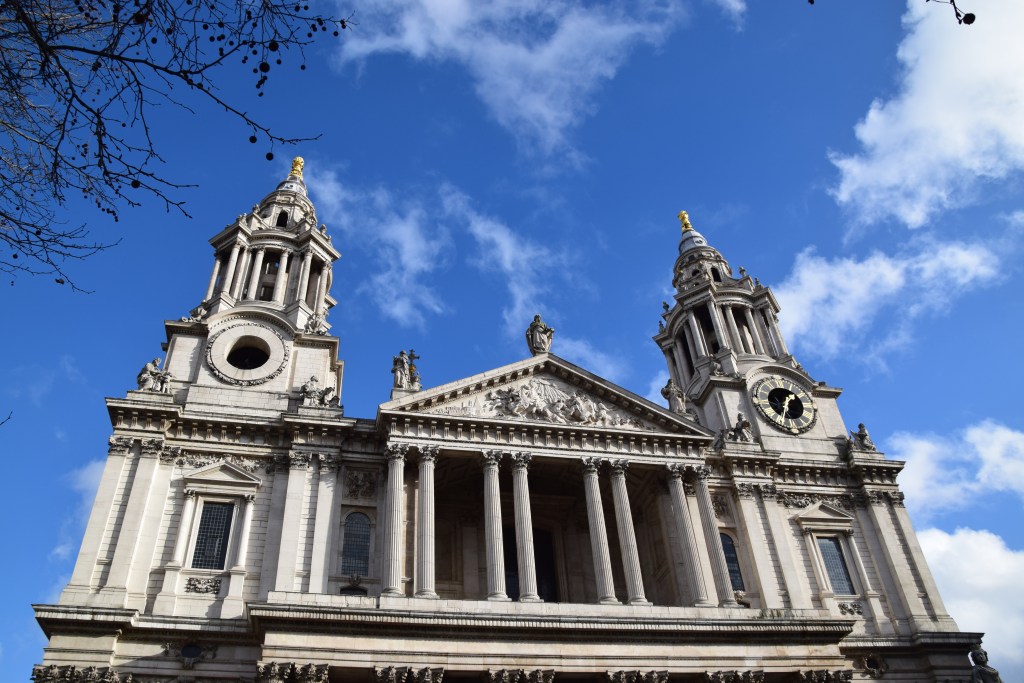
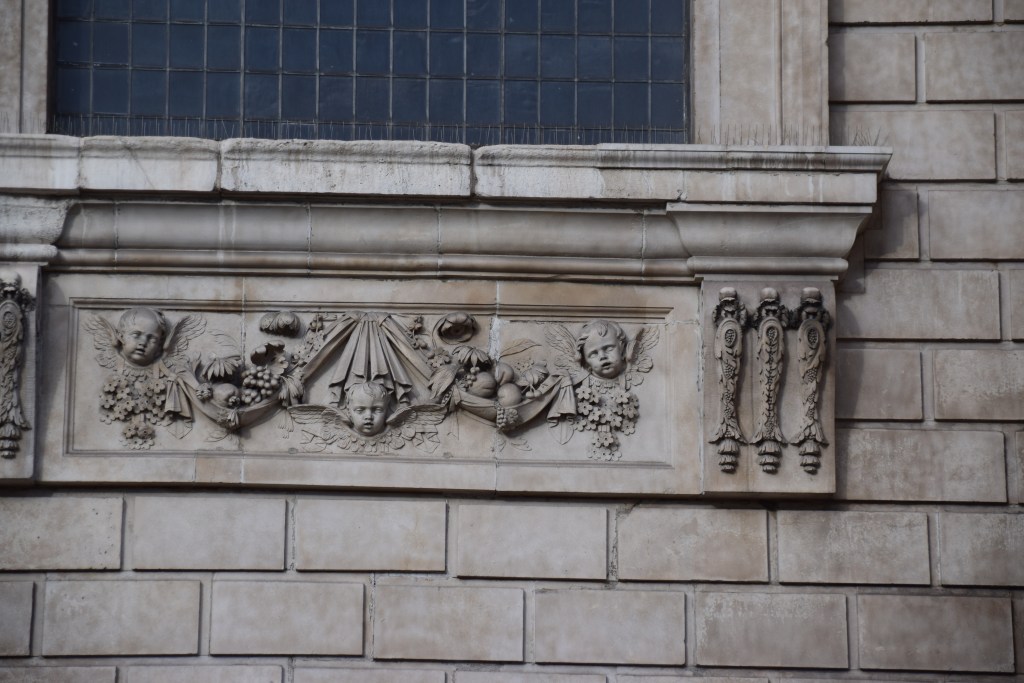
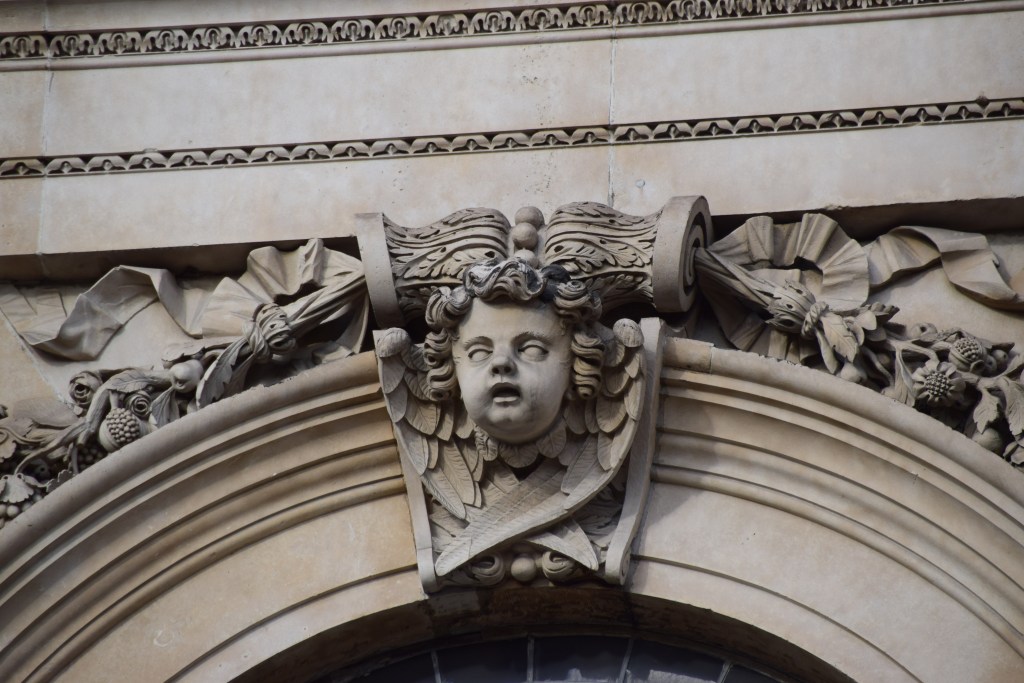
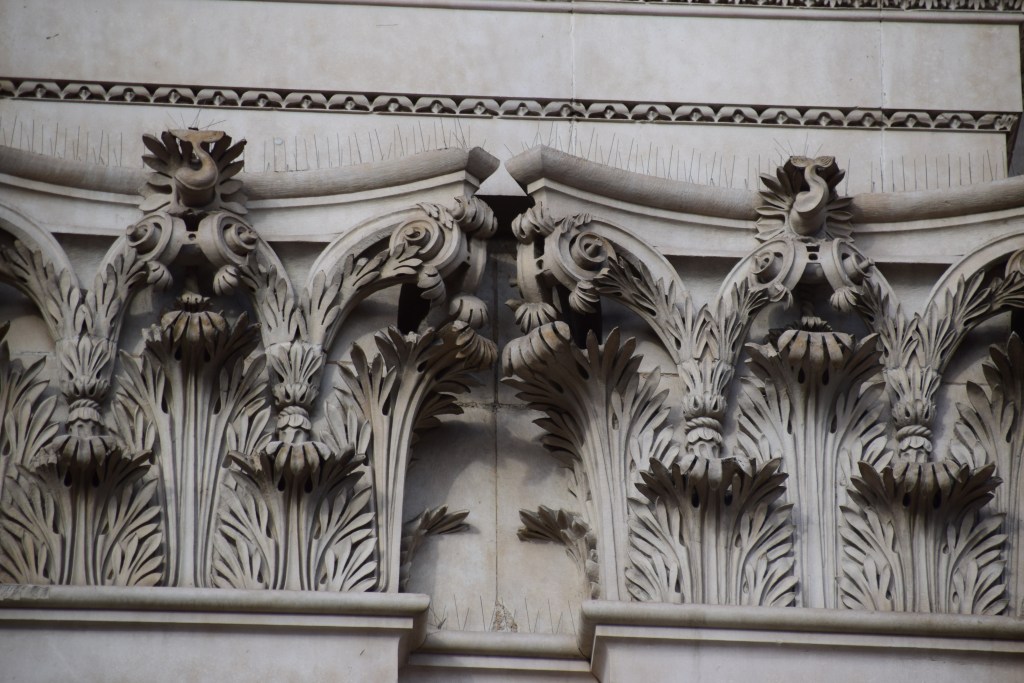
GRINING GIBBONS was born in Rotterdam in 1648 where he trained as a woodcarver, becoming probably the most famous master of the craft. There’s lots of his work to be seen inside, but he also carved in stone and you can see his work on the outside of the cathedral –
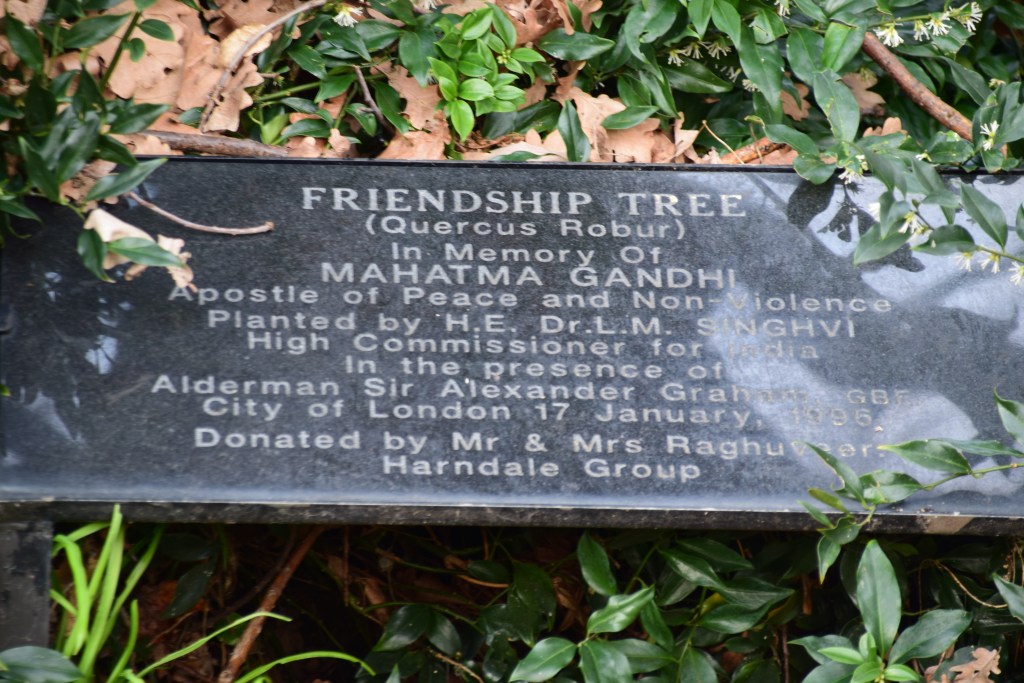
GANDHI’S OAK / THE FRIENDSHIP TREE was planted by the High Commissioner of India in 1996.
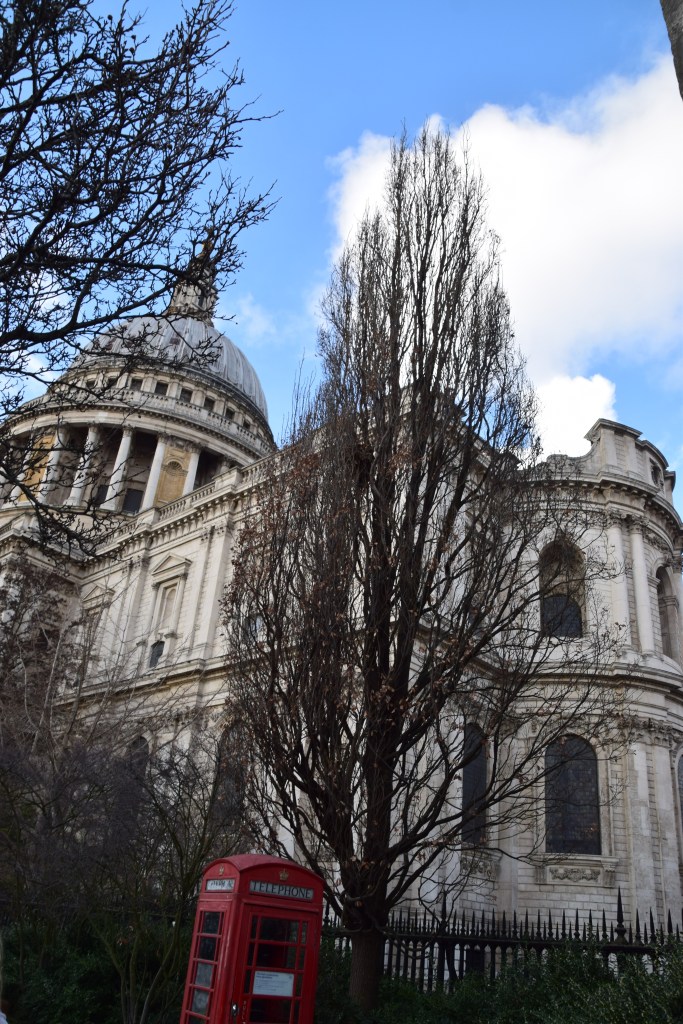
Around the back of the cathedral is ST. PAUL’S CROSS – the site of an open air pulpit since the 13th century. It would have been a site for both religious and civil gatherings – not to mention the odd execution!

Across the road, you can hop in the lift in New Change Shopping Centre and get a good view of the skyline from the roof…
You can see the lift from the street…
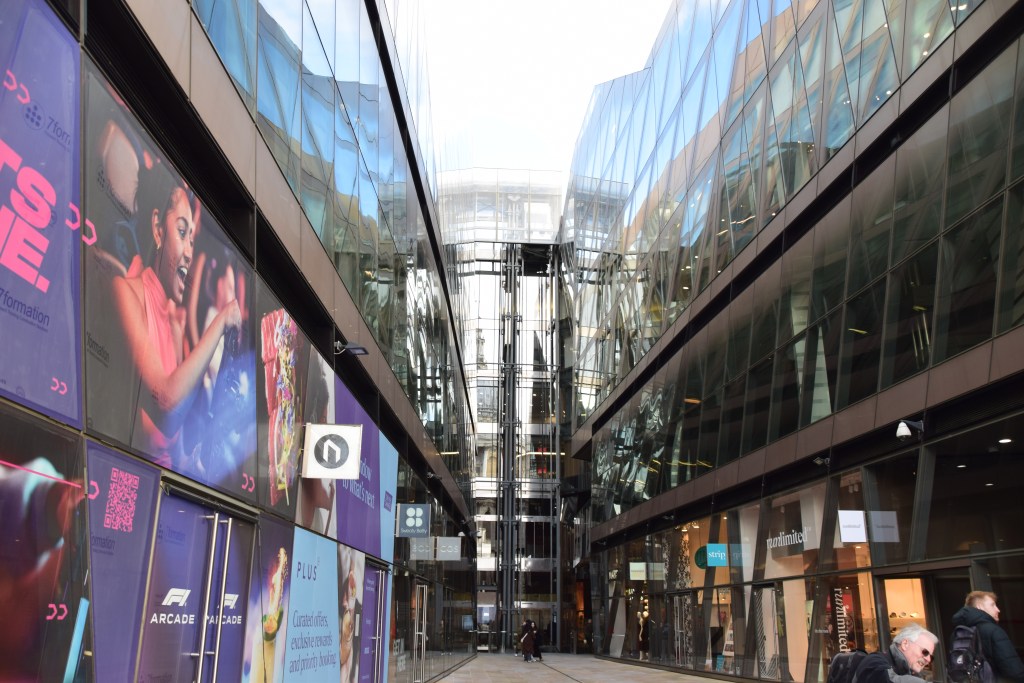


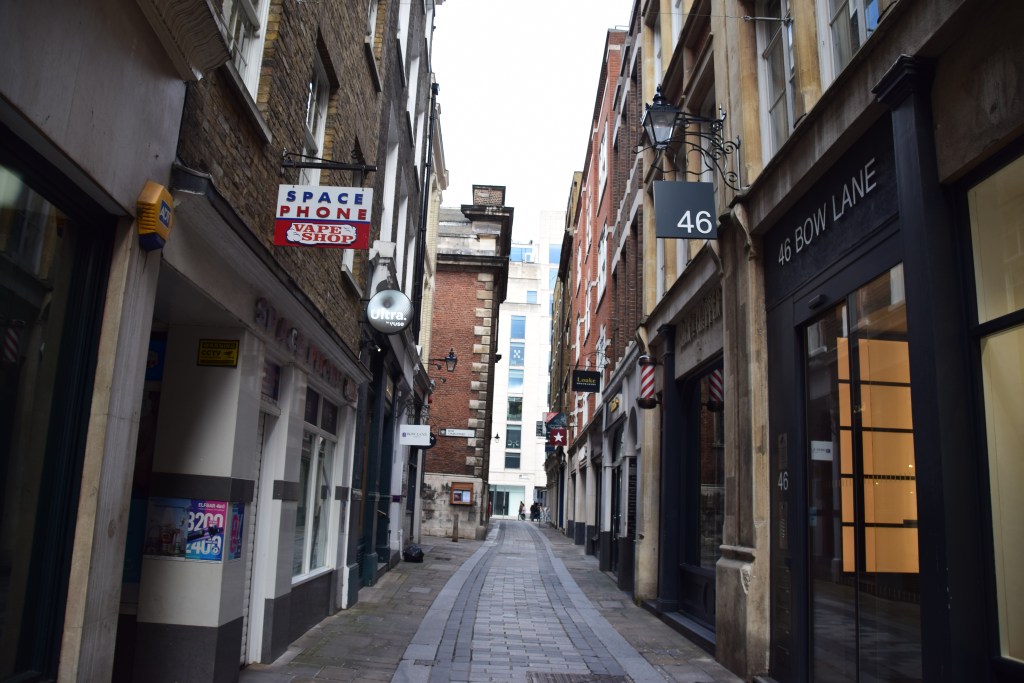
BOW LANE is one of the oldest surviving lanes on its original layout.
Oranges and lemons
Say the bells of Saint Clement’s
I owe you five farthings
Say the bells of Saint Martin’s
When will you pay me?
Say the bells of Old Bailey
When I grow rich
Say the bells of Shoreditch
When will that be?
Say the bells of Stepney
I do not know
Say the great bells of Bow
London folklore maintains that one must be born within sound range of the Bow Bells to be considered a true Cockney! In the middle ages, the bells of ST MARY-LE-BOW announced a 9.00pm curfew for the residents of the city. In 1392, Dick Whittington heard the bells call him back to become Lord Mayor of London.

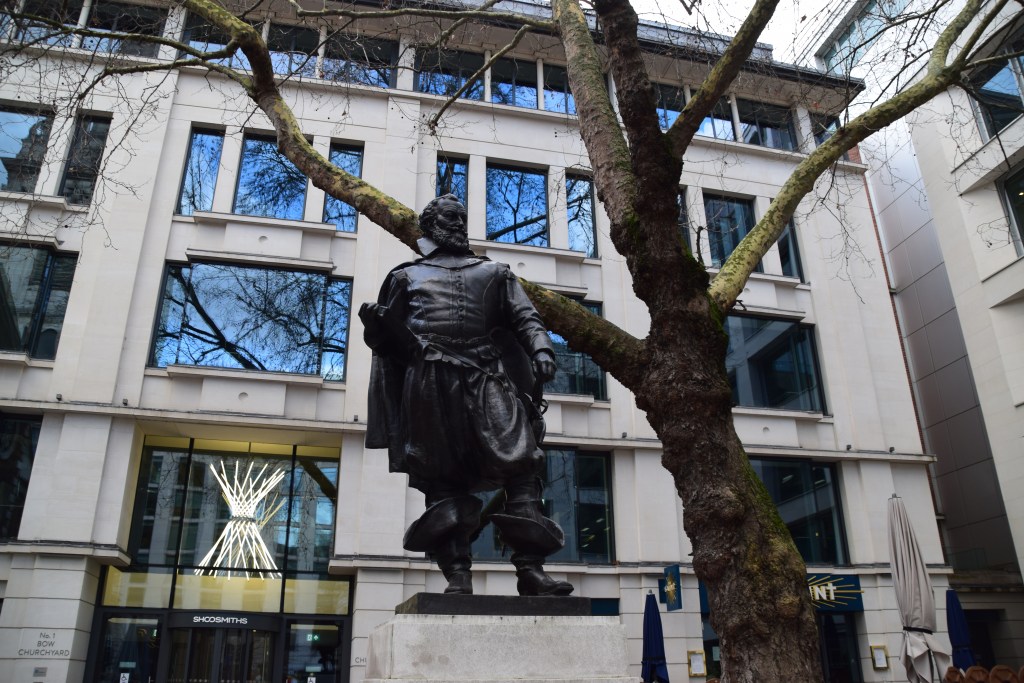
There is a statue outside the church of parishioner JOHN SMITH – the founder of Virginia, England’s first permanent colony in North America.
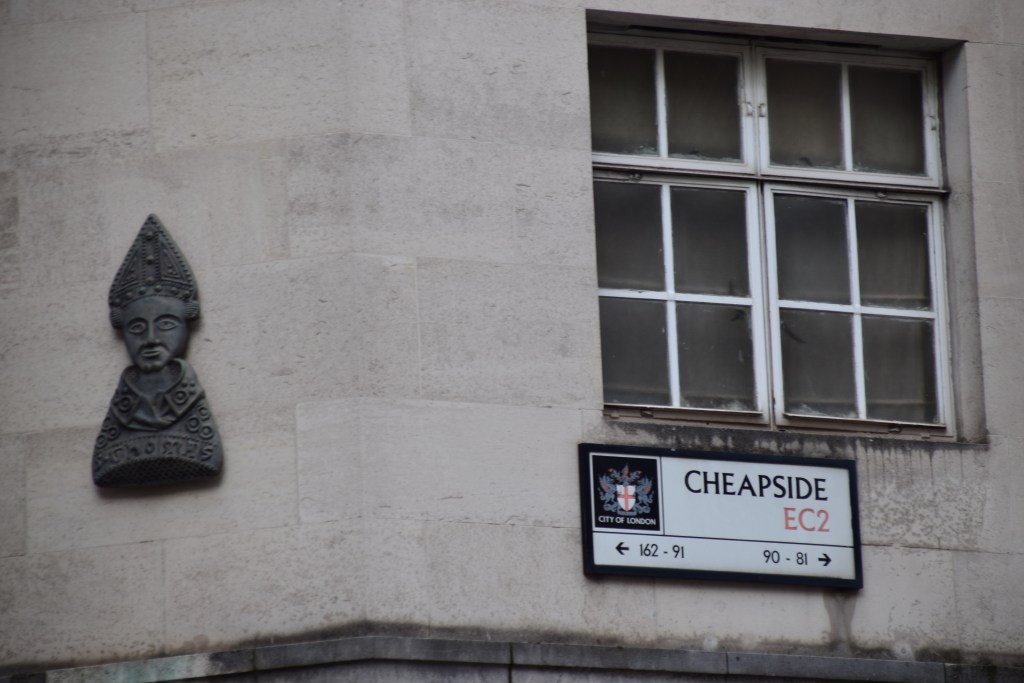
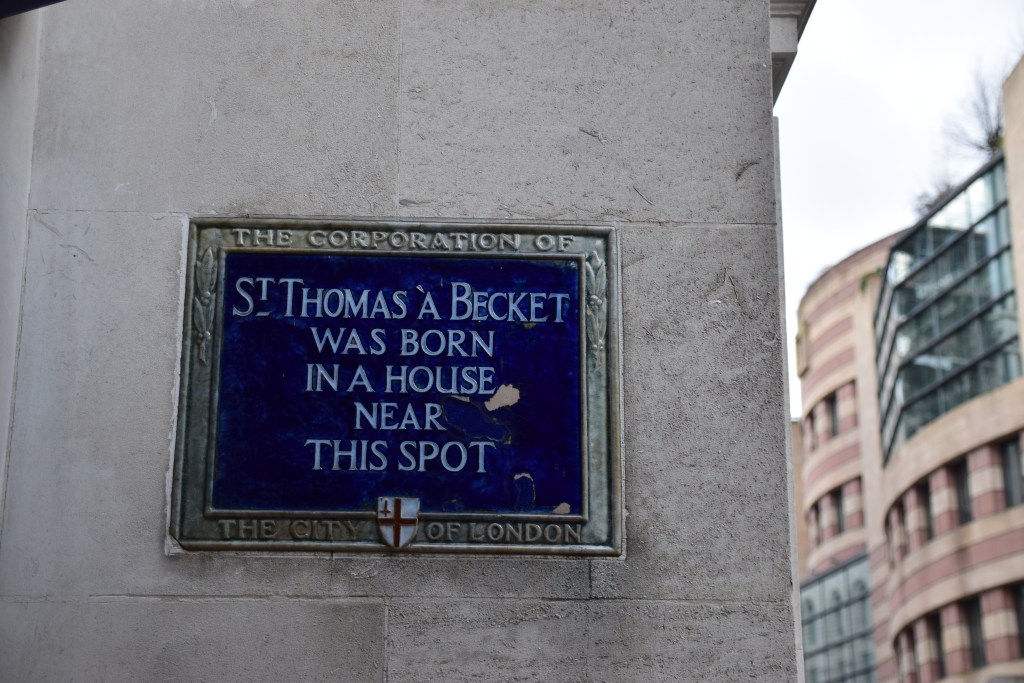
THOMAS BECKETT was born in Cheapside in 1120. He was Archbishop of Canterbury from 1162 but fell out with the king – Henry II – when he tried to limit the power of the Church and increase his own influence in religious matters. Beckett was murdered in Canterbury Cathedral in 1170. He was made a saint in 1173 and Canterbury became a site of religious pilgrimage.
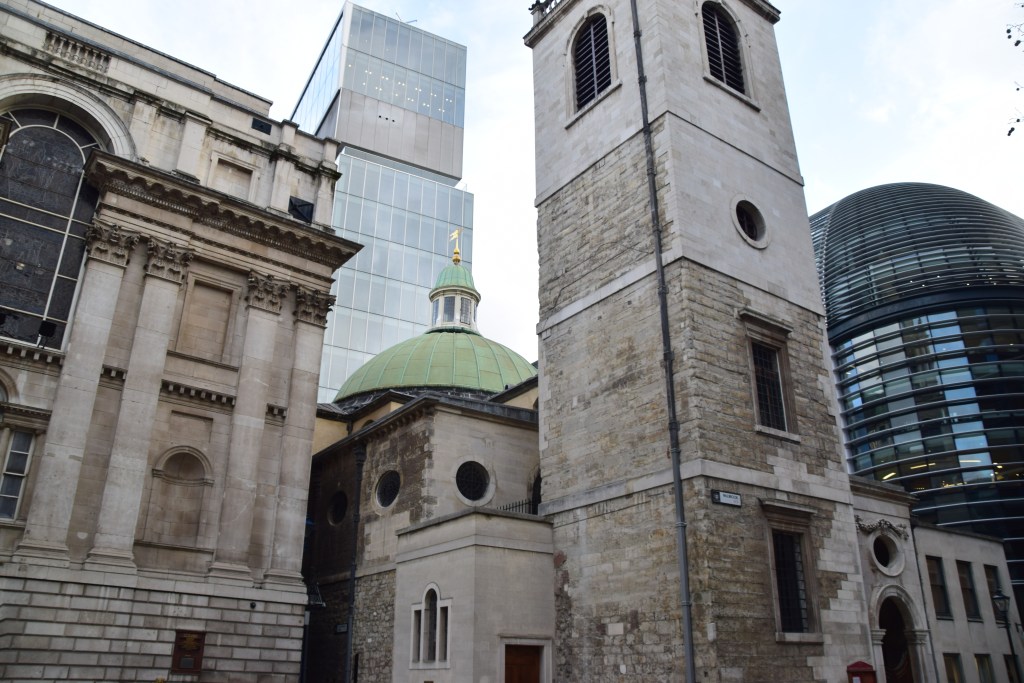
On Walbrook, down the side of the Mansion House, ST. STEPHEN’S is another church designed by Sir Christopher Wren after the great Fire. It’s dome is based on the original plans fro St. Paul’s. In 1953, the Samaritans was founded by the then rector of the church, Dr. Chad Varah.
You can pop in to The London Mithraeum (free entry) to view the ROMAN TEMPLE OF MITHRAS which was rediscovered in 1954 amongst rubble from the Blitz. There are also displays of finds from the archaeological dig.

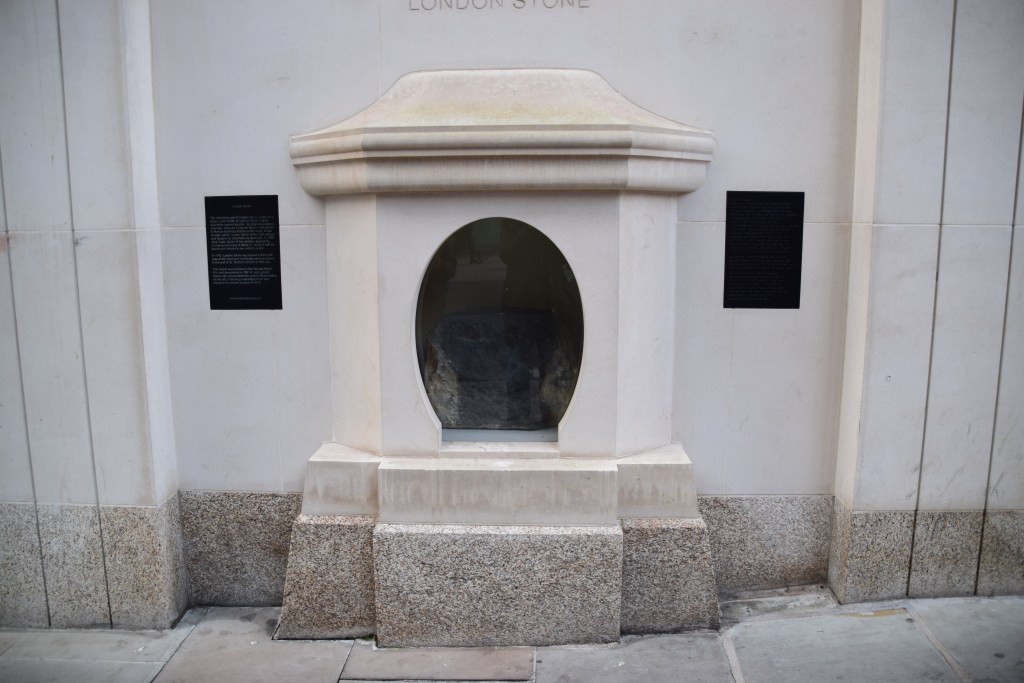
LONDON STONE is housed behind a glass panel in Cannon Street. The origin of the block of limestone is unclear – it is not found naturally in the area. Its purpose is also unclear – but it became an important city landmark.
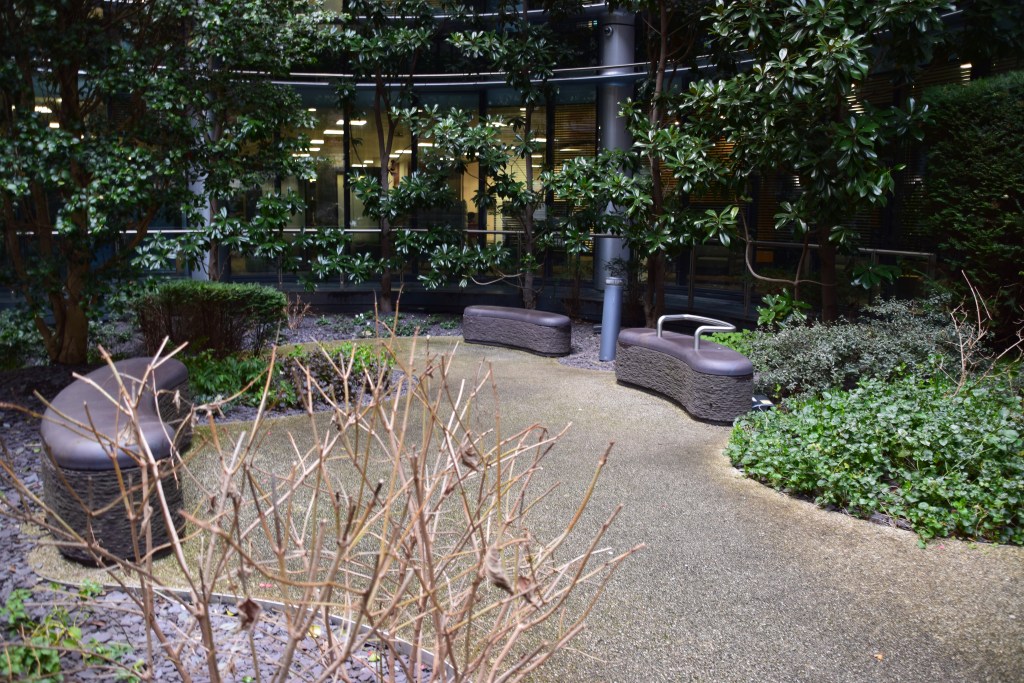
St. Swithin’s Church was another one destroyed by the Great Fire and rebuilt by Wren. It was badly damaged during the Second World War but was not one of those selected for rebuilding and it was totally demolished in 1962. ST. SWITHIN’S GRAVEYARD GARDEN was retained however and turned into a lovely little public garden. (The legend goes that if it rains on 15th July, St. Swithin’s Day, it will continue to rain for a further 40 days).
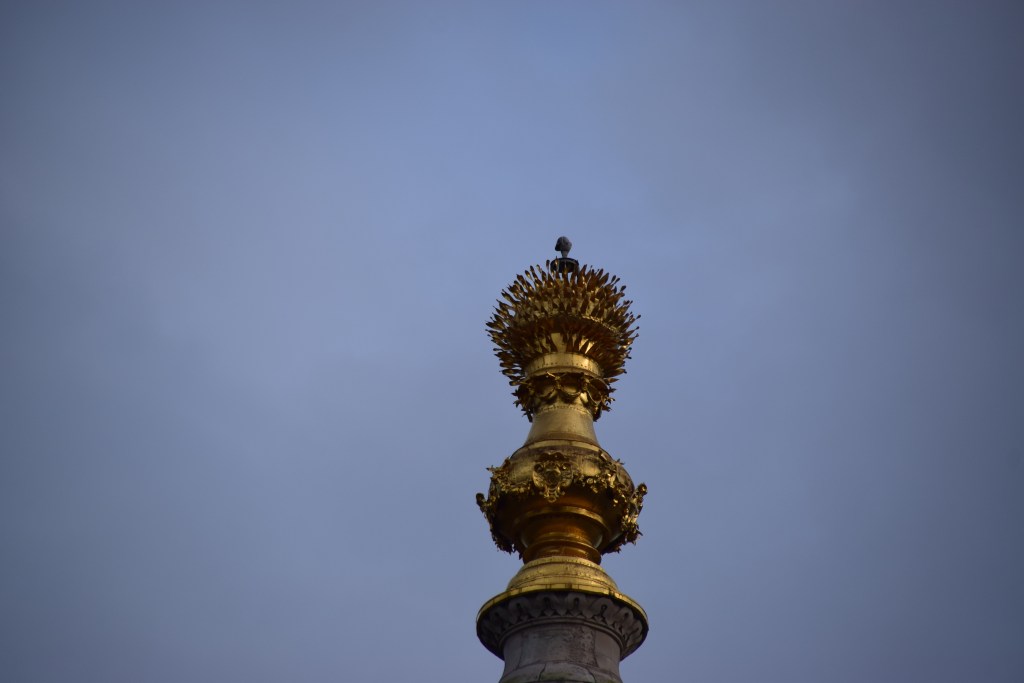
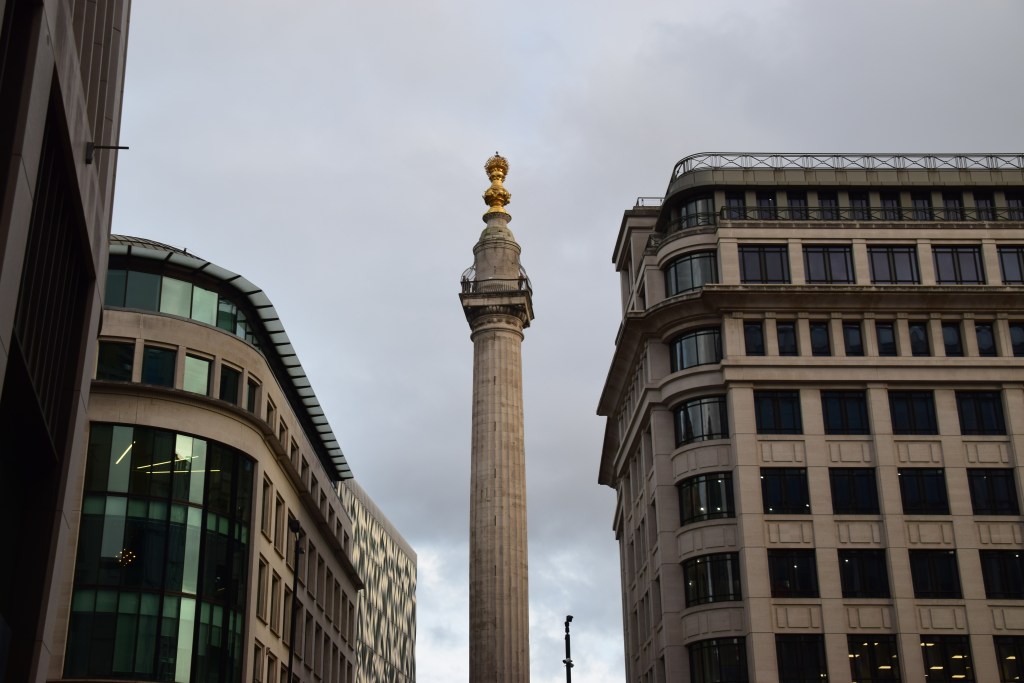
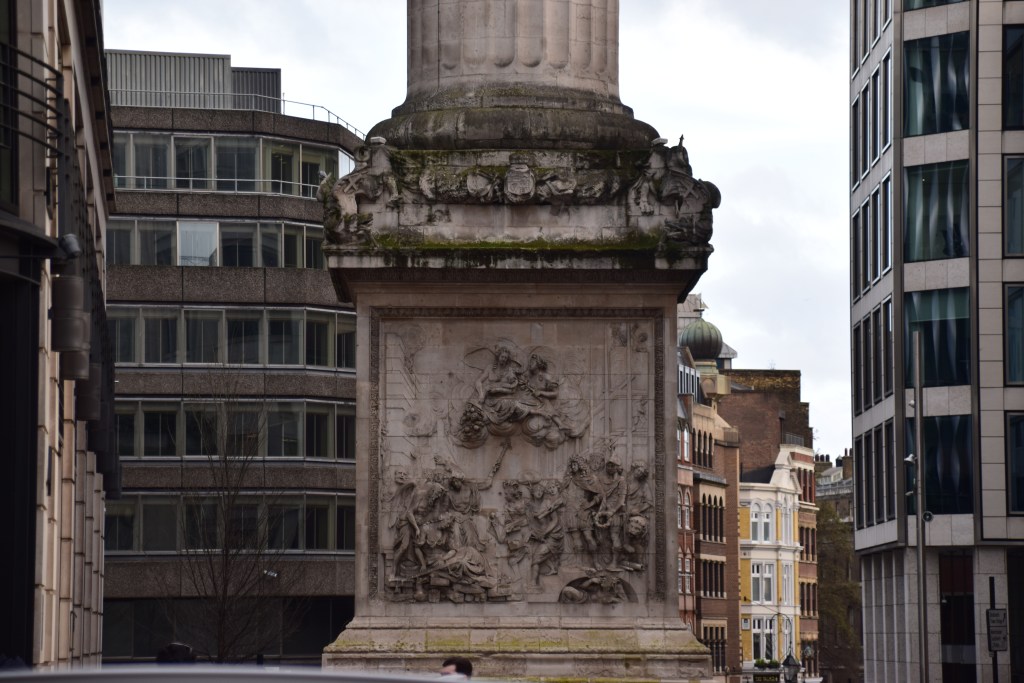
Sir Christopher Wren was one busy man! He was also involved in the design of the MONUMENT – a column commemorating the Great Fire. The memorial measures 61m / 202 ft in height – which is exactly the distance between it and the bakery in nearby Pudding Lane which started the whole thing!

At ST. MAGNUS THE MARTYR you will find some stones from Old London bridge as well as a 2000 year old piece of wood from an old roman wharf.
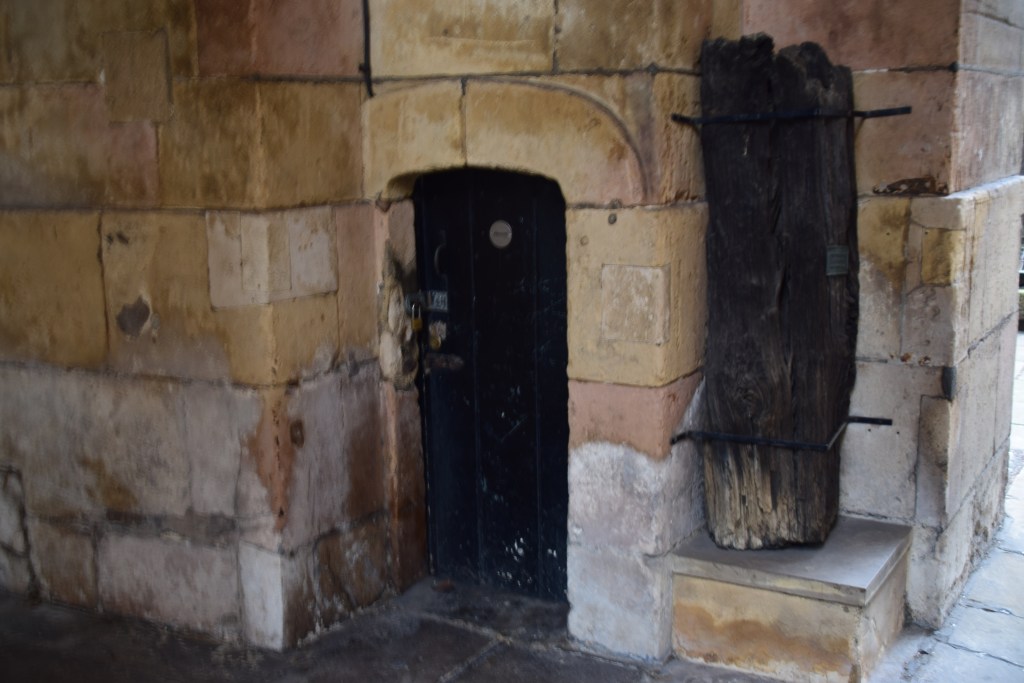
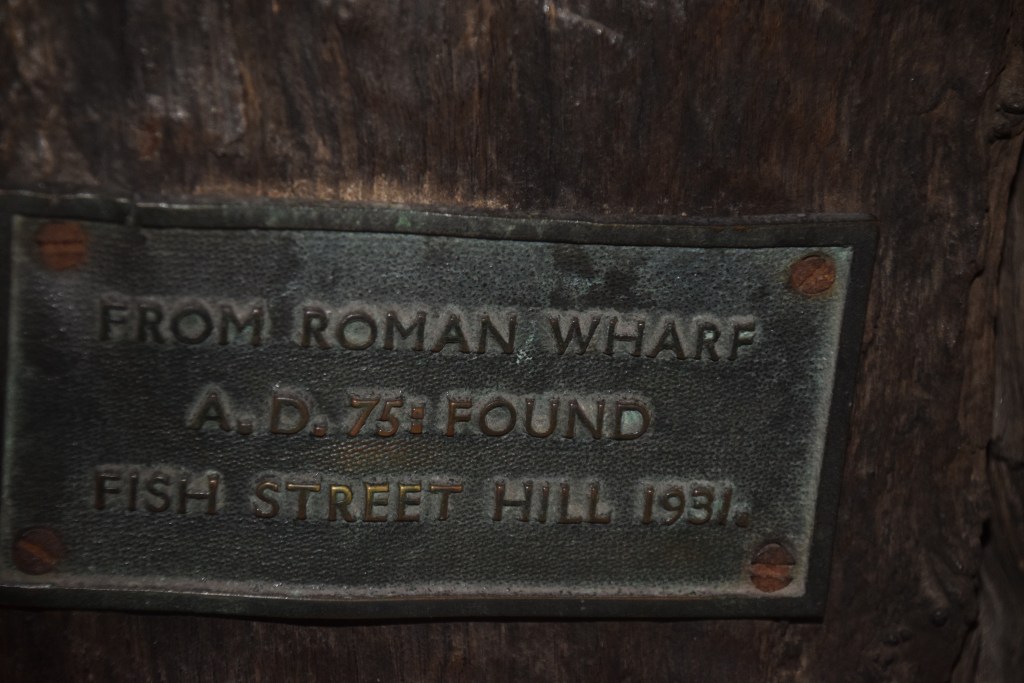
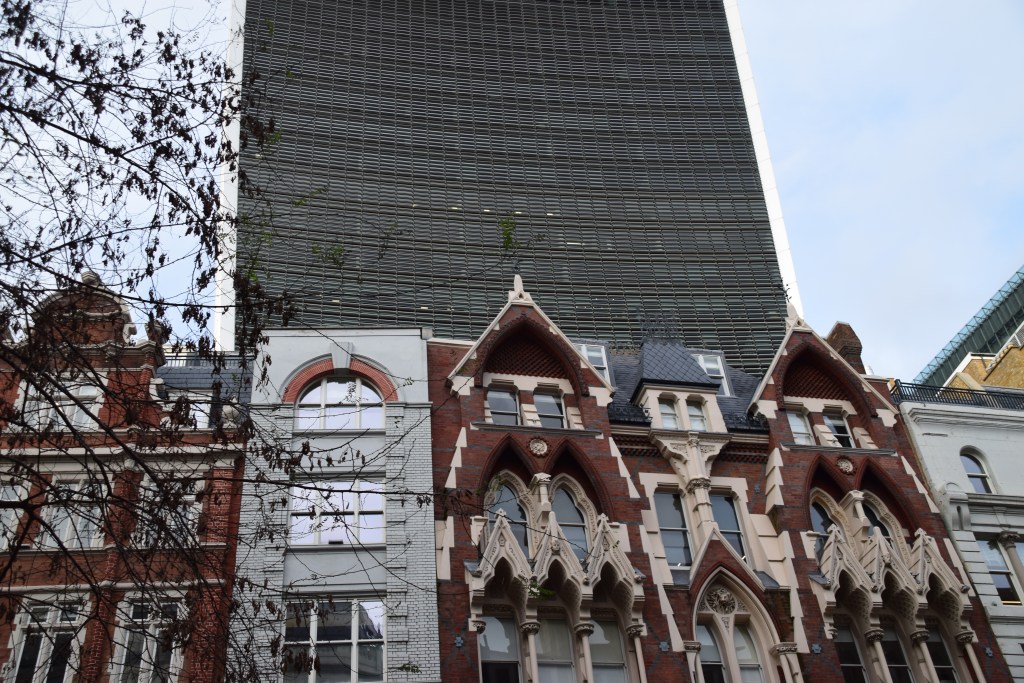
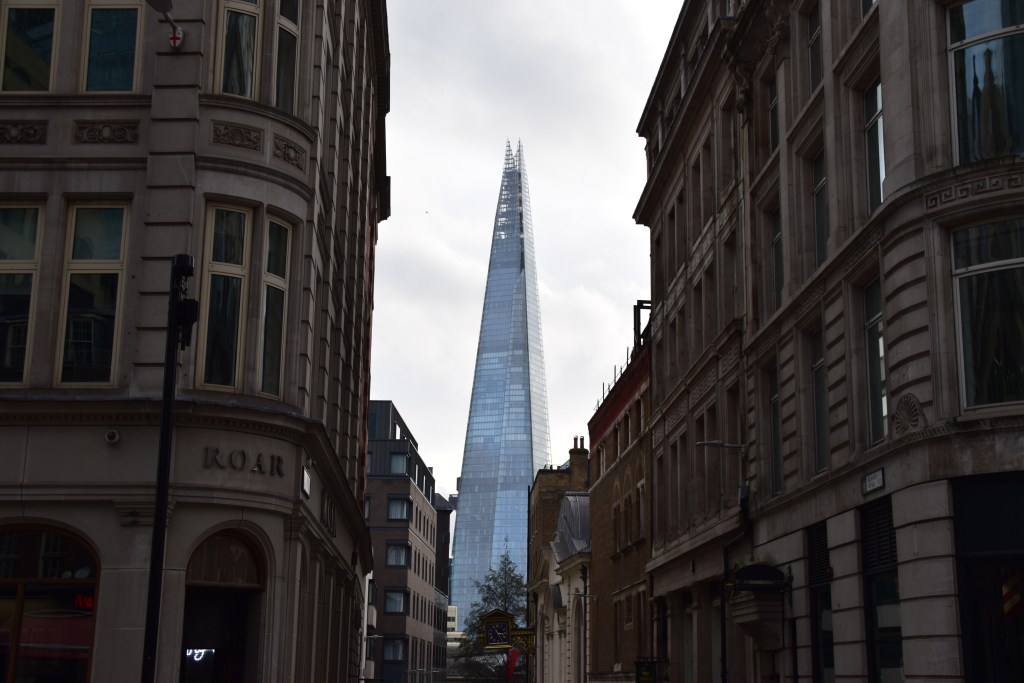
I love the contrast between old and new as we walk along!
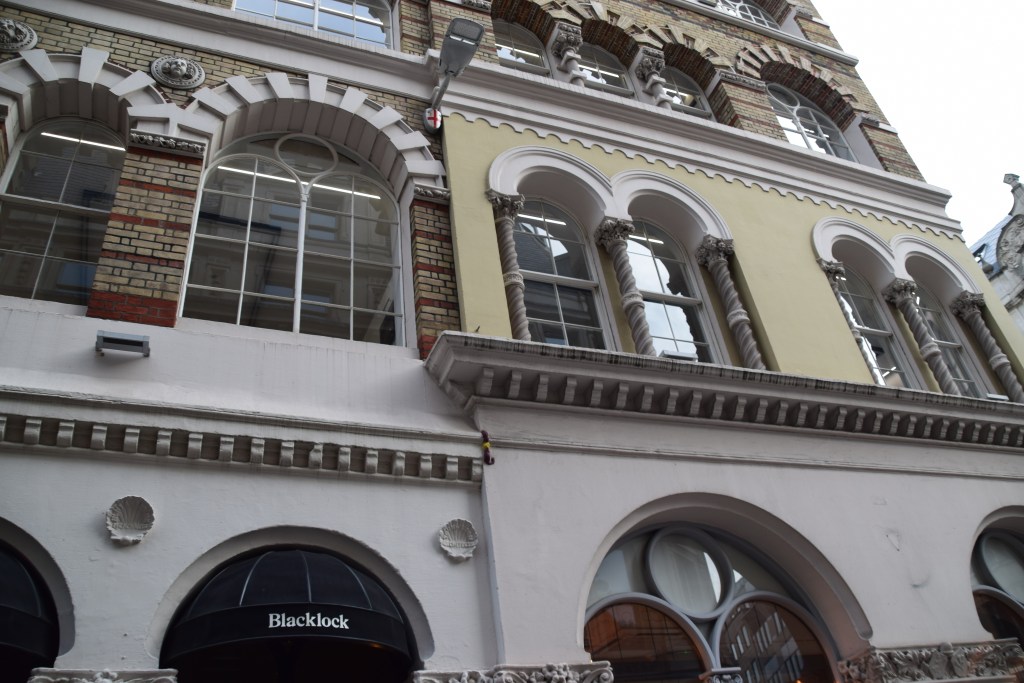
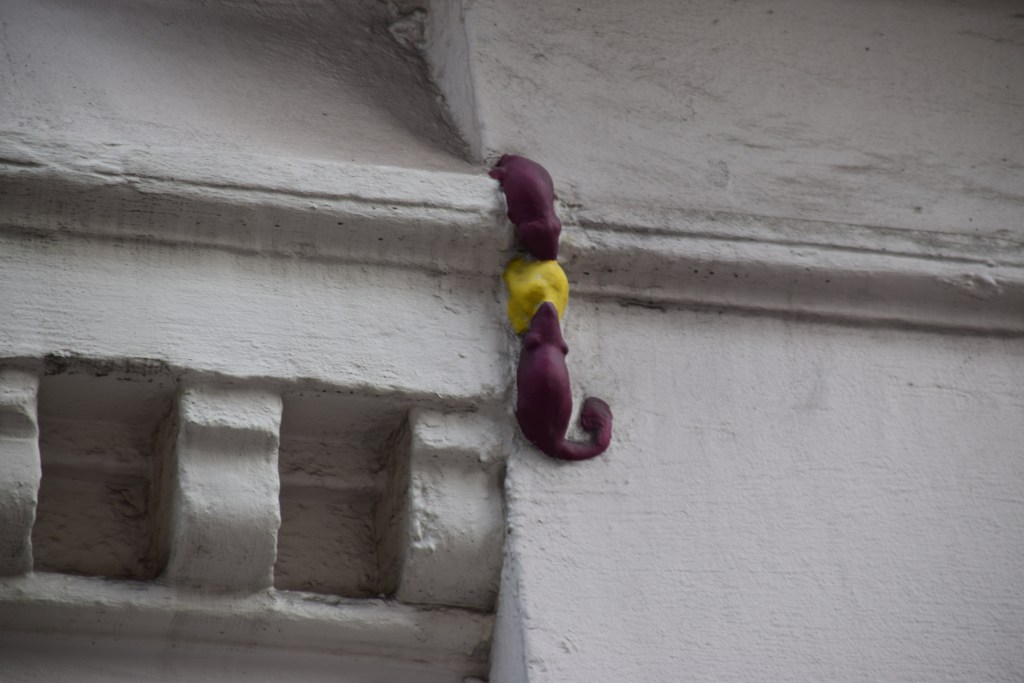
It’s easy to miss LONDON’S SMALLEST PUBLIC STATUE! The story varies a bit but essentially, in 1861/62, two construction workers on Philpot Lane were having lunch up on the scaffolding when one noticed his sandwich had been nibbled. A scuffle broke out when he accused his workmate of eating the said sandwich. Either one – or both of them – fell to their death/s. It was later discovered that the sandwich had been eaten by mice!! Their colleagues added the mice to the building in their memory!
There’s the TOWER OF LONDON in the distance….

Seething Lane was the home of SAMUAL PEPYS – the famous diarist who wrote of grand events and everyday life in such detail that his diary is considered one of the most significant historical records of 17th century England
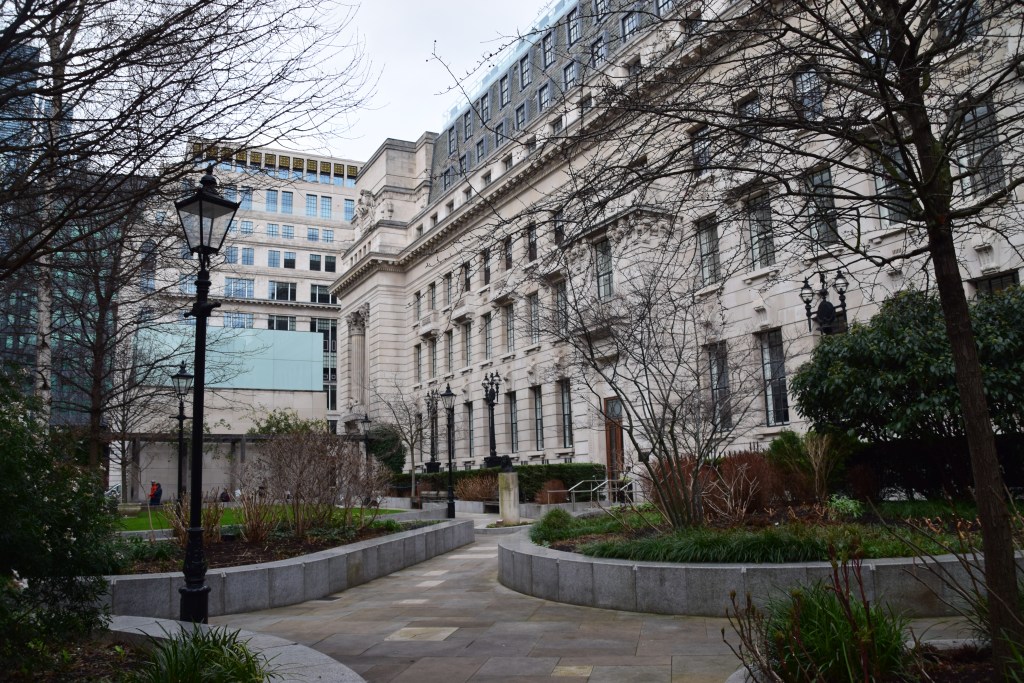
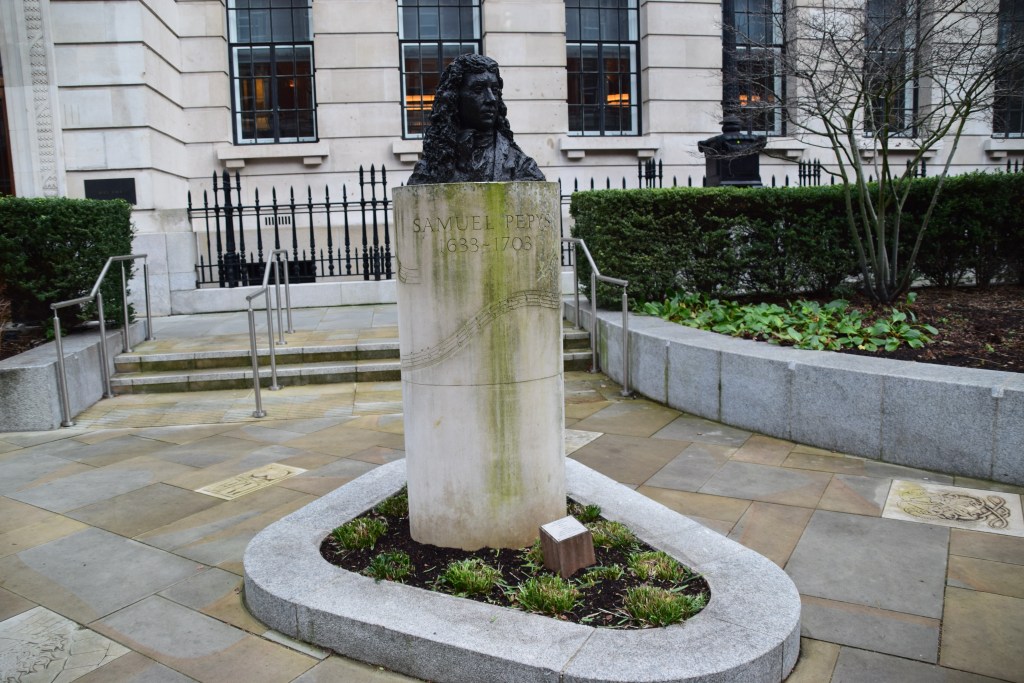
He is buried in ST. OLAVE’S

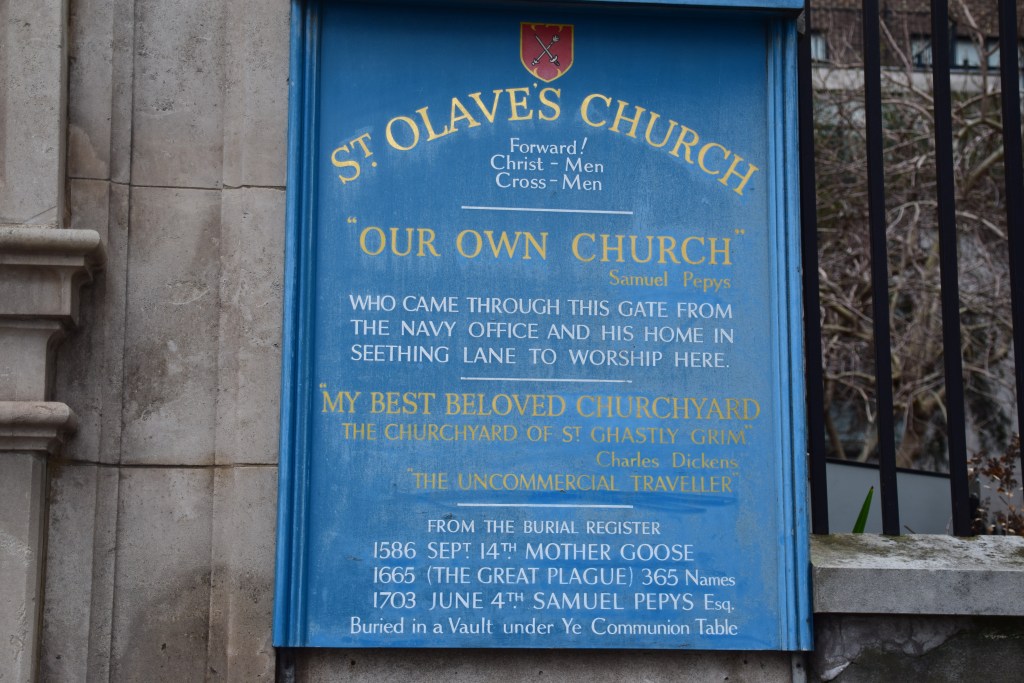
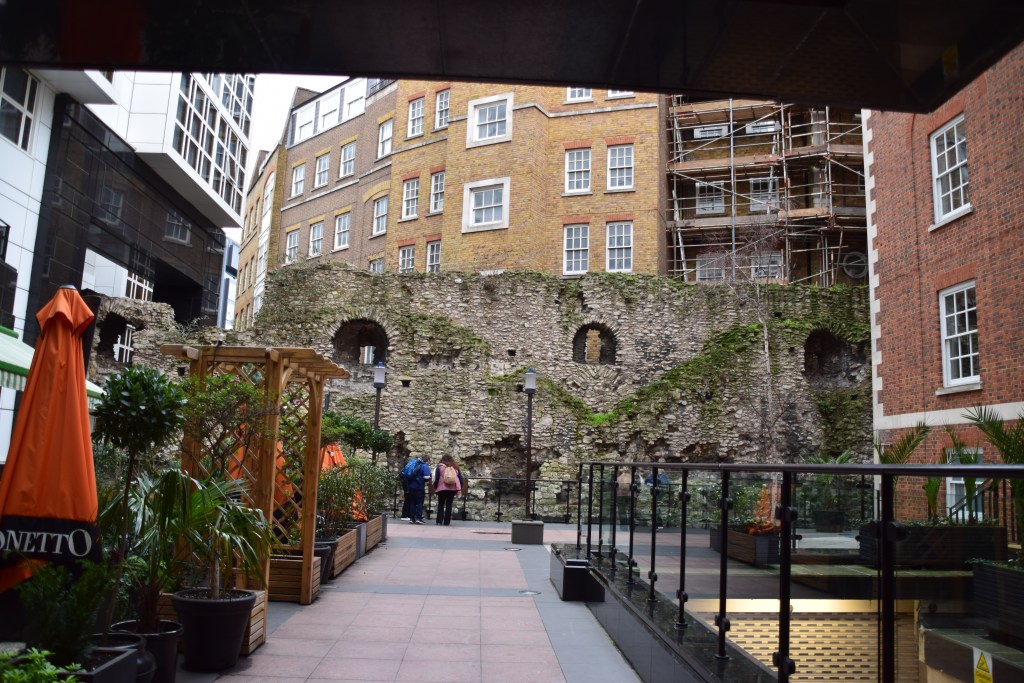
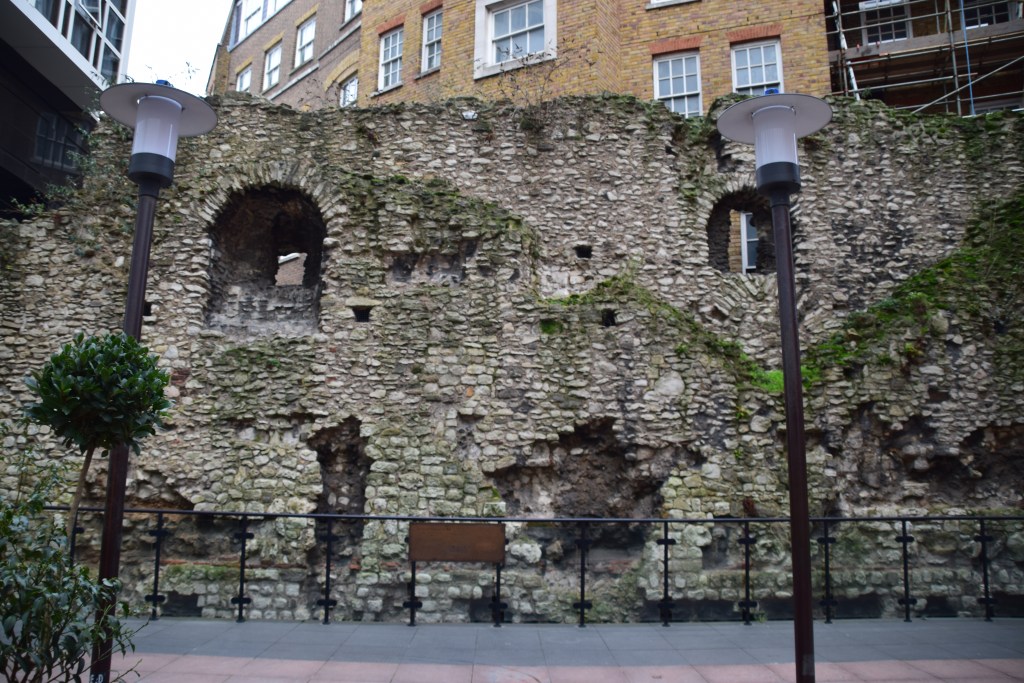
Behind the Leonardo Royal London City Hotel is a stretch of LONDON CITY WALL.
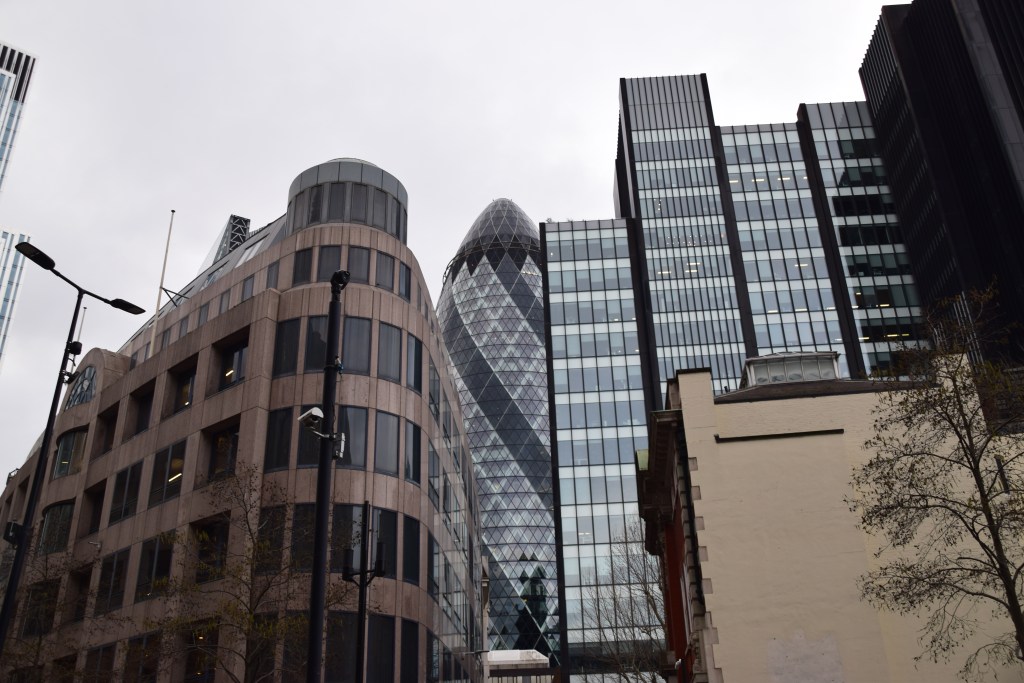
A glimpse of THE GHERKIN – we’re ticking a lot of boxes on this walk!!
We finally reach Aldgate and the infamous ALDGATE PUMP. In the 19th century, fountains were constructed to provide all Londoners with access to clean water. The Aldgate Pump was very fine indeed – it’s wolf-shaped tap commemorating the last wild wolf killed in the city. The water was said to be calcium and mineral rich but, in 1876, people began to complain that it tasted funny and there were more chunky solids than usual in it. As it happened, the stream feeding the the pump actually ran beneath several cemeteries – yep – organic matter from corpses was seeping in to the water!
And, on that cheerful note, we head to our last stop ….. haven’t we seen a lot today!!! What a city!
THE HOOP AND GRAPES, built in 1593, lays claim to being the oldest licensed house in the City – it survived the Great Fire because the prevailing wind was blowing west, away from Aldgate!
I don’t care HOW OLD it is – I think I’ve earned a pint!!!!

Before you go…
Here are a few more of my walkabouts if you’re thinking of visiting London…
Excellent!
Thanks Sheree – glad you enjoyed….
I love this idea! You sure saw a lot on your walk.
We were looking at places as we went along but it was only when I sat to write the blog that I realised how much we actually saw!!
I like your approach to explore a different part of the city on foot each time you visit. Thanks for taking us along with you. Love the architecture, statues, sculptures and interesting street names!
That’s the beauty of return visits – we did the ‘BIG’ stuff years ago so can spend the time elsewhere… This wouldn’t be a walk for a first timer unless they’d lots of time…
Thank you for taking us on your walk and for sharing all these beautiful images and telling about all of this amazing history.
YOU’re very welcome. After all that, we actually didn’t cover much of the city at all – shows you how massive it is!
Exxellent post Marie
I love walking around London
I was born within the sound of the Bow Bells and still have a fairly broad accent. You have covered so much here and researched everything very well
Thanks for sharing
I hope there was something here Alison that you haven’t come across yet!! So you’re a true Cockney!
I am Marie, yes a few things. I did know all the streets though having worked in a few of them
So much to see on your walk! From the old street names like Bread and Pudding, to the legends and history that are attached to each stop. What a fantastic way to explore the city. Maggje
I think my favourite part was the street names – they refer to trades, the Empire, religion … it’s great that they haven’t been changed…
I’ve lived in London almost all my life, but j still find new things to discover and we like to do self-guided walks like this from time to time so I’ll check out Walks Past. You certainly saw and learned a lot on this one. Much of it I knew, but not all – for instance the story behind the Aldgate Pump was new to me!
I’m ashamed to say I don’t do enough of it here in Dublin … note to self to make an effort! I think the Pump story is wonderful – although it killed thousands at the time!
I used to be the same but since retiring we try to do more. We have several good London walk books – if you’re visiting again we could perhaps do one together?
Absolutely!!! I’d love that!! It’ll be after the summer I’d say – so if you’re not travelling I’ll contact you…..
Deal 😀😀
I thoroughly enjoyed the walk through your post. Thank you very much. 😉
That’s great Pepper – there was so much in such a relatively small area….
Wow, you saw a lot! Love the mice sculpture.
And they’d never be spotted if one didn’t go looking for them! I’m sure a good guide would point them out but the self guided tour did just as well on this occasion…
What a great walk that was and through some of my favourite passages and alleys in London. I lived in North London and West London when I was resident there but most of my Sundays I spent around the city, fascinated by the history. We’re lucky that Trump didn’t know about King Henry’s re-naming of the Priory or he’d have added even more gold lettering to his takeover of arts and political buildings in the USA. Thank you for taking me back there.
We’ve several family members living in London – some for decades – and they don’t know the city at all! Never go near the city centre and don’t seem to be familiar with even the main sights! They’re always curious about where we’re off to for the day but that’s as far as it goes!
Thanks for introducing me to Walks Past. The detail, directions and history are amazing.
It’s the best site I’ve come across to date… very user friendly and lots of info….
Very interesting! Thanks.
Glad you enjoyed, Coral. XXXXMarie
Interesting little bits of London. I walked past several without even realising it.
This was actually the first time we ever saw the ‘Monument’! I couldn’t tell you how many times over the years we passed through MONUMENT tube station and never actually wondered what it referred to! Assumed it was a general term for the whole of the city centre or something…. I mean it’s beside London Bridge – how could we miss it!!!
I am going to pursue this at leisure as we have 4 days in London soon.
Yes do – this is all city centre….so parts of it will probably cross with other trails and walks.
What a wonderful walk. You got a whole lot into it
Didn’t we!!! Writing the blog definitely focuses me on details when I’m out and about.
Great part of London for a wander. Our company have an office in that vague area and I used to enjoy having a day there and then a wander after work.
You packed in plenty on your walk!
We’d never been to the Smithfield area at all so it was nice to see it – even if it was closed for the Saturday. Could anyone ever say they really know London!!! There’s so much isn’t there. It’s good you used a bit of time after work to explore the area…
Love this post Marie. As a Brummie I’ve always looked down a bit on London. I regret that now and would love to spend a solid two weeks there, discovering its history – and exploring a few of its ancient bars as night falls.
Myself and my brother were musing over lotto wins last week and he reckoned he’d go spend a month in London! And its to just explore all the nooks and crannies at leisure, enjoy a different cuisine every single night and then hit the jazz and blues clubs – his idea of heaven!!!