
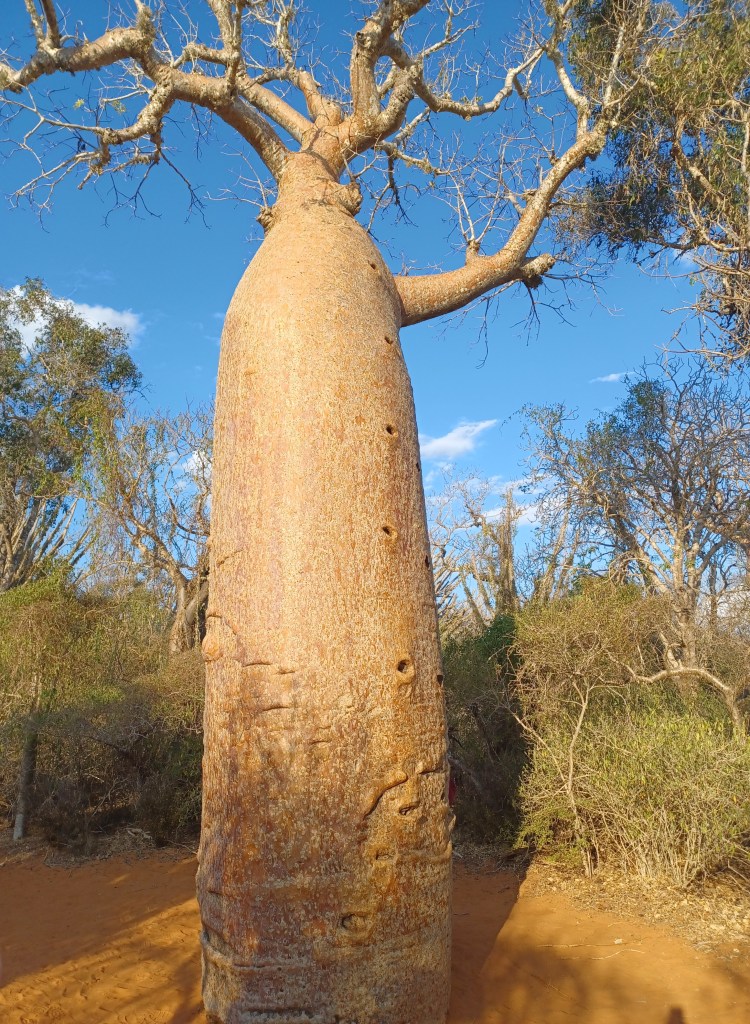
The devil, in a fit of rage, upended the baobab and planted it upside down.
The tree wouldn’t stop walking so God planted it with its root-feet in the air and its branches underground.
This was once a proud and beautiful tree that was punished by the gods for its vanity -they uprooted it and planted it upside down as a reminder of its arrogance.
Take your pick! One thing’s for sure, something as odd looking as this MUST have a good back story!

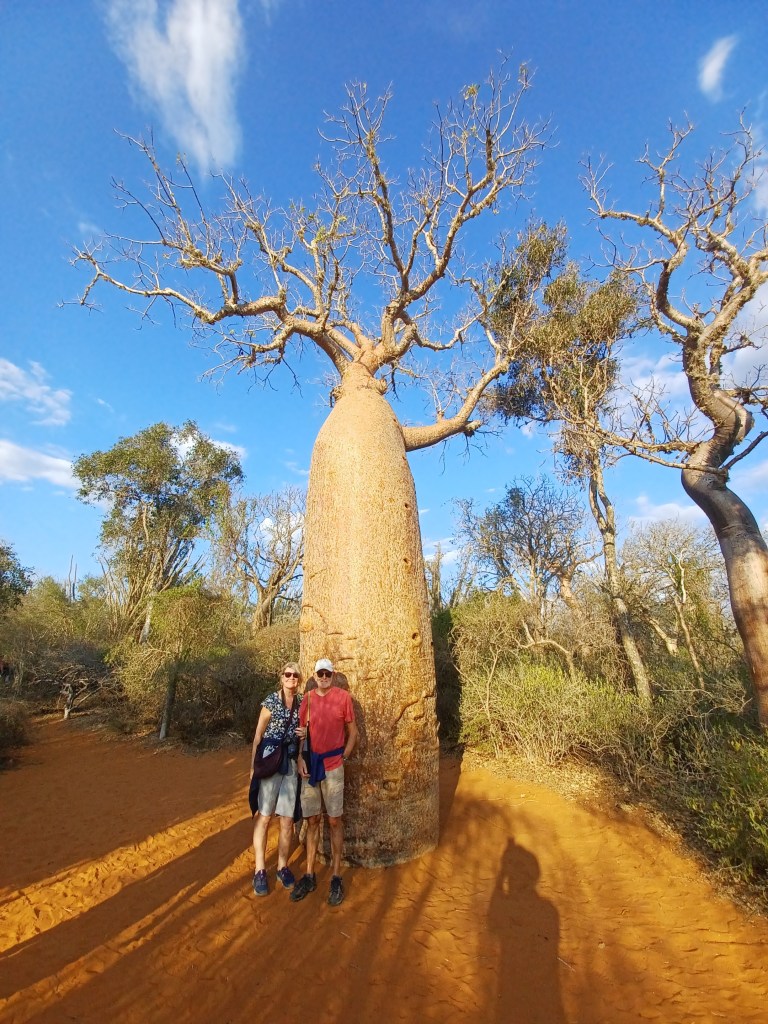
Meet Adansonia – the deciduous tree known as the baobab. Of the eight species on earth, six of them are endemic to Madagascar (the other native to mainland Africa and the Arabian peninsula and also found in Madagascar. The eighth species is native to Australia).
These long-lived trees can grow to 5 -25m (20-100ft) in dry savanna landscapes. Mature baobabs have massive trunks that can be bottle-shaped, cylindrical or tapered. They are covered with a reddish/grey bark. The crown is flat-topped with outstretched branches. Leaves only appear for a relatively short time – they are shed during the dry season to preserve water content. Large flowers are pollinated by nocturnal visitors – moths, bats and even lemurs.

The plant is able to survive in harsh and arid environments thanks to its ability to store large amounts of water in its trunk. It is a succulent so it absorbs and stores the water during the rainy season – anything up to 100,000 litres!
The Malagasy word for baobab is reniala, meaning mother of the forest. Every part of the tree is valuable – the wood is used as a building material and for musical instruments, the bark can be turned into rope, cloth and baskets. The seeds make cosmetic oil and cooking oil while leaves are used in traditional medicine. The water in the trunk can provide a natural reservoir for local communities in prolonged dry periods while the hollow trunks of dead plants are sometimes used as shelters or storage spaces. The fruit is extraordinarily rich in nutrients and antioxidants and is used in cooking and soft drinks.

Beyond their practical uses, baobab trees hold a special place in Malagasy culture and folklore. Some tribes leave offerings at the base of the tree to appease the spirits that inhabit its interior. In other traditions, the tree is seen as a symbol of wisdom and longevity and is often used as the meeting place for important village discussions.

Madagascar’s baobab trees are facing a number of threats.
Climate change is a huge concern. Increased dryness is causing rapid contraction of their traditional habitats.
Deforestation is driven here on at least two fronts. On the one hand, small farmers and migrants are constantly looking for more arable land. They use fire to prepare the fields which often gets out of control. Large scale agribusinesses are also clearing forest for the likes of maize cultivation. In the past 20 years, the country has lost nearly 25% of its tree cover.
Conservation groups are working to raise awareness of the importance of the trees and to find ways of protecting them from human activity and climate change.
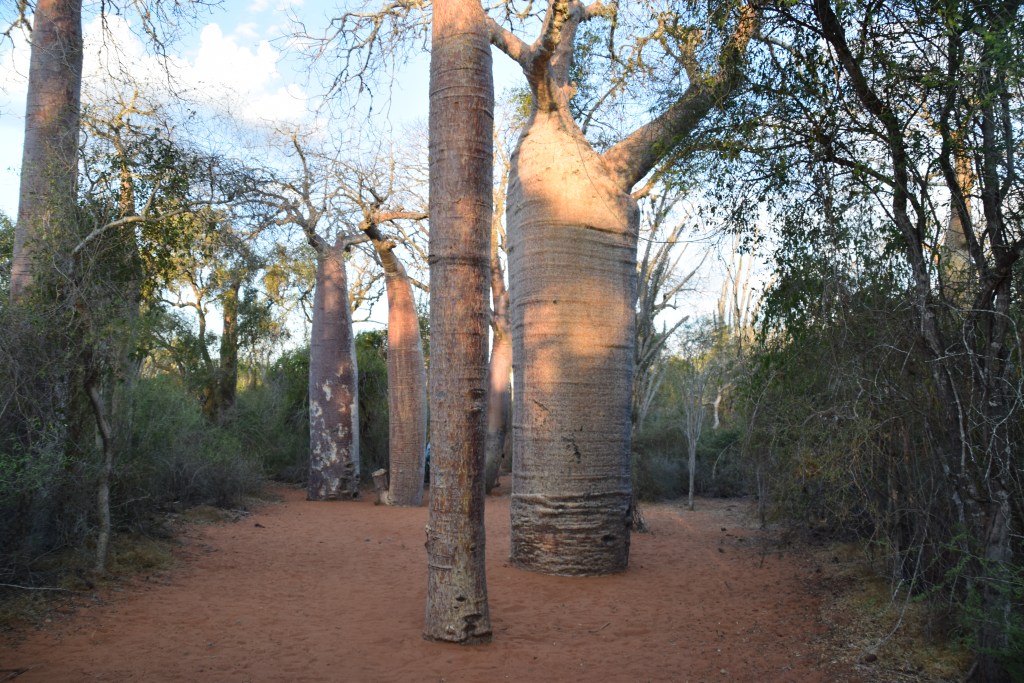
Before you go …..
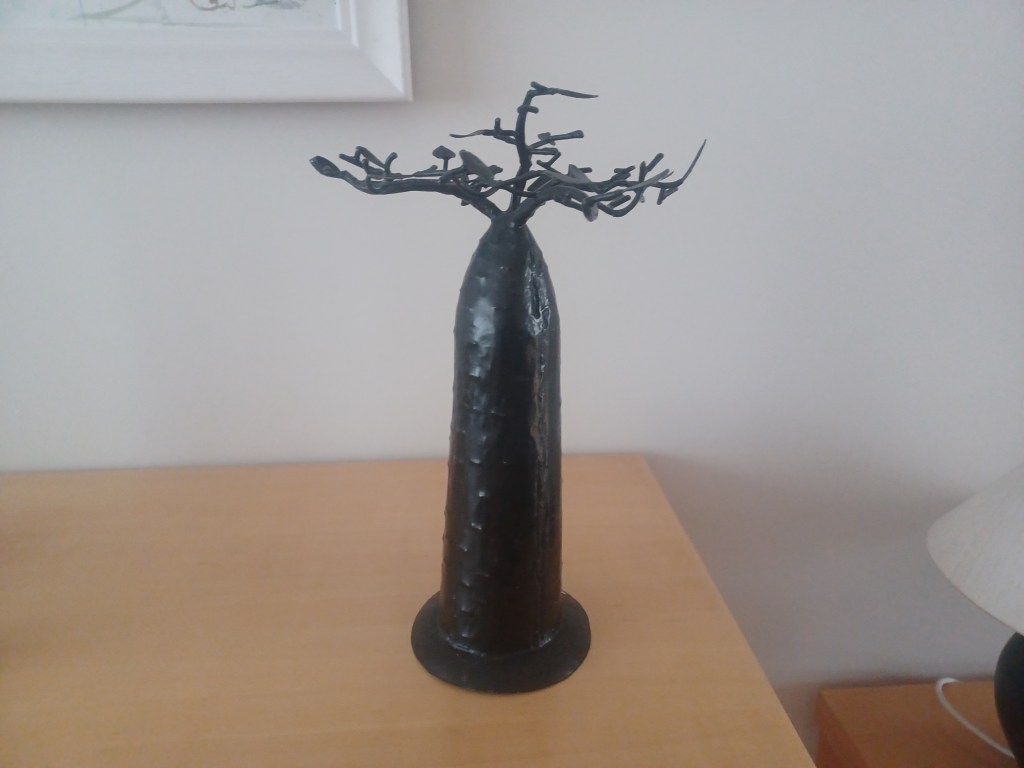
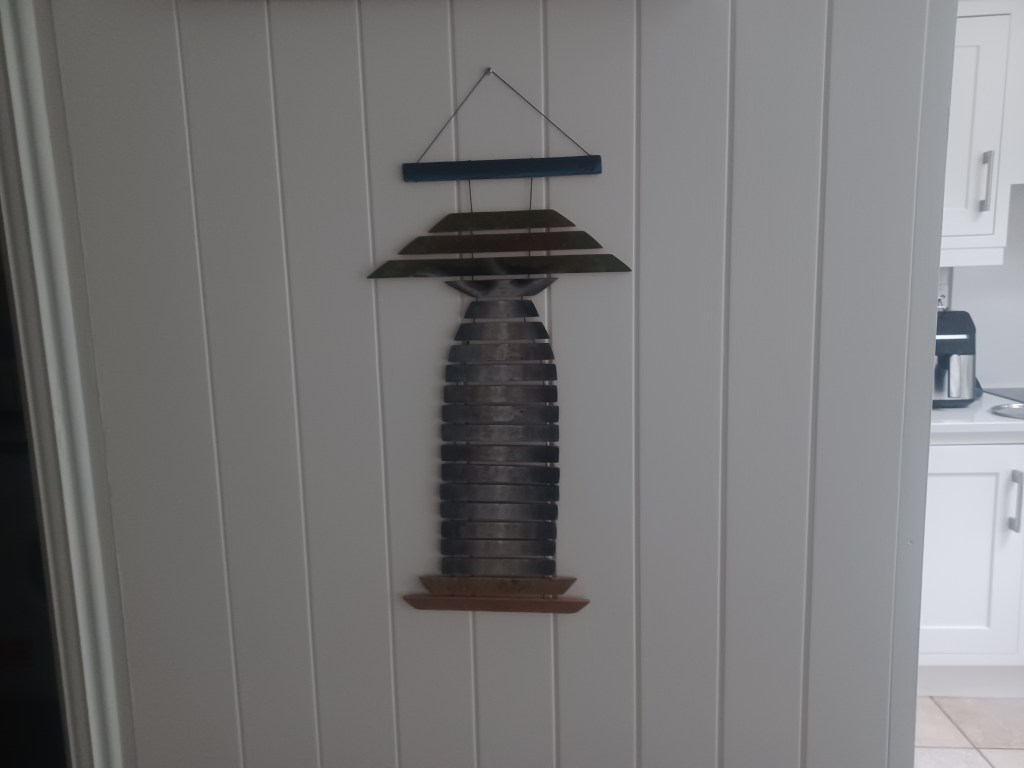
You have to admire my purchases! A full grown tree was turning out to be a bit awkward to get home – just a tad too big for my luggage. And, to be fair, Irish climate mightn’t suit anyway!!
So I settled for these! ….
Keep reading….
Have a look at Madagascar’s capital – Antananarivo
Your souvenirs from Madagascar are so beautiful, and so is this post about these majestic trees, dear Marie. As a tree lover, I have always had a soft spot for baobabs and their unique, massive trunks and bare branches that in the dry season resemble roots reaching toward the sky. I find that their beauty is as much about their character and history as their appearance. Thanks for sharing, and have a good day 🙂 Aiva xx
Ah thank you Aiva – they’re my favourites at the moment but I’m always open to updating when I go away!! I remember learning about them at school so it was wonderful to see them up close…
😊😊😊
The dirt, the red trees .. look identical north of Western Australia! Love your souvenirs.
Same conditions more or less I suppose, Therese. Thank you – I’m showing them off to everyone!!🤣
The bizarre shape of the tree makes it very sympathetic, and even its name, baobab, is rather funny. I have seen some in South America, particularly in the Paraguayan Chaco area, and I wonder what sub-species they come from.
Don’t know if they’re related – Only Africa and Australia is mentioned in any reading I’ve done…
I’d love to see them, but I had no idea they are succulents! Fascinating. Maggie
I think they might be the largest in the world!
so no travel-friendly bonsai editions available then 😉
Ah – wouldn’t be the same🤣
I love baobabs, they are so photogenic! And any/all of the legends about them are wonderful too 🙂 I also love your ceramic souvenir in particular. Like you we decided a whole tree would be impractical to pack and would overwhelm our tiny London garden so we settled on a stylised woodcut print!
This house is becoming rather overrun with ‘stuff’! Although I bring less and less home every time…. But I think that’s all we have from that trip – apart from a piece of handmade paper – lying around somewhere waiting to be framed! (And something for the xmas tree of course but that doesn’t count!!)🤣
A fascinating story and I’m open to believe in all three explanations of this strange tree! And I very much approve of your purchase. Let’s hope it brings luck to your house.
Yes – I love all three stories – If I have to choose….maybe the fact that it wouldn’t stop walking!! And thank you for your kind wishes – they’ve been lucky so far anyway. XXXMarie
They are very interesting!!
They look great don’t they – this was actually the first excursion once we’d left the city so we’d a lovely evening….
They are just incredible trees!
I thought we’d see them everywhere we went but of course conditions aren’t the same all over the island – And I’m actually glad they weren’t in leaf – I love the bare branches…
Such unusual and impressive trees (or should I say succulents)! Love the souvenirs that you took home.
Thanks Linda – ‘baobab succulent’ doesn’t have the same ring to it does it!🤣
Loved this post, Maggie, as I had never seen a post devoted to a particular type of tree before! Really enjoyed reading all about baobab 101, as I love facts and figures. I hope we’ll be able see them for ourselves this time next year. Congrats on your purchases and bringing a little bit of Mad home with you.
Oops, meant to write MARIE – my apologies!
Ha thank you! I’ll have to abandon my Madagascar posts for now – packing for our next adventure!
Very cool! We’re planning a trip to South Africa this fall and considering Madagascar as well so seeing this is helpful. 🙂
That’s a great combo – we were in South Africa 2023 and loved it.