

I’d always imagined Madagascar as total jungle, narrowly framed by tropical beaches. Anything but! Especially nowadays. The island, which is a bit bigger than France and about twice the size of Arizona, now devotes over 70% of the land to farming.
Most farms are small family units – there’s somewhere between 2.4 and 2.5 MILLION of them! Imagine! Most of these operate at subsistence level – barely producing enough to feed their own families and without enough income to invest in new equipment and techniques (We’re not talking high tech – but being unable to afford a simple wooden plough for the zebu to pull). Almost half the cultivated land is devoted to rice and the paddies are constructed on narrow terraces – some no more than a few square metres in area. Most farmers also grow a mix of other crops and raise livestock.
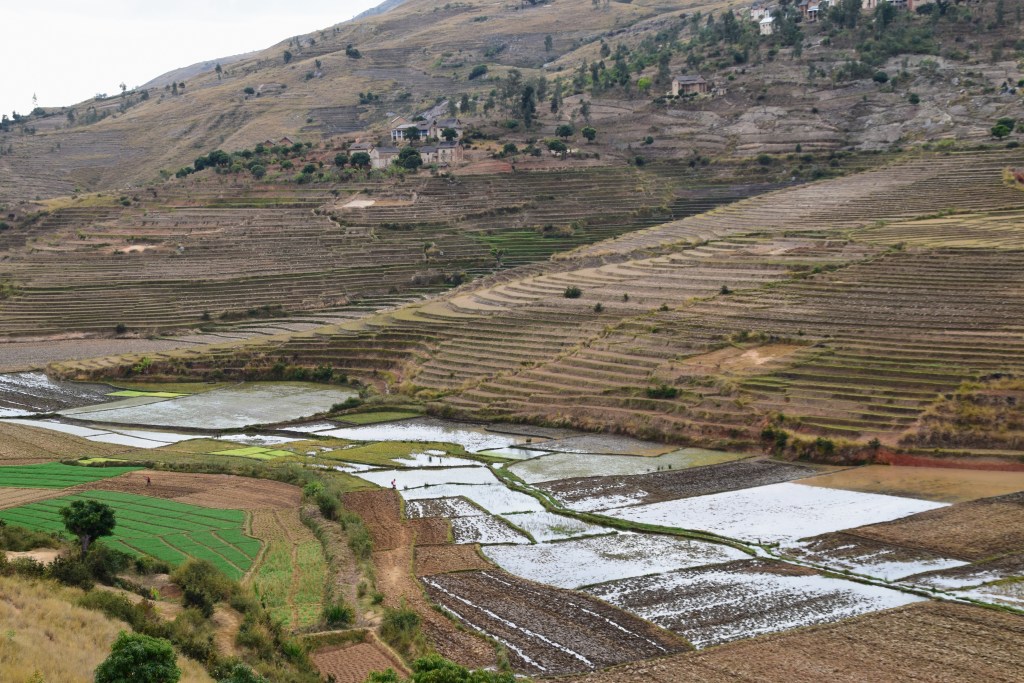


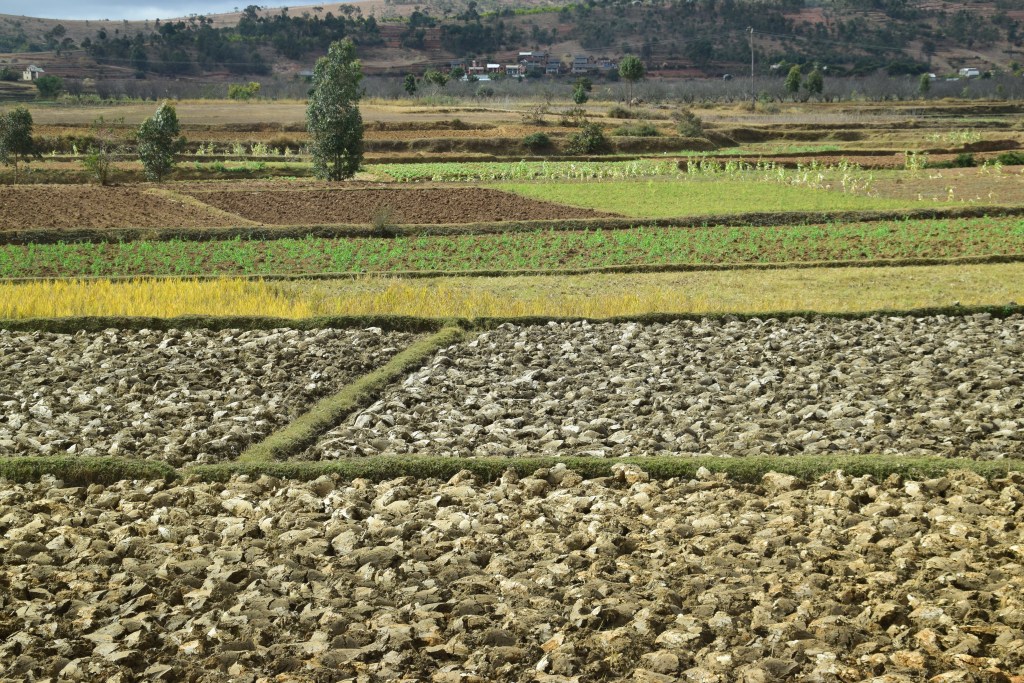
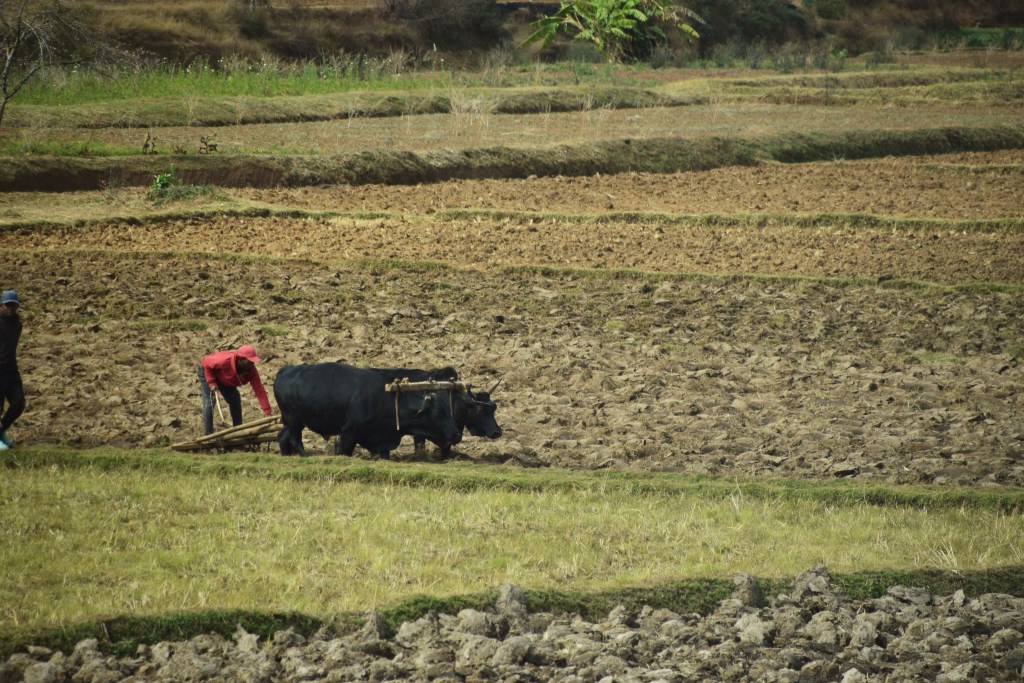


Crops may also be grown for household income but revenue is low due to poor productivity and lack of road infrastructure. Most farmers have no personal transportation anyway and have to walk with their produce to the nearest market. Livestock is a more important source of income and zebu, pigs, sheep and poultry are widely raised.


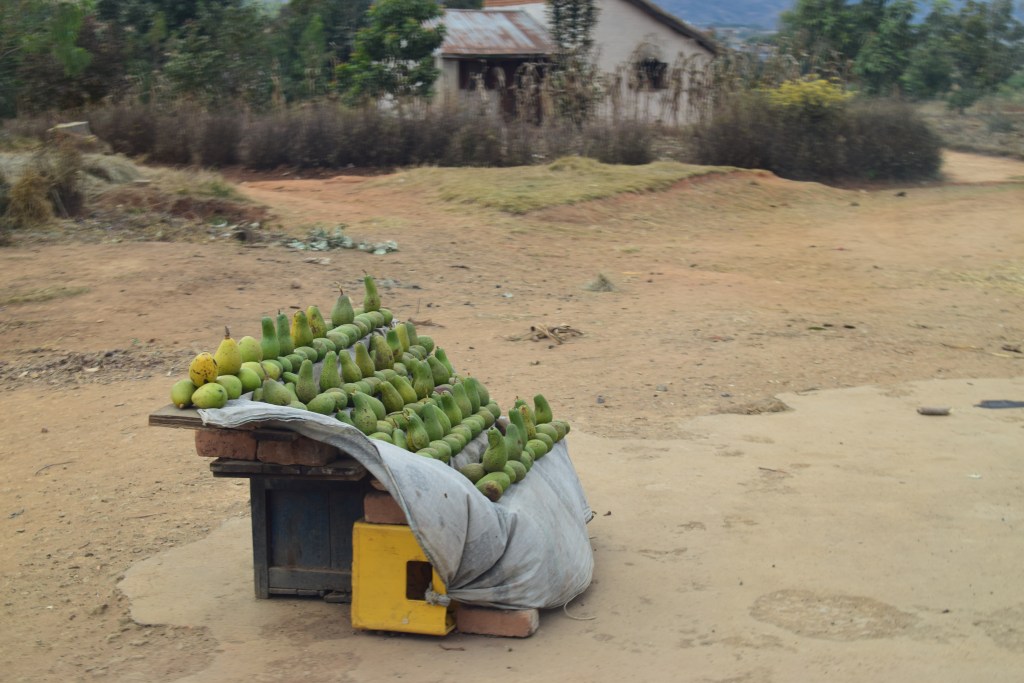


(We were more than happy to pull up along the side of the road and buy fruit – with 16 of us on board, we could buy a few bowls worth at a time. Our driver and guide were very appreciative and happy to oblige – and needless to say the fruit was delicious!!)
Houses throughout the island are constructed using the local resources available.In the highlands, they are predominately of red brick and plastered with clay, sporting wooden doors and unglazed windows.


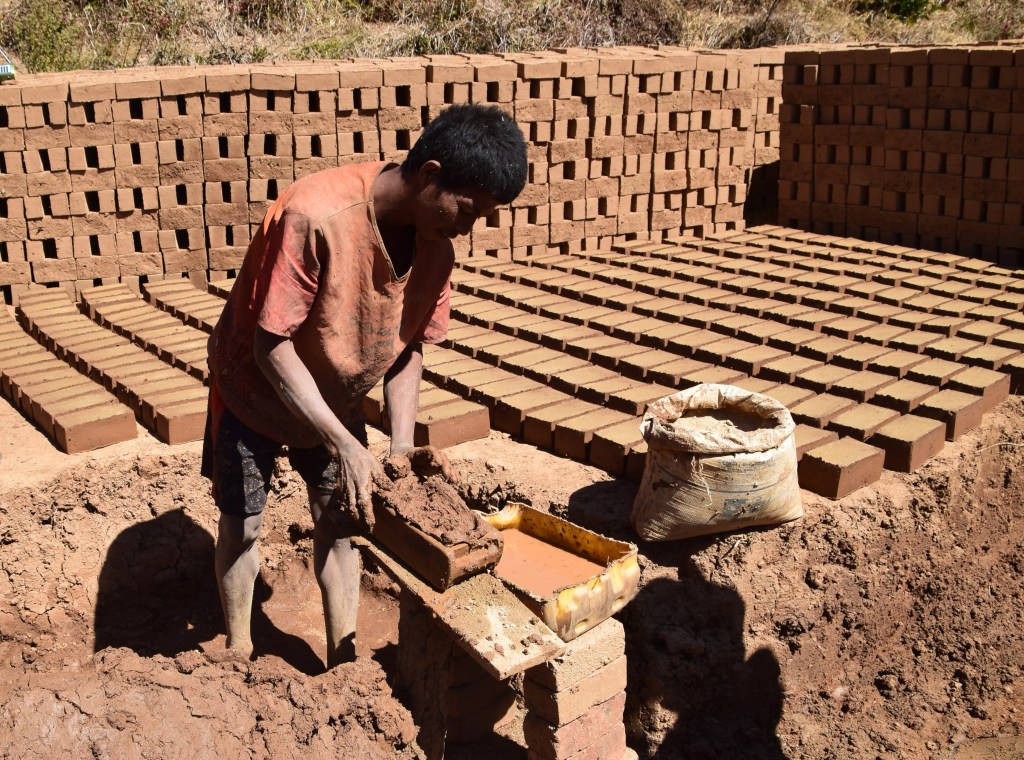
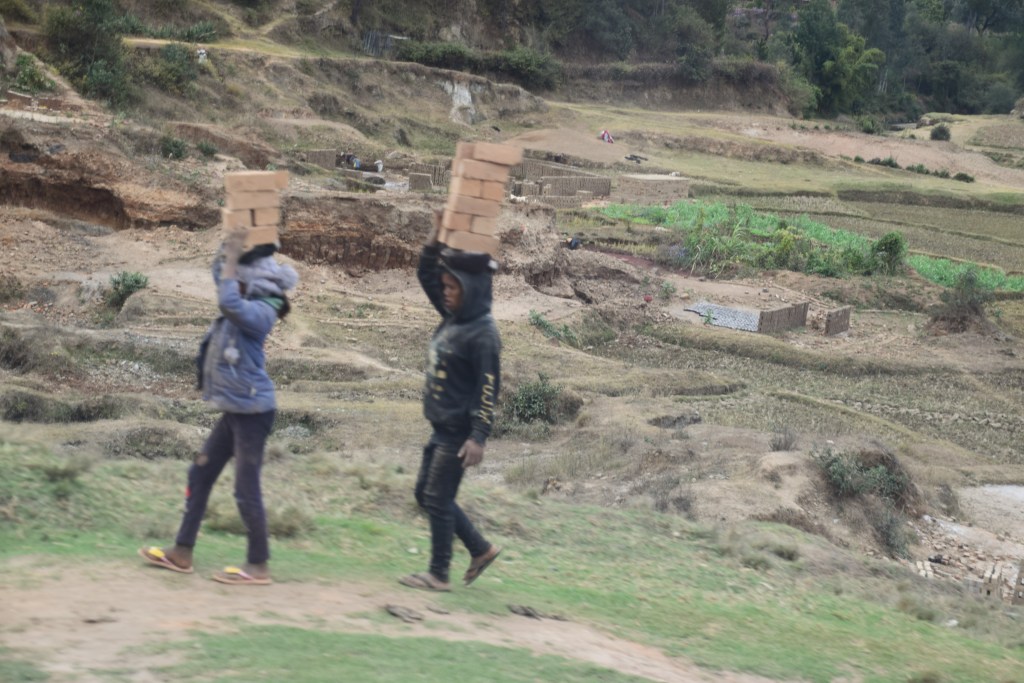
Brick building is big business in the dry season and organised on a local level. Clay sediment is taken from the rice fields, mixed with river water, moulded into shape by hand, dried in the sun and then fired in open-air furnaces. An experienced worker can produce between 200 – 400 bricks per day but it’s a low-paying job – bricks are sold very cheaply to make them accessible to local families.

Apologies for the clarity of the photos – many were taken in transit through the bus window!
(We travelled to Madagascar in July/August 2025 with G Adventures)
I did not realise Madagascar was so large!
I know! We hadn’t a clue either- didn’t get to see quite a bit of it which was a pity….
I’ve learnt a lot from this post as I, too, had imagined a tropical forest surrounded by white sandy beaches, and had no idea of an interior such as you’ve shown us. Your images supplement your text very well but I don’t suppose they got much milk from the skinny looking cows. But then, is dairy part of their food intake? I doubt it. Thanks for a very interesting post, I feel as though I’ve been n a journey!
The zebu are raised for meat and work primarily I think – dairy comes up last in the list. How lucky are we with our amazing dairy products!
Really enjoyed reading about Madagascar, Marie, as you painted a picture that was so different than what I imagined the country was like. Your photos were excellent and added ‘color’ to your text. How sad that the farmers don’t have the simplest of tools to make their efforts more productive.
Life is tough – there’s almost no road network and certainly none linking local villages. There’s a lack of basic resources (for us!!) like access to water, education, etc. And then throw in deforestation, climate change…. We came home with a new appreciation of what we’ve got!
I was struck too by the extent of the agricultural land in Madagascar. Did you spot the family tombs on their land? We were told by our guide that the houses are always built from mud, wood or brick which the Malagasy consider to be ‘warm’ materials, while cold stone is reserved for the family tombs.
It’s such a strange thing to us – having tombs scattered about the countryside isn’t it – we saw a lot of it in Viet Nam also…
I felt very ignorant reading your blog. I had no idea that Madagascar was so big. I also had to look up what a zebu was.
I remember learning about zebu in primary school – the only bit that stuck was that they had humps!
Fascinating. I had no idea that much of Madagascar’s land is used for farming. It’s a country that has always fascinated me and I would love to visit one day.
Getting about is a challenge because the roads are so awful but once you get over that then it’s a great destination….
I enjoyed your photos of real life in Madagascar. 👏
Thanks Pepper – it was lovely to see it – from the comfort of our bus of course…
This is truly fascinating, dear Marie. I very much enjoyed your photos as well as learning that farming is the backbone of Madagascar. I can see that life in Madagascar is notoriously challenging; it’s heartbreaking to see just how hard so many fellow living beings work to get the food they need for their sustenance. Thanks for sharing, and have a good day 🙂 Aiva xx
Its all the more upsetting when you consider that the land quality is quite good and the island is rich in natural resources – especially sapphires…. unfortunately, the general population isn’t reaping the benefits…