

There have been occasions (not too many though) when a travel destination has left me a tad underwhelmed. I had VERY high expectations this time – and (rest assured!) – the experience was as good as hoped for!
Getting to the Komodo Islands sounds more complex than it actually is. From Dublin, it means two flights to Indonesia and one domestic to Labuan Bajo on the island of Flores. 13,100kms is a long way to go – even for dragons – so it makes sense to include it as part of an extended trip. We joined G Adventures for 21 days through Java, Bali and Komodo, finishing up back in Bali for a few days on our own before heading home.
So what’s the big deal about the Komodo Islands?
The Komodo Dragon – the world’s largest lizard – once lived across a huge range, spanning Indonesia and Australia. Since the 1970s, it has only been found in the Komodo Islands. Nowadays, fewer than 3,500 remain – present only on five islands. Four of these islands make up Komodo National Park, and the fifth island is Flores. The largest number of the creatures are found on the aptly named Komodo Island.
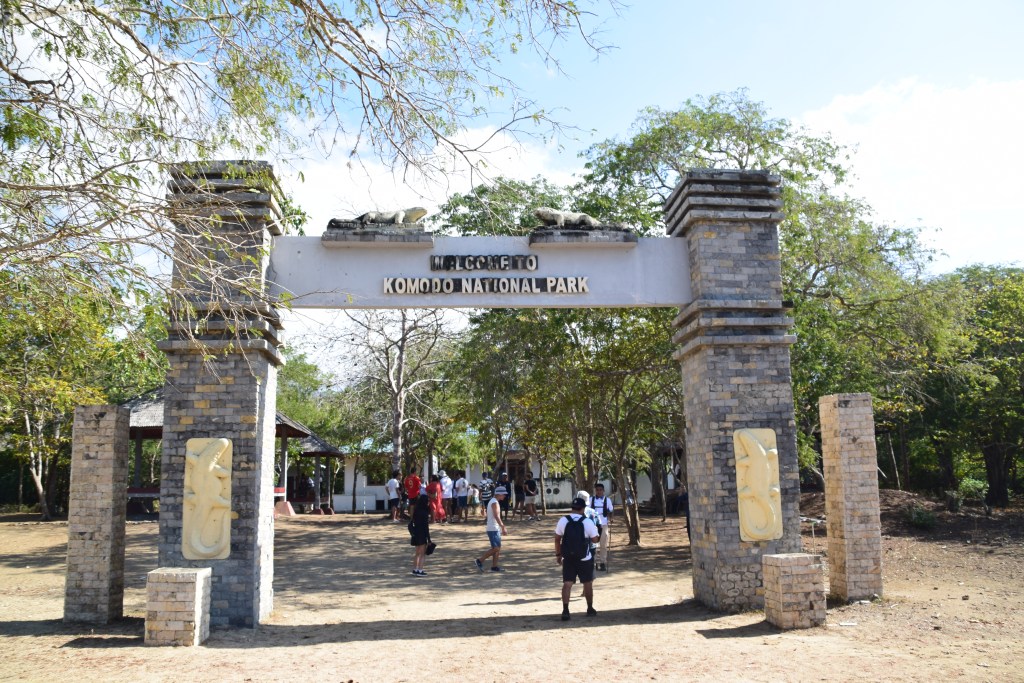
Komodo National Park was established in 1980 and officially designated a UNESCO World Heritage Site in 1991.
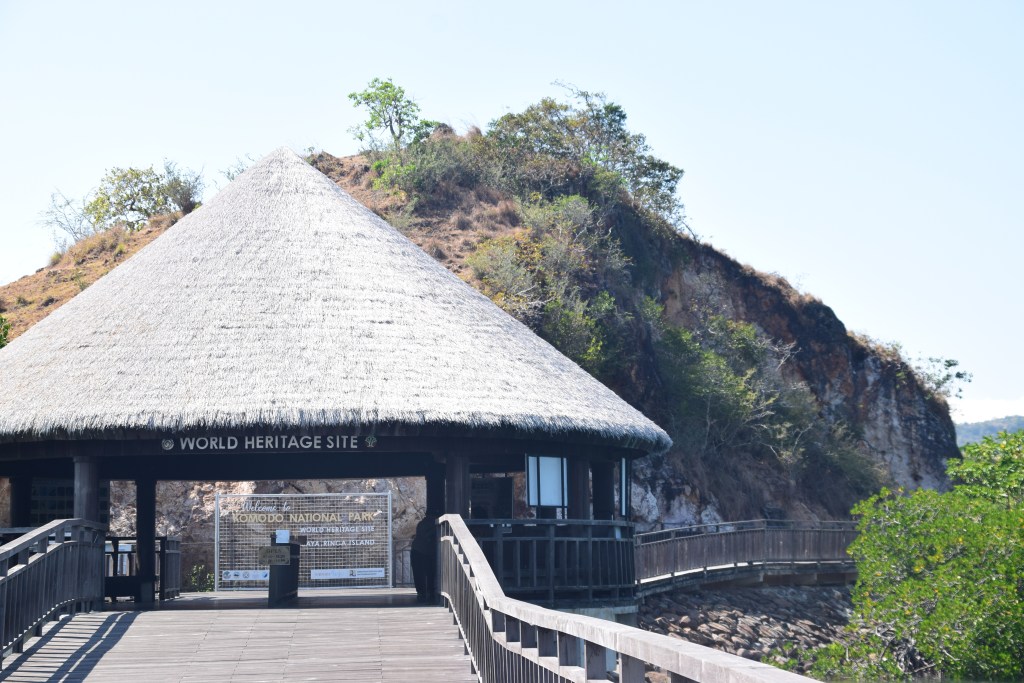
Getting There ….
Most visitors make their way to the port town of Labuan Bajo on the western side of Flores island. We thought we were special until we got to Denpasar Airport (Bali)!!! In August, there were 656 flights into Labuan Bajo – that’s 22 per day!! They are mostly from domestic airports but also from Singapore and Kuala Lumper. From Bali, flight time is circa 90 minutes.
It’s possible to go by sea via Lombok but it’s not an easy option.
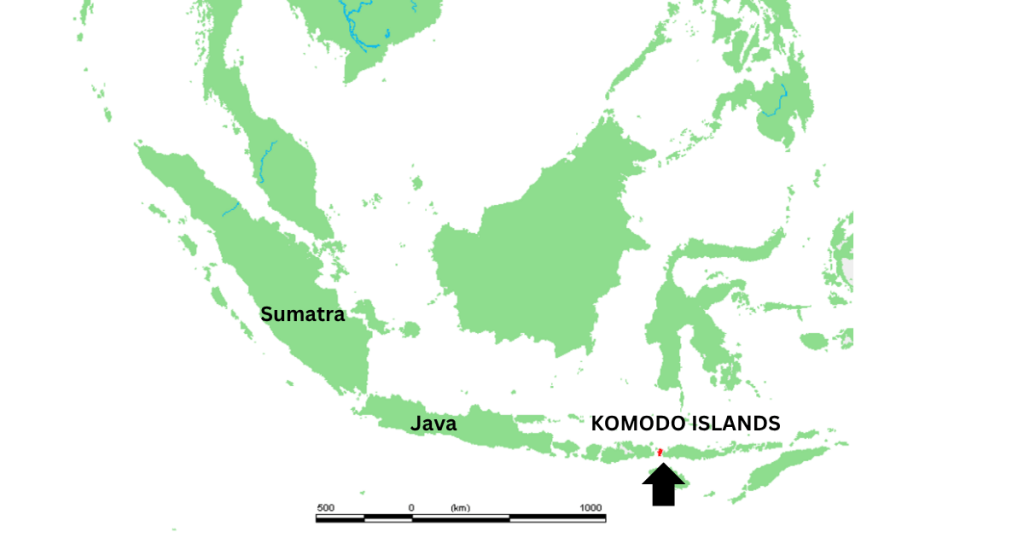

Then What….
There are different ways to experience the National Park. You can base yourself on Flores (which we did) and make day trips out to the national park. There are also a few resorts out on the smaller islands closer to the Park. Otherwise, you can venture out on a multi-day boat journey – there are dozens of boats offering a range of facilities and suiting every budget but all pretty much offering the same excursions.

Traditional two-masted Phinisi boats offer multi-day trips

How the other half lives!!!!
How Long
Unless you’re interested in extensive diving etc, 3-4 days is sufficient to visit the dragons on 2 islands and enjoy a range of water-based activities the rest of the time. Schedules are prone to change – the harbour master is God here and has the final say – so a few days flexibility is wise.
Visiting the Dragons….
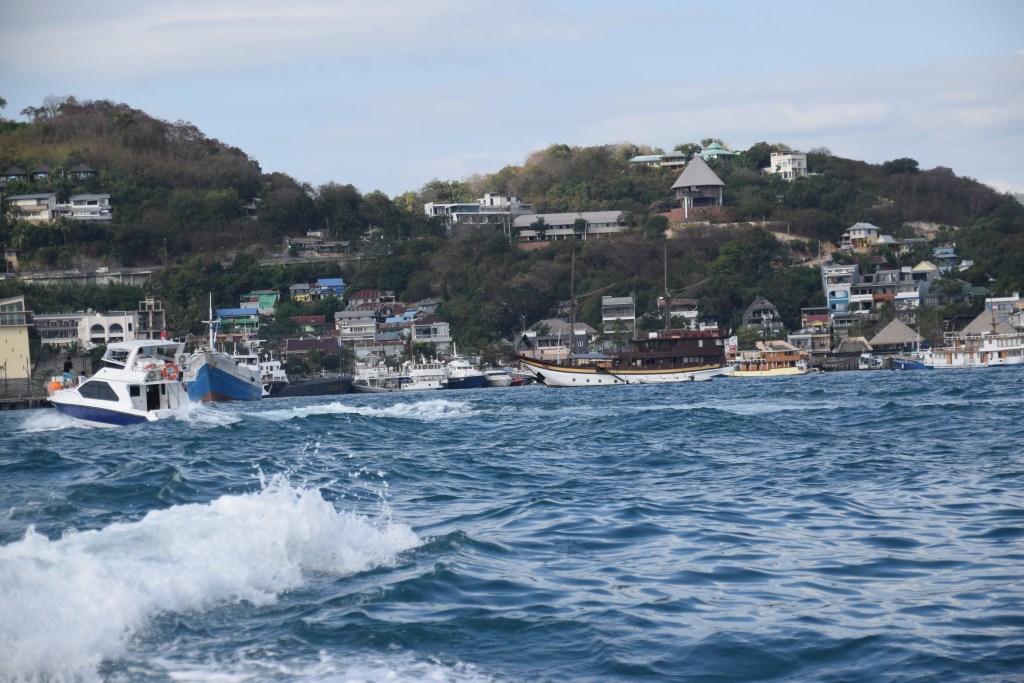
Komodo National Park access is by boat only. The journey, by speedboat from Labuan Bajo, takes circa 90 minutes.
A strict daily visitor limit of 1,000 people is implemented as part of the government’s effort to reduce overcrowding and protect the park’s ecosystem.
Walk-in visits are not available – visitors must pre-book their entry permit via the official e-ticketing app or through a licensed tour operator.
All treks on Komodo and Rinca islands require an official, trained naturalist guide.
Packages from Labuan Bajo include boat transfers, permits, ranger fees and snorkelling equipment so offer the most practical and hassle free option.
It’s best to visit in early morning when the dragons are most active – as temperatures climb during the day, they retreat into the shade.
Once landed and registered, there’s a health and safety briefing before the guide and spotters bring their group on a walkabout – typically 90 minutes or so. The pace is leisurely – the group stopping whenever there is something to be seen – so not a lot of distance is covered beyond the mooring area and village. Encounters are controlled, with the guide and spotters dictating the route and distance maintained from the animals.
What we Learn….
*The Komodo Dragon (Varanus Komodoensis) belongs to the Monitor Lizard family.
*It is the largest extant species of lizard, with males growing up to 3 metres and weighing up to 150 kg. Its tail is as long as its body and skin is reinforced with armoured scales. It has about 60 serrated teeth and a long forked tongue. It has an estimated life span of up to 30 years.

*They are the apex predators in their ecosystem (meaning they have no natural enemies). The young eat small prey – insects, eggs and small reptiles – while adults eat carrion and hunt deer, pigs and water buffalo.

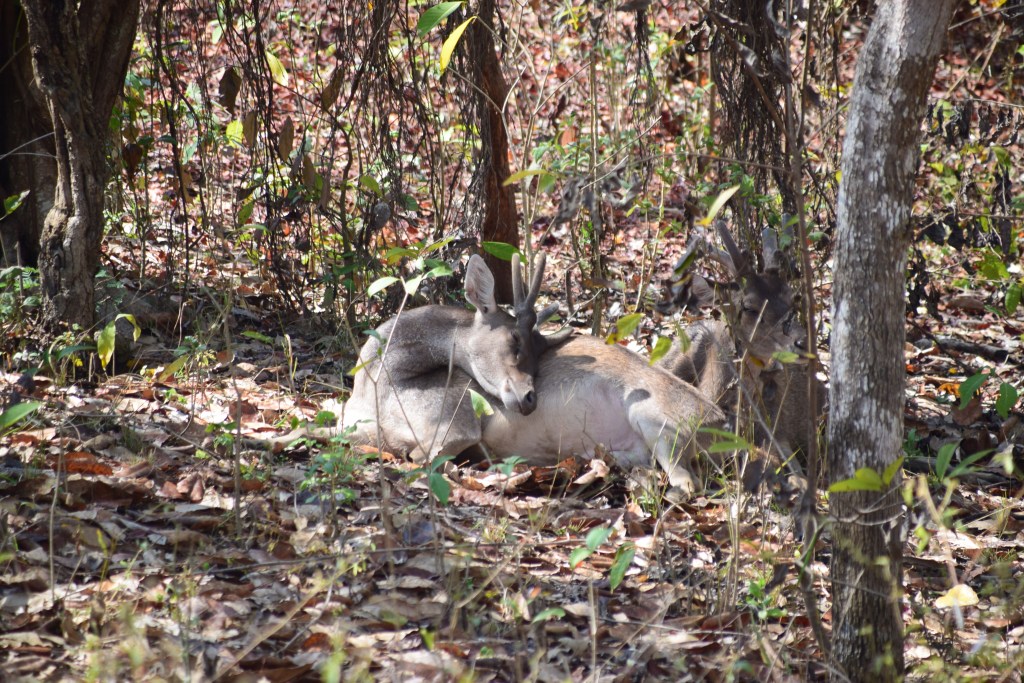
What’s on the menu today?
*They hunt in the afternoon, hiding near trails and waiting quietly for suitable prey. When attacking, they sink their teeth deep into the flesh and use powerful neck muscles to shake violently, creating deep wounds that cause massive blood loss.They possess venom glands that secrete toxic proteins which stop the victim’s blood from clotting – dropping its blood pressure rapidly and forcing the animal into shock. The dragon then tracks the wounded animal until it collapses. They enjoy their prey by tearing large chunks of flesh and swallowing them whole. They can eat an impressive 80% of their body weight in a single feeding and slow metabolism means large dragons can survive on as few as 12 meals a year.


*Komodo dragons generally avoid encounters with humans. If cornered, they may react aggressively by hissing and swinging their tail. If disturbed further, they may attack and bite. Attacks on humans are rare – spanning the 38-year stretch from 1974 – 2012, there were 24 reported attacks, five of them fatal. Most of the victims were local villagers.
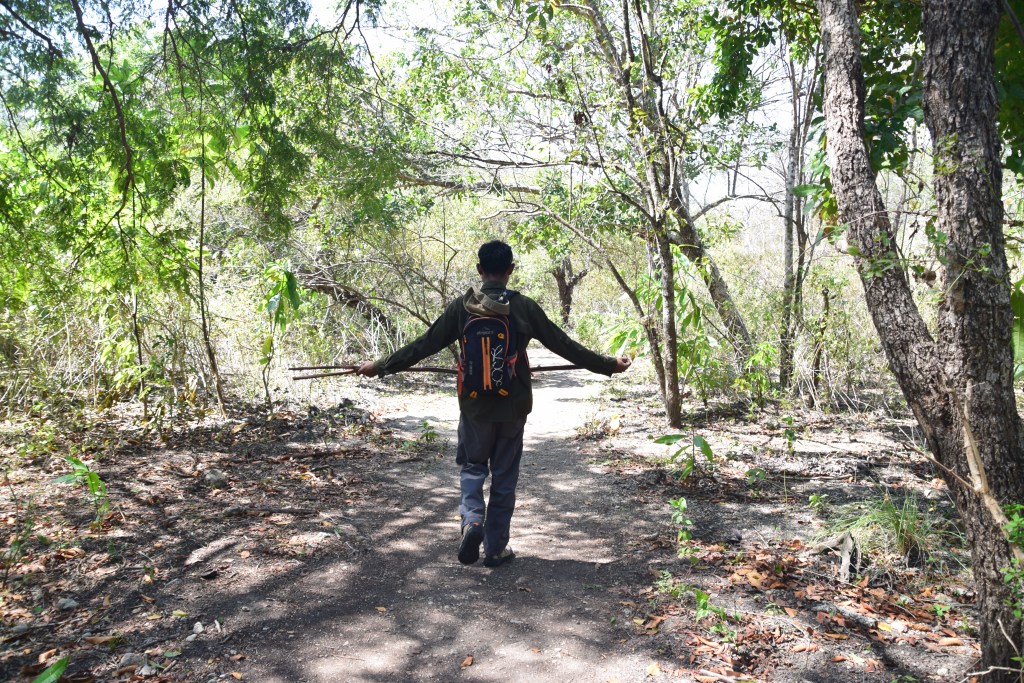
Rangers carry forked poles – just in case!!!
*Dragons are solitary creatures – coming together to breed. Mating occurs between May and August…
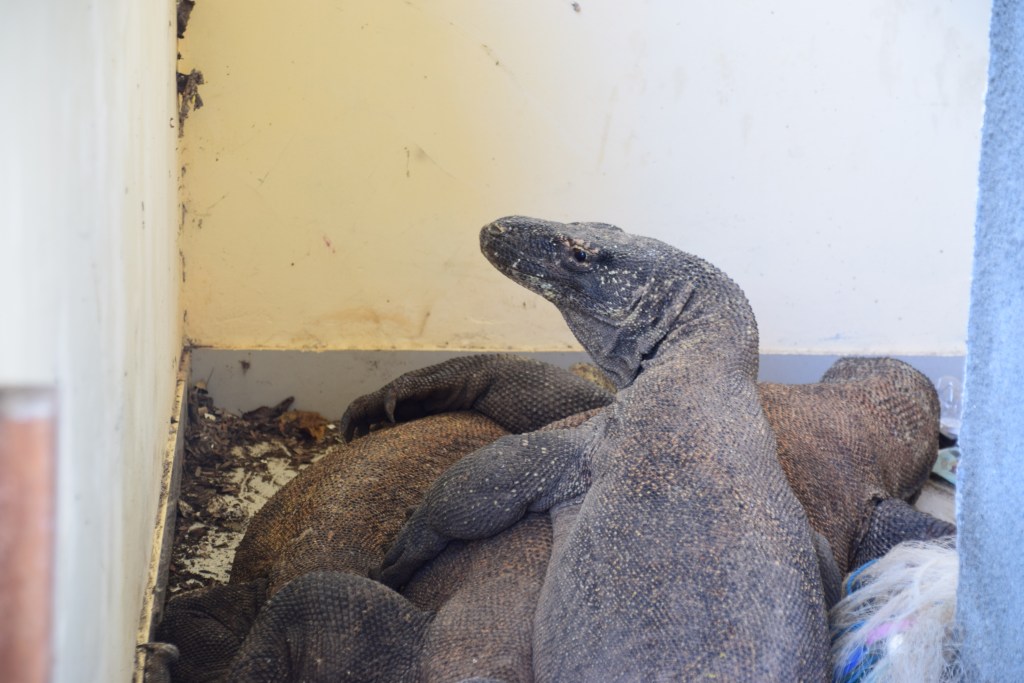
What’s going on here, lads!
…..with an average of 20 eggs laid in September in camouflaged nests/holes (to prevent other dragons from eating the eggs). Females can also give birth via parthenogenesis, producing a litter of dragons without the help of a male.

*Hatchlings are born quite defenseless and spend much of their first few years in trees where they are relatively safe from predators. Predators include their own species alas as the juveniles make up 10% of the cannibalistic adults’ diets!
*The main threats to the Dragons come from poaching, tourism and volcanic activity. Climate change is viewed as a major future danger – dragons do not inhabit the higher altitude regions of their island so aridification and sea level rise will affect their low-lying habitats.

After a morning excursion to Komodo or Rinca Island, the rest of the day is spent at leisure before returning to Labuan Bajo in the evening. Activities include swimming / snorkelling and hiking.
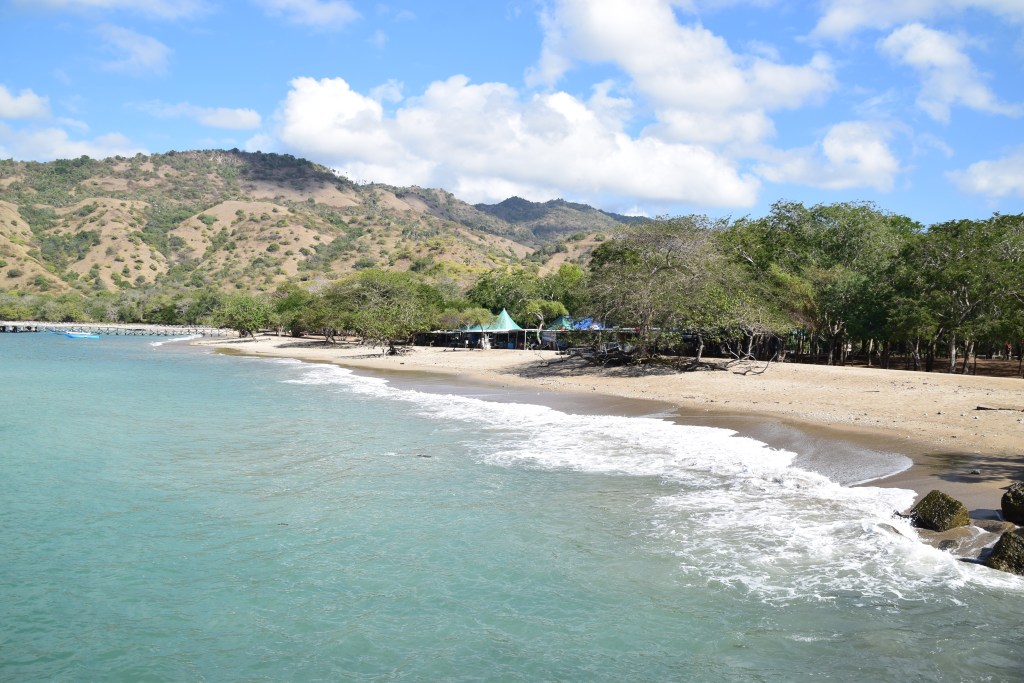
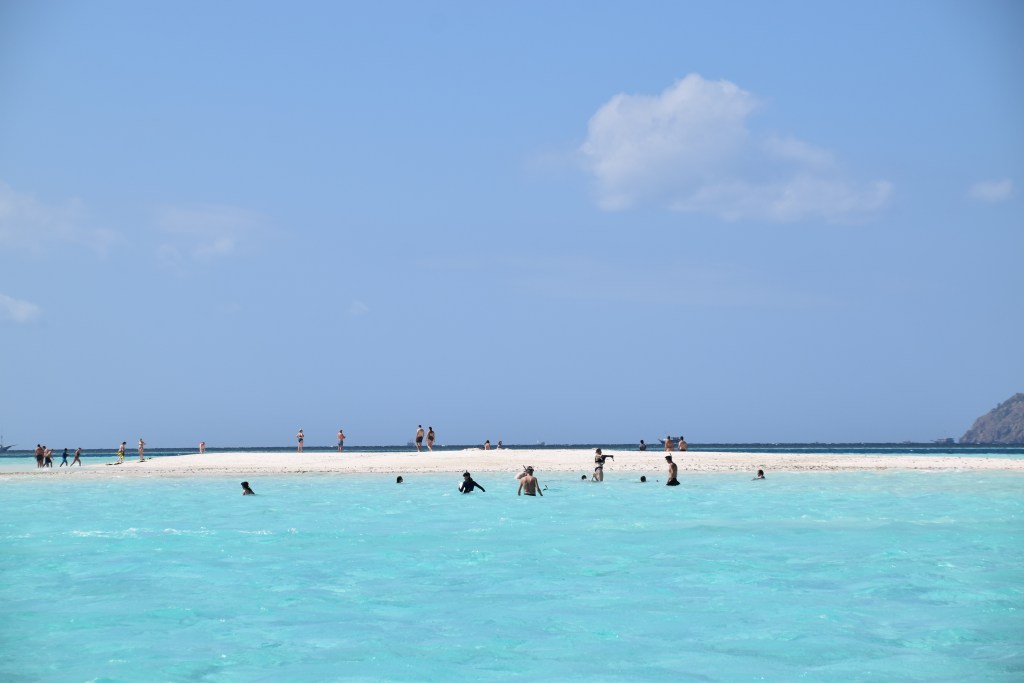
Komodo National Park is famous for its beautiful pink beaches – created by fragments of red coral mixed with white sand…..
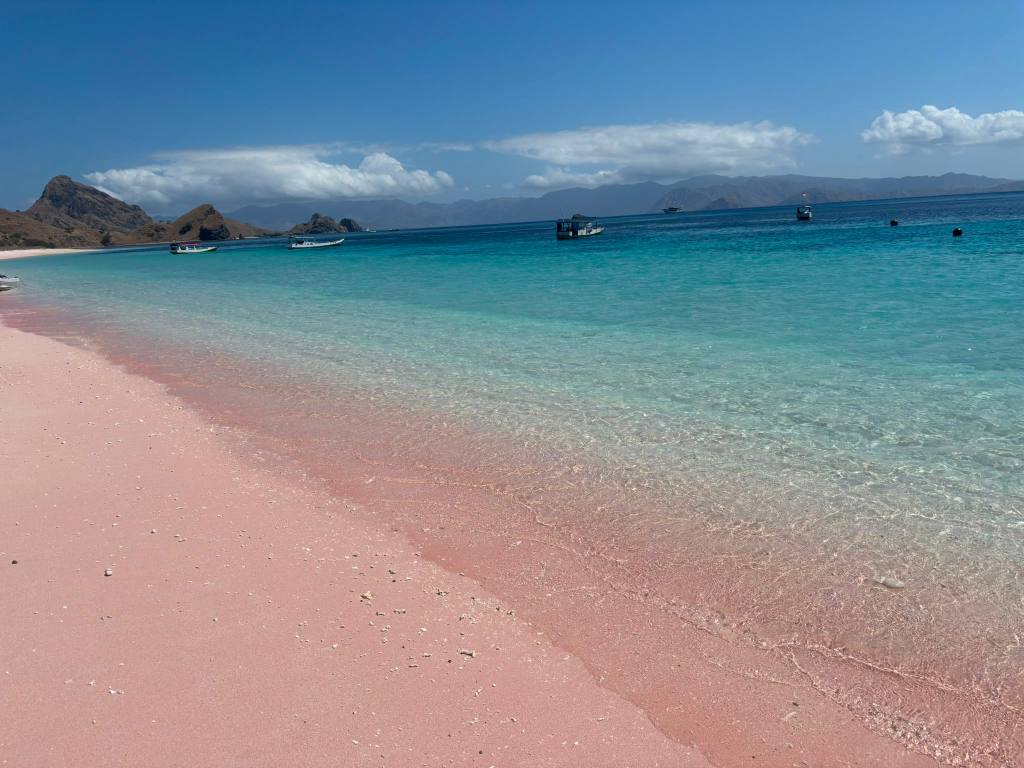
….and turquoise waters…

Snorkelling options vary between beach and boat and locations change, depending on weather conditions on a particular day.

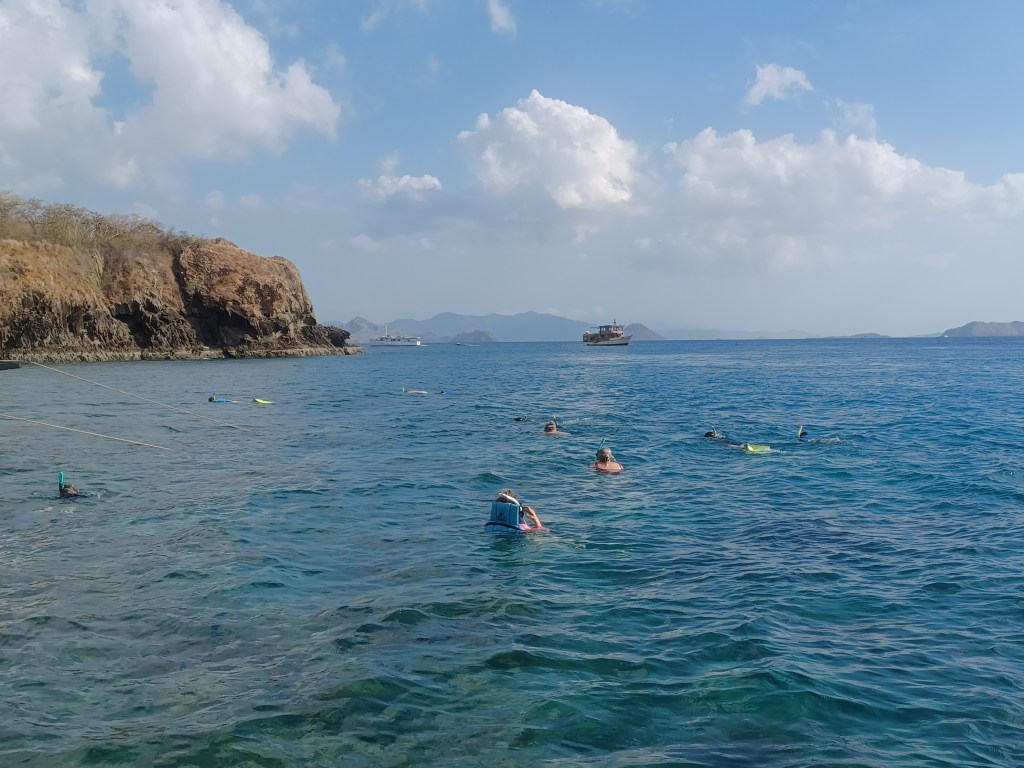
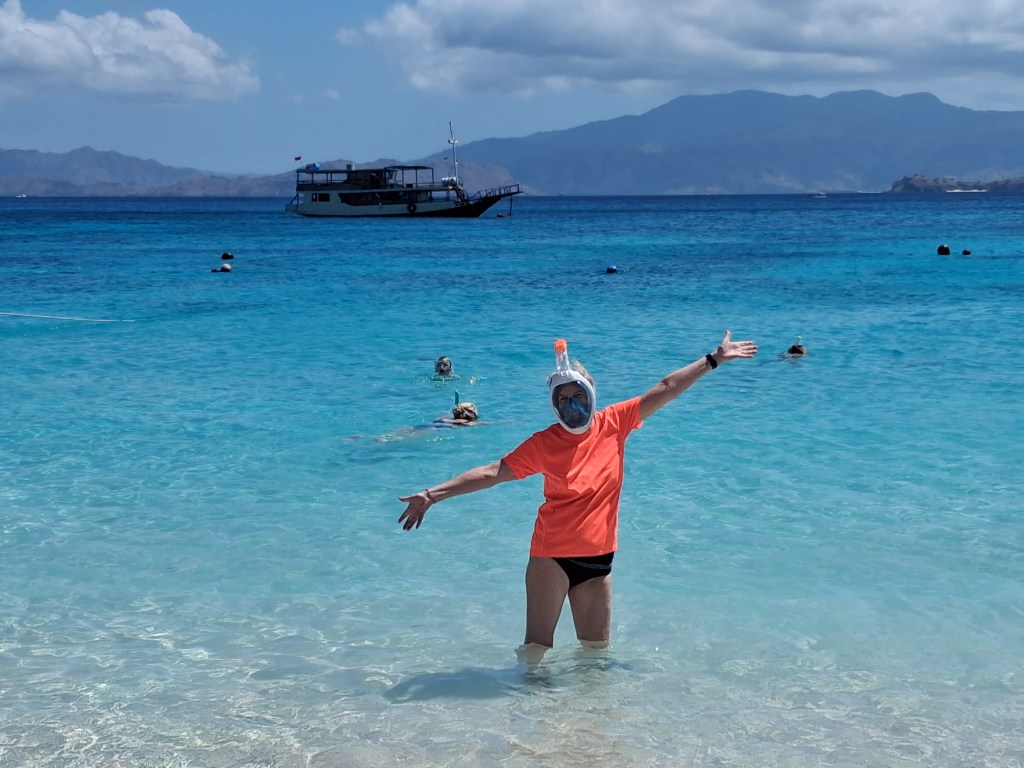
You don’t even have to snorkel – the water is SO clear….

…..sting rays in the shallow waters……

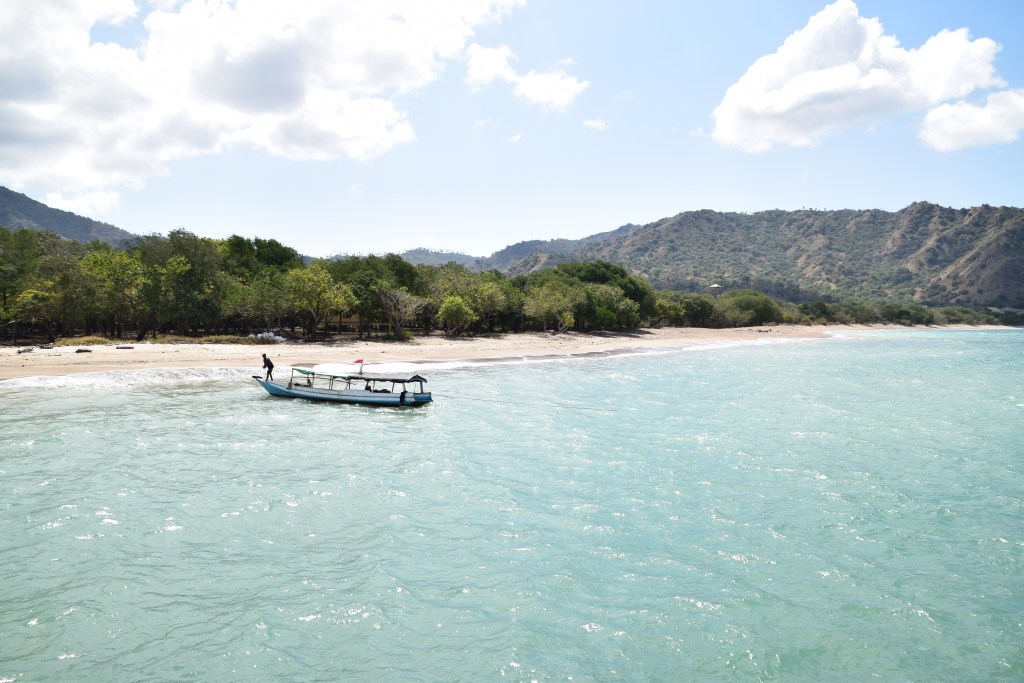
The scenery is stunning and there’s plenty to look at from the boat…
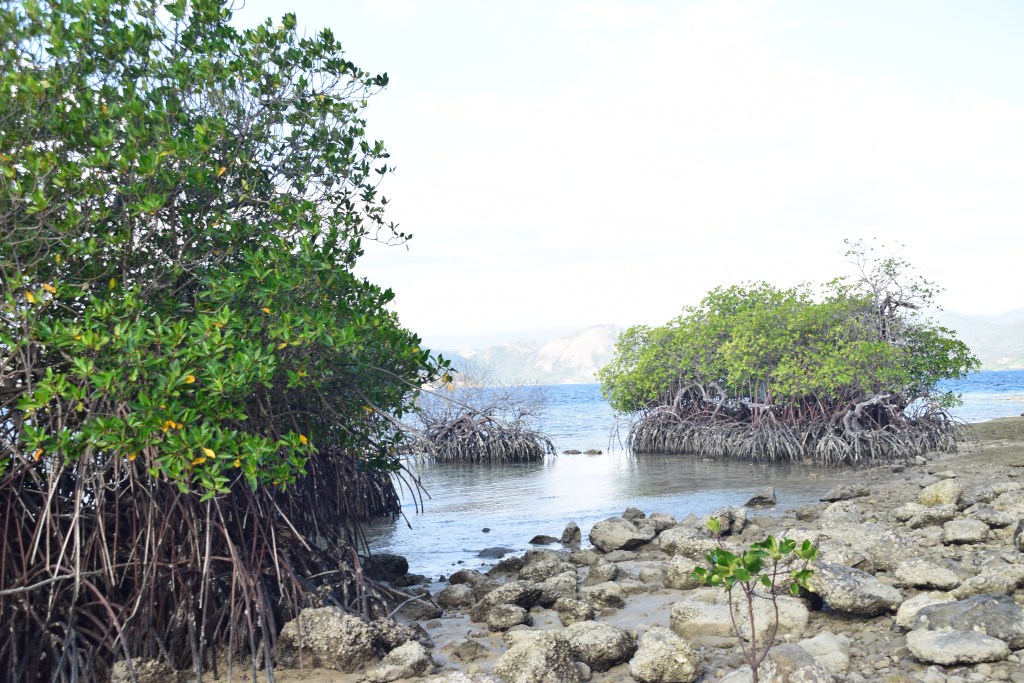
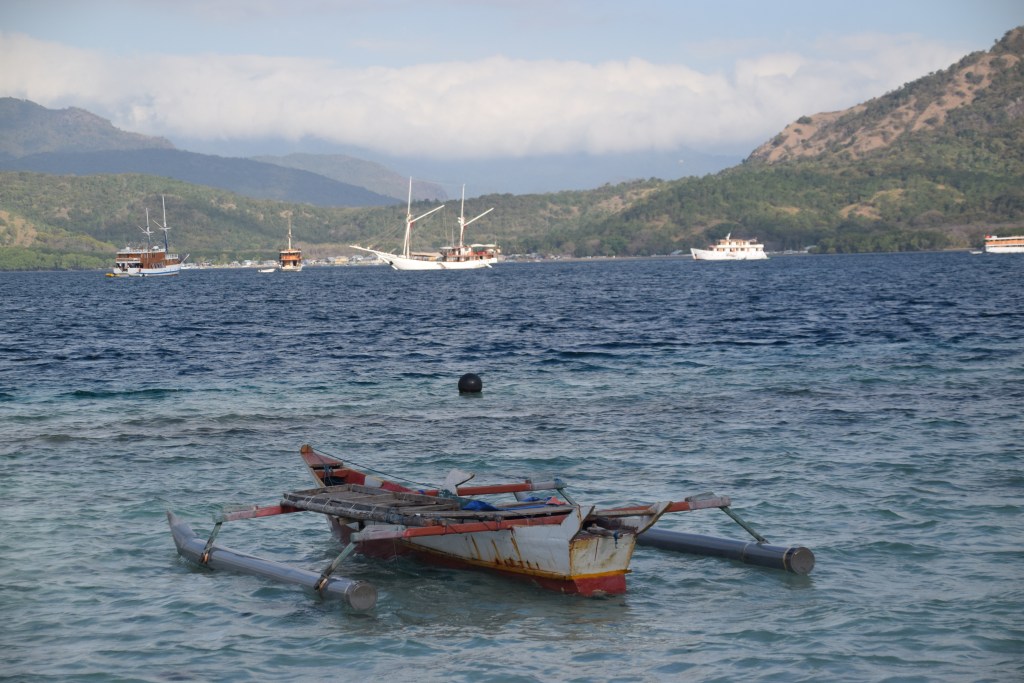
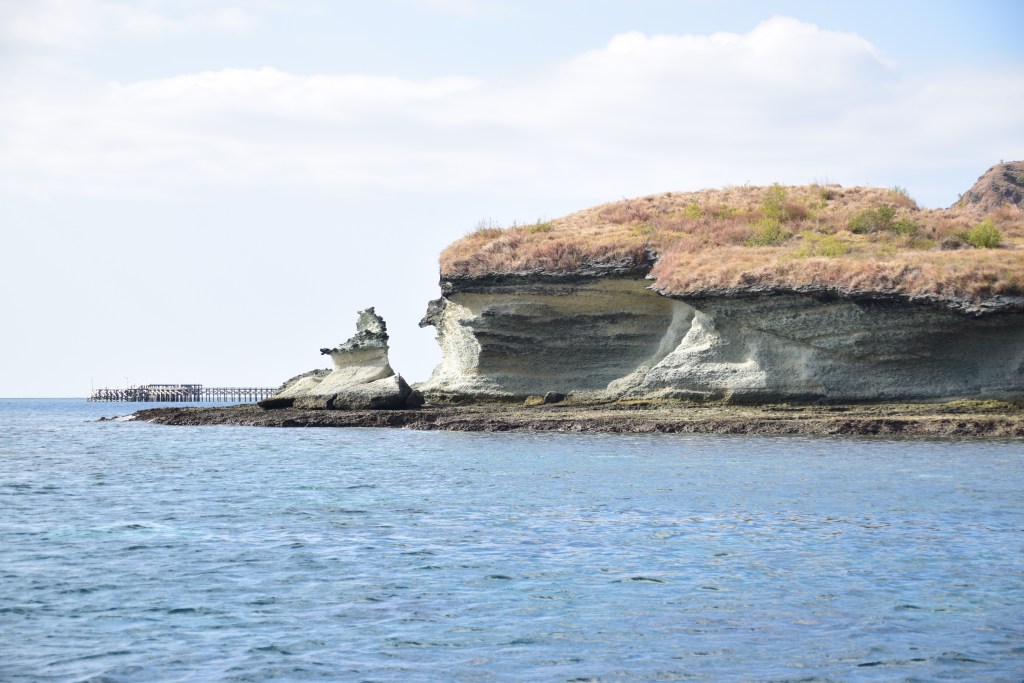
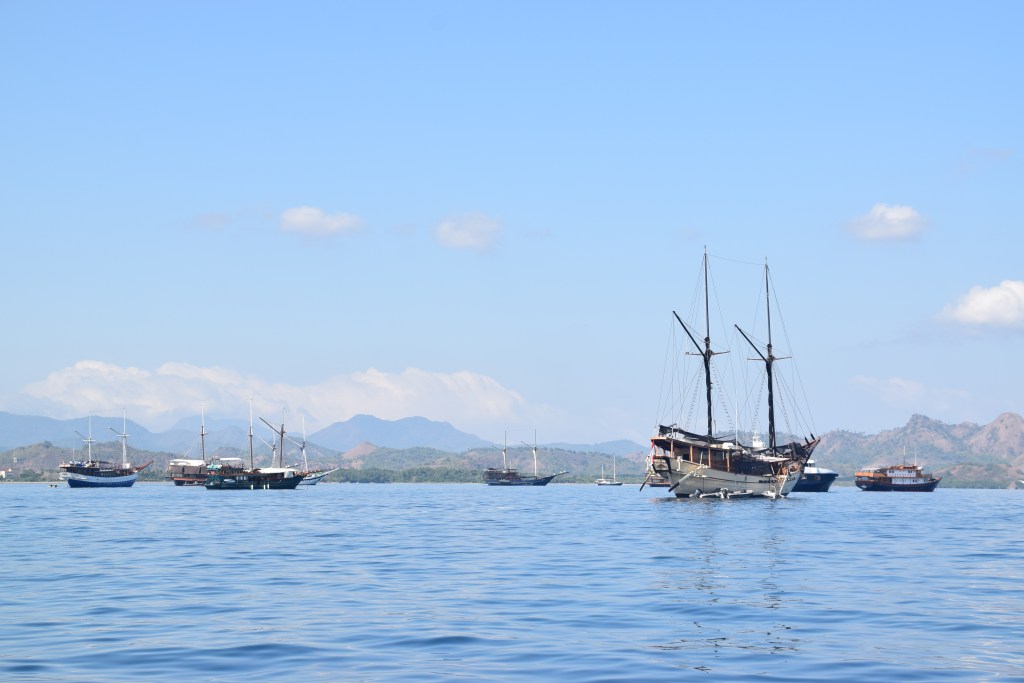


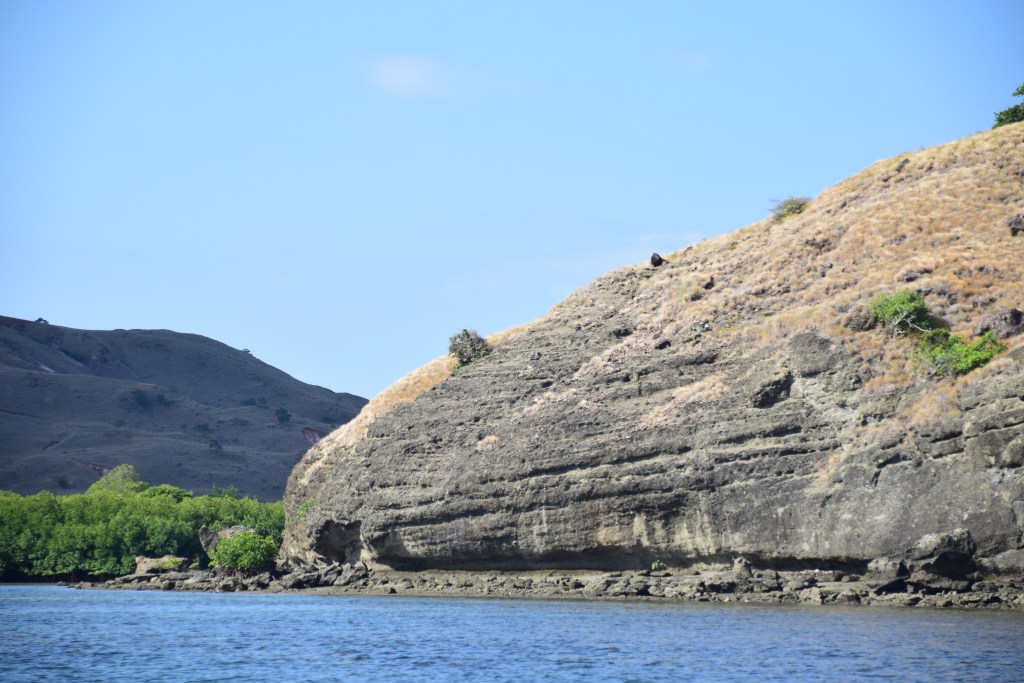
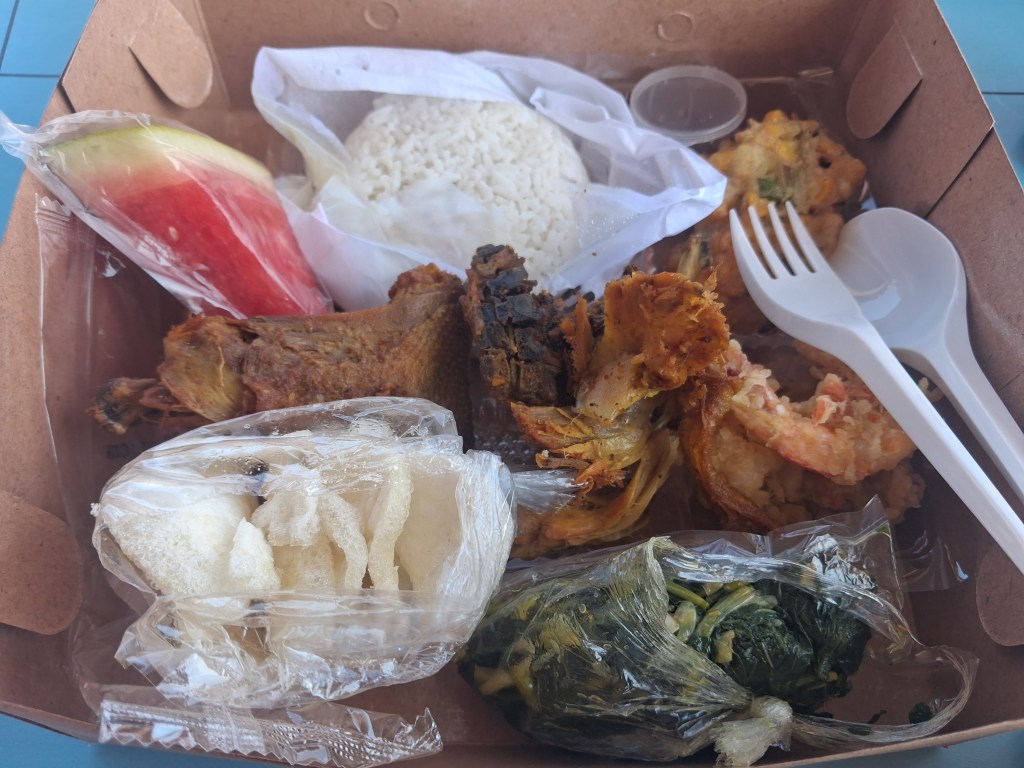
Packed lunches are brought along on board and enjoyed on one of the beaches – chicken, veg, rice, prawn crackers, fruit – washed down with fresh coconut water!

Padar Island
Padar Island is included in most itineraries.The early morning hike to the summit takes 30-40 minutes and is worth it for the views. Unfortunately for us, weather conditions weren’t great on the morning of our scheduled visit and the harbour master stopped all boats from visiting. We didn’t have another opportunity so missed out on the climb…

What we missed – Padar Island -( 20250822 09342664 – Wikimedia)
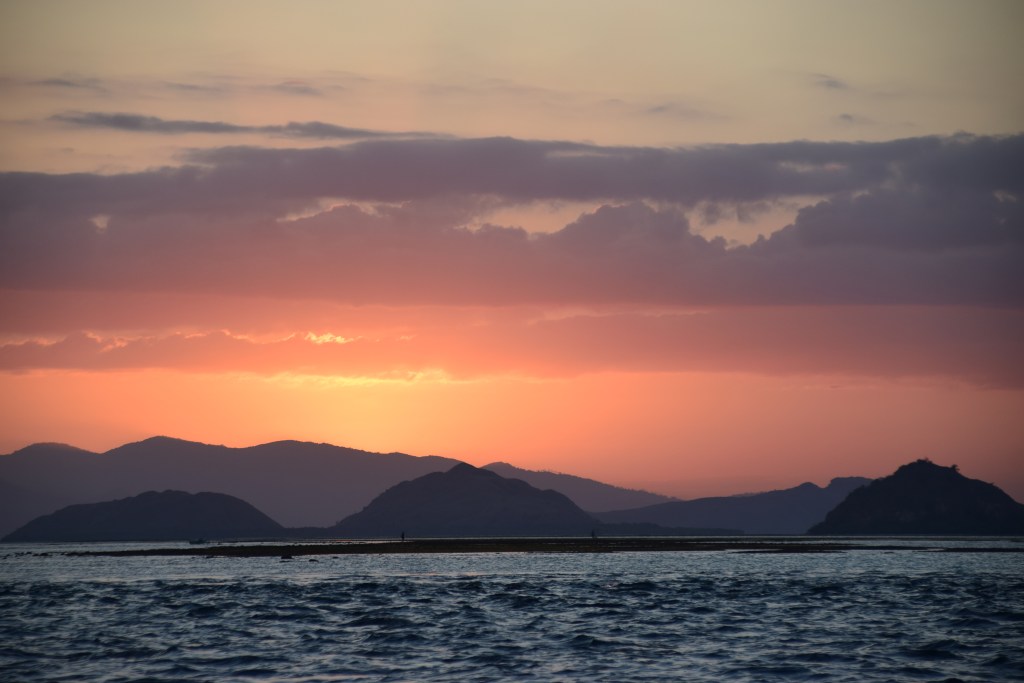
Sunsets
Not bad!!!

Flying Foxes
At sunset, thousands of Flying Foxes emerge from the mangrove forests of Kalong Island as they head off on their night’s hunting. Boats anchor offshore and visitors watch the stream of bats pass overhead…

Attribution Charles J Sharp, Wikimedia – a better photo than any of my own!
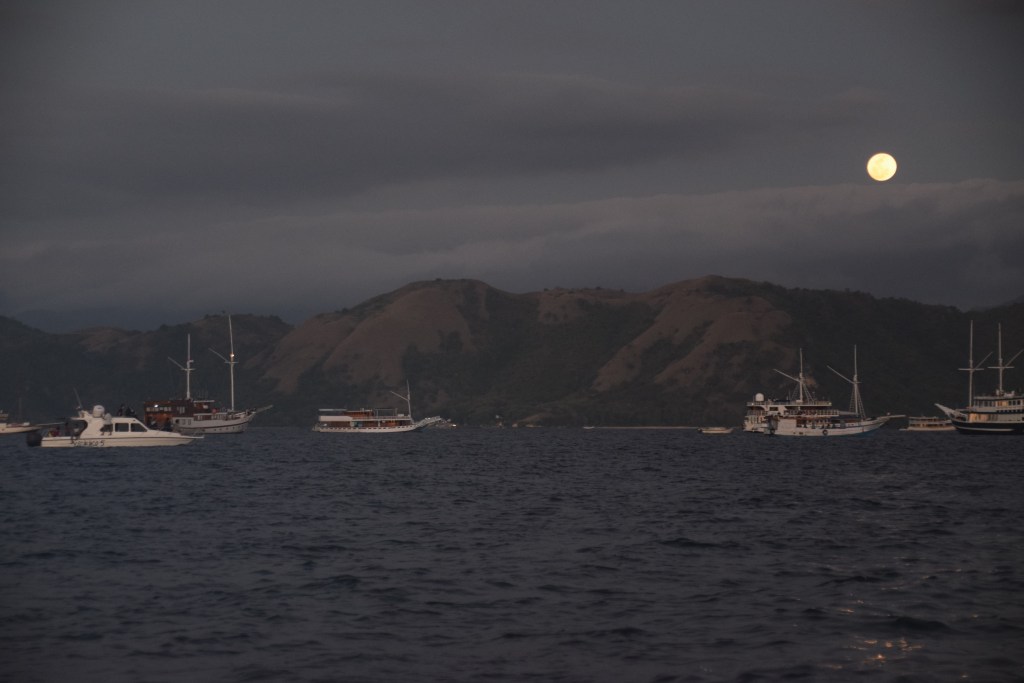
Homeward bound at the end of a long day – by the light of the silvery moon…
Labuan Bajo
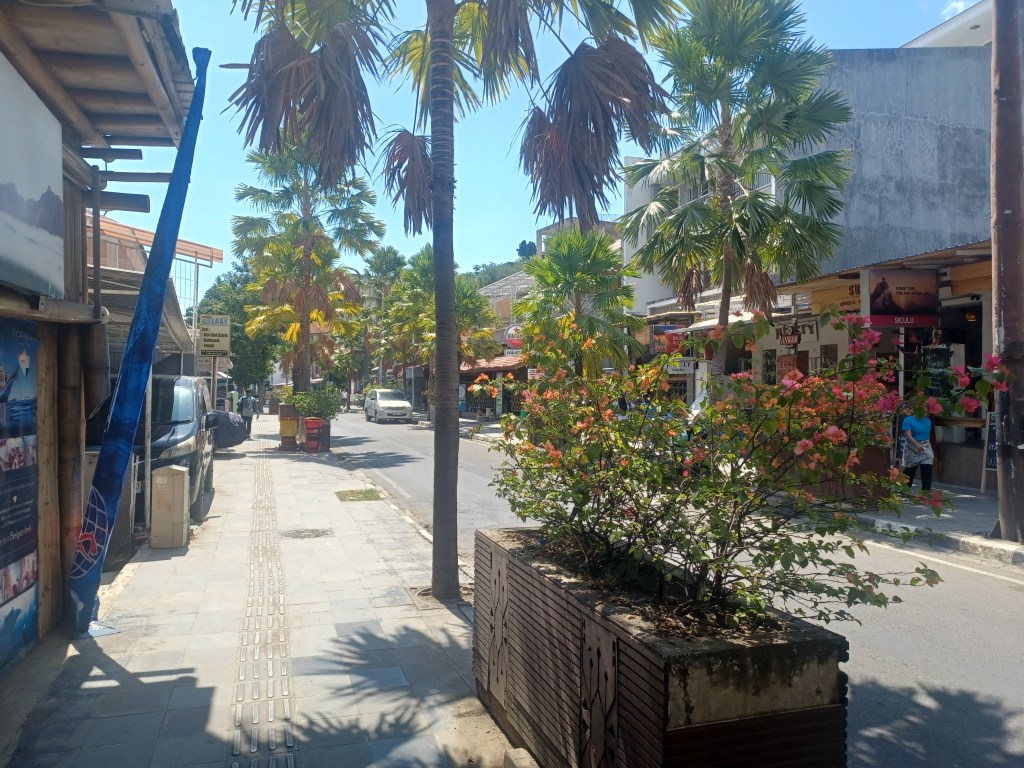
The town is mainly used as a base for visiting the National Park with dozens of tour company offices lining the main street and beyond. There are some nice restaurants and coffee shops but very few stores and fewer attractions – a brief walkabout will suffice.
Local Population and Tourism Dependence
An estimated 3,200 indigenous residents live in settlements within the Park. Historically reliant on fishing, nowadays a large part of the economy is dependent on tourism.

More than 16,800 people in the broader region work as boat operators, tour guides, hospitality staff and souvenir vendors -all tied directly to the park’s visitors.

A few things to consider…
A lot of time is spent on boats – Just getting to and from the islands takes 90 mins each way by speed boat. Waters are NOT always calm!
Then there’s the scrambling on and off the boat – fine on a beach, but, back in harbour, you might find yourself moored alongside 4 or five boats and have to pass through them all to reach the jetty.
Itineraries (including our own) change frequently, depending on weather and sea conditions.
Rinca Island is less visited and offers longer trails so should definitely be included in your schedule.
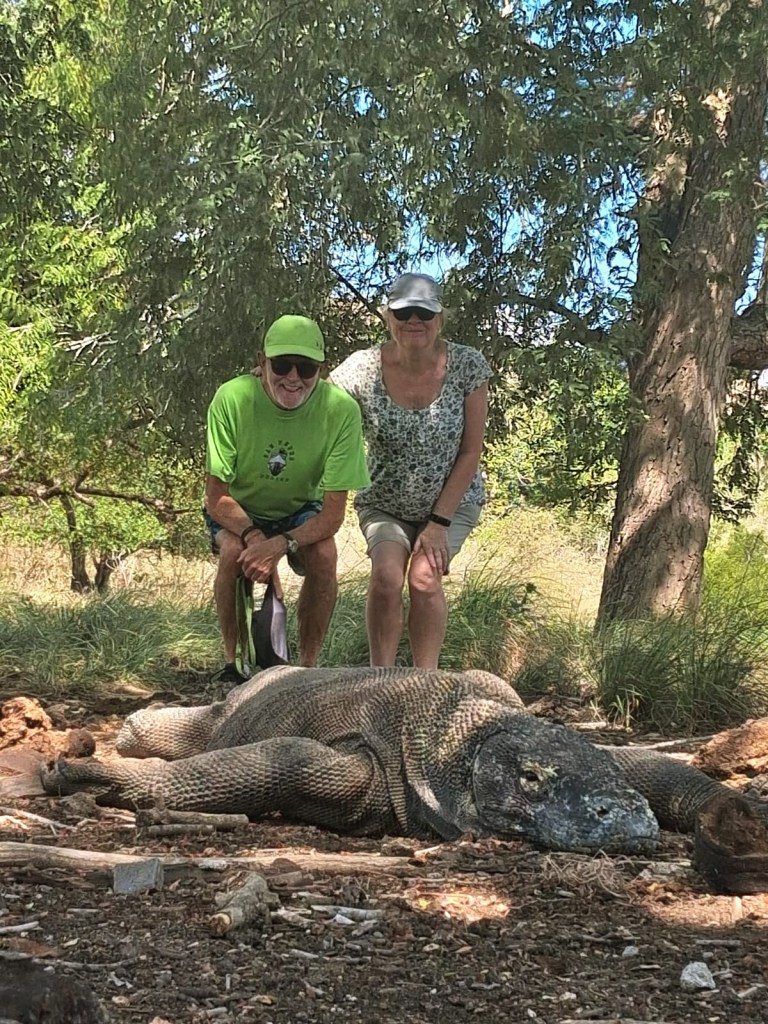
Dragons can be seen year-round, but may be less visible in mating season (July – August). Having said that, we visited in late July and saw 10 on Komodo Island and 8 the following day on Rinca…. .
Thank you so much for sharing your experience through wonderful pictures and commentary. Your post allowed me to revisit some fond memories. We visited many years ago and really loved seeing all the dragons. I’m not sure how many we saw, but I vividly remember walking up to and around many of them on the trails and at the end of the walk a huge number of them were gathered around a mess hall looking for handouts. That felt a bit strange and a bit like being in a zoo rather than a National Park. The snorkeling around the area was some of the best in the world and I had the unique experience of seeing my first seahorse. Incredibly unusual and lucky.
Stay safe,
Steve
You were definitely the intrepid traveler to have ventured there back then. I’m sure it was quieter then – although, to be fair, because of the number control, there was no sense of crowds on the islands themselves – it was only when we looked out on the water and saw the number of boats that we became aware of how busy the place was….
We went to Komodo a few years ago and remember being skeptical that our parks officer would be able to defend us with his wooden stick! Thanks for the revisit Maggie
I know what you mean!! None of them mentioned having to actually use the thing but we can only assume that it works when necessary!!!
Fab photos!
Thanks Sheree – I didn’t take enough at the time!!!!
What a brilliant post, Marie. I’ve enjoyed this so much I’ve read it twice in one sitting, amazed at both your ability to research how to make this journey and your get up and go to then do so. Intrepid? I should say so. I bet this trip is one of the highlights of your travel life and one you can call on time and again to talk about – give talks on? I look forward to your next off-the-scale trip, if there are any left for you to tackle, and wish you luck and happiness in all your future travels.
Ah thank you Mari. You’re right – we’ve been lucky to have had so many great trips but this one will definitely stand out. I was genuinely a bit sceptical – afraid I’d blown it out of proportion in my head – but we came away more than content with the adventure….
This sounds absolutely fascinating 🙂 And I was interested to see your photos and read of your experiences beyond the dragons themselves.
There’s limited enough access to the dragons so they’ve expanded the experience by including beach and water activities. I don’t swim or snorkel off boats but I was still quite happy to sit in the boat and enjoy my surroundings and was able to enjoy the beaches. So 3 days / 4 nights was enough for me. We were looking for somewhere beachy and nice for our last few days and initially considered staying in Labuan Bajo but were advised against it by pals and couldn’t see a place we liked anyway. So we settled on returning to Bali and definitely made the right decision.
What a wonderful adventure!
That’s exactly what it was! I don’t know how we’ll top this one!!
Wow, what a truly wonderful adventure, dear Marie, especially given that it is the only place on Earth where you can see the world’s largest living lizards in the wild. Seeing tens of thousands of flying foxes wake up at dusk and stream across the colourful sunset sky must have been a true spectacle. Thanks for sharing, and have a good day 🙂 Aiva xx
The flying foxes were a bonus! We’d 2 biology teachers with us and I could hear the dad whispering to his 11 year old daughter – ‘you’re witnessing something very special -don’t ever forget this moment’ It was lovely…
What a wonderful time you had. Flores and Bali are the next two Indonesian islands we want to visit, so your trip report was very welcome. Especially that bit about the harbour-master being king. Reminded me of our experience in the Andaman islands, where we found that overplanning does not work when island hopping. Wonderful photos: lovely waters too
What a special experience.
Yes – one of those once in a lifetime opportunities….
Hope you get there – both are great but Flores etc is VERY special.
WOW, what an absolutely amazing trip, and so special to see the dragon up close. A true adventure to such a remote place. I am truly green with envy 🙂
It certainly sparked a lot of interest here at home – usually family and pals just about ask us if we’d a good trip! But – this time…..!!
Oh you have been to some absolutely incredible places!!
I have Emma – How lucky am I!
Visiting the komodo dragons several years ago continues to rate high on our list of top experiences, Marie. We didn’t visit Rinca island, however. It looks fantastic from your photos, so i wish we had! I think the turquoise waters should come up for the definition of “stunning” in the dictionary, as their clarity and color are simply ‘stunning.’
I was delighted to visit both Komodo and Rinca – meant we had another opportunity to enjoy the experience. I hadn’t given mush thought to the rest of our time there so the beaches and water were a delightful bonus.
What an extraordinary wildlife encounter! Seeing Komodo dragons in their natural habitat must be unforgettable, especially after such a long journey. I also like how you combine practical information with fascinating details about their behaviour, diet and survival. The contrast between these ancient-looking predators and those beautiful pink beaches is remarkable.